Is It Safe To Travel In Myanmar and Explore This Country?
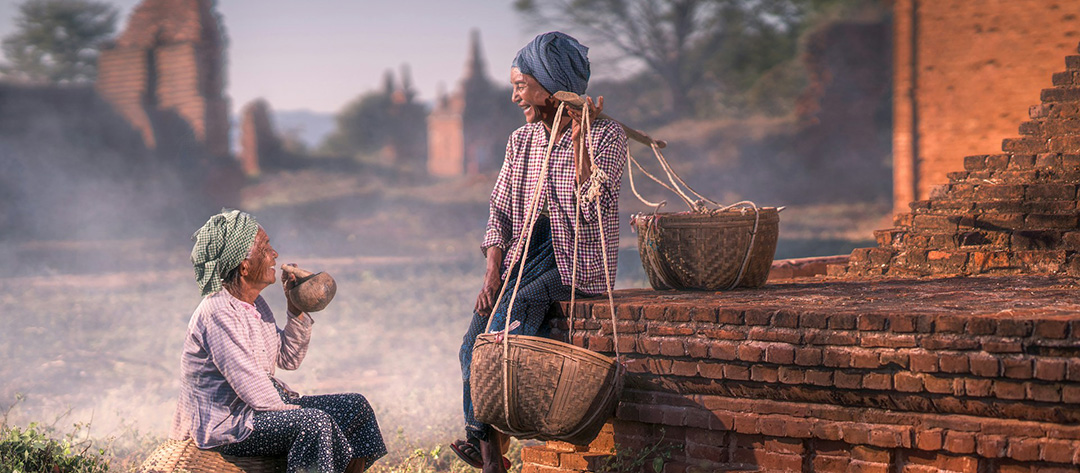
You’ve seen the headlines and the stark government warnings. And yet, you’ve also seen the breathtaking photos of golden pagodas at sunrise and serene fishermen on Inle Lake. This profound contradiction leads to one of travel’s most complex questions: Is it safe to travel in Myanmar?
The short answer is complicated: No, not all of it is safe. But yes, specific, well-established parts can be. Myanmar currently has two distinct realities. For any traveller, knowing the difference between the welcoming ‘Green Zones’ and the ‘Red Zones’ to avoid is the most essential part of the journey. This is not a political analysis, but a practical, on-the-ground guide to help you make an informed decision.
Understanding the Big Picture (Without the Political Jargon)
The Context in Brief
To understand the “why” behind the safety question, you must first understand the context. Since 2021, Myanmar has been in a state of complex civil unrest, which has escalated a long-running civil war. This has resulted in active, unpredictable, and severe conflict. However, it is crucial to understand that this conflict is heavily concentrated in specific rural regions and along the country’s extensive land borders.
This situation is the fundamental reason why so many regions are entirely off-limits for travellers and why government advisories are so severe. We are not hiding this fact; we are starting with it because it’s the foundation for travelling safely and responsibly. Acknowledging the risk is the first step to mitigating it. The situation is volatile in the “Red Zones,” and this article’s primary purpose is to guide you on how to stay firmly within the “Green Zones.”
Official Advisories vs. On-the-Ground Reality
Check your home government’s travel advice (whether you’re from the UK, USA, Australia, or Canada). You will almost certainly see a “Level 4: Do Not Travel” warning for the entire country. These advisories cite armed conflict, arbitrary detention, and civil unrest. They are serious, and they should not be ignored.
However, these advisories must, by their very nature, paint the entire country with a broad brush. A government cannot guarantee your safety in any part of a nation experiencing conflict, so it designates the entire territory as high-risk. It is their job to warn you of the worst-case scenario.
This article will do what those broad advisories cannot: it will give a detailed, on-the-ground answer to “is it safe to travel in Myanmar“ by drawing a clear line on the map. It will separate the on-the-ground reality of the core, insulated tourist hubs—where life continues with a sense of normality—from the volatile border regions where the conflict is an active, daily reality. Understanding this distinction is the key to a safe trip.
The Two Myanmars: A Clear Guide to “Go” and “No-Go” Zones
Your safety in Myanmar is not a matter of luck; it is a matter of geography. Your entire trip must be planned around a well-established and monitored tourist circuit. This is not the time for “off-the-beaten-path” exploration. Sticking to the main tourist “Green Zone” is not just a recommendation; it is the absolute, unbending rule for safe travel.
The Tourist-Safe “Green Zone”: Where to Go
These are the core destinations where the local economy has long depended on tourism. They are geographically and politically insulated from the conflict areas, and day-to-day life for visitors remains generally peaceful and calm.
- Yangon: The Vibrant Former Capital
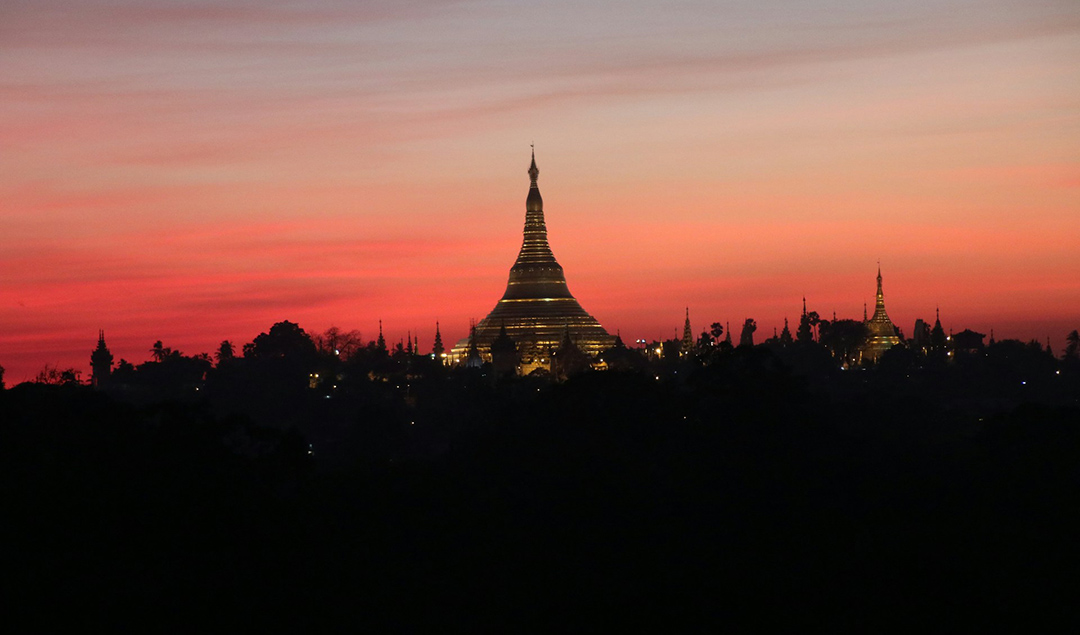
The former capital is a vibrant, sprawling, and energetic city. It is a living, breathing entity.
Here, colonial-era buildings crumble beautifully next to bustling tea shops, and the scent of street-food skewers and jasmine hangs in the air. The magnificent Shwedagon Pagoda, a 326-foot golden spire that dominates the skyline, remains one of the most awe-inspiring religious sites in the world.
Life in Yangon does go on. However, you will also notice a more visible security presence and pass checkpoints. This is not a cause for panic, but rather a call for mindfulness.
Your guide will navigate these. As a tourist, your role is to be a respectful observer: keep a copy of your passport handy, dress modestly, and never photograph military personnel, police, or official convoys. It is also wise to avoid any large gatherings or demonstrations.
- Inle Lake: A Serene World on the Water
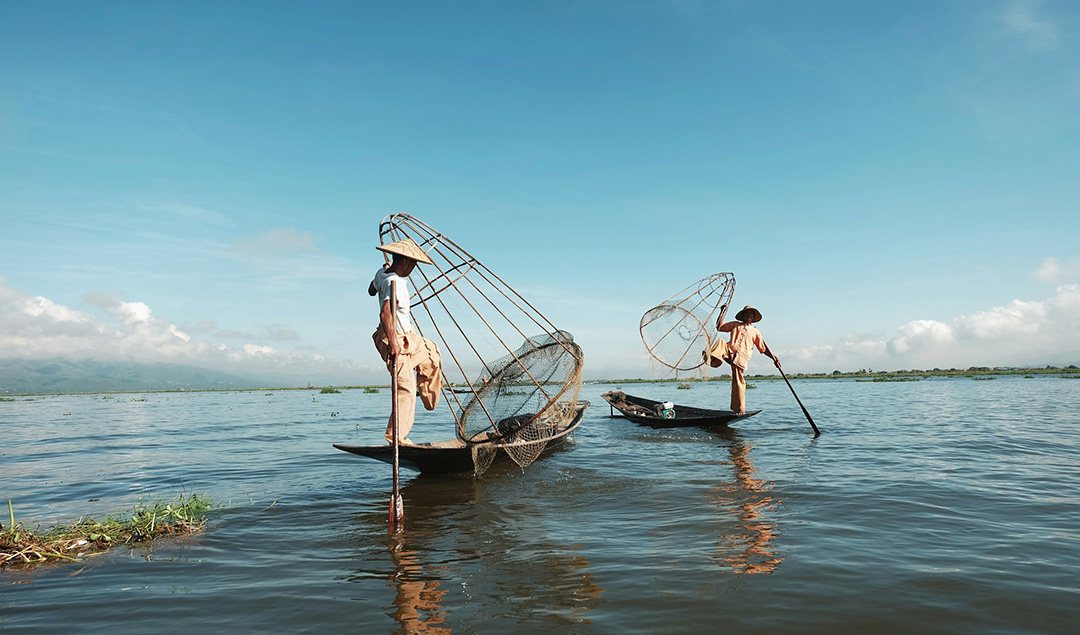
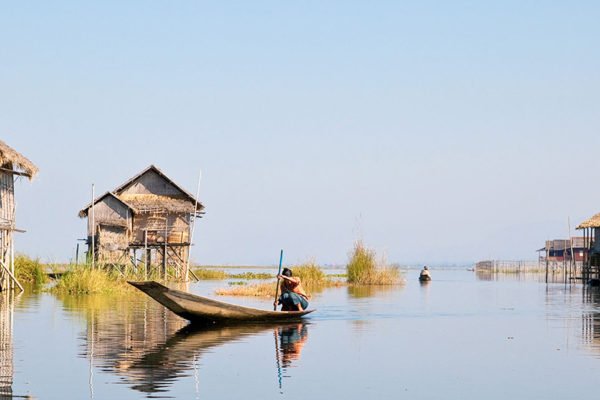
Imagine a self-contained, ethereal world that exists entirely underwater. This highland lake, nestled in the hills of Shan State (in a safe, specific part of it), is home to the Intha people. They have built stilt villages and floating gardens from reeds and silt. Intha people are also known for their unique leg-rowing technique, where fishermen balance on one leg at the end of a canoe while using the other leg to paddle.
The rhythm of the water dictates life here. Your visit will consist of long-tail boat trips to floating markets, stilt-bound weaving workshops (where they craft silk from the lotus flower), and ancient monasteries. The local communities are known for their hospitality and are eager to welcome respectful travellers back.
- Bagan: The Ethereal Temple Plain
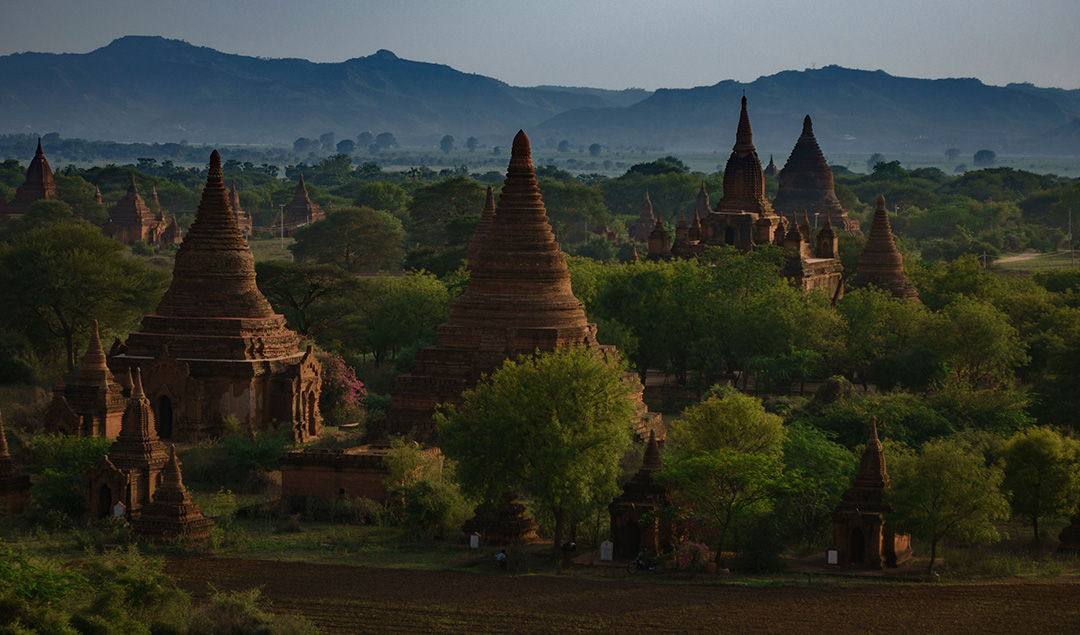
This is the tranquil, magical heart of Myanmar.
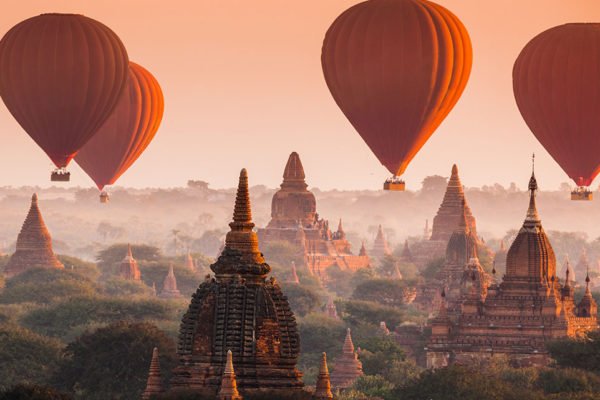
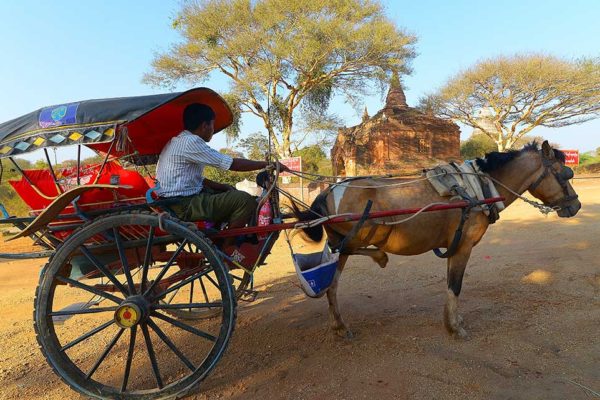
Bagan is not a city; it’s a vast, 100-square-kilometer archaeological plain where over 2,200 ancient temples and pagodas rise from the dusty earth. It is a UNESCO-focused “bubble” that feels a million miles away from modern troubles.
The experience here is one of profound peace. You will spend your days renting an e-bike, zipping along quiet, dusty lanes, and discovering temples all to yourself. The main event is sunrise, where you climb a designated temple in the pre-dawn quiet and watch as the sun illuminates the plain, the pagodas emerging from the mist.
Life here is slow, tourism is the main activity, and the atmosphere is serene.
- Mandalay & Surrounds: The Cultural Heart
As the cultural and religious heart of Myanmar, Mandalay is a grittier, more “real” city than Yangon. It’s a bustling hub of commerce and monastic life. While the city itself is generally safe, the real treasures lie in its ancient satellite cities, which is why traveling with a guide here is non-negotiable for a smooth and safe experience.
You will visit Amarapura to walk the U Bein Bridge at sunset, the world’s longest and oldest teak bridge, filled with silhouettes of monks and locals. Then, explore Sagaing, known as the “City of Hills,” which is adorned with numerous white and gold pagodas and nunneries. Finally, see Mingun, home to a giant, earthquake-cracked unfinished pagoda.
A tour guide will ensure a smooth experience on these day trips.
Ngapali Beach: The Secure Coastal Escape
If you’re looking for a “fly-in, fly-out” paradise, this is it. Ngapali (pronounced ‘Na-pa-li’) is Myanmar’s premier beach destination, a stunning stretch of pristine white sand, clear turquoise water, and swaying palm trees.
Crucially, although it is technically located in Rakhine State (a “Red Zone”), the resort area is geographically isolated and accessible by a short, direct flight from Yangon. It is a secure “bubble” completely separate from the state’s wider troubles. It’s the perfect, relaxing, and safe place to end your journey.
The “Red Zones”: Areas to Strictly Avoid
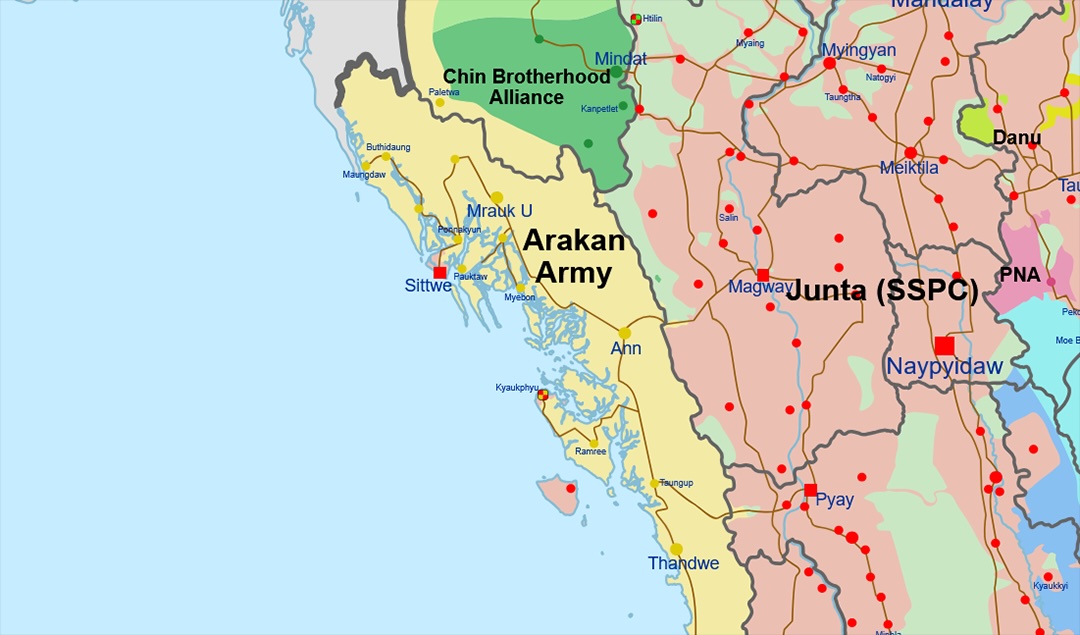
This section is absolute. These areas are not for adventure. They are not for “intrepid” backpackers. They are active conflict zones, and travel to them is impossible, illegal, and extremely dangerous. Do not attempt to visit any of the following:
- A Clear Warning: Do Not Enter Conflict Areas
Travellers must avoid all land borders with China, Thailand, India, and Laos. Your trip must not include the vast majority of the border states, including Kachin, Kayin, Kayah, and Chin states. The large parts of Shan State (outside the protected Inle Lake zone) and the Sagaing Region (outside the Mandalay city area) are also prohibited.
You should avoid all areas of Rakhine State, except for the secure, fly-in Ngapali Beach resort area. These regions are experiencing active and unpredictable fighting, contain unexploded ordnance (landmines), and lack any tourist infrastructure.
Your safety cannot be guaranteed, and consular assistance is unavailable. It is crucial to stay within the Green Zone—there are no exceptions.
Practical Safety Concerns (Beyond Politics)
Your safety in Myanmar isn’t just about avoiding conflict zones. It’s about making smart, practical, and respectful decisions every single day.
The Role of a Local Guide: Your Safety Lifeline
If you take only one piece of advice from this entire article, let it be this: Hire a registered, independent local guide.
In today’s Myanmar, a guide is not a luxury; they are your single most important safety tool. They are not just there to show you temples and tell you history. They are your lifeline, your cultural translator, and your real-time logistics manager.
A local guide offers unique on-the-ground insights that websites can’t match. They know the current status of roads, how to navigate checkpoints with ease, and manage all communication for you. Most importantly, they help you avoid potential risks, such as photographing sensitive buildings or engaging with security forces. Essentially, they are your safety net, ensuring a smooth and secure journey.
Transportation: Why You Must Fly, Not Drive
The safest, fastest, and most reliable way to move between the Green Zone hubs (such as from Yangon to Bagan or Bagan to Heho for Inle Lake) is to fly, not drive.
Long-distance road travel and buses are not recommended. The journeys are long, roads can be in poor condition, and checkpoints are unpredictable. Reputable internal airlines, such as Mann Yadanarpon or Air KBZ, offer safe and efficient flights that connect the main tourist centres.
Health and Hygiene: Staying Well on the Road
Your biggest day-to-day health risks are the mundane ones: stomach bugs and mosquitoes. The medical infrastructure in Myanmar is limited, so prevention is paramount.
Drink bottled water only, and use it for brushing your teeth. Avoid ice in your drinks unless you are at a high-end hotel that confirms it is purified and safe.
Be smart about street food: if it’s piping hot, freshly cooked right in front of you, and the stall is busy with locals, it’s generally a fantastic and safe experience.
Before you leave home, consult a travel doctor about the necessary vaccinations, which typically include Hepatitis A and Typhoid, and discuss any other recommended precautions.
Common Scams: What to Watch For
Standard tourist scams, while not rampant, do exist. The most famous is the gem scam, where a friendly stranger strikes up a conversation, invites you to their “family’s” gem shop, and pressures you into buying what turns out to be a worthless, overpriced stone.
Be polite but firm, and never buy gems from an unlicensed dealer. Other than that, standard travel smarts apply: agree on taxi prices before you get in, be mindful of your belongings in crowded markets, and cover your PIN when using an ATM.
Cultural Etiquette: Your Key to Respectful Travel
Finally, cultural etiquette is a key component of your safety. Being a good, respectful guest makes you a safe guest.
- The most important rules revolve around religion. You must cover your shoulders and knees before entering any religious site—this is non-negotiable.
- It is necessary to remove your shoes and socks (yes, socks too) at all pagodas and monasteries.
- Be mindful of your feet; never point them at another person or at a Buddha image.
- The head is considered sacred, so do not touch anyone’s head, even a child’s.
- Monks are deeply respected; do not touch a monk, and women should be especially careful not to brush against them.
- Do not, under any circumstances, discuss local politics. This is not a topic for debate or curiosity.
>> Read More: Essential Myanmar Travel Tips For First Timers
The Critical Question: Should You Go?

This is the final, heavy question. Acknowledging the political situation, is it safe to visit a country with such a troubled government? It’s a valid and important dilemma, and the answer is not straightforward.
Acknowledging the Dilemma
The focus of the narrative must change from “visiting a regime” to “visiting a people.” The truth is that thousands of everyday Burmese individuals—such as small guesthouse owners, independent guides, artisan families, boat drivers on Inle Lake, and local restaurant staff—rely entirely on tourism for their survival.
Years of isolation, first due to the pandemic and now because of the political situation, have been devastating for them.
The Power of Responsible, People-First Tourism
This is where responsible tourism becomes a powerful, positive force. Your money is your power. By making conscious, careful choices, you can ensure that your tourist dollars bypass the government and go directly into the hands of the people. This is the key.
To make a positive impact, consider actively choosing to stay at a family-run guesthouse instead of a large, state-affiliated hotel chain. Opt for hiring an independent, local guide for the day rather than a massive, faceless tour company. Purchase your lacquerware souvenirs directly from artisans in their workshops in Bagan, and dine at small, family-owned restaurants in Yangon.
When you approach your visit this way, it’s not just a political statement; it serves as a direct economic lifeline for the local community.
The Human Connection: A Welcome Visitor
The Burmese people are known for their remarkable warmth, gentle smiles, and deep resilience. After enduring many challenges, a respectful and mindful visitor who comes to learn about their culture and support their livelihoods is often seen as a welcome reminder that the world has not forgotten them.
Your decision to visit is personal, but it is not a simple one. By traveling thoughtfully, staying within the safe “Green Zone,” and supporting local communities directly, you can have a safe, meaningful, and human-centered experience.
Ultimately, the answer to “Is it safe to travel in Myanmar?” is a conditional yes, contingent upon careful planning and responsible choices.
Your safety hinges on meticulously adhering to the “Green Zones” (such as Bagan and Inle Lake) and completely avoiding the “Red Zone” conflict areas. This is not a destination for casual exploration; it demands expert knowledge.
Embark on a safe, ethical adventure that uplifts local communities by reaching out to Asia Travel Pioneer! With our trusted local partners and up-to-date insights, you’ll explore this stunning nation with confidence and genuine respect for its rich culture.

Tours You might like
 Best Seller
Myanmar Essence
Ancient Kingdom of Myanmar