The Best Way to Explore Thailand on a Budget: A Regional Breakdown

There’s no single way to experience Thailand — and that’s what makes it so irresistible. From the golden temples and vibrant markets of Bangkok to the tranquil islands of the south and the cool mountain retreats in the north, every region tells its own story. This guide walks you through the best way to explore Thailand, so you can discover the country’s charm at each destination at a time.
What To Do When Visiting Different Parts Of Thailand
Bangkok
Bangkok is a city of contrasts, in which ancient temples rise beside glass towers, and street vendors serve dishes that rival fine dining. As Thailand’s capital and main transport hub, it offers a wide range of prices for every traveler. Despite its modern edge, daily expenses can stay surprisingly low: dorm beds start around 10 USD, full meals cost 2–3 USD, and efficient public transport keeps getting around the capital affordable.
With a bit of planning, the best way to explore Thailand, including exploring Bangkok’s temples, markets, and riverfront life, is entirely doable on a modest budget.
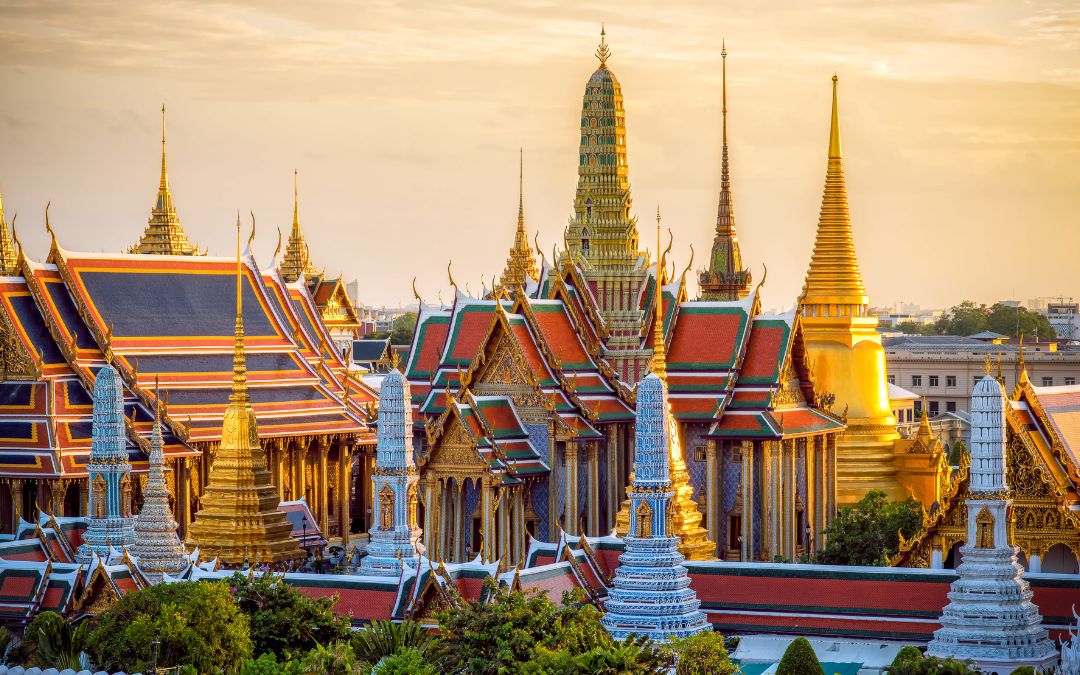
Bangkok’s Grand Palace complex showcases ornate temple spires in brilliant gold, vibrant reds, and intricate tile work against the evening sky.
Accommodation
Budget travellers often gravitate toward Khao San Road, where hostels provide a lively, social base close to the old city’s cultural heart. Beds start around 8–12 USD, making it the best way to explore Thailand for those prioritising affordability and community.
- NapPark Hostel @ Khao San: Dorms from roughly 10 USD, popular for cleanliness and central location.
- Khao San Social Capsule Hostel: Compact, modern, and ideal for travellers seeking both privacy and interaction.
For quieter nights and scenic mornings, riverside guesthouses offer charm and tranquillity without inflated prices. Staying near the Chao Phraya River grants easy ferry access and a view that costs far less than a sky bar.
- River View Residence: Affordable private rooms overlooking the river, located near Chinatown’s winding lanes.
Travellers who value privacy can still stay within budget by using booking apps for last-minute 3-star hotel deals. Flexible dates often unlock discounts up to 40%, especially outside peak season.
Transportation
- The BTS Skytrain and MRT subway link most major districts quickly, sparing travellers from traffic jams and inflated taxi fares. Fares typically range from $0.50 to $1.50 per trip.
- To explore the city’s scenic side, Chao Phraya river ferries connect temples, markets, and historic neighbourhoods at a fraction of taxi prices.
- For short hops, Grab offers fair, meter-based rides, while public buses remain the most affordable way to move around—just be prepared for slower travel and some adventure.
Cuisine
- Street markets such as Yaowarat (Chinatown) and Chatuchak brim with freshly cooked dishes, where a plate of pad thai or a steaming bowl of boat noodles costs just 2 USD.
- Mall food courts are another smart choice — clean, air-conditioned, and often featuring local favorites like basil chicken rice for under $ 3.
- Follow locals’ queues for the best way to explore Thailand’s street food scene and get the best flavour-to-price ratio. Where the line is long, freshness and quality usually follow.
Activities
- Visit free (or very low-cost) temples like Wat Saket (Golden Mount) or spend some time relaxing in Lumphini Park, both give a strong sense of place without high expense.
- Explore night markets: great for local snacks, souvenirs and soaking in the vibe without major spending.
- Enjoy skyline or riverside views from affordable rooftop bars that charge minimal or no cover fee — great way to treat yourself while staying on budget.
>> Read More: Bangkok Travel Guide – Your Essential Companion to the Heart of Thailand
Northern Thailand (Chiang Mai, Pai)
Northern Thailand unfolds at a slower pace, where misty mountains meet temple spires and morning markets hum to the rhythm of local life. The region, which is anchored by Chiang Mai and the smaller, bohemian town of Pai, offers a standard of living that suits long-term travellers and digital nomads alike.
The best way to explore Thailand on a budget shows clearly here, as daily costs remain far below those in Bangkok: simple dorms and local meals rarely exceed a few dollars, while cafés with strong Wi-Fi and mountain views make it easy to linger. Tourism plays a large role in the local economy, yet it hasn’t stripped away authenticity. So, visitors still find an everyday ease that keeps the north both welcoming and affordable.

Accommodation
Travellers can stay in clean, design-focused hostels or small boutique hotels for 10–20 USD per night, many clustered around the Old City or Nimman area. Weekly or monthly rentals often come with deep discounts, making Chiang Mai a favourite base for those staying longer.
- The Common Hostel: Stylish and centrally located with private pods and shared spaces from about 12 USD.
- Green Sleep Hostel: Modern design, breakfast included, and a calm atmosphere just outside the city walls.
- Buri Gallery House: Boutique option offering Thai-style rooms and a pool for under 25 USD in the low season.
Further north, Pai feels more rustic yet equally inviting. The town’s riverside huts, bamboo bungalows, and family-run guesthouses deliver laid-back comfort at around 10–15 USD a night. Staying closer to the river ensures quiet evenings and easy access to cafés, hot springs, and the famous Pai Walking Street.
- Pai Village Boutique Resort: Mid-range comfort with garden views and warm local touches.
- Darling View Point Bungalow: Affordable wooden huts overlooking the valley, perfect for sunset views.
Transportation
- Renting a motorbike (typically 5–7 USD per day) allows full freedom to roam from waterfalls to hilltop temples, provided travellers ride safely on winding roads.
- For shorter distances within town, songthaews — the red shared trucks — offer a simple and cheap solution; routes across Chiang Mai’s Old City often cost less than a dollar.
- To travel between cities, overnight buses remain the smart budget pick, saving both a night’s accommodation and a half-day of travel. The Bangkok–Chiang Mai route, for instance, can be done comfortably for about 15 USD with reclining seats and air conditioning.
Cuisine
- Markets around Chiang Mai show the best way to explore Thailand’s northern cuisine, overflowing with options: bowls of khao soi, grilled sai ua sausage, and sticky rice wrapped in banana leaves rarely cost more than a few dollars.
- The Chiang Mai Gate Market in particular is famed for 1-USD street meals that fill both appetite and curiosity.
- In Pai, organic cafés and vegan-friendly eateries highlight the area’s local produce. Here, fresh fruit smoothies and plant-based curries are served in garden settings that match the town’s relaxed spirit.
Activities
- Visit Wat Phra Singh and Wat Doi Suthep to experience Northern Thailand’s spiritual heritage while enjoying sweeping mountain and city views for a minimal fee.
- Trek through Doi Inthanon or Doi Suthep–Pui National Park to encounter waterfalls, forest trails, and remote hill tribe villages where daily life unfolds far from city pace.
- Explore Pai Canyon at sunrise or sunset for panoramic vistas over the valley, with winding paths that invite quiet reflection and free exploration.
- Soak in Tha Pai Hot Springs, where naturally heated pools sit amid tropical greenery; entry costs just a few dollars for hours of relaxation.
>> Read More: Rising Destination in Thailand for Tourism – Where to Visit before Everyone Else
Southern Thailand (Phuket, Krabi, Koh Lanta)
Southern Thailand stretches from limestone cliffs to turquoise bays, offering postcard-perfect scenery that need not come with resort-level costs. Understanding the best way to explore Thailand’s south means knowing the region’s rhythm is slower than Bangkok’s yet livelier than the north’s.
Daily expenses vary across islands, but smart choices, such as eating local, booking transport collectively, and skipping packaged tours, keep spending modest. Phuket and Krabi attract the crowds, while smaller islands like Koh Lanta and Koh Yao Noi maintain a more grounded charm, where accommodation, food, and activities stay comfortably affordable.
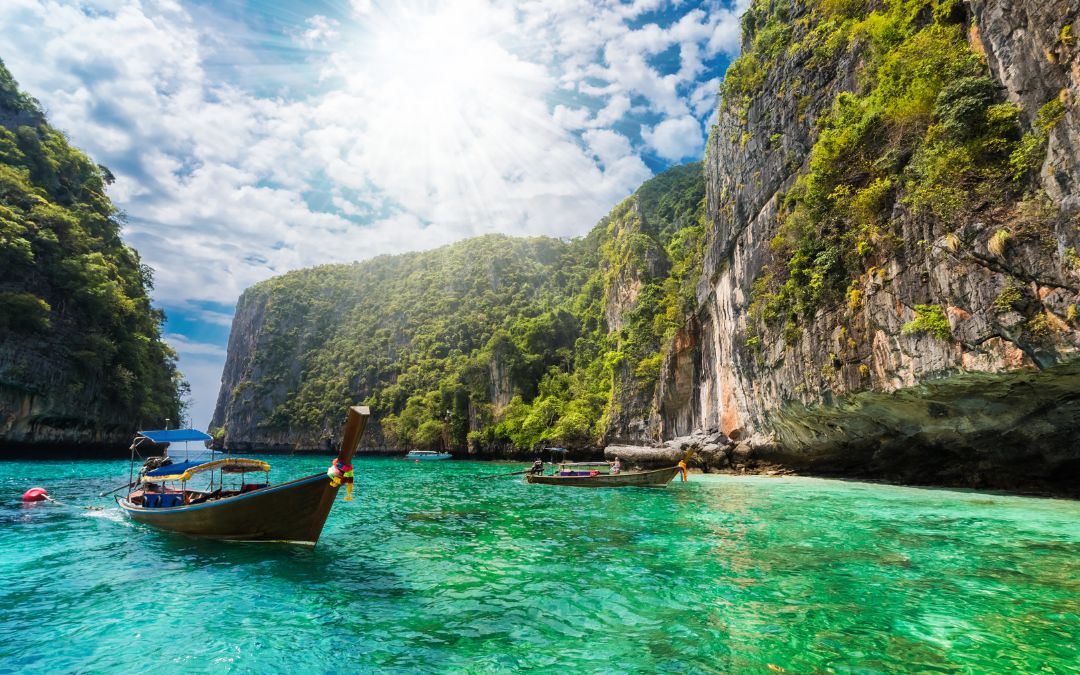
Traditional longtail boats float in crystalline turquoise waters surrounded by towering limestone cliffs draped in tropical greenery.
Accommodation
Instead of international resorts, staying in beachfront bungalows or hostels keeps the ocean close and the budget intact. Rooms with fans and private porches often cost between 15–25 USD, especially when booked off-season.
- Lub d Phuket Patong: Trendy hostel near Patong Beach with both dorms and private rooms, often under 20 USD.
- The Memory at On On Hotel (Phuket Old Town): Historical, well-kept, and still affordable for those preferring culture over coastline.
Booking directly with local owners rather than large platforms frequently secures better nightly rates or extras such as free scooter rental. In smaller destinations like Koh Lanta or Koh Yao Noi, the lower tourist volume brings even gentler prices, making them ideal for longer stays.
- Lanta River Sand Resort: Simple bamboo bungalows right on Klong Nin Beach, around 25 USD per night.
- Koh Yao Beach Bungalows: Family-run lodging with hammocks and sea views for a fraction of resort prices.
Transportation
- Shared minivans and ferries connect major islands efficiently, offering convenience without the expense of private transfers.
- For local exploration, scooter rentals (about 7–10 per day USD) open up beaches and viewpoints unreachable by bus.
- Travelers heading from Bangkok can take overnight buses or trains, saving both on accommodation and daytime travel hours. Routes to Surat Thani or Phang Nga serve as affordable gateways to Krabi and Phuket, with combined bus–ferry tickets simplifying onward connections.
Cuisine
- Beach shacks along Phuket and Krabi serve grilled fish, prawns, and squid pulled straight from the morning catch, all of which are fresh, simple, and inexpensive.
- Local curries like massaman or gaeng som pair perfectly with rice and usually cost under 4 USD.
- To start the day cheaply, morning markets brim with steamed buns, sticky rice, and iced coffee for just a few baht.
- In Koh Lanta, small family-run restaurants add a personal touch—meals are cooked to order and often include fruit or dessert at no extra cost.
Activities
- Snorkel in shallow reefs around the Phi Phi Islands or Koh Rok with local operators offering half-day tours at budget-friendly rates.
- Kayak through mangroves in Krabi or around Koh Yao Noi to spot limestone formations and hidden lagoons without pricey group tours.
- Relax on free public beaches, such as Ao Nang in Krabi or Kata Noi in Phuket, both ideal for swimming and enjoying stunning sunset views.
- Hike up Dragon Crest Mountain near Krabi or through Koh Lanta National Park to enjoy panoramic coastal scenery for little or no entry fee.
- Chase waterfalls like Ton Pariwat or Sa Nang Manora after the rains—peaceful escapes that require only local transport and time.
>> Read More: Top-Rated Things To Do In Phuket: Unveiling The Island’s Must-See Magic
Other Hidden Gems Across Thailand
Beyond the well-trodden routes of Bangkok, Chiang Mai, and Phuket, Thailand hides a quieter charm in its smaller provinces—places where the rhythm of daily life still follows the seasons, not the crowds. The best way to explore Thailand beyond tourist trails is visiting regions such as Nan, Lampang, and Nakhon Si Thammarat that reveal another side: serene, community-driven, and far more affordable.
Prices drop noticeably the farther you go from tourist hubs; accommodation, meals, and transport often cost half as much. Yet, the real value lies in connection—sharing a meal with locals, joining a village craft workshop, or waking up to mist rolling over rice paddies.

White stupas crown jagged limestone pinnacles overlooking Lampang’s rural valleys and distant mountain ranges in soft morning haze.
Accommodation
Homestays and eco-lodges give travellers the chance to stay with families or within small communities, learning from daily life rather than observing it from afar. Nights here often include home-cooked meals and stories shared over tea, creating experiences richer than any high-end hotel.
- Huen Wangthong Homestay (Nan): Wooden house surrounded by rice fields, offering comfort and cultural immersion for under 25 USD per night.
- Lampang River Lodge (Lampang): Eco-lodge with traditional Lanna design and peaceful riverside setting.
- Baan Suan Khun Ta (Nakhon Si Thammarat): Family-run lodge with gardens, bicycle rentals, and local meals sourced from nearby farms.
When searching for accommodation, using local booking apps such as Traveloka or Agoda’s Thai version often uncovers exclusive deals or discounts unavailable on international platforms. Direct communication with owners can also lead to better prices, especially for longer stays.
Transportation
- Regional trains and local buses move slowly but cover vast distances at a fraction of flight costs. Journeys between provinces, such as Lampang to Phrae or Nan to Chiang Rai, cost only a few dollars and pass through lush countryside unseen from the air.
- In remote areas, hitchhiking, which is common among locals, remains safe and surprisingly easy, provided it’s done respectfully.
- For shorter distances, community-run songthaews or shared pickups connect nearby villages and markets, offering an authentic glimpse of everyday mobility.
Cuisine
- Isaan dishes like grilled chicken, sticky rice, and spicy som tam dominate in the northeast, often sold from countryside stalls for under a dollar.
- In the north, earthy curries and herbal soups reflect cooler climates and mountain produce.
- Along the south’s rural stretches, coconut milk and seafood feature heavily but remain inexpensive when eaten away from resort towns.
- Most small towns have morning markets where the best way to explore Thailand’s local food culture unfolds, as vendors greet regulars by name, and travellers are welcomed with the same warmth — proof that good food in Thailand doesn’t need a famous address.
Activities
- Visit local temples tucked in small valleys or perched on quiet hillsides, where monks still engage with visitors personally and crowds are rare.
- Walk through rice fields in Nan or Phayao at sunrise to watch farmers begin their day and mist lift from the paddies.
- Explore artisan villages in Lampang and Sukhothai that still handcraft ceramics, textiles, or silverware using generations-old techniques.
- Join community-based tourism programs in Nakhon Si Thammarat or Chiang Rai, where travellers can learn traditional cooking, weaving, or organic farming directly from residents.
- Cycle around rural backroads to discover unmarked temples, bamboo bridges, and village cafés that rarely appear on maps.
Plan The Best Way to Explore Thailand Now
Planning any trip requires careful preparation, but organizing a budget-friendly journey demands even more attention to detail. With the tips shared in this guide, travelers can confidently approach Thailand, understanding the best way to explore Thailand while keeping costs manageable and fully experiencing its vibrant culture and hidden gems.
Start your adventure with ease by contacting Asia Pioneer Travel today and let their experts help craft the perfect budget-friendly itinerary for an unforgettable Thai experience.


Tours You might like
 Best Seller
Best of Thailand
 Best Seller
Essential Thailand