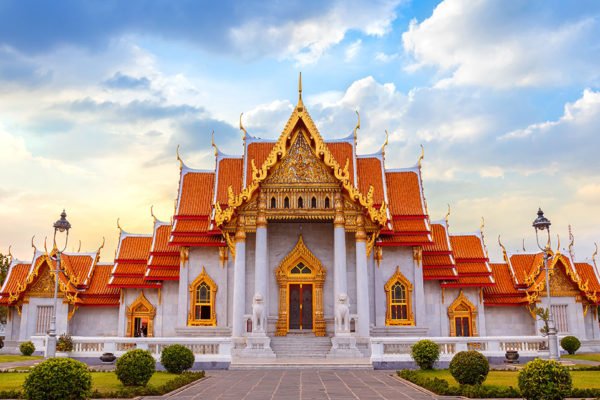
Tattoos in Thailand — What Every Traveler Needs to Know
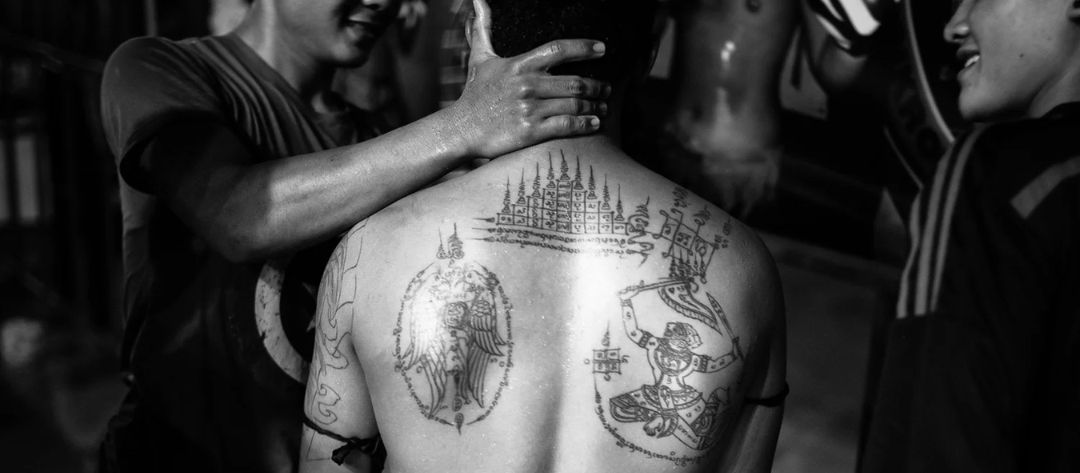
To visit Thailand and leave without tattoos in Thailand is to miss a window into its soul. These designs carry layers of belief, protection, and heritage that go far beyond the ink itself. Here, learn how this ancient art began, what it symbolizes and the customs every visitor should honor.
Tattoo Culture & Tradition in Thailand
What Is Sak Yant?
Sacred Tattoos Defined
The practice of Sak Yant goes far beyond the typical tattoo experience, it carries with it centuries of layered meaning and ritual. Tattoos in Thailand, specifically these sacred markings, blend art, spirituality and heritage in a way that sets them apart from pure decoration.
Sak Yant tattoos trace their roots to sacred geometry and mantras—a “yant” being a geometric or symbolic design, and “sak” meaning to tattoo. In their earliest forms they served as protective talismans for warriors. Over time, they came to incorporate Buddhist, Brahman and animist elements. Each tattoo thus becomes a vehicle for blessing, strength or protection.
Each Sak Yant carries a story in its lines and symbols, and understanding these designs reveals how deeply faith and artistry intertwine in tattoos in Thailand:
- The popular “Ha Taew” (five-lines) design features five vertical rows. Each is traditionally linked to a different life domain, such as protection from harm, reversal of bad luck, defence against curses, boost of fortune and increase of charm.
- The “Gao Yord” (nine peaks) design symbolises the nine peaks of Mount Meru and offers broad protection and spiritual authority.
- Animal motifs, mythical creatures and deities are also common (for instance twin tigers symbolise power, confidence and dominance).
Within each tattoo, the geometry, script (often in ancient Khmer or “Khom” script) and mantra (“kata”) work together: the shape channels spiritual energy, the script conveys the blessing, and the mantra activates the effect.
Traditionally, Sak Yant tattoos are applied by monks or specialised masters known as “ajarns” who receive training in spiritual ritual, mantra recitation and blessing the ink. The technique often uses long metal rods or hand-poked tools rather than standard tattoo machines.
Unlike decorative tattoos—chosen purely for visual appeal—Sak Yant are deeply rooted in intent, lineage, ritual and protocol. Wearing one often implies adherence to a moral code or certain conduct, and the spiritual effectiveness is believed to depend on that.
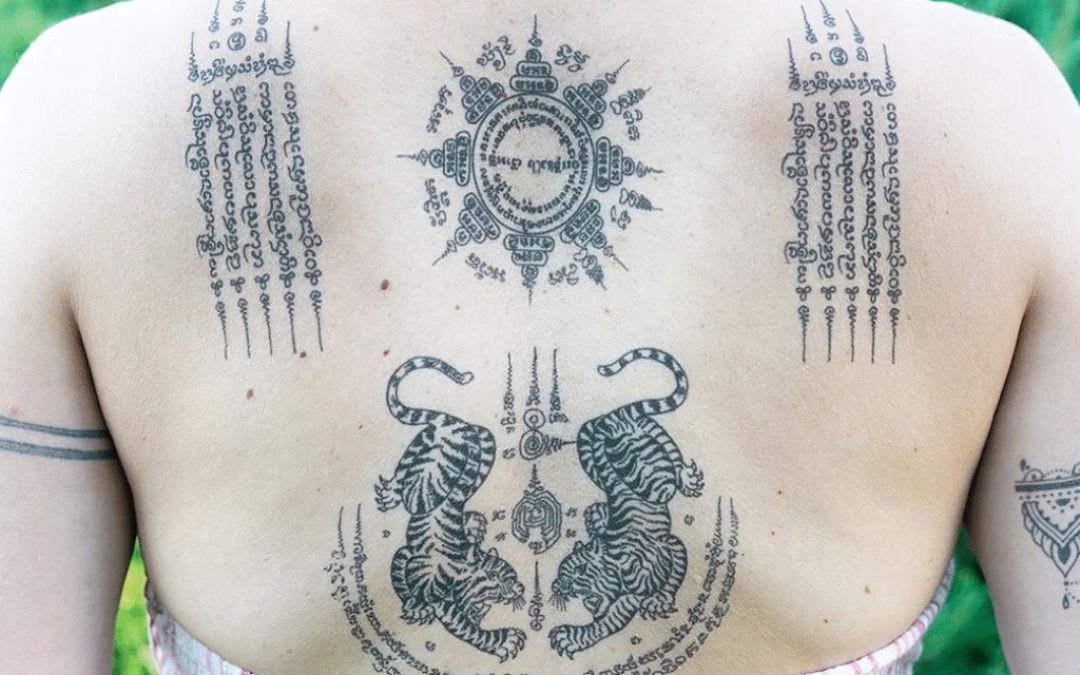
Twin tigers and sacred geometry create a robust Sak Yant design across this devotee’s back.
Is Sak Yant Safe for Foreigners?
Yes, but with some caveats. As with any tattoo, overall and tattoos in Thailand specifically, hygiene, licensing, and a reputable practitioner are vital. Also:
- Ensure the temple or studio is recognised and follows safe procedures (sterile needles, clean environment).
- Be aware of the cultural context: the tattoo carries spiritual significance for many Thais, so respectful behaviour is expected.
- Understand that the tattoo is more than a souvenir; it may come with expectations or codes of conduct. Failure to respect them could be seen as disrespectful or may affect how the tattoo’s blessing is perceived.
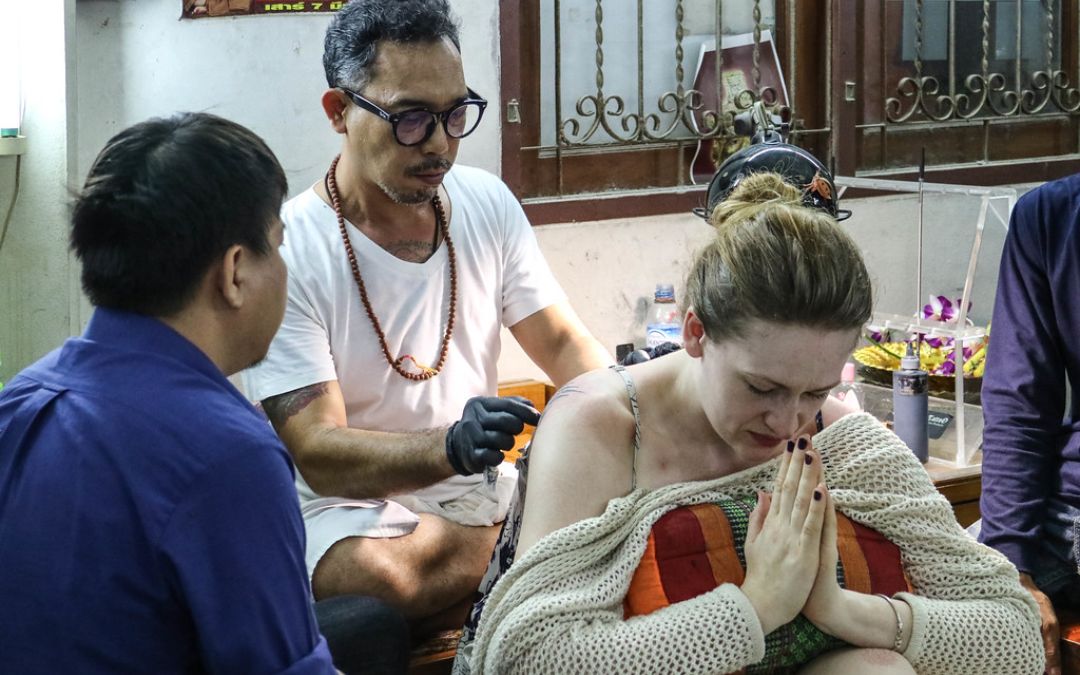
Hands clasped in prayer, a Western woman embraces the spiritual intensity of receiving her first Sak Yant tattoo.
>> Read More: Unlock Spiritual Thailand Temple Tours with The Best Stunning Places of Worship
Other Styles
- Modern (Machine) Tattoos
Modern machine tattoos in Thailand are the most common across this country’s studios, especially in cities like Bangkok and Chiang Mai. Using electric machines, artists can achieve precise lines, smooth gradients, and vivid colors — ideal for realistic or intricate designs. Prices usually start from tens of USD for small pieces and rise with size and detail. Sessions are typically hygienic and professional, with aftercare instructions similar to international standards.
- Bamboo (Traditional Tapping)
The bamboo or tapping method, once done with sharpened bamboo sticks and now often with metal rods, reflects centuries of Thai tattoo tradition. Each tap inserts ink by hand, creating bold black lines and slightly uneven textures that give the piece its soulful authenticity. While often linked to Sak Yant tattoos, some artists adapt the method for modern motifs. Costs may be framed as donations in temples or set fees at private studios. The ritual often feels slower and more spiritual than a machine session.
- Hand-Poke (Stick-and-Poke)
Hand-poke tattoos are created one dot at a time, without the use of machines, resulting in a raw, minimalist aesthetic. The process takes longer and depends entirely on the artist’s steadiness, making research crucial before booking. Prices vary widely — from affordable local options to premium boutique studios — but hygiene should always be the top concern. The style has become popular in tourist hubs for those drawn to its intimate, handcrafted feel.
Legal Rules & Safety You Must Know
Age, Licensing, Regulations
Tattooing in Thailand is regulated under the Public Health Act of 1992, which classifies tattoo services as a health business requiring registration and inspection. In Bangkok, the Metropolitan Administration (BMA) has intensified inspections, with officials targeting unlicensed studios and warning that only around 50 tattoo parlors in the city are properly certified. Operators caught without a license face fines up to 1,546 USD or six months in jail, along with mandatory closure.
New health regulations also require tattooists to undergo annual health checks, have medical clearance (to ensure they’re free of diseases like hepatitis or tuberculosis), and be knowledgeable about infection control and tool disposal.
As for age, most studios enforce a minimum age of 18, aligning with global tattoo regulations. Some local artists may require written parental consent for clients under a certain age, although licensed studios generally refuse to accept minors altogether.
Hygiene & Health Precautions
When choosing a studio or centre, verifying proper hygiene is essential:
- Ensure that new, sealed, single-use needles are removed from their packaging in front of you.
- Check that the studio uses fresh, clearly labelled ink, and that all surfaces and tools are properly sterilized or disposed of after each client.
- Ensure the artist wears disposable gloves, that your area is covered (e.g., with plastic wrap or clean wipes) and that ink cups are single-use.
- Understand risks: infection from unsterilised equipment, allergic reactions to dyes or ink chemicals, and cross-contamination of blood-borne viruses.
Aftercare in a Travel Context
When getting tattoos in Thailand, the tropical climate — humid, warm, and often sunny — affects tattoo healing in ways you may not encounter at home. To ensure proper recovery:
- Pack a basic aftercare kit: antibiotic or healing ointment (if recommended), non-stick dressings, and maybe a clean, breathable covering for nights.
- Keep the fresh tattoo out of direct sun, avoid heavy sweating or friction (common if exploring or hiking), and steer clear of saltwater swimming or putting dipped skin into dusty or dirty water for at least the first week.
- Expect some extra care: higher humidity may increase rthe isk of swelling or raised ink lines; dust or motorbike rides (as travellers often do) can expose the skin to irritants.
- Follow the artist’s aftercare instructions strictly: cleaning only as directed, avoiding scrubbing, and monitoring for signs of infection (redness, heat, prolonged oozing).
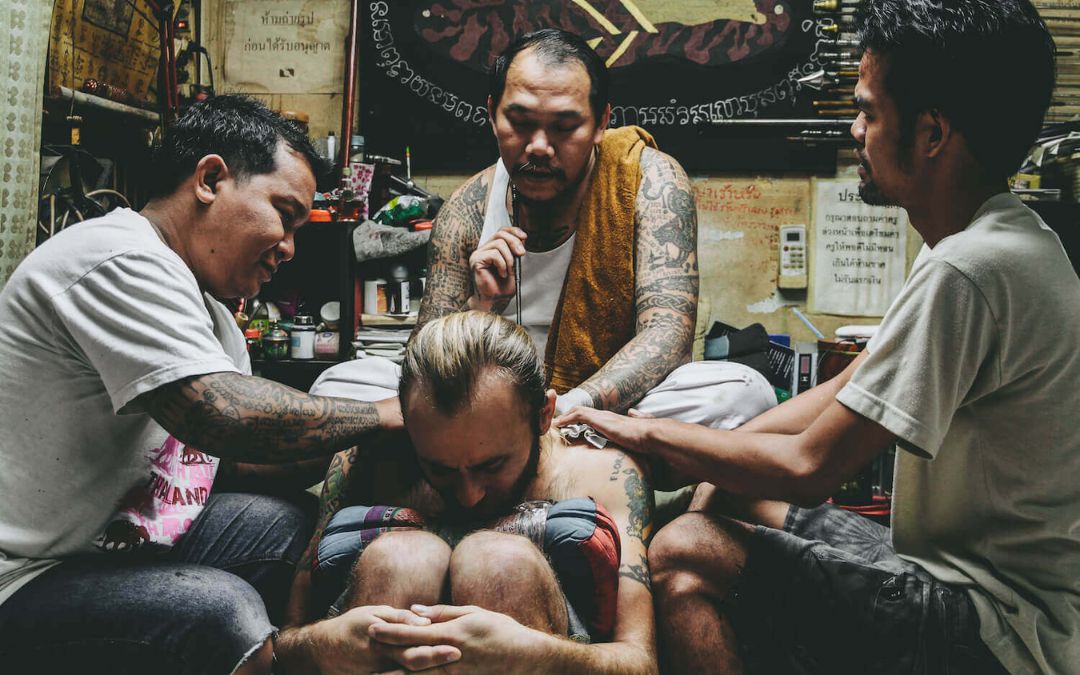
Three masters work in unison, demonstrating the precise hand-tapping technique that defines authentic Sak Yant tradition.
Cultural Etiquette & Respect
Religious/Sacred Imagery Rules
Regarding tattoos in Thailand, some symbols carry deep spiritual weight and are treated with, or restricted by, cultural and religious protocols:
- Designs featuring images of the Wat Bang Phra master Luang Phor Phern, deities, or Buddha-figures are often reserved for placements above the waist and on the back or shoulders, as designs below the waist (especially involving sacred or powerful imagery) can be considered disrespectful.
- Some temples or masters may refuse certain designs for foreigners or ask that deeper commitment to the spiritual precepts be demonstrated before being tattooed; not every visitor may be eligible.
- Wearing or displaying such tattoos comes with expectations: strict behavioural abstentions (known as khor haam) may apply, including refraining from certain foods, avoiding disrespectful gestures, and honouring the lineage of the tattoo master.
Disrespecting these rules—whether by placing sacred imagery in inappropriate locations, ignoring the behavioural codes, or treating the tattoo merely as a souvenir—can be seen as culturally insensitive and may undermine the ritual’s authenticity or invite blessing.
Towards Temples & Masters: Rituals, Behavior & Offerings
When receiving sacred tattoos in Thailand in a temple context, showing deference to the site and those who assist the ritual is essential:
- Arrive clean, dressed modestly (shoulders and knees covered), and remove shoes when entering sacred areas.
- Greet the master or monk with the traditional wai (hands pressed together, body slightly bowed) and maintain a position lower than the monk during the ceremony.
- Offer a respectful donation or offering tray (incense, flowers, candle) as part of the ritual process, which signifies acceptance of the lineage and the spiritual blessing about to be conferred.
- Photography, phones, and careless behaviour should be avoided during the ceremony — treat the temple not as a tourist attraction, but as an active place of ritual and devotion.
Ethical Considerations: Avoiding “Tattoo Tourism” Traps
When seeking out sacred tattoos in Thailand, travellers should beware of commercialised or culturally insensitive offerings:
- Avoid places that treat the experience purely as a “photo-op” or tourist spectacle, rather than as a sincere ritualic engagement with the tradition. Many reviews note instances where touts guide foreigners through quick, high-cost setups with little authenticity.
- Respect fair compensation: masters who maintain the lineage and perform the ritual should be paid appropriately — not simply bargain-hunted as though the experience were a commodity.
- Ensure the studio or temple is transparent about who the master is, what lineage they belong to, and whether the ritual aspect (blessing, mantra recitation) is legitimately included. This prevents the experience from becoming mere decoration.
Cost, Style & Where to Get Inked
Cost Breakdown: What Determines Price
When budgeting for tattoos in Thailand, several factors influence the cost. These include:
- Size & placement: Smaller, discreet tattoos cost less, while half-sleeves, full backs, or extensive colour work cost significantly more. For example, in the Bangkok studio, pricing starts from around 4.6-154 USD for very small designs (approximately 2-3 cm) and can range from 247-928 USD for half-sleeve designs.
- Design complexity & type: A simple black-ink line or script will cost less than a full colour piece with shading. Sacred tattoos in Thailand (such as a Sak Yant) carry their own pricing norms. At some temples or by masters, you may encounter donations or set fees ranging from tens of USD upward.
- Artist’s reputation and studio location: Highly regarded artists with international exposure often charge premium rates. Studios in tourist hubs or up-market areas will also cost more than locally tucked-away ones.
- Studio vs temple vs “ajarn” master: The setting affects pricing — commercial studios may charge hourly rates, whereas temple-based or spiritual master sessions may rely on donations or have special conditions. For example, one temple experience quotes small Sak Yant designs from around 257-216 USD in a guided context.
Here’s a breakdown of typical rates for tattoos in Thailand to help plan your budget:
- Bangkok: Small, minimalist tattoos typically start around 46–77 USD, mid-sized palm- or hand-size designs from about 93–278 USD, and half-sleeves or large custom pieces may range from 247–928 USD or more.
- Chiang Mai: Some studios offer very modest starting prices for small machine tattoos at around 31 USD. For authentic sacred tattoo experiences (e.g., with a master or monk) you’ll often see pricing from around 62–108 USD upward for medium size.
- Phuket: Studios advertise simple designs from about 31 USD as the lowest tier, while large, detailed, full‑sleeves or complex colour work can escalate significantly (even hundreds of USD).
Studio vs Temple vs Ajarn — Which to Choose Based on Your Priorities
Each type of setting for tattoos in Thailand offers a different experience and should be chosen based on what matters most to you: artistry, spiritual meaning, budget or authenticity.
- Commercial studio: Best if you prioritise artistic diversity, hygiene standards, professional consultation and wider stylistic options (colour, realism, custom designs). Expect standard booking, clear pricing, and after-care guidance.
- Temple or sacred master (ajarn/monk): Ideal if the aim is spiritual significance and ritual. The experience may include blessings, traditional tools (hand-poke, tapping), and cultural immersion, but aesthetic options may be more limited and pricing/conditions less transparent.
Studios may allow for faster turnaround and flexible scheduling; temples often require specific timing (temple hours, offerings, waiting) and may insist on certain behaviors or preconditions (rituals, abstentions). If budget is a core concern, smaller studios or simpler designs cost less, but if authenticity is your aim, then temple or master sessions may carry extra value beyond the ink.
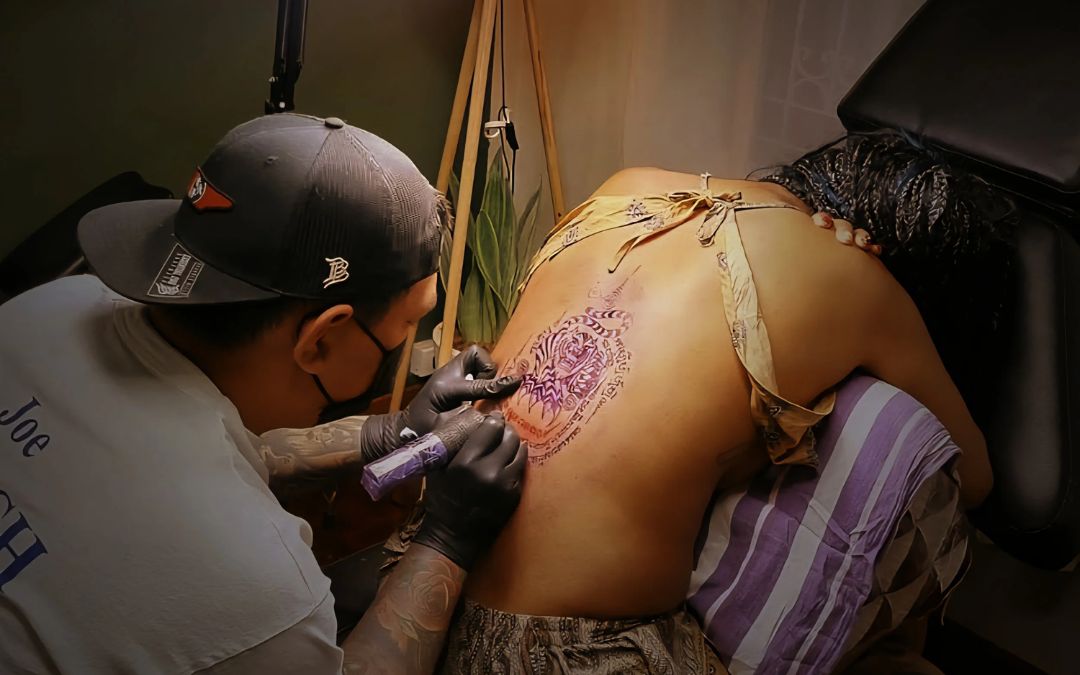
Under focused lamplight, a modern Sak Yant studio blends traditional sacred art with contemporary tattooing equipment.
Top Cities & Studios to Consider
ALL DAY Tattoo (Bangkok)
- Address: 710/4 Sukhumvit Road, Phrom Pong, Bangkok 10110.
- Hours: Typically open every day from 12:00 to 20:00.
- Known for: Premium international‑level artists, Western‑style hygiene standards, custom colour & realism work.
Bangkok Tattoo Studio 13 (Bangkok)
- Address: 231/12 Sukhumvit 101 Rd, Punnawithi Soi 7, Bang Chak, Phra Khanong, Bangkok 10260.
- Hours: Monday–Saturday from 10:00 to 20:00 pm (booking recommended), sometimes 24‑hour by appointment.
- Known for: Private studio focusing on black ink/blackwork, with an emphasis on Sak Yant understanding and discreet sessions.
>> Read More: Bangkok Travel Guide – Your Essential Companion to the Heart of Thailand
Bloodline Tattoo (Chiang Mai)
- Address: 25/4 Loi Kroh Road, Chang Klan, Mueang Chiang Mai District, Chiang Mai 50100.
- Hours: Open 7 days a week, from 11:00 to 23:00.
- Known for: Established studio well‑rated among locals/expats, offers clean lines, fine work and a comfortable environment.
Celebrity Ink (Chiang Mai)
- Address: 44/2 Loi Kroh Rd, Tambon Chang Khlan, Mueang Chiang Mai, Chiang Mai 50100.
- Hours: Daily from 10:30 to 24:00 .
- Known for: A larger chain with strong hygiene standards, many style options and good accessibility for travellers.
Inked Machine Tattoo Studio (Phuket)
- Address: 1/19 Soi Dr Watthana, Patong Beach, Kathu District, Phuket 83150.
- Hours: Daily from 11:00 – 20:00 .
- Known for: Popular studio in the heart of Patong Beach offering broad style options and more tourist‑friendly environment.
Kayo Tattoo Studio (Phuket)
- Address: 72/7 Sainamyen Rd, Pa Tong, Kathu District, Phuket 83150.
- Hours: Daily from 10:00 – 20:00.
- Known for: Award‑winning artists, wide style range including traditional Thai, sak yant and fine line; central and visible location.
Temples known for Sak Yant
Wat Bang Phra
- Address: Moo 3, NTD.4014 Bang Phra, Nakhon Chai Si District, Nakhon Pathom 73120.
- Hours: Open daily from 6:00 to 23:00.
- Known for: One of the most famous temples for authentic Sak Yant tattoos with monks/ajarns offering rituals and blessings.
Wat Bang Nom Kho
- Address: Bang Nom Kho, Sena District, Phra Nakhon Si Ayutthaya Province, Thailand.
- Hours: Typical temple hours are around 8:00 – 17:00 .
- Known for: While primarily known for its amulets and the lineage of Luang Pho Parn, it is also referenced in Sak Yant‑related literature as a place of traditional yantra work and sacred tattoos.
Wat Phrathat Cham Muang
- Address: Located approximately 60 km south of Chiang Rai and about 30 km north of Phayao, Thailand.
- Hours: Not strictly published; visit by arrangement.
- Known for: A more “old school” Sak Yant experience in a forest‑temple setting, by a monk known as Monk Rachon. The location appeals to those looking for ritual depth and less tourist‑heavy contexts.
How to Plan Your Tattoo Day During Your Trip
Making your experience of tattoos in Thailand smooth and meaningful requires some travel-specific planning and preparation.
- Choose the day of the week and time: For temple sessions, arrive early (morning) to avoid long waits. Studios may book slots in advance so plan at least one day ahead. For a busy tourist area, early morning or a weekday offers fewer crowds.
- Bring essentials: Valid ID (passport/photo ID) for studio check-in, cash for deposit or payment, and if visiting a temple bring a small offering (incense, candles, flowers) or confirm ahead what is expected.
- Pack an aftercare kit: Since you’ll be travelling, include mild soap, non-stick dressing, healing ointment (approved by artist), and ensure you’ll have a clean place to rest after the session (especially if the tattoo is large).
- Factor travel between locations: If moving between hotel, studio or temple, allow extra time for transit, account for possible traffic delays (especially in Bangkok), and avoid scheduling major transport immediately after a session if you need to rest in the inked area.
- Wear appropriate clothing: For temples, select modest attire (shoulders and legs covered), and in studios, wear clothes that allow easy access to the placement area. Also consider the weather: Thailand’s heat and humidity mean you’ll want breathable fabrics and avoid tight covers over fresh work.
- Allow for healing downtime: Plan lighter activities the day of and the following day — avoid heavy sweating, beach sun exposure or dusty excursions immediately after getting the tattoo. This ensures the healing process isn’t interrupted.
Risks & How to Avoid Regret
Common Issues to Watch For
- Allergic Reactions: Even high-quality inks can trigger skin reactions, particularly with vibrant colors or pigment additives. Red, yellow, and blue inks are the most common culprits.
- Design Regret: Choosing a design hastily or without full understanding of its cultural or personal meaning can lead to dissatisfaction later. Sacred designs like Sak Yant carry symbolic weight that might not align with individual beliefs.
- Healing Complications: Tropical humidity, sun exposure, and travel activities can interfere with proper healing, leading to infections or uneven lines.
- Social Perception: Tattoos, especially large or prominent ones, may elicit different reactions in professional or social environments back home.
Testing and Thoughtful Planning
- Start Small: Consider beginning with a smaller design or temporary tattoo to assess comfort with pain, style, and personal resonance.
- Location Considerations: Placement affects both visibility and long-term satisfaction. Areas frequently exposed to sunlight or friction may fade faster and require touch-ups.
- Meaning and Longevity: Reflect on the cultural significance, symbolism, and personal relevance of the design before committing to a permanent piece.
Practical Exit Strategies
- Removal Options: Laser removal is effective but costly, can be painful, and often requires multiple sessions. Understanding this in advance helps manage expectations.
- Cover-Ups and Modifications: A poorly executed or regretted tattoo can be concealed or creatively incorporated into a new design by a skilled artist.
- Fading and Adjustment: Some colors fade naturally over time; intentional fading or touch-ups can reshape the tattoo’s appearance.
- Professional Consultation: Seek advice from reputable artists before starting a design, particularly for complex or culturally significant tattoos.
Final Words
Tattoos in Thailand carry far more than aesthetic appeal, they embody rich cultural and spiritual significance that sets them apart from tattoos in other countries. Each design, from intricate Sak Yant to modern studio art, is tied to traditions, rituals, and careful symbolism. Understanding the rules, respecting temple customs, and choosing the right artist are essential steps for anyone looking to experience these sacred markings responsibly.
For travelers ready to explore this unique aspect of Thai culture, firsthand experience offers insight that goes beyond observation. To see it up close and even participate safely in this living tradition, contact Asia Pioneer Travel to plan a journey to Thailand that blends cultural discovery with personal expression.
Tours You might like
 Best Seller
Best of Thailand
 Best Seller
Essential Thailand