

When planning a trip to Cambodia, one of the first questions to understand is Cambodia currency. The official currency is the Cambodian riel (KHR), but US dollars are also widely used, creating a practical dual-currency system for travelers. Knowing when to use riel, when USD is more convenient, and how to handle change can make everyday spending much easier. This guide explains Cambodia’s currencies, banknotes, prices, ATMs, digital payments, tipping, and essential money tips, helping you prepare your travel budget and feel more confident before your trip.
Understanding Cambodia’s Dual Currency System (USD & Riel)
What is the Official Currency of Cambodia?
The official currency of Cambodia is the Cambodian riel (KHR), but US dollars (USD) are also widely used in everyday transactions. USD became common in Cambodia during the 1990s, as the economy reopened and international trade and investment increased.
Today, both currencies are used side by side, but each has a practical role. US dollars are commonly used for larger payments, such as hotel stays, tour packages, Angkor Pass tickets, and restaurant bills. The riel Cambodian currency is more convenient for everyday purchases, including bottled water, street food, tuk-tuk rides, and small change.
Practical Exchange Rates and Quick Conversion Tips
A commonly used local conversion rate is 1 USD = 4,000 KHR, although exchange rates may vary slightly between businesses and money changers.
For quick mental calculations, divide the amount in riel by 4,000 to estimate its value in US dollars. For example, 20,000 KHR is approximately 5 USD.
When paying in US dollars, you may receive change in riel. Carry small, clean USD notes and some riel for everyday spending, as shops may not accept damaged or heavily worn dollar bills.
All Banknote Denominations: Cambodian Riel & US Dollar
Cambodian Riel Banknote Breakdown
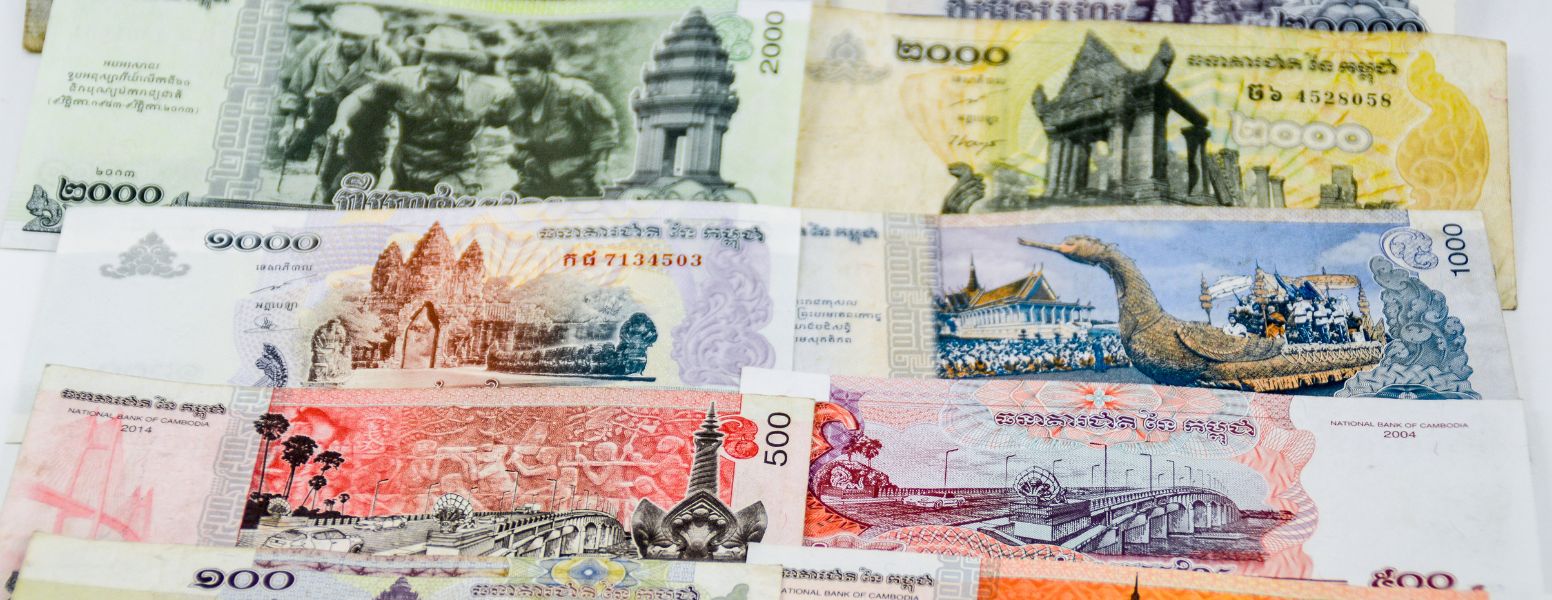
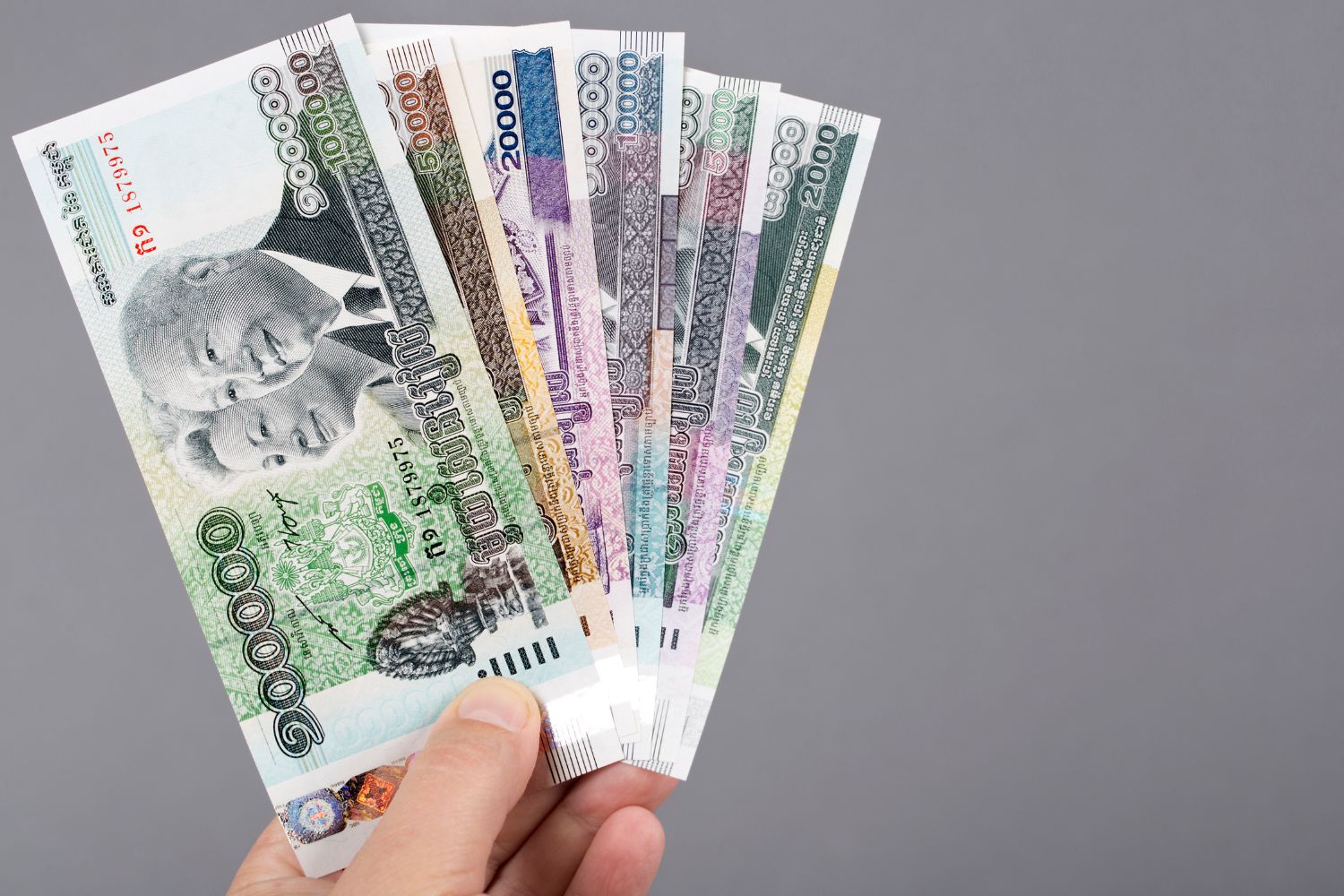
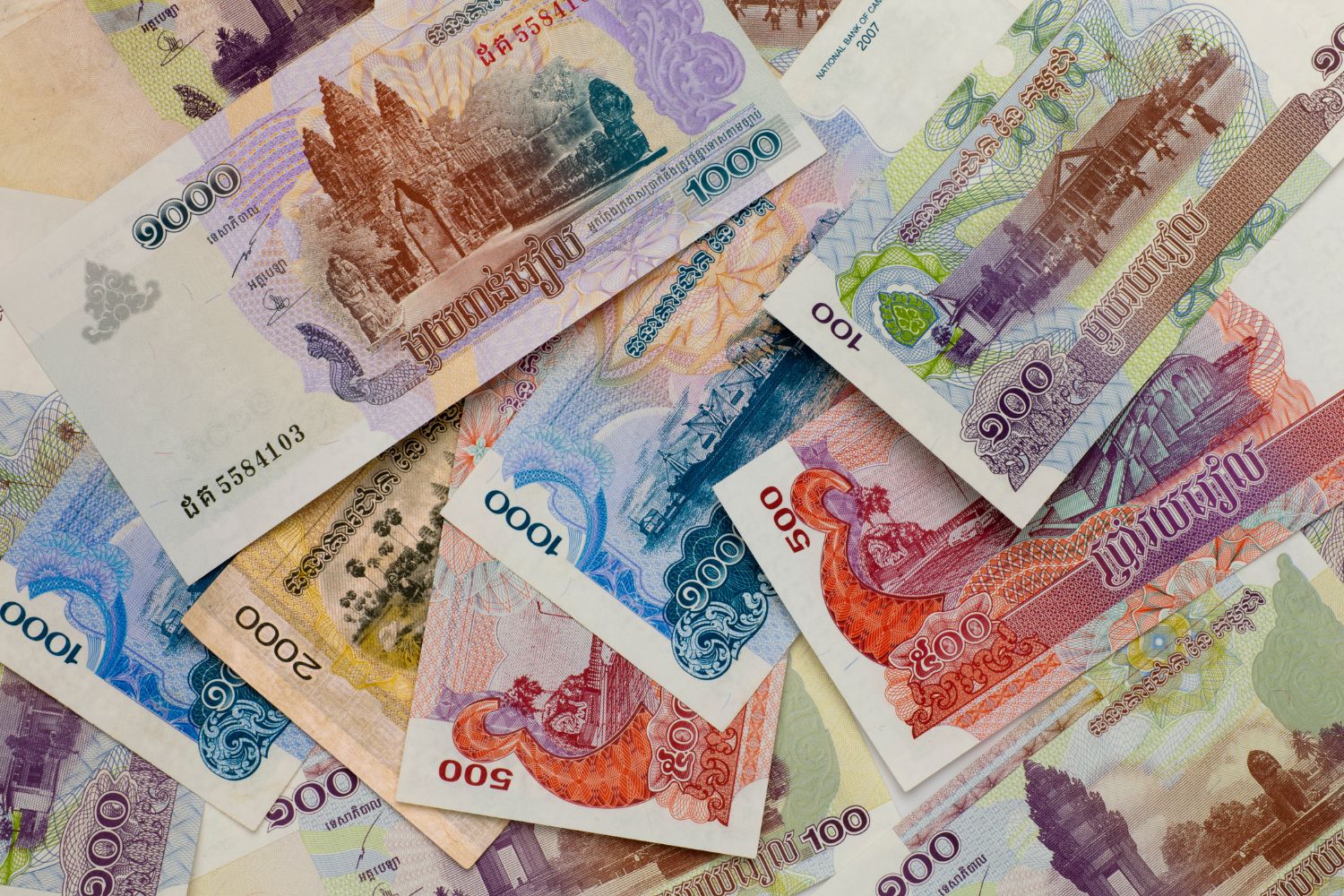
Cambodian currency banknotes come in several denominations, from small notes for everyday purchases to larger notes for bigger payments. The National Bank of Cambodia lists denominations ranging from 100 to 200,000 KHR.
- Small notes (100, 500, 1,000 and 2,000 KHR): Useful for small purchases, such as bottled water, Cambodia street food, parking, and tuk-tuk rides.
- Medium notes (5,000, 10,000, 15,000 and 20,000 KHR): Practical for everyday spending, including meals and local transport.
- Large notes (30,000, 50,000, 100,000 and 200,000 KHR): Better suited to larger payments. You may use these less often for routine tourist purchases.
Keep some small riel notes handy, as they are useful when paying in cash and receiving change.
US Dollar Banknote Rules and Preferences
US dollars remain widely used in Cambodia, particularly for larger payments and tourist services. However, the condition and denomination of your notes matter.
- Useful denominations: $10, $20 and $50 notes are practical for hotel bills, restaurants, and other travel expenses.
- Small notes: Cambodia phased out the circulation of $1, $2 and $5 bills in 2020 as part of efforts to encourage the use of riel. Riel is therefore a practical choice for small purchases and change.
- Note condition: Bring clean, undamaged US dollar notes. Some businesses may refuse notes that are torn, marked, or heavily worn.
Why Coins Are Not Commonly Used in Cambodia
Cash transactions in Cambodia mainly use banknotes, and coins are rarely encountered in everyday spending.
The country’s history, including the collapse of its banking and monetary system during the Khmer Rouge period, contributed to the development of a cash economy based largely on paper money. Today, travelers should rely on riel and US dollar banknotes rather than expecting to use coins.
Basic Prices and Daily Travel Costs in Cambodia
Everyday costs in Cambodia are generally affordable, and the common 1 USD ≈ 4,000 KHR conversion makes prices easy to estimate. Here are some typical prices travelers may encounter:
- Bottled water: 1,000 – 2,000 KHR ($0.25 – $0.50)
- Fresh coconut or local coffee: 3,000 – 6,000 KHR ($0.75 – $1.50)
- Short tuk-tuk ride: 4,000 – 8,000 KHR ($1 – $2)
- Local meal or street noodles: 6,000 – 12,000 KHR ($1.50 – $3)
- Mid-range restaurant meal: around $8 – $20 per person
- Angkor Pass: $37 for 1 day, $62 for 3 days, or $72 for 7 days
Prices can vary depending on the city, location, and type of service. Tourist areas such as Siem Reap and Phnom Penh may cost more than smaller towns.
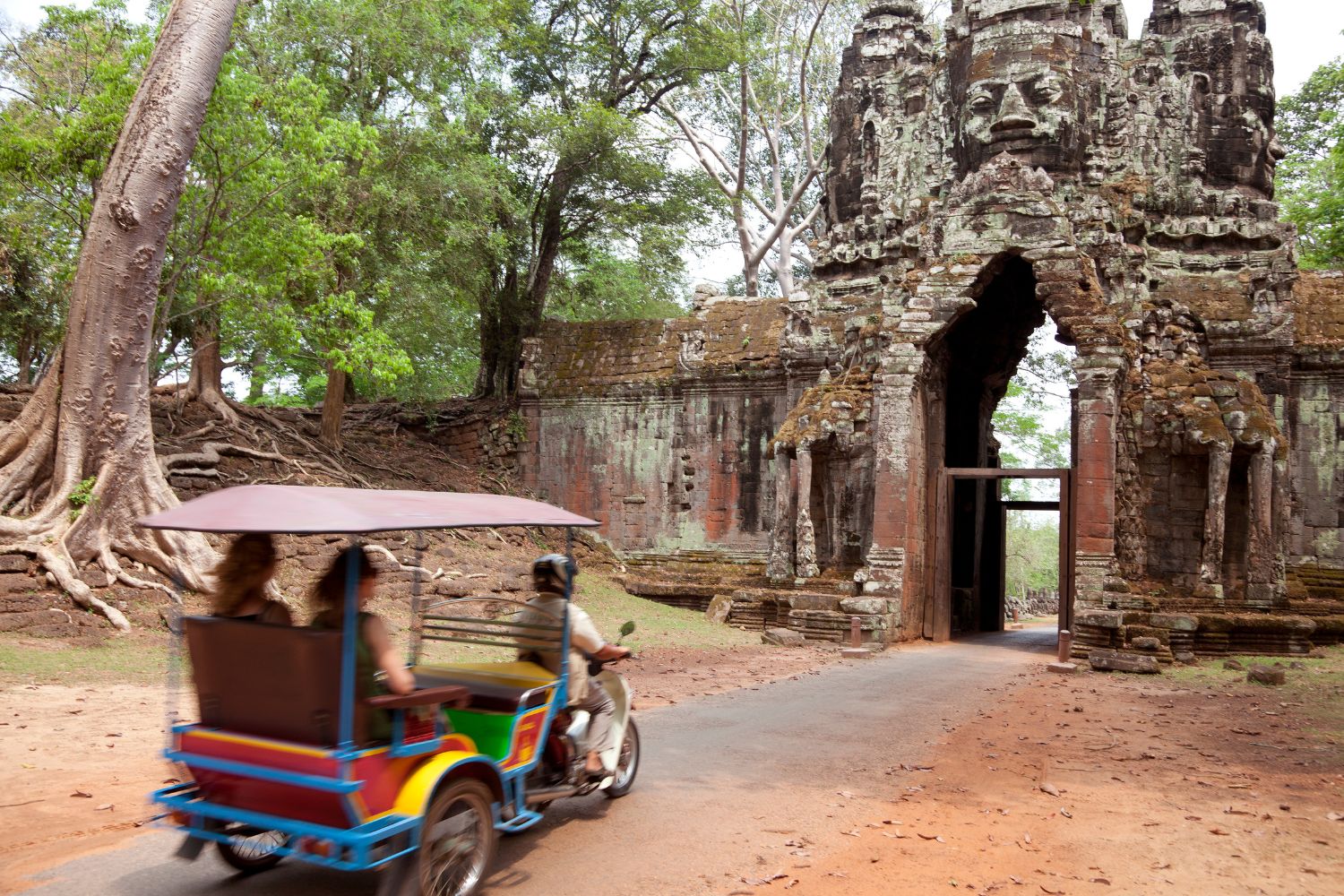
If you travel on a package tour, many of your larger expenses are usually paid in advance. Hotel stays, airport transfers, entrance tickets, and included meals may already be covered.
For a typical package trip, carrying around $150 – $300 in cash can be a reasonable backup for personal spending. You can use it for tips, souvenirs, drinks, meals outside the itinerary, and other optional activities.
Keeping some riel for small purchases also makes everyday transactions easier.
Strict Rules for Using US Dollars in Cambodia
Unacceptable Conditions for USD Banknotes
Cambodian businesses can be very particular about the condition of US dollar notes. Even small marks or damage may cause a shop to refuse a bill.
- Bring clean, crisp notes without tears, tape, heavy creases, ink marks, or large stains.
- Check your change before leaving a shop, especially when receiving US dollars.
- If a note looks damaged, use riel instead or ask for another payment option.
This is particularly important for travelers carrying US dollars from home. A bill that is accepted in another country may not be accepted by a Cambodian shop.
Rules for Handling Change and Small Bills
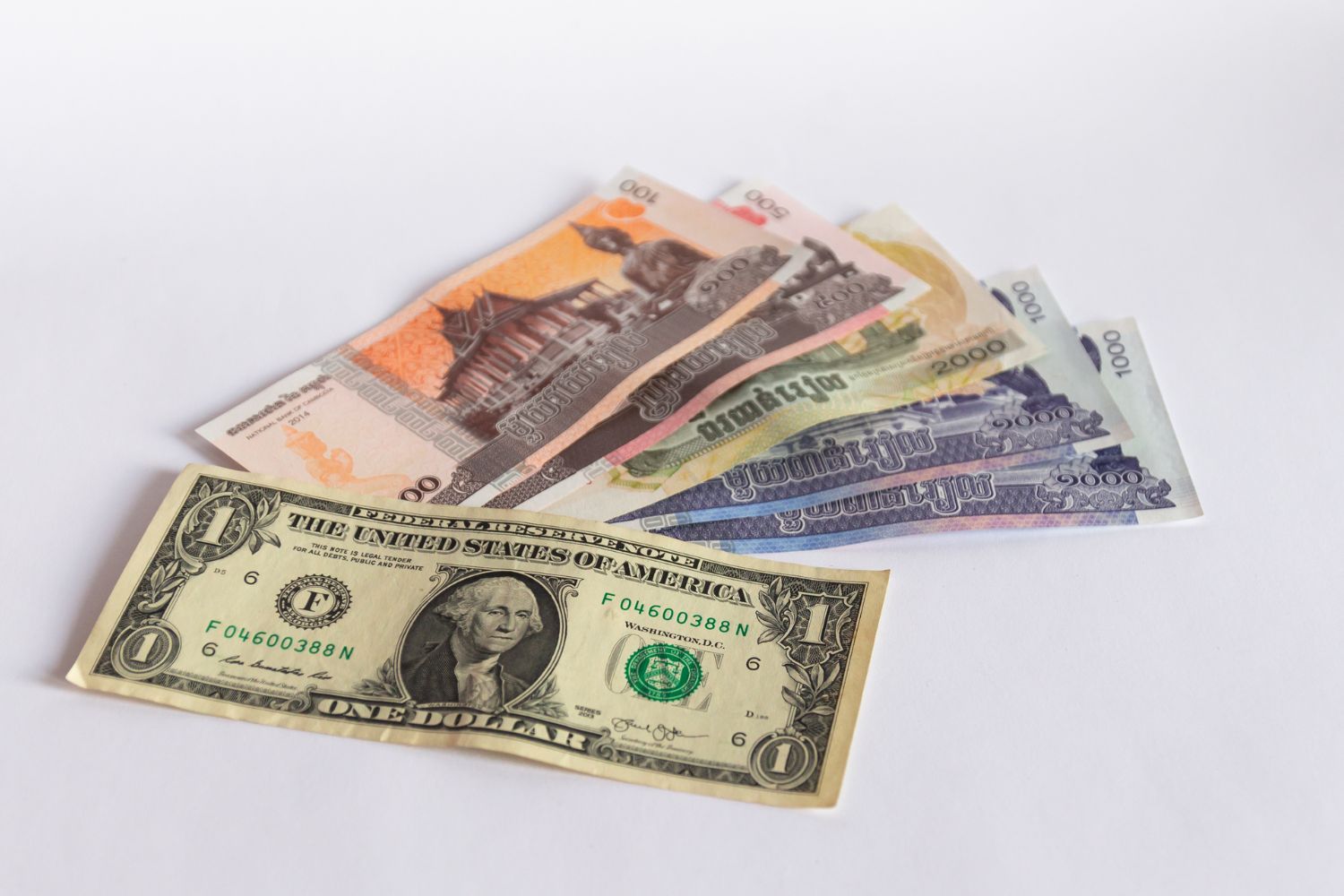
When you pay in USD, change may be given in Cambodian currency – riel, especially for smaller amounts. For example, if a bill costs $3 and you pay with $10, the seller may return the balance in riel.
This is useful rather than inconvenient. Keep the riel you receive and use it for small expenses such as water, snacks, tuk-tuk rides, and tips.
For everyday travel, a mix of small USD notes and Cambodian riel is usually the easiest way to pay.
ATMs, Cash Withdrawals, and Cambodia Money Exchange Tips
Best ATM Withdrawal Practices and Bank Fees
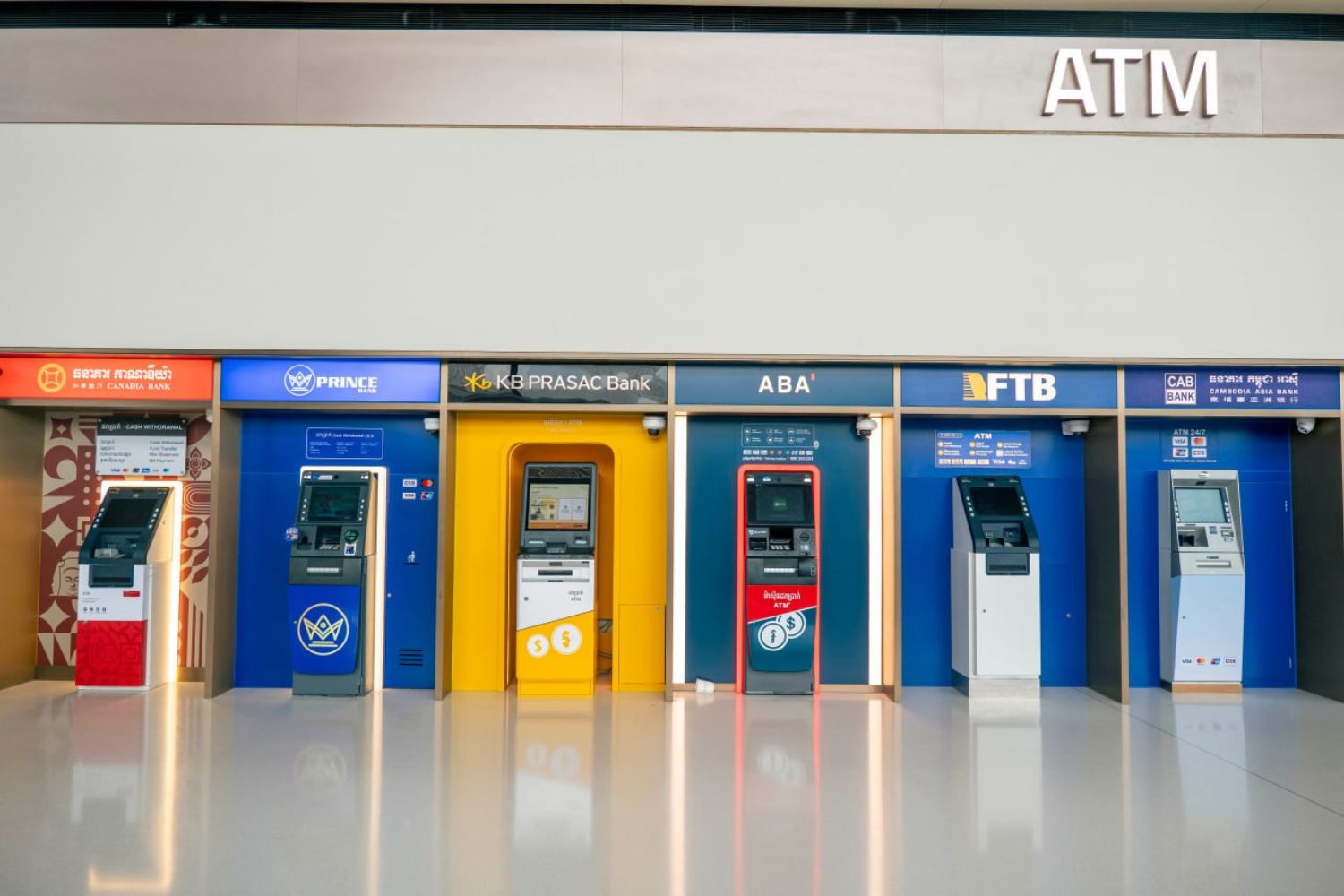
ATMs are widely available in major tourist destinations such as Phnom Penh, Siem Reap, and Sihanoukville. Many machines accept international Visa and Mastercard cards, and some allow you to choose between USD and Cambodian riel. For example, ABA Bank ATMs support both currencies and accept Visa, Mastercard, UnionPay, and JCB cards.
ATM fees vary by bank and card. As an example, ABA’s own debit cards can withdraw cash from ABA ATMs without an operational ATM fee, while withdrawals from other banks’ ATMs can incur 2% of the amount, with a minimum of $5. Your home bank may also charge a foreign transaction or cash withdrawal fee.
A few practical tips can help you avoid unnecessary costs:
- Withdraw less often: If your bank or ATM charges a fixed fee, taking out a larger amount at once can reduce the cost per transaction.
- Choose riel when available: Riel is useful for small purchases and avoids the need to carry large USD notes.
- Carry some backup cash: ATMs are less reliable in remote areas and on smaller islands, so withdraw enough before leaving major cities.
How and Where to Exchange Money Safely
You do not need to exchange a large amount of Cambodian money before arriving. USD and riel are both widely used in Cambodia, so many travelers simply bring some clean USD and get riel through ATM withdrawals or change received from purchases.
If you need to exchange foreign currency, use a bank or established money changer rather than an informal street exchange. Compare the displayed rate and count your money before leaving the counter.
Digital Payments: Bakong Tourist App and KHQR Standard
The Rise of the KHQR Payment Network
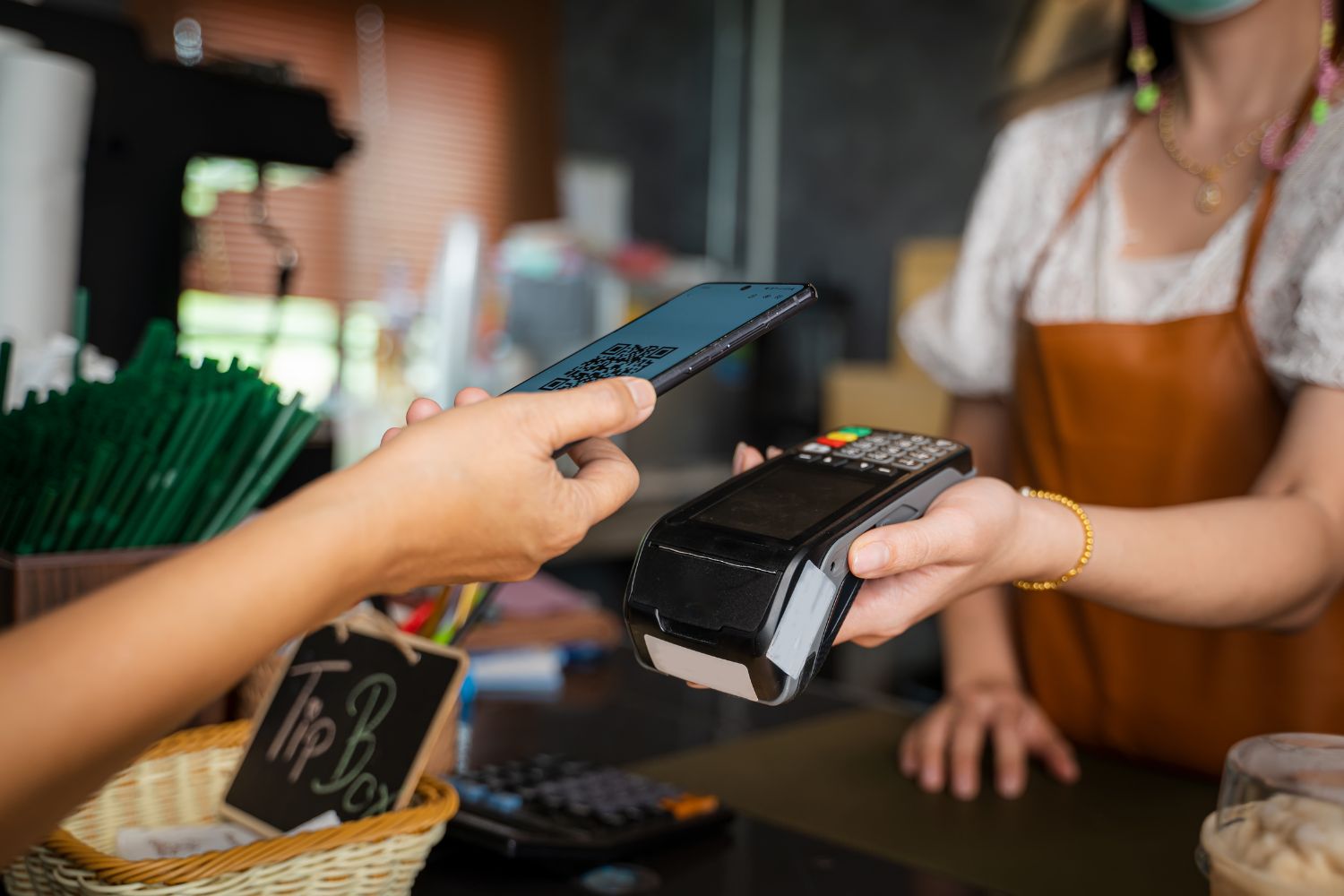
Cambodia’s digital payment system has grown rapidly through Bakong, a payment platform developed by the National Bank of Cambodia. Its national KHQR standard allows customers to make payments by scanning a QR code.
According to the National Bank of Cambodia, around 4.5 million merchants were registered to use KHQR. This includes businesses across major cities and tourist destinations, making QR payments increasingly common for everyday purchases.
For travelers, KHQR can be especially useful for small payments. It reduces the need to carry lots of cash or find exact change, although keeping some riel and USD is still a good backup.
Setting Up and Using the Bakong Tourist App
The Bakong Tourist App was officially launched in January 2025 to make digital payments easier for international visitors. Tourists can download the app, register, and link an eligible Visa card issued in their home country.
The basic process is simple:
- Download and register: Create a Bakong Tourist account through the official app.
- Link a card: Connect an eligible Visa or Mastercard and transfer money into the Bakong account.
- Scan KHQR: Use the app to scan KHQR codes at participating merchants.
- Manage your balance: The app supports payments in both riel and USD and allows users to exchange between the two currencies.
Cross-border QR payments are also expanding. Cambodia now has payment links with several neighboring and regional markets, including Thailand, Malaysia, Laos, India, and others, allowing eligible travelers to use participating home-country payment apps at Cambodian KHQR merchants.
For most tourists, the best approach is to treat digital payment as a convenient backup rather than a complete replacement for cash. Keep some riel and clean USD notes with you, especially when traveling outside major cities.
Tipping Culture and Useful Financial Tips for Travelers in Cambodia
Tipping Etiquette Across Different Services
Tipping is not traditionally mandatory in Cambodia, but it is widely appreciated in the tourism and service industries. Here are some common guidelines:
- Tour guides: $10 – $20 per day for a full-day tour, depending on service quality, group size, and overall experience.
- Tour drivers and tuk-tuk drivers: Round up the fare for a short tuk-tuk ride. For a full-day driver or tuk-tuk, $2 – $5 per day is a reasonable tip.
- Restaurants and cafés: If no service charge is included, around 10% of the bill is a common guideline. For casual meals, simply rounding up is also fine.
- Hotel housekeeping: Around $1 – $2 per night is a practical amount, usually left in the room before checkout.
- Currency for tips: Use USD for larger tips and Cambodian riel for smaller ones. Avoid foreign coins, as they are generally difficult to use locally.

Essential Money Safety and Travel Tips
- Split your cash: Keep some money in your wallet and some in a separate secure place instead of carrying everything together.
- Keep small riel notes: They are useful for drinks, snacks, tuk-tuks, tips, and other small purchases.
- Check USD change carefully: Look at every US dollar note you receive before leaving the shop. Torn, marked, or heavily worn notes may be difficult to spend later.
- Use riel for small payments: Smaller purchases are often easier to pay for in riel than with larger USD notes.
- Spend leftover riel before departure: Riel is primarily useful inside Cambodia, so use most of your remaining cash before leaving. Do not assume it will be easy to exchange outside the country.
- Keep emergency cash separate: Even if you mainly use cards or QR payments, carry some cash when traveling outside major cities.
Frequently Asked Questions (FAQs)
1. What is the official currency of Cambodia?
The Cambodian riel (KHR) is Cambodia's official currency and legal tender. The US dollar is also widely used, especially for tourism, hotels, restaurants, and larger transactions.
2. Do I need to exchange money into Cambodian riel before traveling?
No. You do not need to exchange a large amount of riel before your trip. Bring some clean US dollar notes, withdraw riel from ATMs after arrival, and keep the riel you receive as change from everyday purchases.
3. Why are damaged or torn US dollar bills rejected in Cambodia?
Cambodian businesses can be particular about the condition of US dollar notes. Torn, heavily worn, marked, or taped bills may be refused because businesses can have difficulty depositing or passing them on.
4. Can tourists use digital payments in Cambodia?
Yes. International visitors can use the Bakong Tourist App to link an eligible Visa or Mastercard, transfer funds, and scan KHQR codes at participating merchants. The National Bank of Cambodia says the system covers approximately 4.5 million merchant locations.
5. What should I do with remaining Cambodian riel at the end of the trip?
Try to spend most of your remaining riel before leaving Cambodia. You can use it for meals, drinks, souvenirs, local transport, or tips. For larger amounts, you can also look for a reputable money changer rather than assuming the currency will be easy to exchange after departure.
Final Thoughts on Cambodia Currency
You can use Cambodian riel for small everyday purchases and US dollars for many larger expenses. Keeping a mix of both, along with some cash and a digital payment option, will make your trip more convenient.
With your money basics sorted, you can focus on enjoying Cambodia’s temples, food, culture, and local experiences. If you want a smoother trip with transportation, accommodation, and activities arranged for you, Asia Pioneer Travel can help plan your Cambodia journey from start to finish.