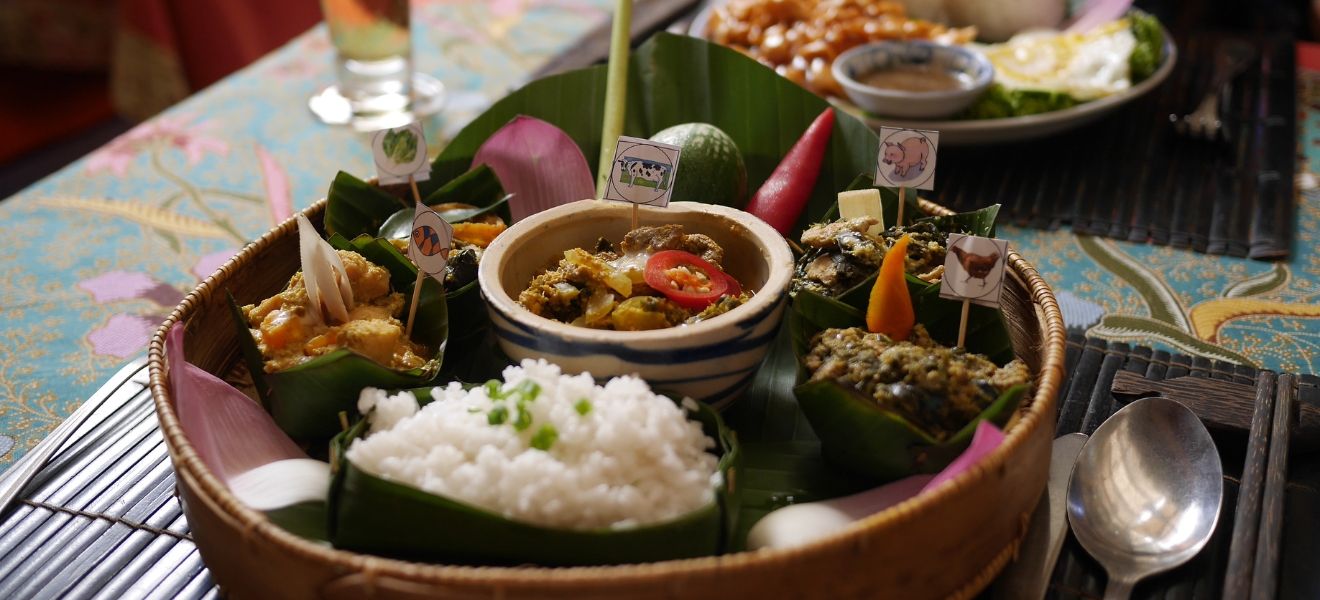


Khmer cuisine offers a distinctive taste of Cambodia, shaped by fresh herbs, fermented ingredients, palm sugar, and centuries of culinary traditions. Often milder than Thai food, Khmer cuisine focuses on balanced flavors rather than intense heat. Local specialties range from creamy Fish Amok and peppery Beef Lok Lak to comforting noodle soups and rich curries. Beyond famous dishes, exploring Khmer cuisine also means discovering local markets, traditional cooking methods, and regional ingredients. This guide covers what to eat, where to try it, and the flavors that define Cambodian food.
What is Khmer cuisine? Understanding Cambodia’s Flavors
Khmer cuisine is known for its mild but complex flavors, built around fresh herbs, spices, fermented ingredients, and palm sugar. Several key ingredients give Cambodian food its distinctive character.
1. The Balance of Four Key Flavors
Khmer dishes often combine salty, sweet, sour, and spicy flavors, but they are usually more balanced than intensely spicy.
- Salty: Fermented fish paste, fish sauce, and salt add depth and umami.
- Sweet: Palm sugar gives dishes a gentle sweetness with light caramel notes.
- Sour: Tamarind, lime, and other sour ingredients add freshness and balance.
- Spicy: Fresh or dried chilies are often served separately, allowing diners to adjust the heat.
2. Traditional Ingredients That Define the Taste
Several traditional ingredients give Khmer cuisine its distinctive balance of earthy, savory, sweet, and aromatic flavors:
- Kroeung: One of the most important flavor bases in Khmer cooking. This fresh spice paste commonly combines lemongrass, turmeric, galangal, garlic, shallots, and kaffir lime leaves. It gives dishes a fragrant, earthy aroma without relying heavily on chili.
- Prahok: Fermented fish paste and a major source of umami in Cambodian cuisine. It is often used in soups, sauces, stews, and other savory dishes to create a deeper, saltier flavor.
- Palm sugar: Made from the sap of sugar palm trees, it has a softer sweetness and more caramel-like flavor than refined white sugar.
- Tamarind and coconut milk: Tamarind adds acidity, while coconut milk creates richness in dishes such as curries and fish amok.
- Fresh herbs and vegetables: These add freshness, fragrance, and texture, helping balance the richer flavors of fermented fish and spice pastes.
3. How Cambodian Food Differs from Thai and Vietnamese
Khmer cuisine shares ingredients and cooking traditions with its neighbors, but its flavor profile is distinct.
- Compared with Thai food: Khmer dishes are generally less intensely spicy. They rely more on aromatic ingredients such as lemongrass, turmeric, and galangal.
- Compared with Vietnamese food: Khmer cooking makes greater use of fermented fish paste and spice pastes such as kroeung, creating deeper savory flavors.
- Compared with both: Palm sugar, prahok, and kroeung are especially important in defining the distinctive taste of Cambodian cuisine.
Traditional Cambodian Food: Iconic Dishes You Must Try
These iconic Cambodian dishes highlight the ingredients and flavors that make Khmer cuisine different from its neighbors.
1. Fish Amok (Amok Trey)
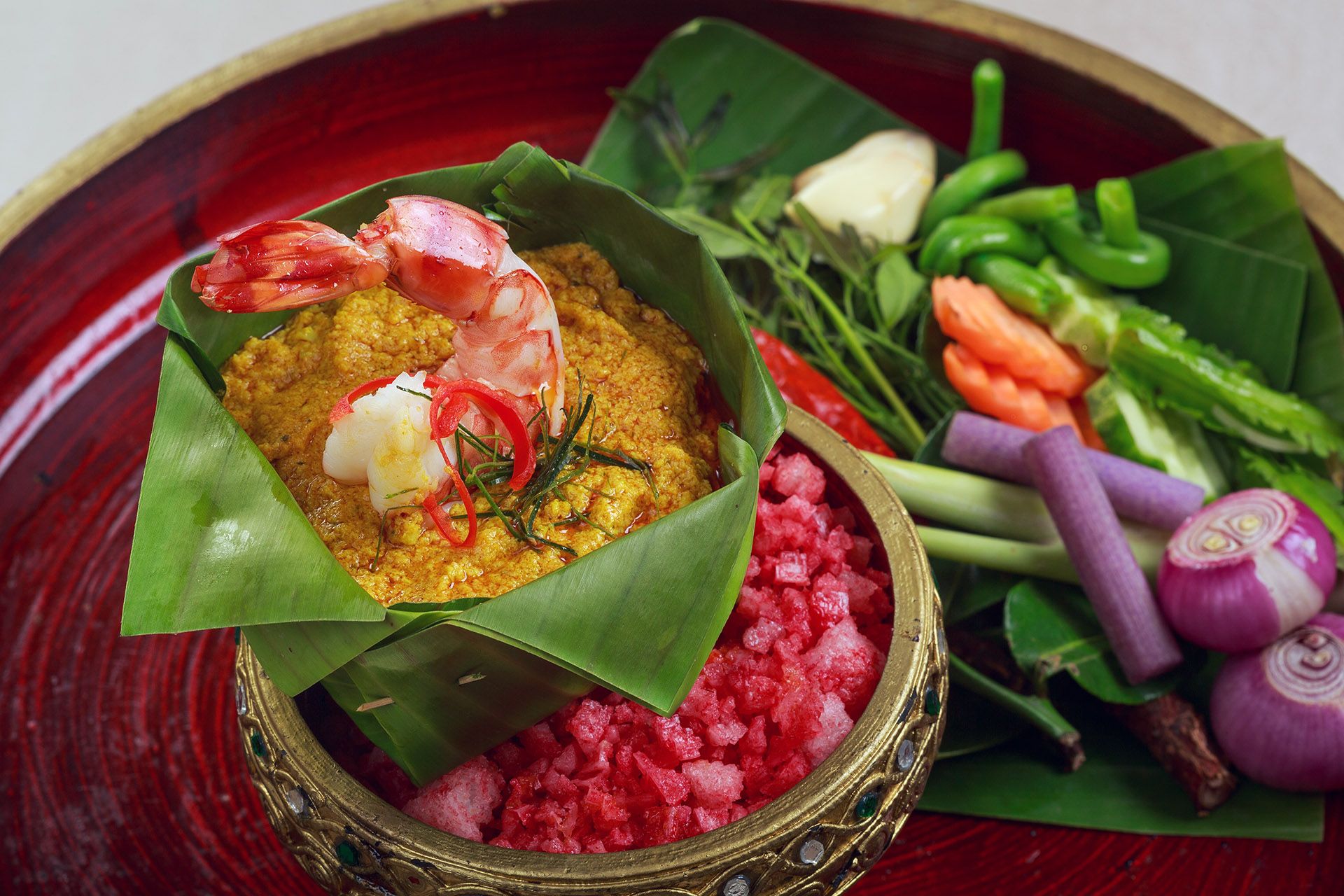
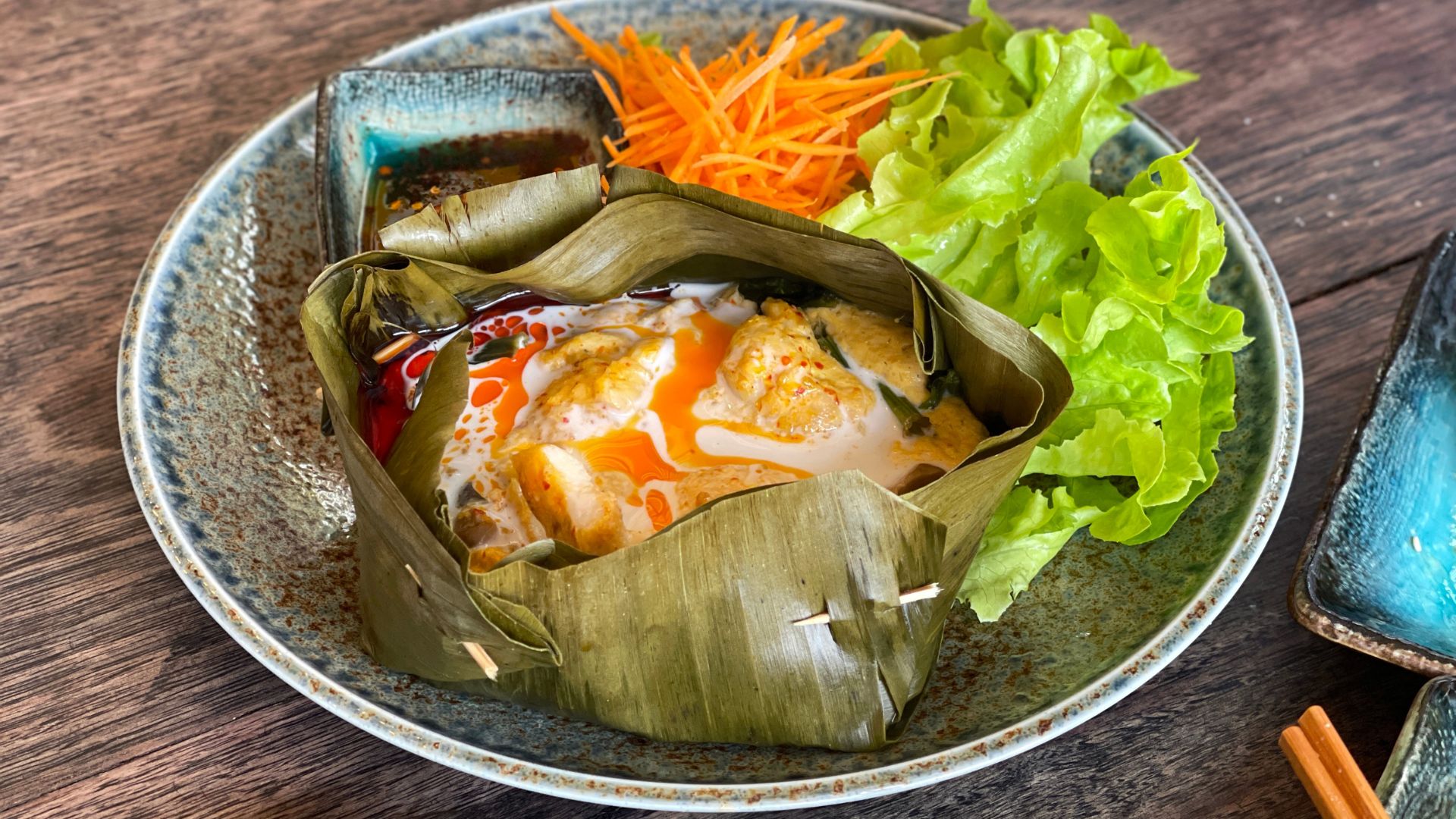
Fish amok is one of Cambodia’s most famous dishes. Fresh fish is steamed with kroeung, coconut milk, and egg, often in a banana leaf cup. Kroeung brings fragrant notes of lemongrass, turmeric, and galangal, while coconut milk gives the dish a rich, creamy texture. The result is a mild, aromatic curry that is usually served with rice.
2. Beef Lok Lak
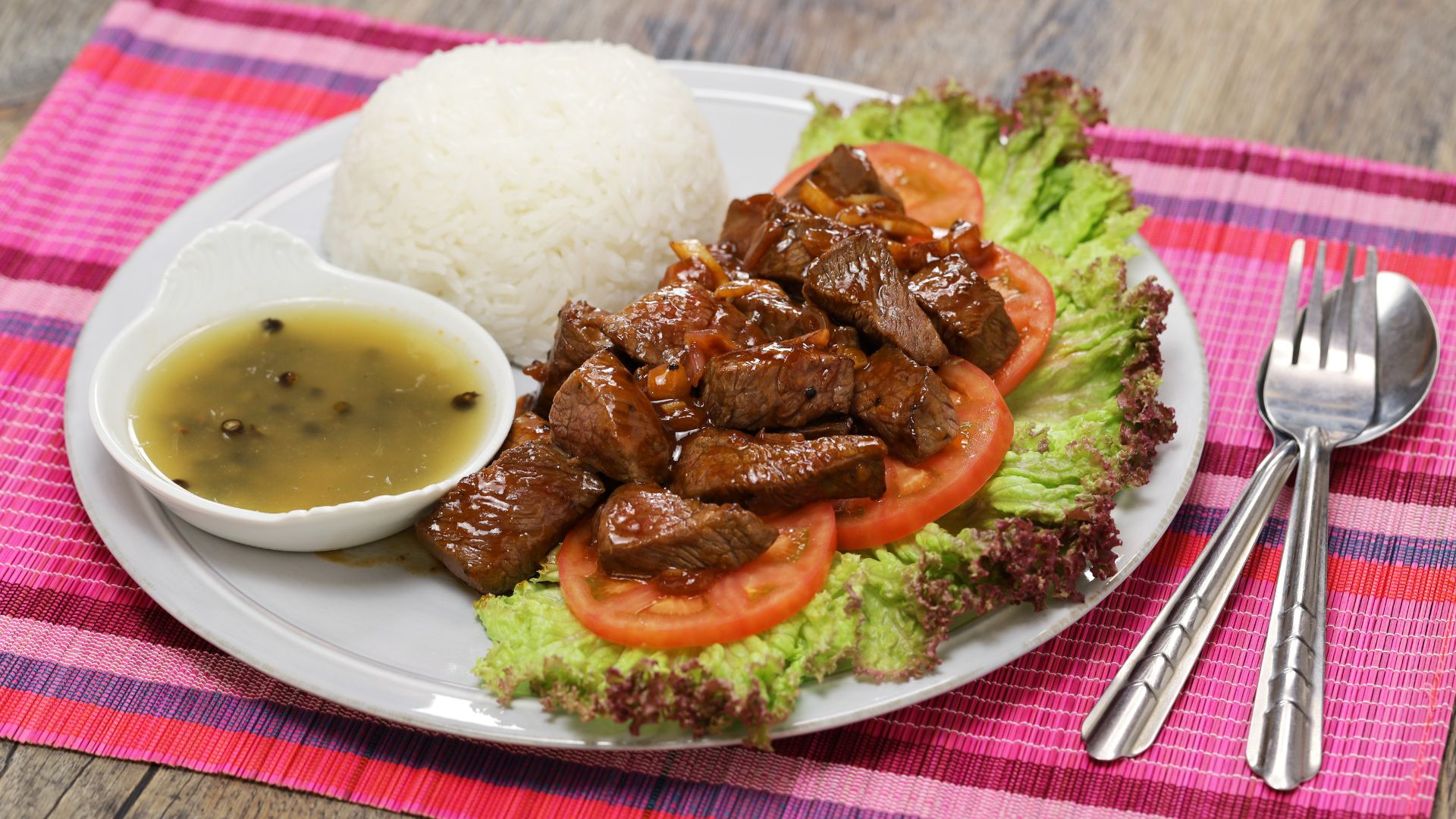
Beef lok lak features tender beef cubes quickly stir-fried with garlic, soy sauce, and other seasonings. It is typically served over lettuce with tomatoes, cucumber, and onions. The key ingredient is Kampot pepper, which is mixed with lime juice and salt to create the classic dipping sauce known as tuk meric. The combination gives the dish a savory, tangy, and peppery flavor.
3. Kampot Pepper Crab
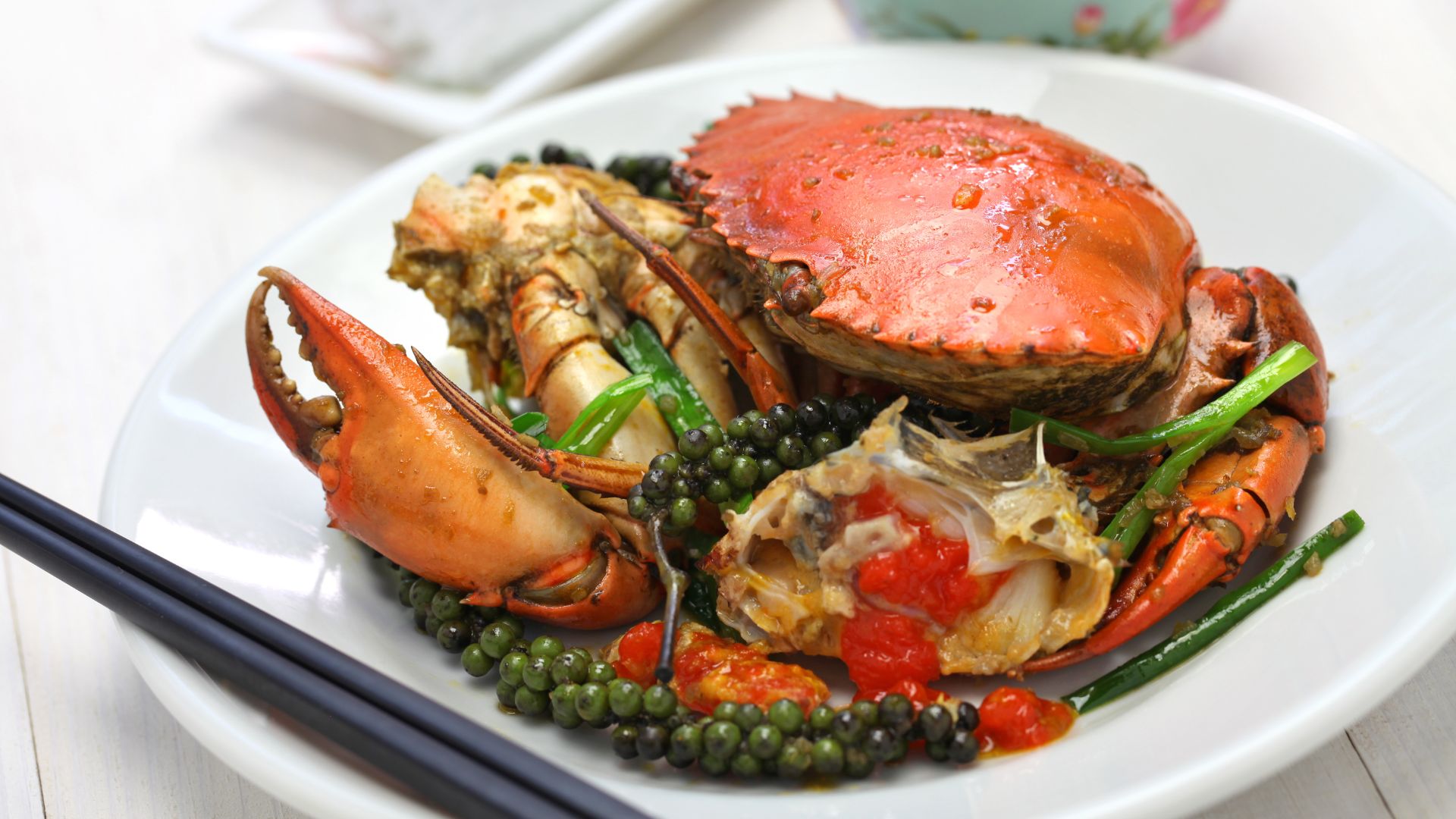
This coastal specialty combines fresh crab with Cambodia’s famous Kampot pepper. The crab is stir-fried with garlic and oil, then cooked with fresh green peppercorns still attached to their stems. The sweet crab meat pairs especially well with the pepper’s warm, herbal aroma.
4. Saraman Curry
Saraman curry is a rich Cambodian curry influenced by Cham cooking traditions. Beef, coconut milk, peanuts, and warm spices such as cardamom, cinnamon, cloves, and star anise create its distinctive flavor. Unlike lighter Khmer curries, saraman is thick, creamy, mildly spiced, and deeply aromatic.
5. Nom Banh Chok & Kuy Teav
Nom banh chok is a traditional Cambodian noodle dish made with fresh rice noodles and a fish-based green curry sauce. The sauce gets its distinctive aroma from kroeung, lemongrass, turmeric, and herbs, while fresh vegetables such as banana blossom and cucumber add crunch.
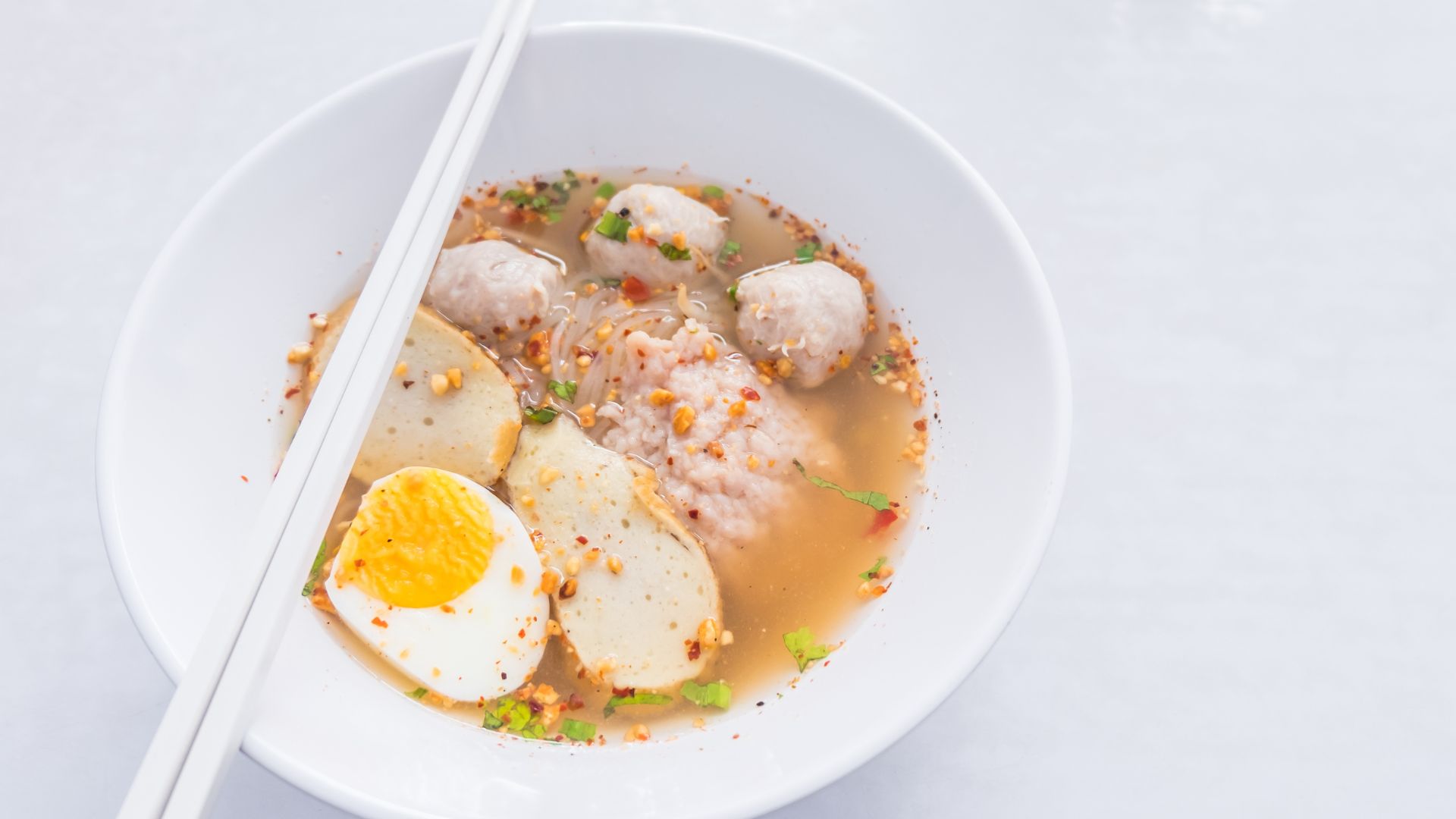
Kuy teav is a popular noodle soup made with thin rice noodles and a clear broth. Pork bones and dried seafood give the broth its savory depth, while toppings can include sliced pork, minced meat, shrimp, garlic oil, and fresh herbs. Lime, chili, and fish sauce are usually added at the table to adjust the flavor.
Best Restaurants in Cambodia: Where to Eat
Cambodia has a growing dining scene where chefs are reinterpreting Khmer cuisine with local ingredients and modern techniques. These restaurants in Siem Reap and Phnom Penh are worth considering for a more refined dining experience.
1. Top Dining Spots in Siem Reap
Siem Reap offers several excellent restaurants for discovering modern Khmer cuisine, from seasonal tasting menus to elegant local dining.
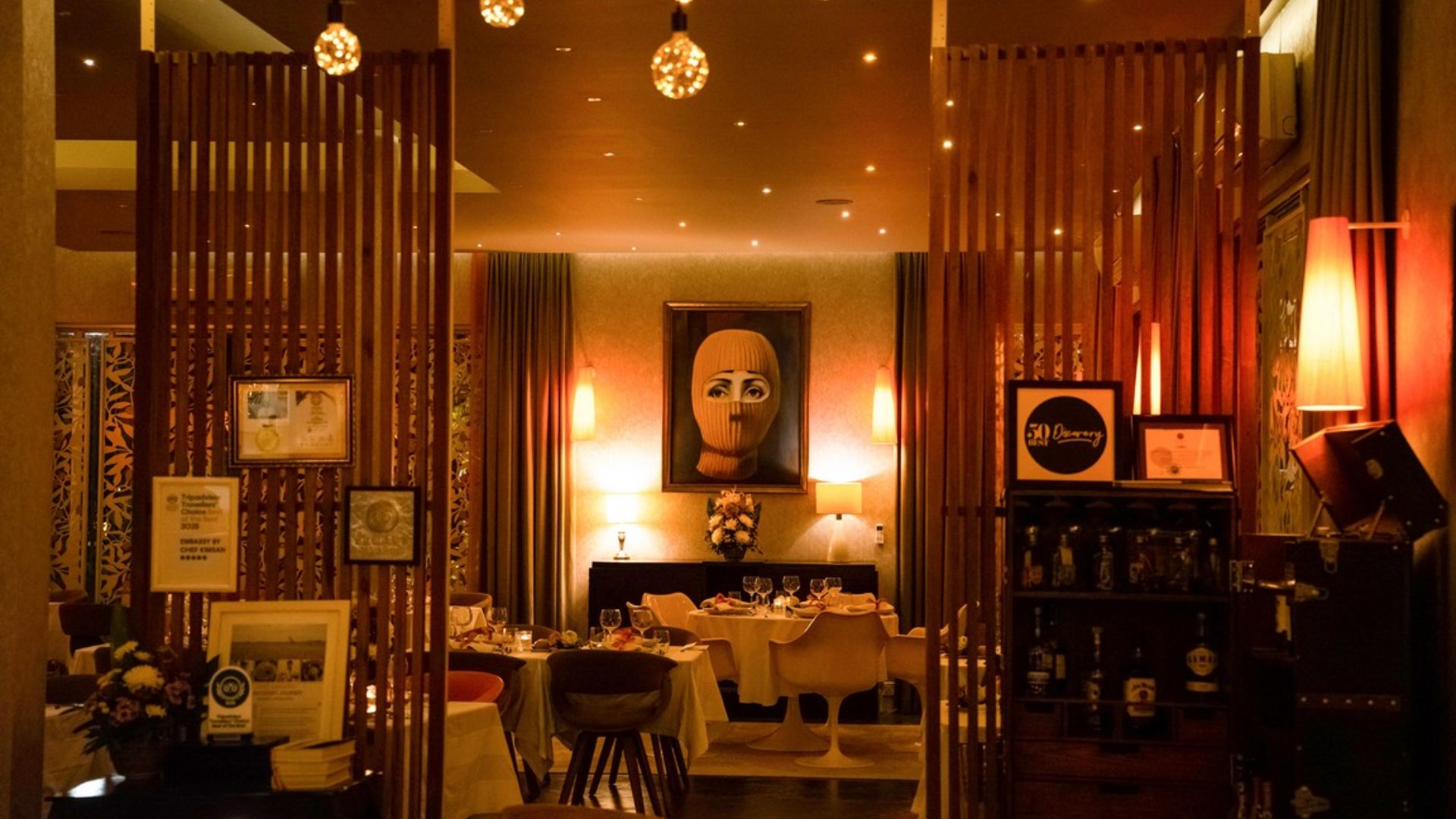
- Embassy Restaurant: Run by the Kimsan Twins, this fine-dining restaurant focuses on seasonal tasting menus inspired by Khmer cuisine. Dishes are paired with selected wines, champagne, or organic teas.
- Cuisine Wat Damnak: Set in a traditional Cambodian wooden house, this restaurant combines local ingredients with contemporary French techniques. Chef Joannès Rivière is known for creating creative dishes using ingredients such as Tonle Sap fish and local herbs.
- Viroth’s Restaurant: Located in the Wat Bo area, Viroth’s offers traditional Khmer dishes alongside international options. Its elegant garden setting makes it a popular choice for a relaxed dinner.
2. Top Dining Spots in Phnom Penh
Phnom Penh has an even wider range of restaurants, from refined Khmer cuisine to modern tasting menus and international fine dining.
- Malis Restaurant: Chef Luu Meng created Malis to celebrate Cambodia’s culinary heritage, including recipes inspired by royal Khmer cuisine. The menu features a wide selection of traditional and contemporary Cambodian dishes in an elegant garden setting.
- Yum Bay: This intimate restaurant focuses on modern Khmer cuisine with a small counter-style setting. The chef works with local ingredients such as prahok, river prawns, and dried fish to create changing tasting menus.
- Mahob: Set in a French colonial villa, Mahob focuses on refined Khmer cuisine using local ingredients. Palm sugar, river fish, herbs, and traditional spices feature prominently across the menu.
- Sombok Restaurant: Located near Sisowath Quay, Sombok serves contemporary Khmer cuisine in an artistic setting. Its menu combines traditional Cambodian flavors with modern presentation.
- CUTS at Rosewood Phnom Penh: Located on the 38th floor of Vattanac Capital, CUTS is a luxury steakhouse with panoramic city views. It is a good choice for travelers looking for international fine dining rather than traditional Khmer cuisine.
Curated Cambodia Food Tours and Experiences
Beyond restaurants, Cambodia offers hands-on food experiences that let travelers discover Khmer cuisine through local markets, cooking, and everyday dining.
1. Private Cooking Classes with Local Chefs
Private cooking classes offer a relaxed way to learn Khmer cuisine directly from local chefs. Sessions usually last around 3–4 hours in a garden villa or shaded outdoor kitchen.
- Visit a local market: Join the chef to explore fresh herbs, roots, vegetables, and spices before cooking.
- Cook and enjoy: Learn to make dishes such as Fish Amok and Beef Lok Lak, including how to prepare kroeung with a traditional mortar and pestle. Finish by enjoying the meal you prepared together.
2. Curated City Food Tours by Tuk-Tuk
Tuk-tuk food tours are an easy way to explore Cambodia’s local food scene while moving between different neighborhoods and dining spots.
- Explore by remork: Travel around the city in a traditional Cambodian remork with a private driver.
- Discover local food: Stop at selected restaurants, traditional markets, and local food stalls to sample authentic dishes.
- Taste a variety of dishes: Try favorites such as Nom Banh Chok, Kuy Teav, grilled specialties, and traditional Cambodian desserts.

3. Sunset Dinner Cruises on the Mekong River
A sunset dinner cruise combines Cambodian cuisine with views of the Mekong River as the city changes from day to night.
- Enjoy the sunset: Cruise along the Mekong during the golden hour while taking in views of the river and Phnom Penh.
- Try modern Khmer cuisine: Enjoy dishes that combine traditional Cambodian flavors with contemporary presentation.
- Dine by the river: Relax over dinner and selected drinks while watching the changing scenery along the waterfront.

Quick Travel Tips for Food Lovers in Cambodia
- Choose busy food spots: Prioritize busy restaurants and stalls where ingredients are fresh and cooked to order. Use sealed bottled water for drinking and brushing your teeth.
- Ask for vegetarian options: Many Khmer dishes use fish sauce or prahok, but restaurants can often adapt them with tofu, mushrooms, or vegetables. Say “kh’nhom si mangsavirat” to explain that you are vegetarian.
- Share dishes Khmer-style: Khmer meals are usually served at the same time for everyone to share. Rice is the staple, while soups, vegetables, fish, and sauces provide different flavors.
- Use local table manners: Spoons and forks are commonly used for rice dishes, while chopsticks are more typical for noodle soups such as Kuy Teav.
- Eat local dishes at the right time: Nom Banh Chok, Kuy Teav, and Bai Sach Chrouk are especially popular for breakfast. Save dishes such as Amok and Khmer curries for later meals.
- Buy certified local products: For Kampot pepper and Kampong Speu palm sugar, look for the PGI label to identify officially protected products.
- Carry small bills: USD and Cambodian Riel are both widely used. Small USD notes are convenient, while change for smaller purchases is often given in Riel.
FAQs About Khmer Cuisine
Is Khmer food spicy like Thai food?
Khmer food is generally milder than Thai food. It uses aromatic herbs such as lemongrass, galangal, turmeric, and kaffir lime, while fresh or dried chili is often served separately.
What is Fish Amok and how is it traditionally served?
Fish Amok is one of Cambodia’s most iconic dishes. Fish is steamed with kroeung, coconut milk, and egg, then traditionally served in a banana leaf cup with rice.
Can vegetarians find suitable options in Cambodia?
Yes, vegetarian food is widely available, especially in Siem Reap and Phnom Penh. Since prahok and fish sauce are common in Khmer cuisine, tell the restaurant clearly that you do not eat meat or fish.
Why is Kampot pepper so highly regarded?
Kampot pepper is prized for its distinctive floral aroma and warm, complex flavor. It has Protected Geographical Indication (PGI) status and is commonly used in Cambodian dishes such as Lok Lak and pepper crab.
What is a typical Cambodian breakfast?
Popular Cambodian breakfast dishes include Bai Sach Chrouk, Nom Banh Chok, and Kuy Teav. These rice and noodle dishes are commonly enjoyed at local markets and street food stalls in the morning.
Discover the Flavors of Khmer Cuisine
Khmer cuisine offers much more than famous dishes such as Fish Amok or Beef Lok Lak. From fresh local ingredients and aromatic spice pastes to traditional markets and cooking experiences, Cambodian food offers many ways to discover the country’s culture.
If you want to explore Cambodia through its food while enjoying a well-planned journey, Asia Pioneer Travel can create a private itinerary with carefully selected dining experiences, local activities, and comfortable transfers. Contact our travel experts to start planning your Cambodia adventure.