

Vietnam’s rice fields are among the country’s most breathtaking landscapes, stretching from the misty mountain terraces of the north to the endless plains of the Mekong Delta. Shaped by more than 4,000 years of rice cultivation, these fields are deeply connected to Vietnam’s history, culture, and everyday life. The Vietnam rice field season attracts travelers with ever-changing scenery, vibrant harvests, and unforgettable photography opportunities. This guide covers the best seasons, top destinations, and practical tips to help you plan the perfect trip.
Why Rice Fields Are One of Vietnam’s Most Iconic Landscapes
Vietnam’s rice fields are far more than beautiful scenery. They tell the story of a country shaped by agriculture, local traditions, and generations of farming communities that continue to care for the land today.
A Landscape Built Around Rice
Rice cultivation has been part of Vietnamese life for more than 4,000 years and remains one of the country’s defining industries. Around 80% of the population has traditionally been connected to rice farming or production, while the Mekong Delta now supplies nearly 90% of Vietnam’s rice exports, helping make Vietnam one of the world’s largest rice exporters.
More Than Just Farmland
Rice fields are deeply woven into local culture. Harvest festivals, traditional ceremonies, and centuries-old farming techniques remain an important part of daily life, especially in northern mountain villages. Terraced rice fields built by H’Mong, Dao, and La Chi communities stand as remarkable examples of human ingenuity, while festivals such as the Bay Nui Ox Racing Festival in An Giang celebrate the connection between agriculture and local identity.
A Dream Destination for Photographers
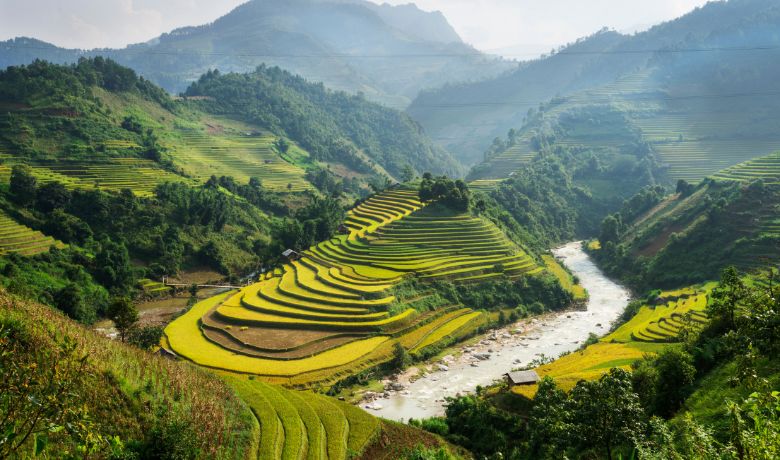
Every year, the short golden harvest season lasts only two to three weeks, attracting photographers and travelers eager to capture Vietnam’s most spectacular landscapes. Combined with colorful ethnic costumes, misty mountains, and dramatic terraces, these scenes have become some of the country’s most recognizable travel images.
Types of Rice Landscapes in Vietnam
Northern Mountain Rice Terraces
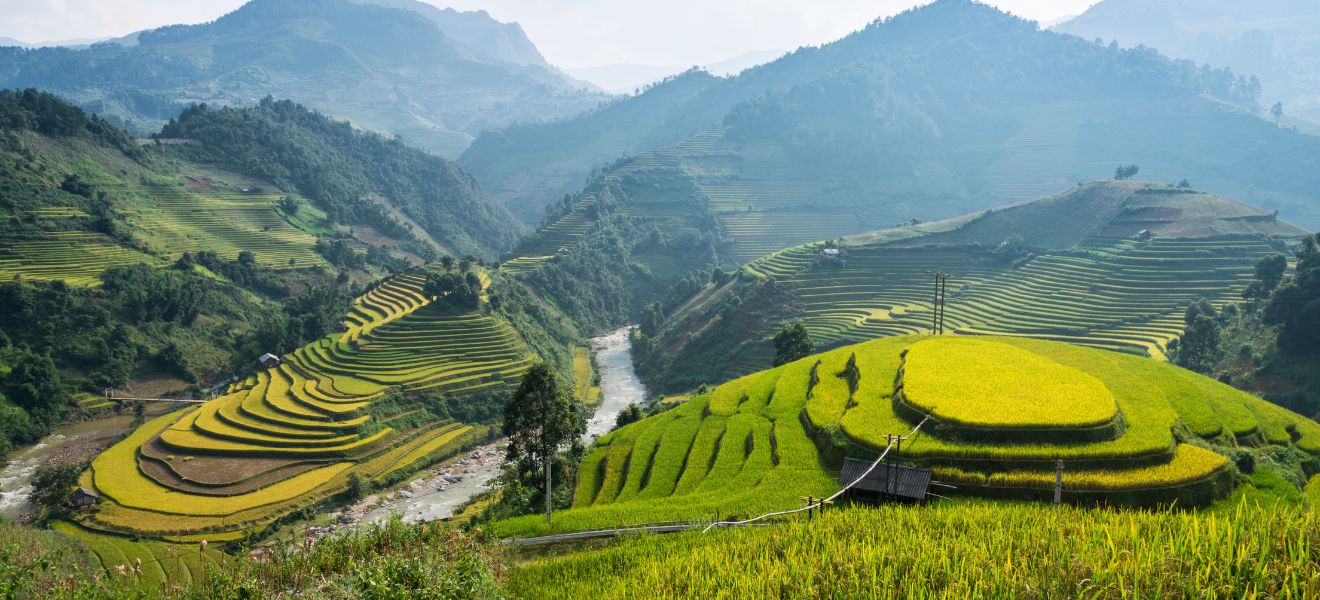
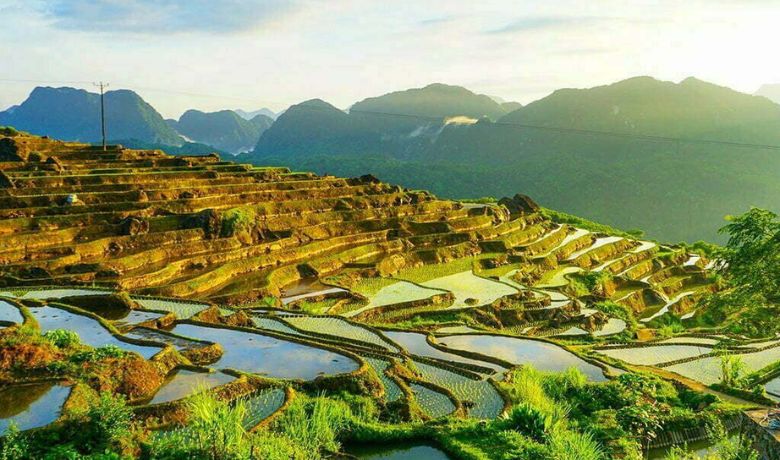
Found in destinations like Mu Cang Chai, Sapa, Hoang Su Phi, and Y Ty, these dramatic terraces climb steep mountainsides and usually produce a single rice crop each year. Visitors can admire mirror-like water-filled fields in May and June, followed by golden terraces between late August and October.
Red River Delta Rice Fields
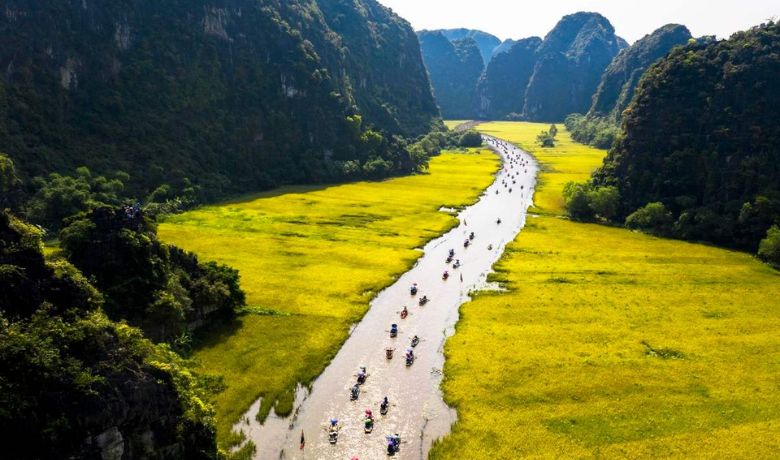
The fertile plains of northern Vietnam create vast, flat rice fields stretching across provinces such as Thai Binh and Hai Duong. In Tam Coc, golden rice fields sit beside limestone karsts and winding rivers, creating one of Vietnam’s most iconic landscapes. Most areas harvest two rice crops each year, while Tam Coc’s famous fields peak during late May and early June.
Mekong Delta Rice Plains
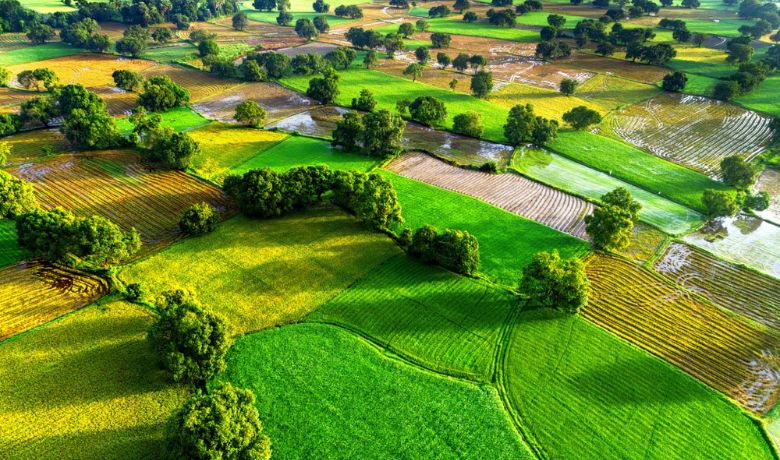
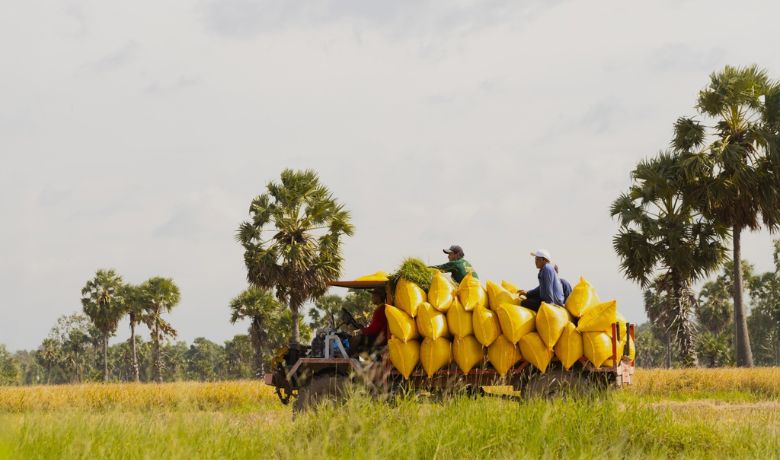
The Mekong Delta is Vietnam’s largest rice-growing region, famous for endless green and golden fields connected by canals and rivers. Thanks to its tropical climate, farmers harvest two or even three crops annually, making beautiful rice landscapes possible almost year-round. The scenery is especially striking around An Giang between September and November, when golden fields contrast beautifully with towering palm trees.
Best Time to Visit Vietnam Rice Fields
The best time to visit Vietnam’s rice fields depends on the landscapes you want to see. May to June offers reflective water-filled terraces and vibrant green rice shoots, while the golden harvest season transforms the countryside into brilliant shades of yellow.
Green Season (Water-Filled and Young Rice Season)
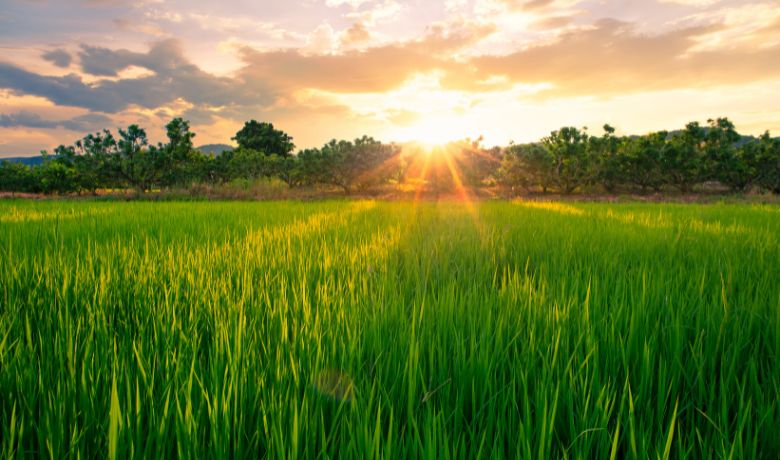
The green season usually falls between May and June, when farmers flood the terraces and begin planting a new rice crop. This is one of the most photogenic times of the year in northern Vietnam.
Water covering the terraces reflects the sky like giant mirrors, creating dramatic landscapes before young rice plants gradually blanket the mountains in fresh green. The combination of water, clouds, and newly planted fields makes this season especially popular with photographers.
Golden Harvest Season
The golden harvest season is widely considered the most beautiful time to see Vietnam’s rice fields, although harvest dates vary by region.
- Northern Mountains: Late August to October, with spectacular golden terraces in Sapa, Mu Cang Chai, Y Ty, and Hoang Su Phi.
- Red River Delta: May to June, including Tam Coc, where golden rice fields surround limestone karsts.
- Mekong Delta: Multiple harvests each year thanks to the tropical climate, making golden fields visible during different seasons.
Harvest season also brings unique cultural experiences, including local harvest activities, fresh green rice specialties, the famous “Flying Over the Golden Season” paragliding festival at Khau Pha Pass, and the exciting Bay Nui Ox Racing Festival in An Giang.
Vietnam Rice Field Season Calendar by Region
| Region | Best Rice Field Season |
|---|---|
| Northern Mountains | - Sapa: Late Aug - Late Sep - Y Ty: Early Sep - Early Oct - Mu Cang Chai: Mid Sep - Early Oct - Hoang Su Phi: Sep - Oct (best after Oct 10) |
| Red River Delta | - Tam Coc: Early May - Bac Son Valley: September - Thai Binh and Hai Duong: May and September harvests |
| Central Valleys | - Mai Chau: Late May - Early Jun and Mid Aug - Pu Luong: Late May - Early Jun and Sep - Oct |
| Mekong Delta | - Winter - Spring Crop: Feb - Apr - Summer - Autumn Crop: Jul - Sep - Autumn - Winter Crop: Oct - Dec |
This calendar makes it easy to plan your trip around Vietnam’s most beautiful rice landscapes, no matter which region you choose to visit.
Best Rice Terrace Destinations in Northern Vietnam
Northern Vietnam is home to the country’s most spectacular rice terraces, where mountains, ethnic villages, and centuries-old farming traditions come together. Each destination has its own harvest calendar, landscapes, and cultural highlights, making it worth planning your trip around the right season.
Sapa – Vietnam’s Most Famous Rice Terraces
Sapa is Vietnam’s best-known rice terrace destination, with the harvest season typically running from late August to mid-September. The spectacular Muong Hoa Valley features endless layers of terraces backed by the Hoang Lien Son Mountains, creating one of the country’s most iconic landscapes.
Beyond the valley, villages such as Cat Cat, Ta Van, and Ta Phin offer opportunities to explore H’Mong and Red Dao culture, traditional handicrafts, and local homestays. During harvest season, farmers working in colorful traditional clothing add even more character to the scenery.
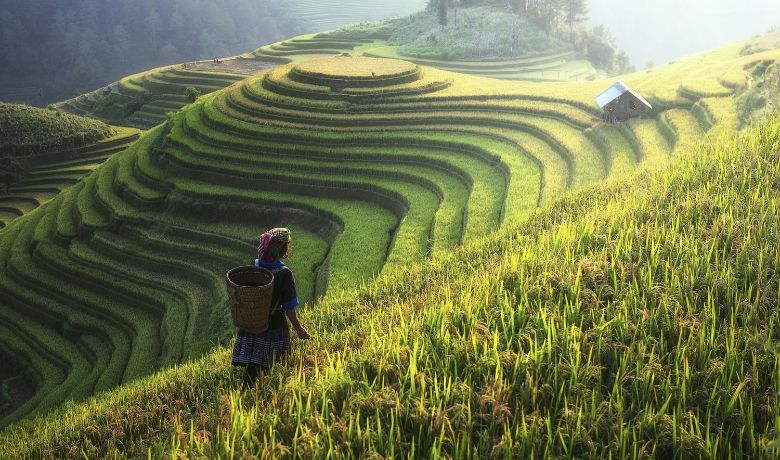
Mu Cang Chai – Vietnam’s Golden Terrace Wonderland
The best time to visit Mu Cang Chai is mid-September to early October, when the terraces glow with golden rice.
Highlights include the famous Mam Xoi Hill, the photogenic Horseshoe Hill, and the terraces around Che Cu Nha. Nearby Khau Pha Pass offers panoramic viewpoints and the popular “Flying Over the Golden Season” paragliding festival, making Mu Cang Chai one of Vietnam’s top photography destinations.
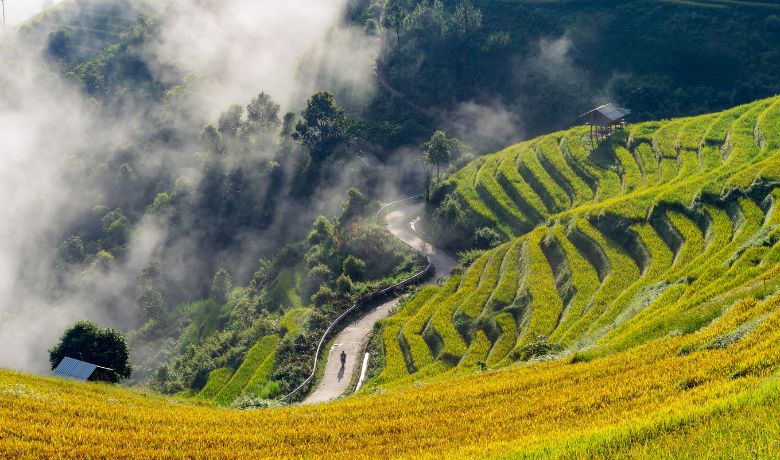
Hoang Su Phi – Untouched Rice Terrace Landscapes
Hoang Su Phi reaches its peak between mid-September and mid-October, slightly later than other northern destinations.
The most impressive terraces can be found in Ban Phung, Ban Luoc, Nam Ty, and Thong Nguyen, where steep mountainsides remain largely untouched by mass tourism. Visitors can also experience Dao and La Chi culture, sample local specialties, and enjoy a quieter atmosphere than more popular destinations.
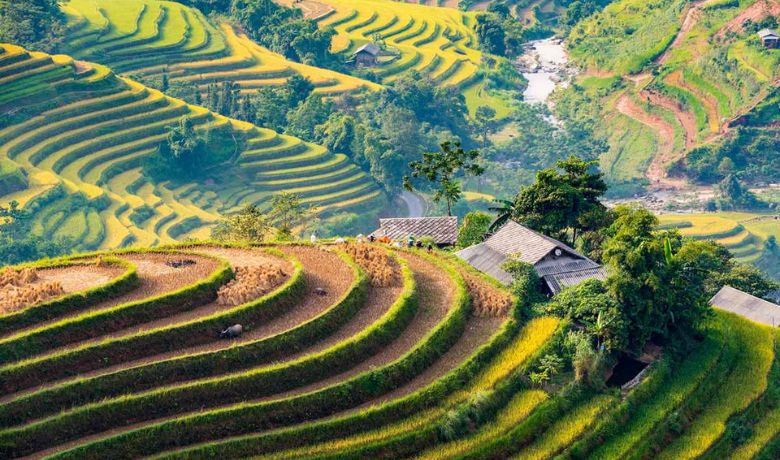
Y Ty – Where Rice Fields Meet the Clouds
Y Ty is best visited during early to mid-September, when golden rice terraces meet the region’s famous sea of clouds.
The route through A Lu, Khu Chu Lin, and Thien Sinh Valley offers some of northern Vietnam’s most breathtaking scenery. Along the way, you’ll also find traditional Ha Nhi earthen houses and remote villages that preserve a unique cultural identity rarely seen elsewhere in Vietnam.
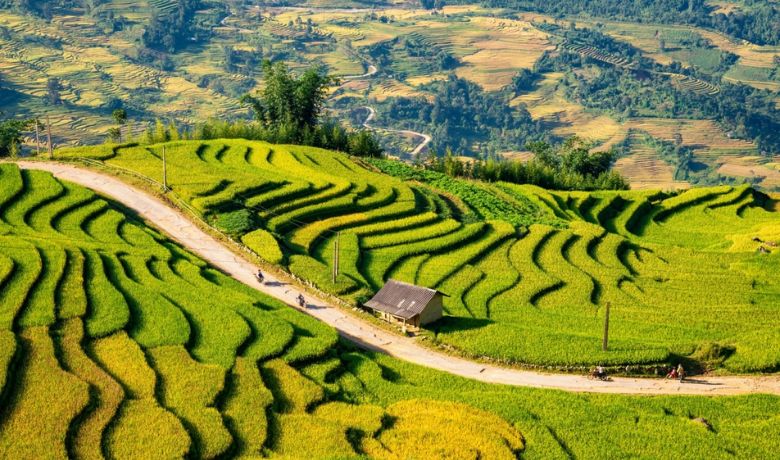
Best Rice Valleys in Central and Northern Vietnam
Not every beautiful rice field in Vietnam is found on steep mountain slopes. Peaceful valleys such as Mai Chau, Pu Luong, Tam Coc, and Bac Son offer a completely different experience, combining golden rice fields with rivers, limestone mountains, and traditional villages.
Pu Luong and Mai Chau
If you’re looking for peaceful valleys instead of dramatic mountain terraces, Pu Luong and Mai Chau are excellent choices. Unlike most destinations in the northwest, both valleys grow two rice crops each year, giving travelers two opportunities to enjoy green fields and golden harvests.
The best times to visit are late May to early June and September to October, while Mai Chau often reaches its peak harvest slightly earlier, between mid-August and September. Traditional Thai stilt houses scattered across the valleys create postcard-worthy scenery, surrounded by bamboo forests, streams, and wooden water wheels.
The gentle terrain also makes these destinations ideal for cycling, kayaking, village walks, and relaxing stays at eco-lodges, making them perfect for travelers seeking a slower pace.
Tam Coc – Vietnam’s Most Scenic Rice Field Boat Ride
Tam Coc offers one of Vietnam’s most unique rice field experiences. Because the fields sit alongside the Ngo Dong River, farmers grow only one rice crop each year, with the golden season usually arriving between late May and early June. The first three weeks of May typically offer the most spectacular views.
A traditional sampan boat ride takes you through golden rice fields, limestone cliffs, and natural caves, allowing you to experience the landscape at water level. This combination of rivers, karst mountains, and rice paddies has earned Tam Coc the nickname “Inland Halong Bay.”
Bac Son Valley
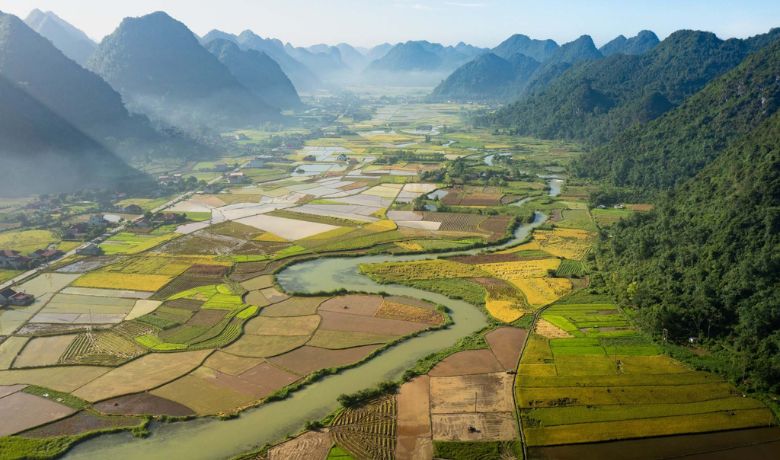
Bac Son Valley reaches its most beautiful stage in September, when patches of green and golden rice create a striking natural mosaic across the valley floor.
The best viewpoint is Na Lay Peak, where a short hike rewards visitors with panoramic views over rice fields, winding rivers, and traditional Tay villages. Because farmers harvest at different times, the landscape displays multiple shades of green and gold at once, making Bac Son one of northern Vietnam’s finest destinations for panoramic landscape photography.
> See tour: Scenic Northern Vietnam Tour
Best Rice Fields in the Mekong Delta, Vietnam
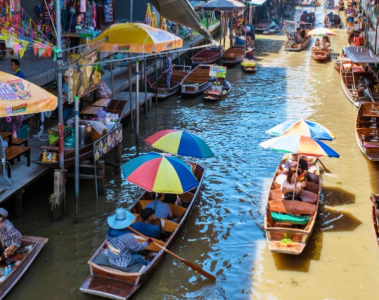
The Mekong Delta offers a different side of Vietnam’s rice-growing culture. Instead of terraced mountains, you’ll find vast flat plains, winding canals, and multiple harvests each year. It’s the perfect destination to combine rice field scenery with floating markets, river cruises, and local village life.
The Rice Bowl of Vietnam
The Mekong Delta is Vietnam’s largest rice-producing region, supplying more than half of the country’s total rice production and nearly 90% of its rice exports. Thanks to fertile alluvial soil, an extensive river network, and a warm climate, farmers can grow up to three rice crops each year: Winter – Spring, Summer – Autumn, and Autumn – Winter. The Winter – Spring crop is generally considered the most productive and highest quality.
Unlike the dramatic terraces of northern Vietnam, the Mekong Delta offers vast, flat landscapes where rice fields stretch to the horizon. A visit here combines beautiful countryside with authentic river life. Travelers can cruise along canals, explore floating villages, visit local markets, and experience the everyday rhythm of farming communities while surrounded by endless green or golden fields.
An Giang During the Golden Harvest Season
An Giang is one of the best places to experience the Mekong Delta during harvest season. The ideal time to visit is September to November, with October offering the most vibrant golden landscapes.
The picturesque Ta Pa Rice Fields blend golden paddies with rolling hills and the emerald waters of Ta Pa Lake, creating one of the region’s most photographed landscapes. Nearby, the Van Giao Rice Fields are instantly recognizable for their iconic rows of towering sugar palm trees, a signature feature of the Bay Nui region.
For panoramic views, head to Cam Mountain (Nui Cam), the highest peak in the area, where you can overlook rice fields, villages, and distant mountains in every direction. Harvest season is also an excellent time to experience local Khmer culture, including the famous Bay Nui Ox Racing Festival, which takes place on freshly harvested muddy rice fields and remains one of southern Vietnam’s most unique cultural events.
> Read more: Mekong River Cruise 2026: The Ultimate Tourist Guide to Vietnam
Photography Guide for Vietnam Rice Fields
Best Time of Day for Photography
- Visit at sunrise (5:30 AM – 6:30 AM) for soft golden light, cool temperatures, and morning mist over the valleys.
- Plan another session at sunset (4:30 PM – 6:00 PM) when warm light enhances the rich colors of the rice fields.
- Use early morning mist and low-angle evening sunlight to add depth and texture to landscape photos.
- Arrive before sunrise or sunset to secure the best viewpoints before they become crowded.
Drone Photography Tips
- Use a drone to capture the full scale of Vietnam’s rice terraces and sweeping valley landscapes.
- Fly higher for panoramic views or shoot straight down to highlight the curved patterns of terraced fields.
- Always check local drone regulations before flying.
- Avoid flying near military zones, border areas, airports, and restricted airspace, especially around destinations such as Y Ty and Hoang Su Phi.
- Respect local communities by asking permission before flying close to villages or people.
- Avoid flying in strong winds, heavy rain, or low cloud, which are common in mountain regions.
What to Wear for Rice Field Photos
- Choose solid colors such as white, red, orange, pink, beige, or blue to stand out against green or golden rice fields.
- Avoid yellow and light green, as these colors blend into the landscape.
- Maxi dresses, linen outfits, and simple neutral clothing photograph particularly well.
- Traditional ethnic costumes can create unique cultural portraits when rented respectfully from local communities.
- Wear comfortable sneakers, hiking shoes, or sandals with good grip, as rice terraces often have narrow, muddy, and uneven paths.
- Bring a hat, sunglasses, sunscreen, and plenty of water if you’re visiting during the harvest season.
Essential Travel Tips for Visiting Vietnam Rice Fields
Transportation and Accessibility
- Take a limousine van for the most comfortable journey between Hanoi and destinations such as Sapa. Expect to pay around 350,000 – 500,000 VND per person.
- Sleeper buses are a budget-friendly option with direct services to Sapa and Mu Cang Chai.
- Rent a motorbike for 100,000 – 150,000 VND per day if you’re confident riding mountain roads and want maximum flexibility.
- Drive famous mountain passes such as Khau Pha, O Quy Ho, and Ma Pi Leng for spectacular viewpoints.
- If you have limited mountain riding experience, hire a local driver or Easy Rider instead of riding yourself.
Packing Checklist
- Bring a light jacket for cool mornings and evenings during the harvest season.
- Wear hiking shoes or sneakers with good grip for muddy and uneven paths.
- Pack insect repellent, especially if you’re staying in rural villages or homestays.
- Carry a camera, drone, spare batteries, power bank, and memory cards.
- Use a waterproof bag or dry bag to protect electronics during sudden rain or heavy morning mist.
- Don’t forget sunscreen, a reusable water bottle, and a rain jacket.
Booking Accommodation During Peak Season
- Book accommodation two to three months in advance if traveling during the harvest season, especially on weekends.
- Reserve transportation early, as buses and limousine vans often sell out during peak travel periods.
- Choose eco-lodges or homestays with rice field views for the best sunrise and sunset experience.
- Popular options include Mu Cang Chai Ecolodge, Hoang Su Phi Lodge, Pu Luong Retreat, Mai Chau Ecolodge, and Avana Retreat.
- Village homestays in Ta Van or Cat Cat are great choices for travelers seeking local cultural experiences.
Responsible Travel Etiquette
- Never walk through or stand on rice plants for photos.
- Stay on designated paths and terrace edges whenever possible.
- Always ask permission before photographing local people, particularly children and elderly residents.
- Dress respectfully when visiting ethnic villages and religious sites.
- Take all rubbish with you and help keep the countryside clean.
- Fly drones responsibly and avoid military zones, border areas, and private property.
- Support local families by staying in locally owned homestays, hiring local guides, and buying handmade products.
Explore Vietnam’s Rice Fields with Asia Pioneer Travel
The Vietnam rice field season is one of Southeast Asia’s most spectacular natural experiences, blending breathtaking landscapes with rich local culture. Since harvest dates vary each year, planning your trip around the latest crop calendar is the best way to catch the fields at their most beautiful.
If you’re unsure when or where to experience the rice field season, don’t hesitate to contact Asia Pioneer Travel. Our local travel specialists can help you plan a personalized itinerary around the best harvest dates and destinations.