

Vietnam etiquette is less about memorizing a long list of rules and more about knowing how to read the room. A smile might mean embarrassment, “yes” might not mean agreement, and a simple gesture can carry more weight than you expect. Get a few basics right, though, and you’ll avoid awkward moments while showing genuine respect. Here’s the practical Vietnam etiquette you actually need to know before your trip.
Vietnam Etiquette Starts With Understanding Local Values
Vietnamese culture puts a lot of weight on harmony, respect, and social relationships. You don’t need to memorize every custom, but understanding these two ideas will make everyday interactions much easier.
Why “Saving Face” Matters in Vietnam
“Saving face” matters in Vietnam. Reputation, dignity, and social standing are important, so public confrontation is best avoided.
If something goes wrong, keep your voice down and handle disagreements privately. This applies to complaints, too. Explain the problem calmly rather than embarrassing someone in front of others.
You may also hear “Vâng” (yes) when someone isn’t actually agreeing. It can simply mean “I understand” or “I hear you.” If something matters, confirm it clearly rather than assuming you have a deal.
Respect for Elders and Social Hierarchy
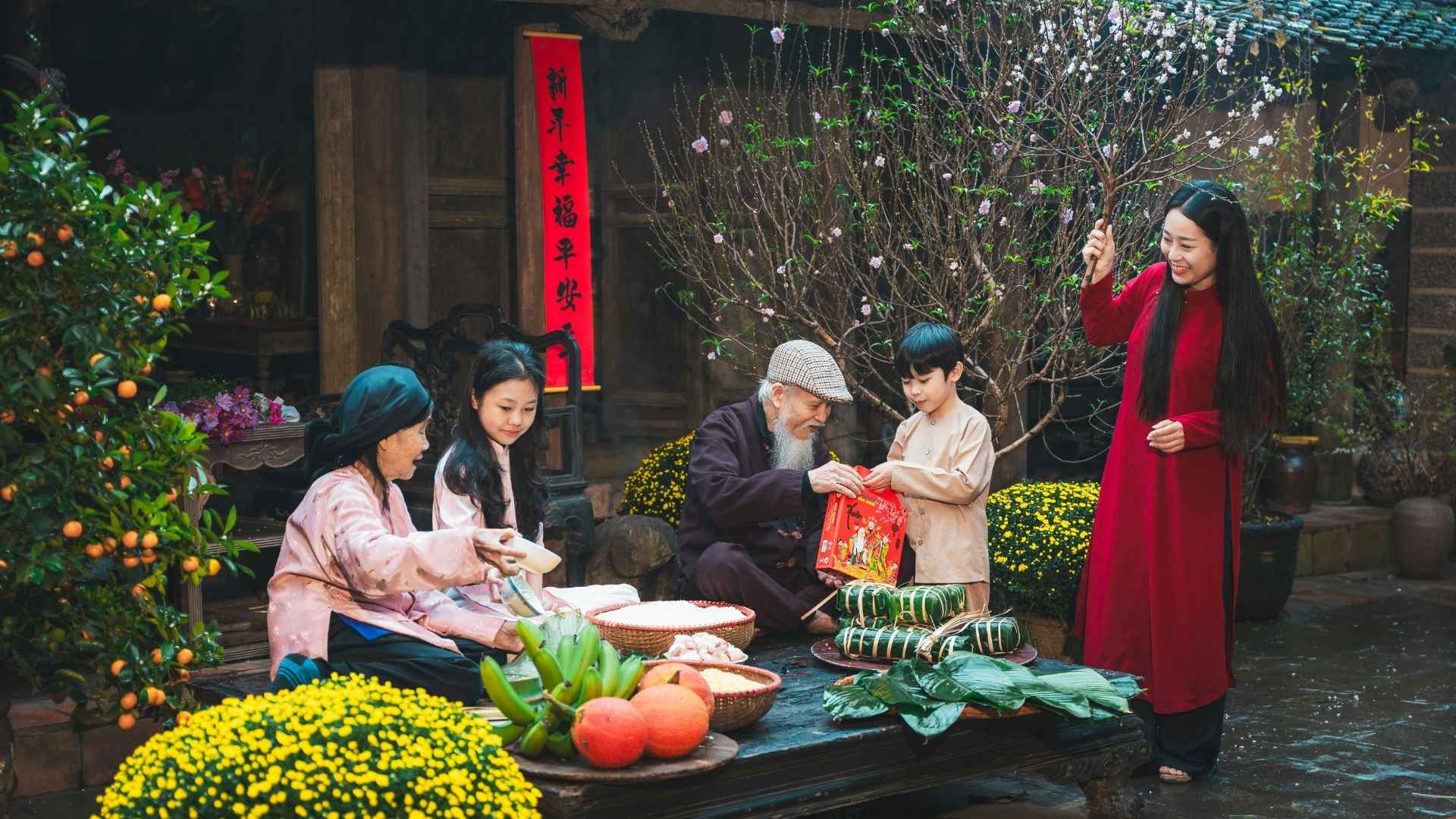
Age and seniority still matter in Vietnamese social life. When meeting a group, greet the oldest or most senior person first. At traditional meals, wait for the host or elders to start eating.
Small gestures also go a long way. When giving or receiving something important, such as a gift, business card, or money, use both hands, or your right hand supported lightly by your left. It’s simple, natural, and shows respect.
Everyday Social Etiquette and Body Language
Vietnamese etiquette is mostly about reading the room. A smile, nod, or thoughtful greeting can go a long way, while a few familiar gestures can mean something very different here.
Greetings, Smiling, and Conversational Warmth
A genuine smile is an easy way to show friendliness and respect. But don’t assume every smile means happiness or agreement. People may also smile when they feel embarrassed, uncomfortable, or unsure.
For everyday greetings, a small nod, smile, or wave works perfectly. Handshakes are common in professional settings. With women or older people, it’s polite to wait for them to offer their hand first.
In more formal situations, a two-handed handshake can show extra respect. When greeting an elderly person or Buddhist monk, removing your hat and giving a slight nod is appropriate. At gatherings, greet the oldest or most senior person first.

Vietnamese Pronouns: What to Call People
Vietnamese pronouns change according to age and social relationship, so choosing the right one matters.
- Ông / Bà: Someone around your grandparents’ generation
- Bác: Someone around your parents’ age or slightly older
- Cô / Chú: A middle-aged person around your parents’ generation
- Anh / Chị: An older person of your generation; a useful choice for many adults
- Em: Someone younger than you
- Cháu: Used for yourself when speaking to older generations
If you’re unsure, Anh for a man or Chị for a woman is generally a safe starting point. Adding “ạ” at the end of a sentence when speaking to an older person makes the exchange more respectful.
Crucial Taboos in Body Language
A few gestures are worth remembering:
- Don’t touch someone’s head, particularly an older person or child.
- Don’t point with one finger. Use your whole hand when indicating a person or object.
- Watch your feet. Don’t point your feet at people, religious objects, or ancestral altars, or put your feet on furniture.
- Avoid standing with your hands on your hips, especially during disagreements, as it can appear confrontational.
- Skip the “fingers crossed” gesture. It can have an obscene meaning in Vietnam.
- Keep PDA modest, particularly in rural areas, traditional homes, and religious sites.
You don’t need perfect Vietnamese or flawless manners. A little observation goes a long way. When in doubt, follow the lead of the people around you and err on the side of respect.
Vietnamese Dining Etiquette: Chopsticks, Shared Dishes, and Drinking
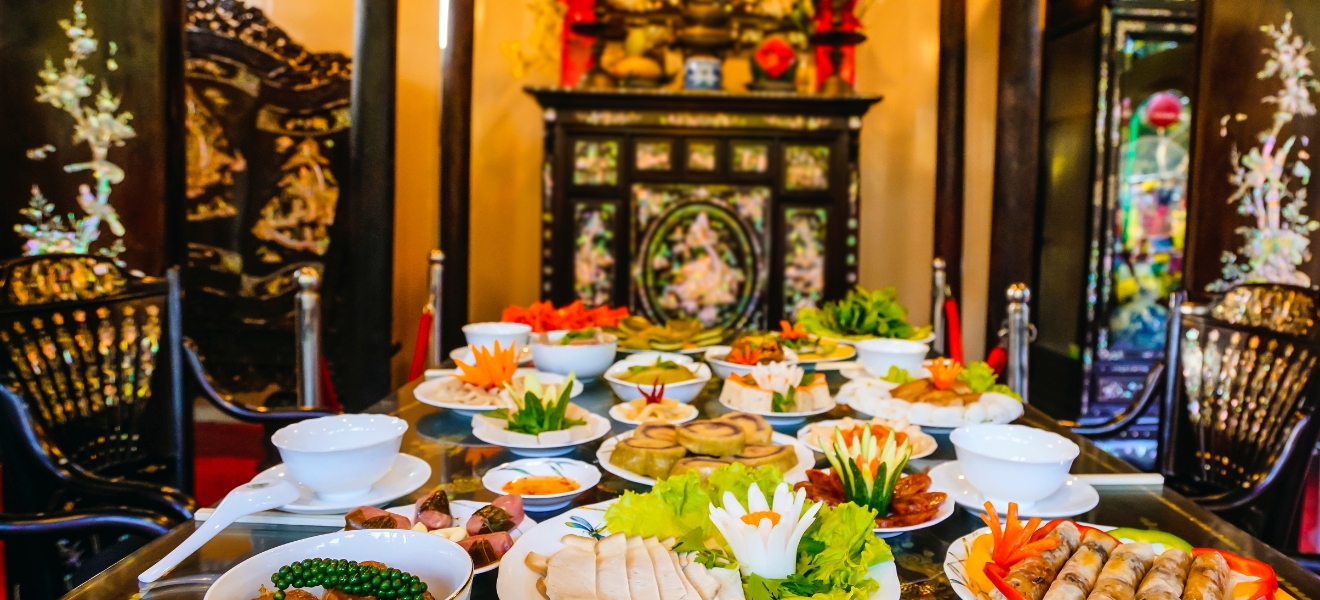
Vietnamese meals are usually family-style, with several dishes shared from the center of the table. You don’t need to master every rule, but a few basics will help you fit in naturally.
Chopstick Rules You Should Know
- Never stand chopsticks upright in a bowl of rice. It resembles incense offered at a funeral and is considered unlucky.
- Don’t tap your bowl with chopsticks, point them at people, lick them, or use them to stab food.
- When taking food from shared dishes, avoid rummaging for the best piece. Use communal serving chopsticks when provided.
- If there are no serving chopsticks, turn your own chopsticks around and use the clean ends.
- Never pass food directly from one pair of chopsticks to another, as this also resembles a funeral ritual.
- When finished or taking a break, place your chopsticks neatly on your plate or chopstick rest.
How to Share Food at a Vietnamese Table
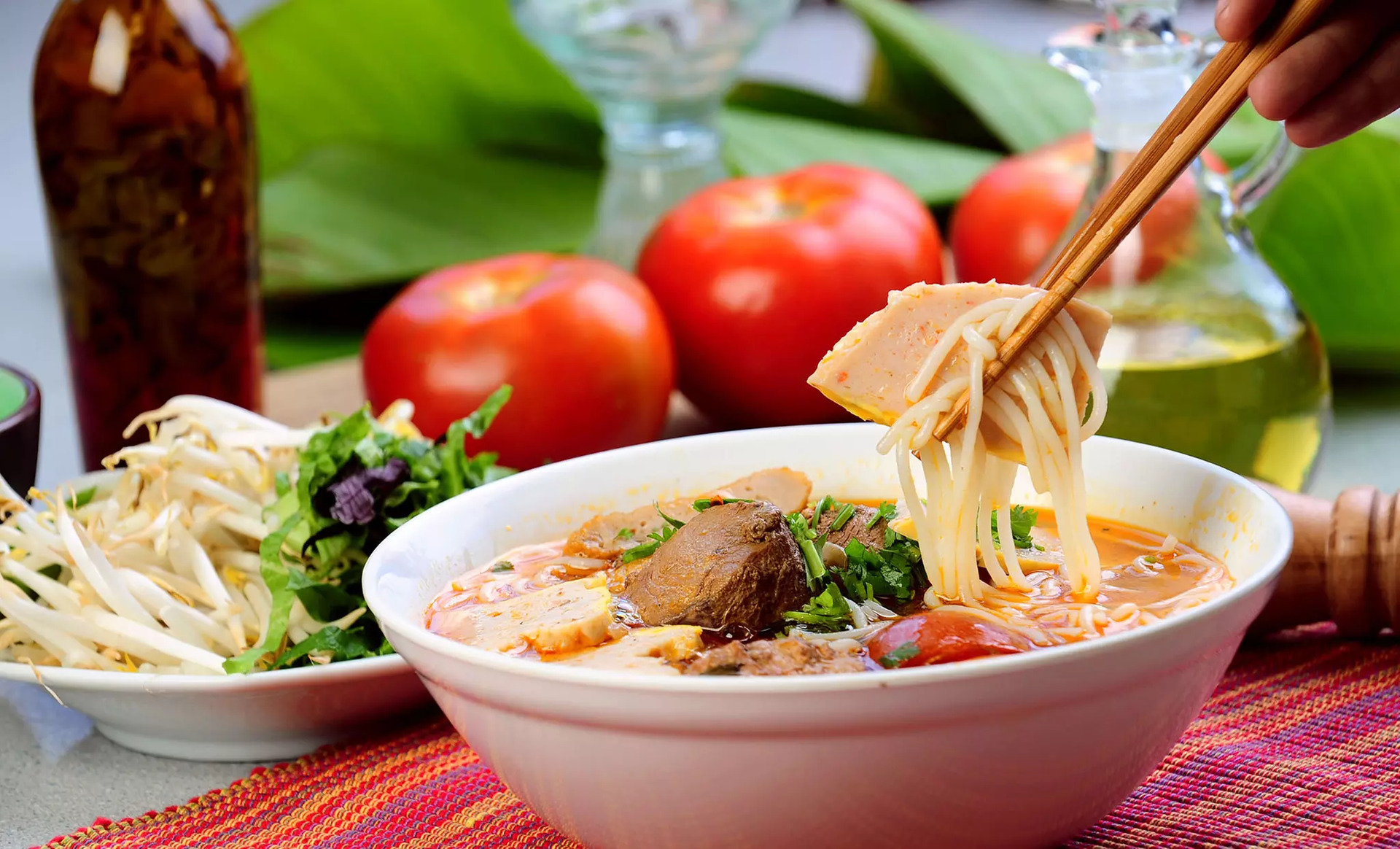
Take food from a communal dish into your own bowl rather than directly into your mouth. At a traditional meal, wait for the host or elders to start eating before picking up your chopsticks.
It’s also polite to invite everyone to eat before starting, often with “Mời cả nhà ăn cơm.” You don’t need to say it yourself as a foreign visitor, but recognizing the phrase is useful.
Drinking, Toasting, and Saying No to Alcohol
Social drinking is common at Vietnamese gatherings, particularly among friends and colleagues.
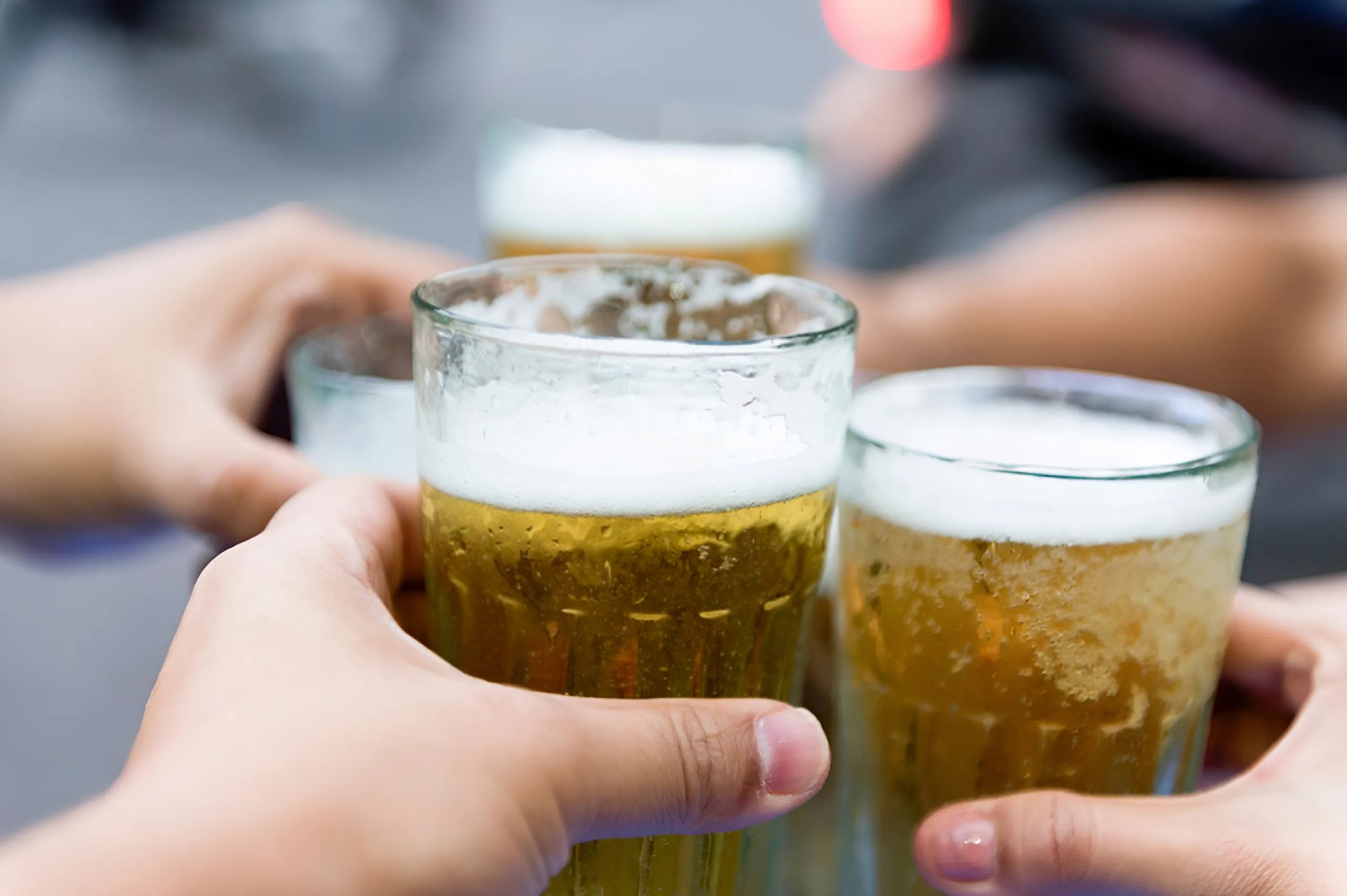
- Group toasts often begin with “Một, hai, ba, dô!” or simply “Dô!”
- When toasting someone older or more senior, keep your glass slightly lower than theirs.
- If you don’t drink alcohol, simply explain it politely and join the toast with water or a soft drink.
- Drinking excessively or becoming loud and disruptive is generally frowned upon.
The point is joining the moment, not proving how much you can drink.
> Read more: Traditional Vietnamese Dishes: What to Eat in Vietnam from North to South
Visiting a Vietnamese Home and Choosing the Right Gift
Being invited into a Vietnamese home is a sign of hospitality and trust. Most customs are straightforward: follow the household’s lead and treat family spaces with respect.
What to Expect When Visiting a Vietnamese Home
- Take off your shoes at the entrance unless the host tells you otherwise.
- Don’t touch, point at, or casually photograph the family ancestor altar. Ask permission before taking pictures.
- Wait for the host to show you where to sit, particularly in traditional homes where seating may reflect age or seniority.
- Keep your feet away from the altar and avoid pointing your soles toward it.
What Makes a Good Gift in Vietnam
If you’re invited for a meal, a small gift is a thoughtful gesture. It doesn’t need to be expensive; around 100,000 – 300,000 VND (about $4 – $12) is plenty.
Good options include:
- Quality fresh fruit
- Biscuits or sweets
- Good tea, such as lotus or jasmine tea
- Vietnamese phin coffee
Avoid overly expensive gifts, which can make the host feel obliged to reciprocate.
Gifts and Colors to Avoid
Some traditional associations are worth knowing, especially when meeting an older or more conservative household:
- Clocks: Associated with death or counting down someone’s remaining time.
- Knives or scissors: Can symbolize cutting a relationship.
- Handkerchiefs: Associated with tears or separation.
- Black or white wrapping: Traditionally linked with mourning.
- Chrysanthemums: Often associated with funerals and ancestor worship.
When giving or receiving a gift, use both hands. Don’t be surprised if the recipient initially refuses it or sets it aside without opening it. This is usually a gesture of modesty and courtesy, not rejection.
> Read more: 21 Unique Vietnam Souvenirs That Travelers Should Buy
Temple and Pagoda Etiquette in Vietnam
Vietnamese temples and pagodas are active places of worship, so treat them as religious spaces rather than tourist attractions. The basic rule is simple: dress modestly, stay quiet, and follow the lead of worshippers.
What to Wear to Vietnamese Temples
- Cover your shoulders, chest, and knees. Avoid tank tops, very short shorts or skirts, sheer clothing, and revealing outfits.
- Remove hats and sunglasses before entering the main worship hall. Shoes should also be removed where required.
- Keep your phone on silent and avoid eating, smoking, shouting, or running inside worship areas.
- Don’t touch Buddha statues, altars, or religious objects. Keep your feet and soles away from statues and altars.
- When photographing, avoid flash and never pose as though you are praying. Ask before photographing monks or people during worship.
How to Behave During Religious Ceremonies
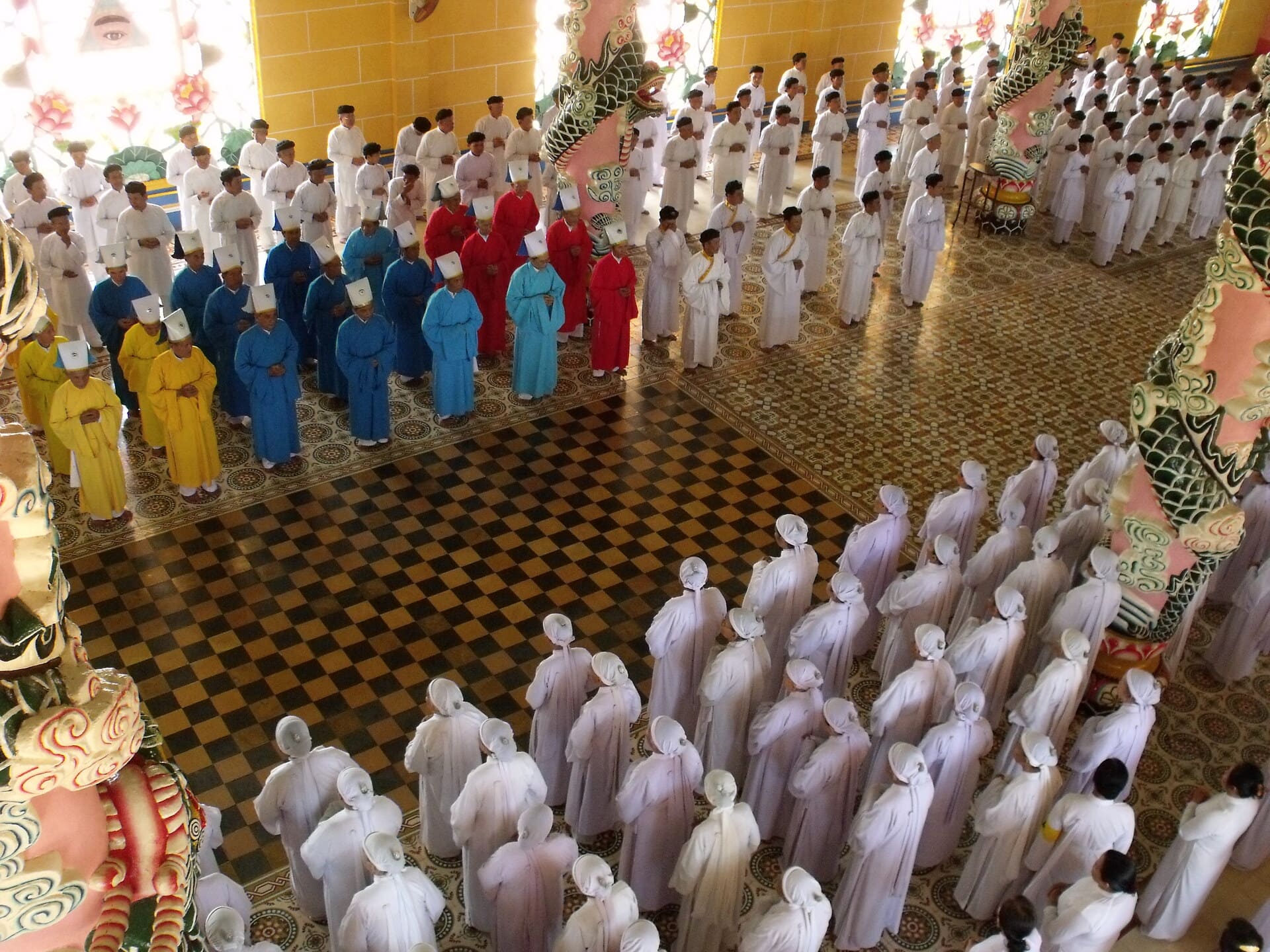
Be especially careful when a ceremony is taking place. Don’t walk between someone praying and the altar; take a route behind them instead. Avoid interrupting prayers or blocking the main aisle.
At Cao Dai temples, men traditionally use the right-side entrance and women the left during ceremonies.
Photography, Donations, and Religious Offerings
Donations are voluntary. If you want to contribute, place money in a designated Công Đức donation box rather than directly on statues or altars. Small notes such as 10,000 – 50,000 VND are commonly used.
Vietnamese Business Etiquette: Meetings, Hierarchy, and Gifts
Business in Vietnam is often built on trust and relationships before contracts. A little patience and awareness of hierarchy can make meetings much smoother.
Building Trust Before Doing Business
- Build trust first. Face-to-face meetings and personal introductions are highly valued.
- Schedule meetings several days ahead and avoid major holidays, especially Tet.
- Share an agenda and key documents in advance. For formal negotiations, an interpreter can be useful.
- Don’t assume “Vâng” means firm agreement. Polite phrases such as “we’ll try” may signal hesitation.
- Give people time to think. Avoid interrupting or pushing for an immediate answer.
- Never publicly criticize or embarrass a business partner. Discuss sensitive disagreements privately.
Business Cards and Workplace Hierarchy
Prepare professional cards, ideally with English on one side and Vietnamese on the other. Exchange them with both hands and take a moment to read the other person’s title.
Give cards to the most senior person first, then continue according to hierarchy. Don’t fold, write on, or casually stuff a received card into your pocket.
What to Wear and Bring to a Business Meeting
Hanoi tends to be more formal, while Ho Chi Minh City is generally more business-casual. For first meetings, dress neatly and conservatively.
Small gifts such as pens, branded stationery, or products from your home country are appropriate. Avoid cash and black or white wrapping paper.
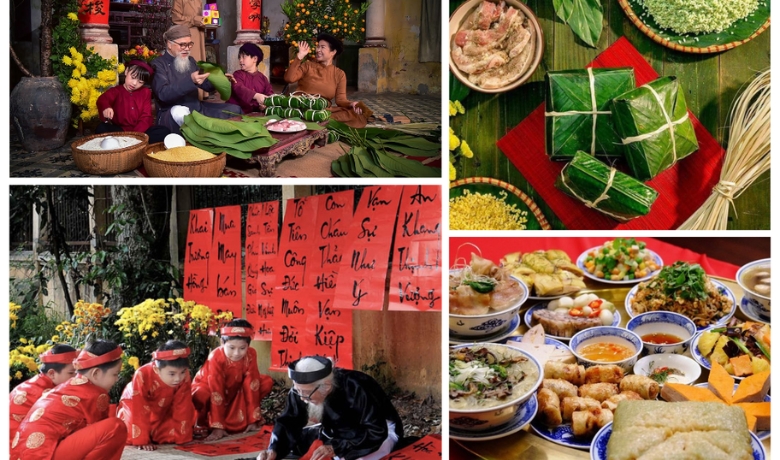
Tet Etiquette: What to Know During Vietnamese New Year
Tet is Vietnam’s biggest holiday, and many customs revolve around starting the year on the right foot. If you’re visiting during Tet, a little cultural awareness goes a long way.
- Don’t sweep or take out the trash: Avoid sweeping the house or throwing away rubbish on the first day of Tet, and traditionally during the first three days, as this is believed to sweep away the family’s luck and prosperity.
- Don’t enter someone’s home uninvited: The first person to enter a home on New Year’s Day is believed to influence the family’s fortune for the year. Only visit on the first day if you have been invited by the host.
- Keep things bright and positive: Black and white clothing can be associated with mourning, so red or other bright colors are safer choices during Tet. Avoid conversations about death, illness, accidents, or other unfortunate events.
- Understand lì xì (lucky money): Red envelopes containing new, crisp banknotes are traditionally given to children and older people as a wish for luck, health, and prosperity. Avoid giving visibly old or crumpled notes.
Frequently Asked Questions (FAQ)
Is tipping mandatory in Vietnam?
No. Tipping is not mandatory in Vietnam, although it is increasingly appreciated in tourism and hospitality. In restaurants, cafés, taxis, and everyday services, simply paying the stated price is generally fine. For excellent service, a small tip is a nice gesture rather than an obligation.
Can I freely take photos of local people while traveling in Vietnam?
It’s better to ask permission first, especially for close-up portraits, children, monks, or people working. A smile and a simple “Can I take a photo?” is usually enough. Avoid photographing people during religious ceremonies without permission, and respect anyone who declines.
How can I politely decline alcohol at a Vietnamese meal?
You don’t need to make a big deal of it. Smile and say “I don’t drink alcohol” or “Thank you, I’ll have water instead.” You can still join the toast with water, soft drinks, or another non-alcoholic beverage. A friendly explanation usually works better than simply refusing the glass.
What are the most important dress codes when visiting temples and pagodas?
Dress modestly and respectfully: cover your shoulders, chest, and knees. Avoid tank tops, very short shorts or skirts, sheer clothing, and revealing outfits. Remove hats and sunglasses before entering the main worship areas, and follow any additional rules posted at the site.
What should I do if I accidentally break a local cultural taboo?
Don’t panic. Most people understand that foreign visitors may not know every local custom. Stop the action, apologize briefly, and correct yourself. A sincere “Xin lỗi” (sorry), accompanied by a polite smile or slight nod, is usually enough.
Know the Etiquette, Then Enjoy Vietnam
A little Vietnam etiquette goes a long way. You don’t need to get every gesture, greeting, or table manner perfect, showing respect, staying curious, and following the local lead will take you far. And once you know the basics, you can spend less time worrying about cultural missteps and more time enjoying the people, food, and places that make Vietnam memorable.
Ready to experience Vietnam beyond the guidebook? Asia Pioneer Travel can tailor your Vietnam itinerary around the culture, places, and experiences you’re most curious about, with the local details taken care of.