Have you ever watched a train squeeze through a street so narrow that houses, cafés, and railway tracks seem to share the same few metres of space? That is the scene waiting for you at Hanoi train street, one of the capital’s most unusual local experiences. Here, you can sip Vietnamese coffee, watch daily life unfold beside the railway, and feel the rumble of a passing train at surprisingly close range. But because this is an active railway, knowing when and where to go makes all the difference.
Is Hanoi Train Street Open in 2026?
Yes, Hanoi Train Street is still accessible in 2026, but it is not an open public attraction where visitors can freely walk along the railway tracks. Access is controlled because trains continue to operate through the area.
At key entrances, including sections around 5 Tran Phu Street and Phung Hung, security barriers and checkpoints restrict access. Visitors should not cross the barriers or walk along the tracks on their own.
In practice, some cafés along the railway still receive visitors through controlled entry. Café owners or staff may meet guests at the checkpoint and escort them directly to their premises. Once inside, visitors are expected to remain in designated areas behind the safety line and watch the train from a safe distance.
The situation can change depending on local safety measures, so do not assume that the railway street is open simply because cafés appear to be operating. If you want to visit Hanoi Train Street in 2026, check the latest access conditions locally and follow instructions from security staff.
For international travellers, the safest approach is to treat Hanoi Train Street as a controlled-access area rather than a freely accessible tourist attraction.
How to Get to Hanoi Train Street
Hanoi Train Street is divided into two main sections, and the best way to reach them depends on the experience you want. The Old Quarter section around Phung Hung and Tran Phu is the most famous and easiest to combine with sightseeing in central Hanoi. The Le Duan section around Alley 224 is farther south and generally feels quieter and more residential.
> Read more: Top 11 Hanoi Tourist Attractions: The Complete Sightseeing Guide
1. Old Quarter Section: Phung Hung and Tran Phu
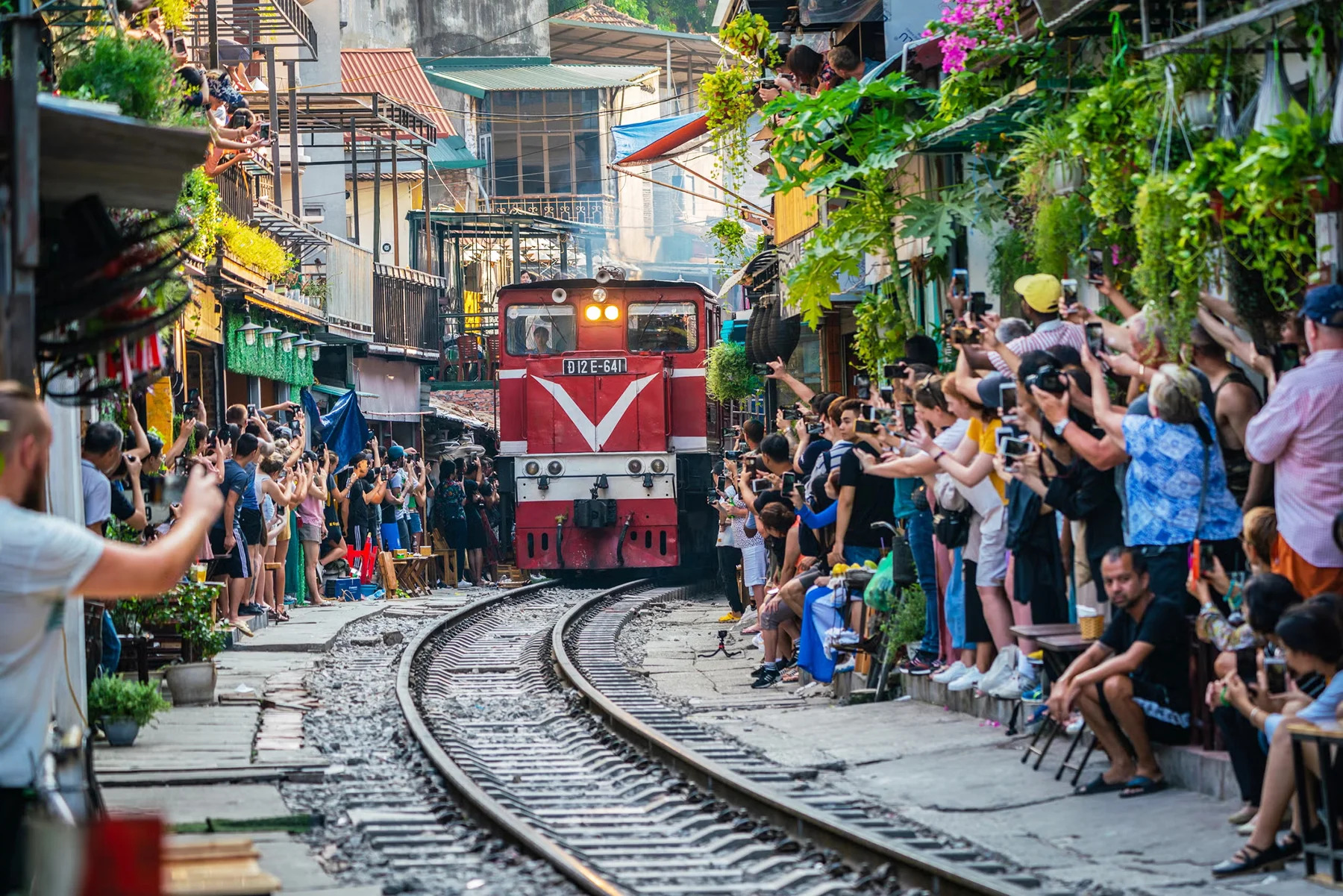
This is the section most visitors mean when they talk about Hanoi Train Street. The railway runs through a dense neighborhood of narrow houses, cafés and colorful balconies, creating the iconic scene you’ll often see in travel photos.
The section around 5 Tran Phu Street and the Phung Hung intersection is roughly 1.2 km from Hoan Kiem Lake, so walking is usually the easiest option if you are already exploring the Old Quarter. It takes around 10 – 15 minutes on foot, depending on where you start.
If you prefer a taxi or ride-hailing service, you can use GrabCar and enter “5 Tran Phu” or “Phung Hung – Tran Phu intersection” as your destination. The driver can drop you outside the access-controlled area, after which you may need to meet café staff at the checkpoint if you have arranged a visit.
Because this section is more tightly controlled, do not expect to simply walk onto the railway tracks. Access can change depending on local safety measures, so follow instructions from security staff and café operators.
2. Le Duan Section: Alley 224 and 222 Le Duan
The second option is the Le Duan section, around Alley 224 and 222 Le Duan, close to Hanoi Railway Station. It is approximately 1.7 – 2 km south of the Old Quarter, making it less convenient on foot but easy to reach by taxi or Grab.
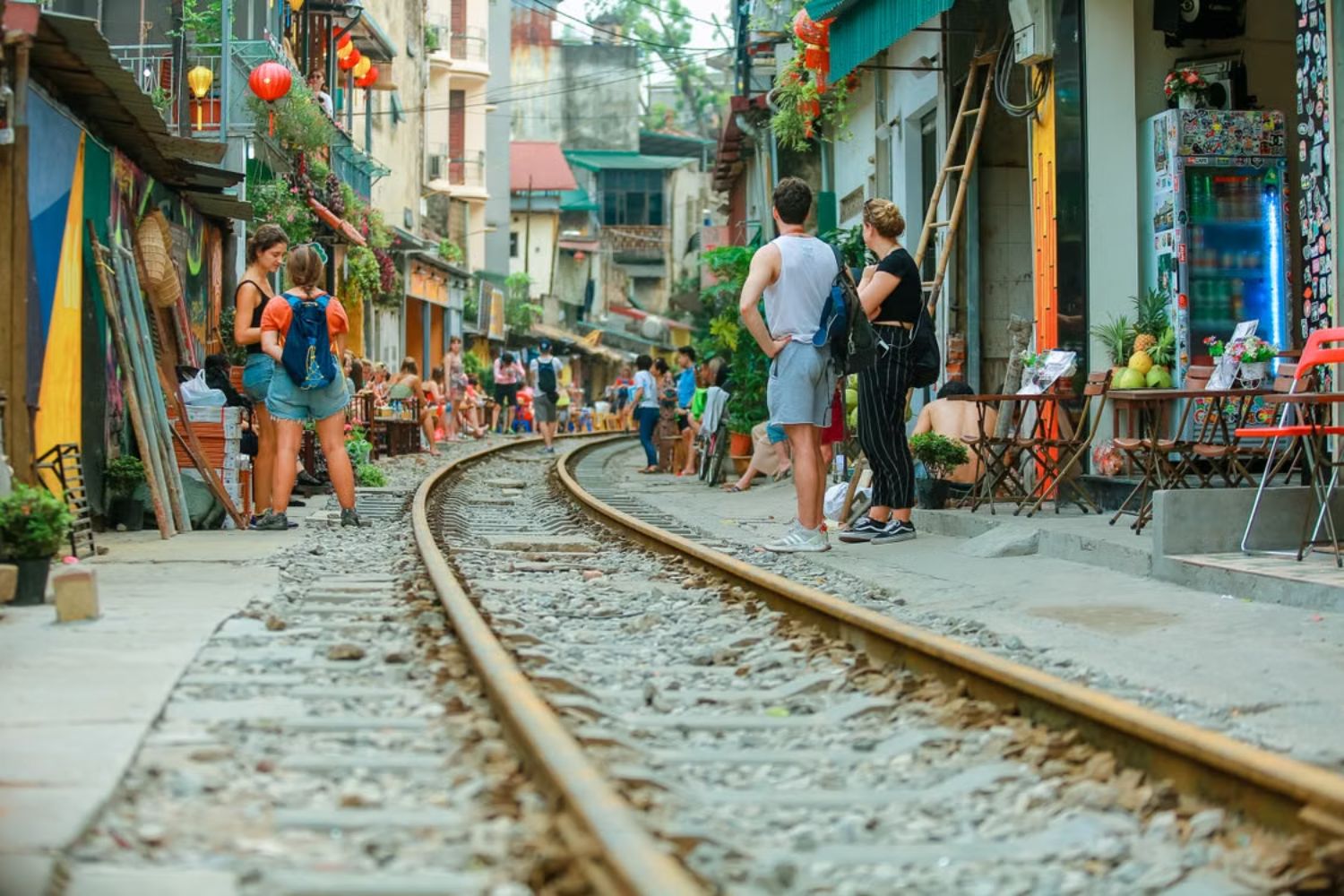
This part of the railway has a more residential atmosphere. Instead of the tightly packed cafés and colorful Old Quarter buildings, you’ll see a quieter side of Hanoi where the railway passes directly through local neighborhoods. It can be a better choice if you want to experience the railway environment without the same level of tourist activity.
The simplest option is to take a GrabCar or taxi and enter “Ngo 224 Le Duan” or “222 Le Duan” as your destination. You can also combine the visit with nearby attractions such as Hanoi Railway Station and the Temple of Literature, making this section convenient for a half-day itinerary.
Important: Access conditions at both sections can change, and being able to reach the street does not necessarily mean you are permitted to enter the railway area. Always follow current local instructions and stay outside the active tracks.
Hanoi Train Street Schedule and Best Viewing Times 2026
Train times at Hanoi Train Street can change, so treat any timetable as a guide rather than a guarantee. Current 2026 schedules show different patterns for the Phung Hung – Tran Phu and Le Duan sections.
Approximate Train Times
- Phung Hung – Tran Phu: On weekdays, trains are generally seen in the morning, afternoon and evening, with commonly listed times around 8:30 – 9:30 AM, 11:50 AM, 3:15 PM, 7:50 PM, 9:15 – 10:00 PM. Weekend schedules include additional daytime services, such as around 6:00 AM, 7:15 AM, 9:30 AM, 11:50 AM, 3:30 PM and 5:30 PM.
- Le Duan: Trains run daily, with commonly listed times around 6:10 AM, 11:40 AM, 3:30 PM, 6:00 PM, 7:10 PM, 7:50 PM and 9:00 PM.
These are approximate passing times, not guaranteed arrival times at the exact viewing spot. Train movements can vary by day and operational conditions.
Best Time to Visit
For the most atmospheric experience, late afternoon and early evening are a good choice. Around 5:30 – 8:00 PM, the weather is generally more comfortable, while the cafés and surrounding streets become livelier.
If you prefer photography with natural light and fewer crowds, weekday mornings or afternoons are usually better. Whichever time you choose, arrive around 20 – 30 minutes early and confirm the next train with a local café or current railway information.
Top Things to Do at Hanoi Train Street
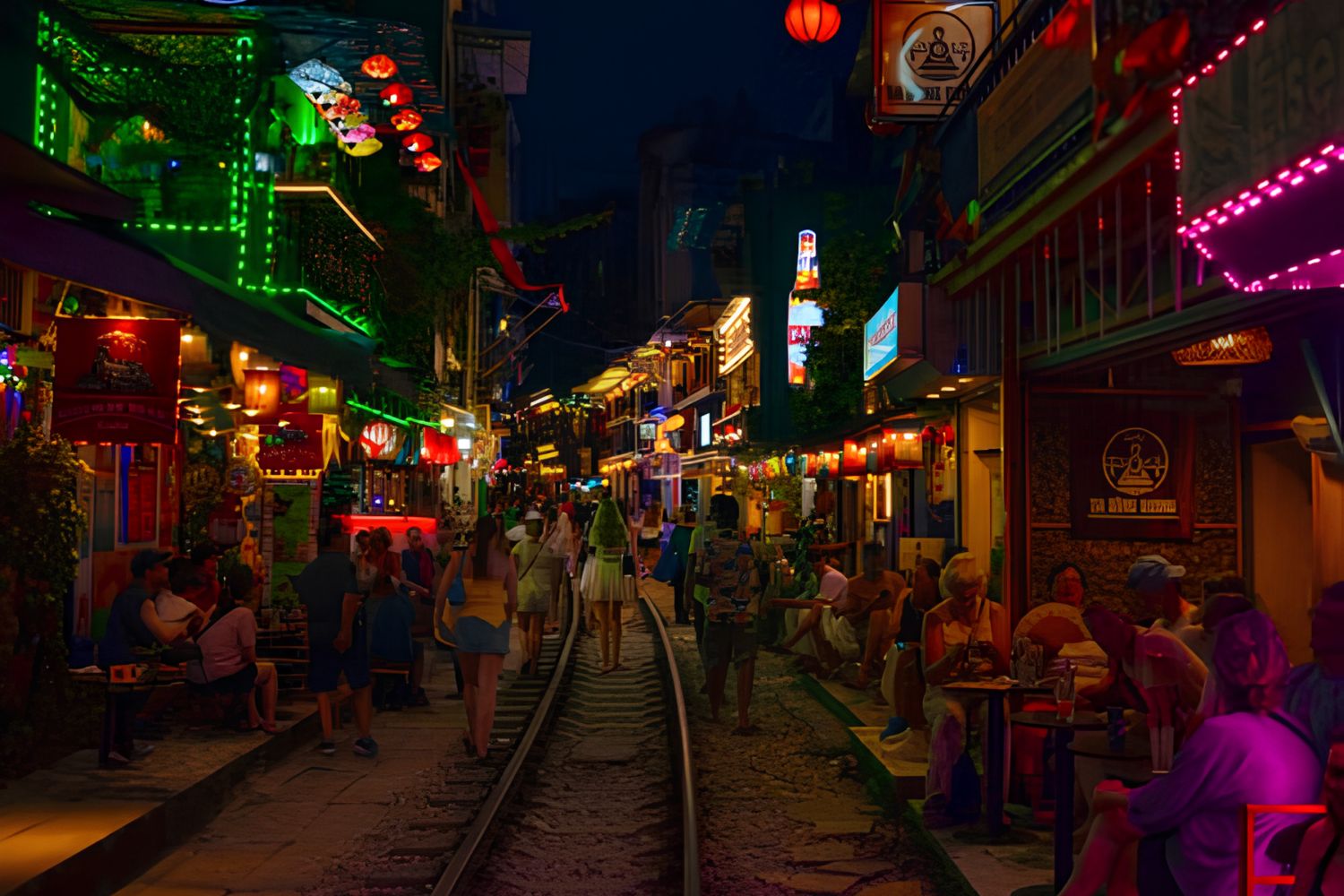
A visit to Hanoi Train Street is more than simply waiting for a train to pass. It is a chance to experience a unique part of Hanoi’s local life, enjoy Vietnamese coffee, take atmospheric photos, and explore the historic streets around the railway.
1. Enjoy Vietnamese Coffee by the Railway
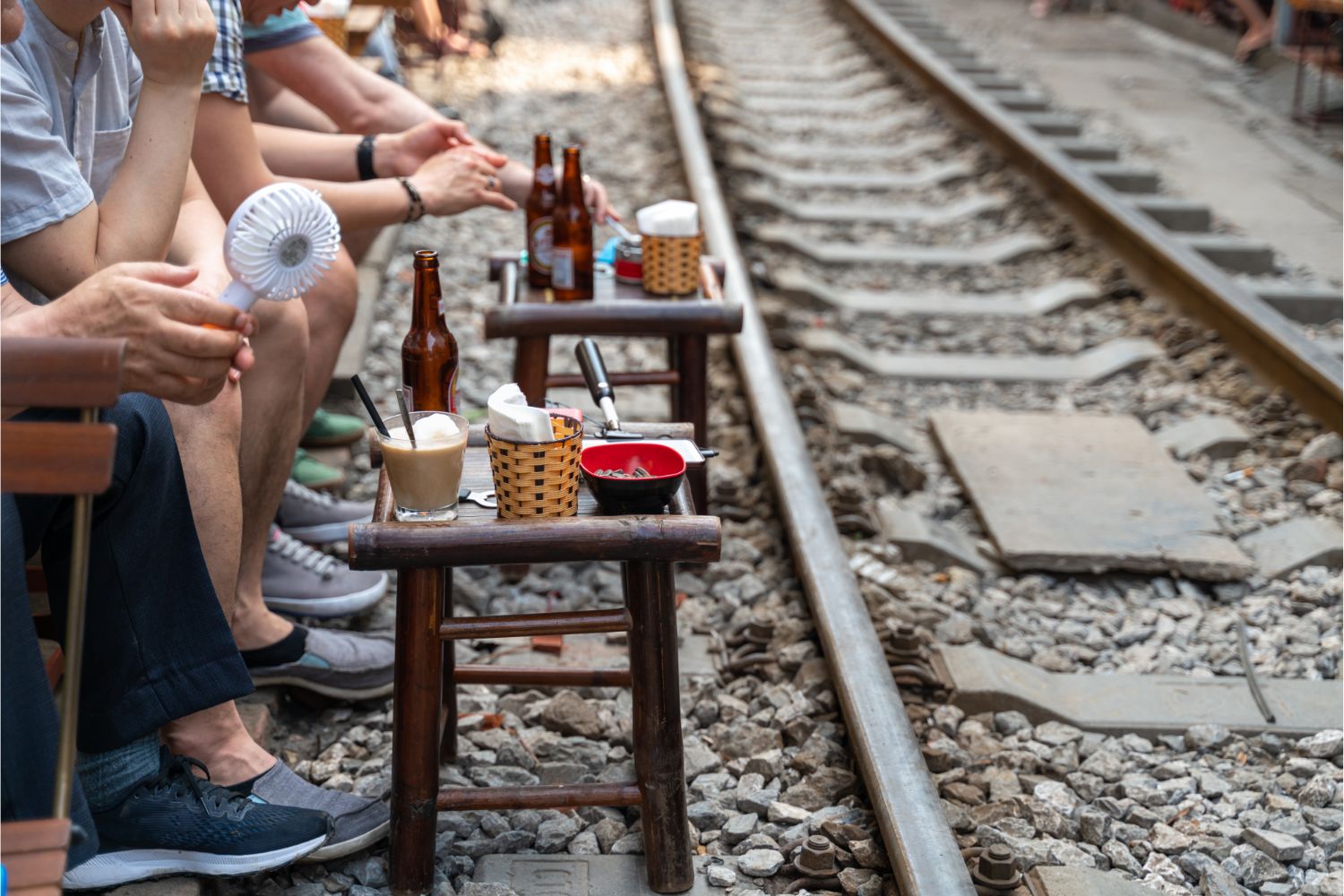
One of the most popular things to do at Hanoi Train Street is enjoying a Vietnamese coffee while watching daily life around the railway. Try local favourites such as Hanoi egg coffee, salted coffee, or coconut coffee. For a more comfortable view, choose a café with an upper-floor balcony rather than sitting close to the tracks. Always follow the café staff’s instructions and stay within designated safe areas.
2. Watch the Train Pass Through the Narrow Street
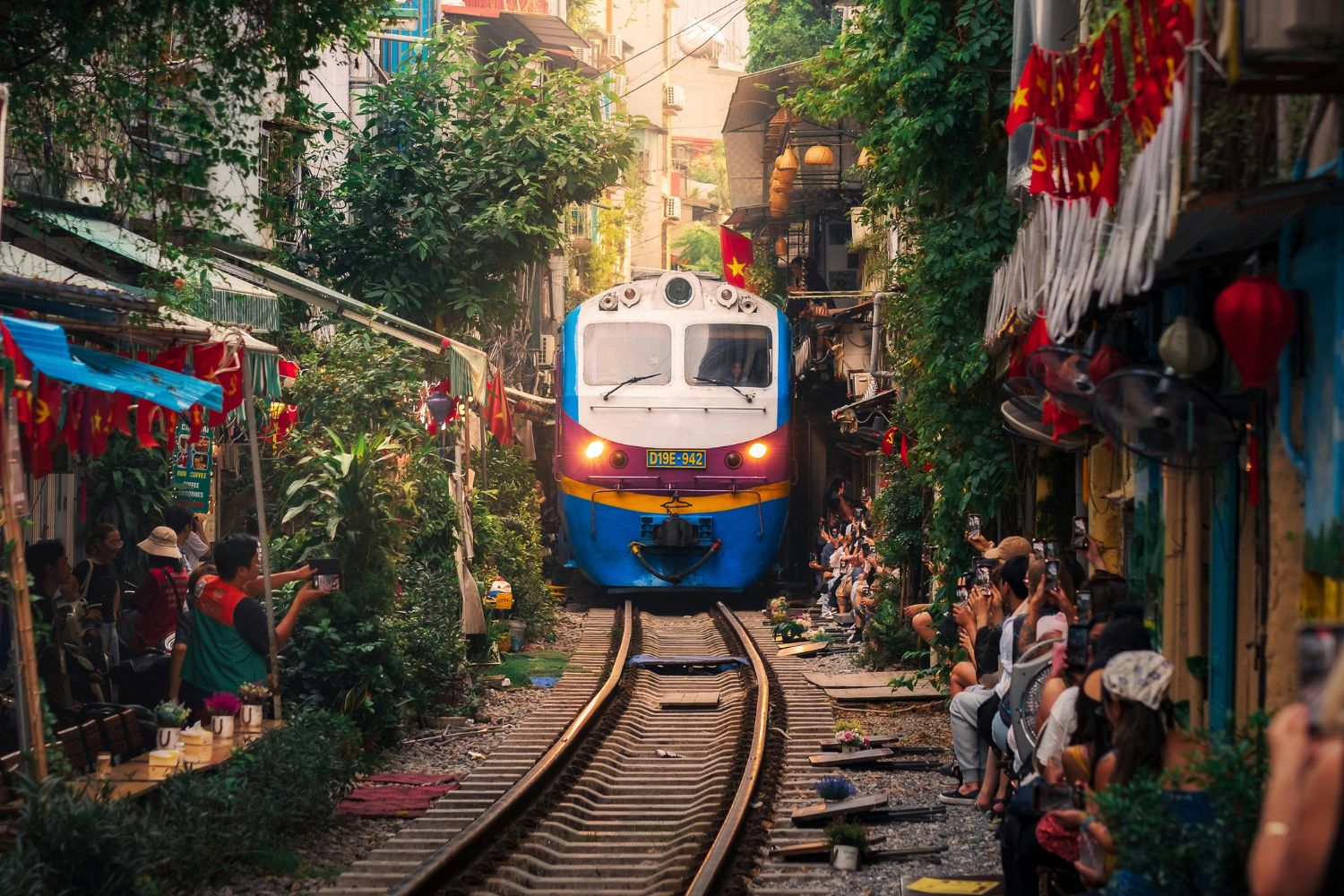
The train passing through the houses is the highlight of the Hanoi Train Street experience. As the train approaches, café staff clear the area and ask visitors to move back to safe positions. The combination of the train’s sound, movement, and the remarkably narrow space makes this a memorable train street experience in Hanoi. However, never step onto the tracks or approach the train for a closer photo.
3. Take Photos and Explore Hanoi’s Railway Heritage
Between train arrivals, the railway corridor offers plenty of opportunities for Hanoi Train Street photography. Look for old tube houses, colourful doors, hanging laundry, cafés, and everyday scenes that show another side of Hanoi. The railway dates back to the French colonial period, adding a layer of history to this unusual urban neighbourhood. Early morning and late afternoon usually provide softer natural light for photos.
4. Combine Train Street with a Hanoi Old Quarter Walk
Because the railway is close to Hanoi’s historic centre, it is easy to include it in a half-day itinerary. After visiting the railway, walk toward Phung Hung Mural Street, St. Joseph’s Cathedral, or Hoan Kiem Lake. You can also explore the Old Quarter’s food scene and try local dishes such as pho, banh mi, or bun cha. This makes visiting Hanoi Train Street a natural stop during a wider Hanoi city tour.
Best Recommended Cafes along Hanoi Train Street
Choosing the right café can make your Hanoi Train Street coffee experience much more enjoyable. Instead of focusing only on the closest seat to the railway, look for cafés with a good view, comfortable seating, and clear safety guidance.
Hanoi 1990s Train Coffee
- Address: Ngo 222 Le Duan and a location around the Old Quarter section of Hanoi Train Street.
- Drinks: Hanoi egg coffee, fresh mango juice, and tropical fruit smoothies.
Hanoi 1990s Train Coffee is a good choice for travellers looking for a nostalgic Hanoi Train Street café. The space uses vintage details such as wooden furniture, yellow walls, old photographs, and warm lighting to recreate the atmosphere of old Hanoi.
Its upper-floor balcony is particularly appealing for visitors who want a wider view of the railway without sitting directly beside the tracks. It is also a practical spot for taking photos while enjoying a classic Vietnamese coffee.
30 Train Coffee
- Address: 30 / 159 Phung Hung, Cua Dong, Hoan Kiem.
- Drinks: Vietnamese phin coffee, iced black coffee, and egg coffee.
30 Train Coffee is one of the more spacious cafés along the Phung Hung section, with a warm, traditional interior inspired by old Northern Vietnamese homes. Its dark wooden furniture and vintage décor make it a popular stop for travellers looking for an authentic train street coffee experience.
The café offers a close-up view of the railway, but visitors should always follow staff instructions and move to designated safe areas when a train approaches.
Spot 09 Coffee
- Address: 74A Phung Hung / Tran Phu, Hoan Kiem.
- Drinks: Egg coffee, Vietnamese iced coffee, and tea.
With a younger and more modern atmosphere, Spot 09 Coffee offers a different take on the classic Hanoi Train Street café experience. Large windows facing the railway provide a convenient viewpoint while keeping guests inside the café.
It is a good option for travellers who want to combine coffee, photography, and a quick visit to the Old Quarter. Staff can also guide visitors on where to sit when a train is approaching.
Cafe San Ga 62
- Address: 62 Phung Hung / 5A Tran Phu, Hoan Kiem.
- Drinks: Coconut coffee and hot egg coffee.
Cafe San Ga 62 takes inspiration from Hanoi’s railway heritage, with old railway-style furniture and vintage details throughout the space. The décor makes it especially appealing to visitors interested in the history and atmosphere surrounding Hanoi Train Street.
Its location close to the railway provides a dramatic viewpoint when trains pass. However, the narrow corridor means visitors should remain inside the designated café area and follow safety instructions.
Nam Vy Coffee
- Address: Ngo 222 Le Duan, Dong Da.
- Drinks: Salted coffee and peanut butter coffee.
Located along the southern railway section near Hanoi Railway Station, Nam Vy Coffee offers a quieter alternative to the busier Old Quarter cafés. The smaller setting gives visitors a more relaxed way to experience the local neighbourhood around the tracks.
For travellers looking for cafes near Hanoi Train Street without the busiest tourist atmosphere, this can be an interesting option. Its creative drinks, particularly salted coffee and peanut butter coffee, also make it stand out from more traditional cafés.
MER Cafe
- Address: 48 Phung Hung, Cua Dong, Hoan Kiem.
- Drinks: Vietnamese black coffee, bac xiu, and soft drinks.
MER Cafe has a simple, nostalgic atmosphere with hanging lanterns and weathered walls that fit naturally into the historic railway neighbourhood. Its position along the Phung Hung section makes it convenient for visitors exploring the Old Quarter.
The café offers a direct view of the railway and a chance to watch everyday life around the tracks between train arrivals. It is a straightforward choice for travellers who want coffee and local atmosphere without an overly elaborate café setting.
Tram Cafe
- Address: Along the Phung Hung railway section, Hoan Kiem.
- Drinks: Salted cream coffee and hot ginger honey tea.
Tram Cafe has a more artistic and intimate atmosphere than many Hanoi Train Street coffee shops. Inside, travel photographs, maps, postcards, and personal memories from visitors create the feeling of a small traveller’s gallery.
It is particularly suitable for those who prefer a quieter café experience rather than simply waiting for a train. The warm interior and selection of Vietnamese-style drinks make it a pleasant place to slow down during an Old Quarter walk.
Hoa Xa Coffee
- Address: Long Bien Railway Station, around 1.5 km north of Hanoi Old Quarter.
- Drinks: Espresso-based coffee, traditional Vietnamese coffee, and fruit tea.
Hoa Xa Coffee is an alternative for travellers interested in railway photography in Hanoi but who prefer a more controlled railway environment. Located within Long Bien Railway Station, the café provides views of trains passing through the historic station area.
Its setting is different from the narrow residential section commonly associated with Hanoi Train Street. For visitors who want to combine a railway experience with a visit to Long Bien and the surrounding Old Quarter, it can be a worthwhile alternative.
Entrance Costs, Cafe Etiquette, and Safety Guidelines
Visiting Hanoi Train Street is free, but access to some sections is controlled for safety. Knowing the basic rules will help you enjoy the experience without disturbing local residents or railway operations.
1. Entrance Costs and Drink Prices
There is no official entrance fee for Hanoi Train Street. In controlled areas such as Phung Hung and Tran Phu, however, visitors may enter through a local café and are generally expected to order a drink.
A coffee or soft drink typically costs around 30,000 – 80,000 VND ($1.20 – $3.20). Some cafés may have a minimum spend for balcony seating or preferred viewing areas. Cash or local payment methods are useful, as not every small café accepts international cards.
2. Cafe Etiquette
The railway passes directly through a residential neighbourhood, so respectful behaviour is important. Keep noise down, avoid blocking shared walkways, and never enter private homes or residential areas without permission.
If you want to take photos of local residents, especially children or older people, ask first. When visiting a Hanoi Train Street café, order a drink rather than occupying a table without purchasing anything.
3. Essential Safety Rules
The railway is still operational, so Hanoi Train Street safety should always come first.
- Stay inside the café or behind the designated safety line when a train approaches.
- Never stand, sit, or pose on the railway tracks.
- Keep bags, phones, cameras, and other belongings away from the tracks.
- Do not use long selfie sticks or tripods close to the railway.
- Keep children within arm’s reach and follow staff instructions immediately.
- Never attempt to approach or touch a passing train.
The most important rule is simple: do not step onto the tracks for a photo. A train can arrive quickly and needs a long distance to stop.
Safe Alternative Spots for Railway Photography
If access to the main Hanoi Train Street railway area is restricted, you can still enjoy Hanoi’s railway heritage from safer viewpoints.
1. Hoa Xa Coffee at Long Bien Railway Station
Located inside Long Bien Railway Station, Hoa Xa Coffee offers a more structured setting for watching trains. It is a good alternative for travellers who want railway photography in Hanoi without standing in the narrow residential corridor of Train Street.
2. Phung Hung Mural Street
Phung Hung Mural Street runs beneath the old railway arches near the Old Quarter. Its colourful murals depict scenes from traditional Hanoi and make an easy addition to a Hanoi Old Quarter itinerary.
Because the street is separated from the active railway tracks above, visitors can explore and take photos at a much more relaxed pace.
3. Long Bien Bridge
Long Bien Bridge is another iconic location for experiencing Hanoi’s railway heritage. The historic steel bridge crosses the Red River and offers views of trains travelling along the railway.
It is particularly attractive around sunset, when you can combine Hanoi railway photography with views of the river and the city’s historic skyline.

4. Take a Short Train Ride to Long Bien
Instead of watching the railway from the outside, consider taking a short local train journey between Hanoi Railway Station and Long Bien Station. The ride offers a different perspective of the railway neighbourhood while keeping you safely inside the train.
It is also an inexpensive way to experience Hanoi’s railway system as part of your wider Hanoi travel itinerary.
Frequently Asked Questions
1. Do I need a ticket or reservation to enter Hanoi Train Street?
No. There is no official entrance ticket for Hanoi Train Street. In controlled sections, visitors may enter through a local café and are generally expected to order a drink to use the café’s seating area.
2. What is the best time to see the train at Hanoi Train Street?
Late afternoon to early evening, around 5:00 – 7:30 PM, is a popular time to visit. The weather is usually more comfortable, cafés start lighting up, and the railway neighbourhood has a lively atmosphere. However, train schedules can change, so confirm the timing locally before visiting.
3. Is Hanoi Train Street safe for families with children?
It can be visited by families, but extra care is essential because trains still operate through the area. Families should stay inside designated café areas, keep children close, and follow staff instructions whenever a train approaches. Upper-floor seating can provide a more comfortable viewing option.
4. What if the train is delayed or the entrance is closed?
Train times can vary because of railway operations, so allow some flexibility in your itinerary. If access to the main viewing area is temporarily restricted, consider alternatives such as Long Biên Railway Station, Long Biên Bridge, or Phùng Hưng Mural Street.
5. How much does it cost to visit a Hanoi Train Street café?
There is no separate entrance fee, but you should expect to purchase a drink at the café. Typical drinks cost around 30,000 – 80,000 VND ($1.20 – $3.20), although prices and minimum spending requirements can vary between cafés.
Final Thoughts
Hanoi Train Street offers a glimpse of Hanoi that is difficult to find anywhere else: trains, old homes, local cafés, and everyday life sharing the same narrow space. The experience can be fascinating, but it also requires careful attention to railway safety and local access rules. If you want to enjoy the atmosphere without worrying about where to go or how to stay safe, Asia Pioneer Travel can help arrange a local experience with knowledgeable guides. You can focus on the coffee, the culture, and that unforgettable moment when the train rolls past.