

Few things cause more pre-trip anxiety than money, and few things turn out to be simpler once you arrive. The currency in Thailand is the Thai baht, and managing it is straightforward: cards work in most of the places you would expect, ATMs are everywhere, and exchanging money is easy in every city and resort town.
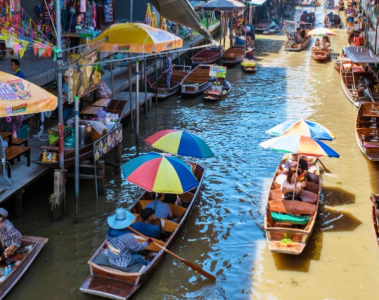
The one thing worth understanding before you land is that Thailand still runs partly on cash. The night market where you eat grilled chicken and mango sticky rice, the longtail boat driver, the tuk-tuk, the small temple donation box, the family-run noodle shop with the best broth in the neighborhood: these are cash moments, and they are often the moments you will remember most.
This guide covers what you actually need to know, from Thai baht denominations to cards, ATMs in Thailand, exchange counters, digital payments, and how much cash to carry.
1. What Is The Currency in Thailand?
Thailand’s official currency is the Thai baht. Its international code is THB, and you will see it written with the ฿ symbol or simply as “baht” or “B” on menus and price tags. One baht is divided into 100 satang, though satang coins play a very small role in daily life.
The baht is a stable, fully convertible currency, and it is the only currency you will realistically use in Thailand. Prices in hotels, restaurants, shops, taxis, and attractions are set in baht, and nearly all transactions, whether by cash or card, are settled in baht.
Exchange rates against the US dollar, euro, pound, and Australian dollar fluctuate daily, so check a current rate shortly before you travel rather than relying on a figure from an old guidebook or a friend’s trip last year. For the latest exchange rates, you can check reliable tools such as Exchange Rate Calculator before or during your trip.
Thai Baht Notes and Coins
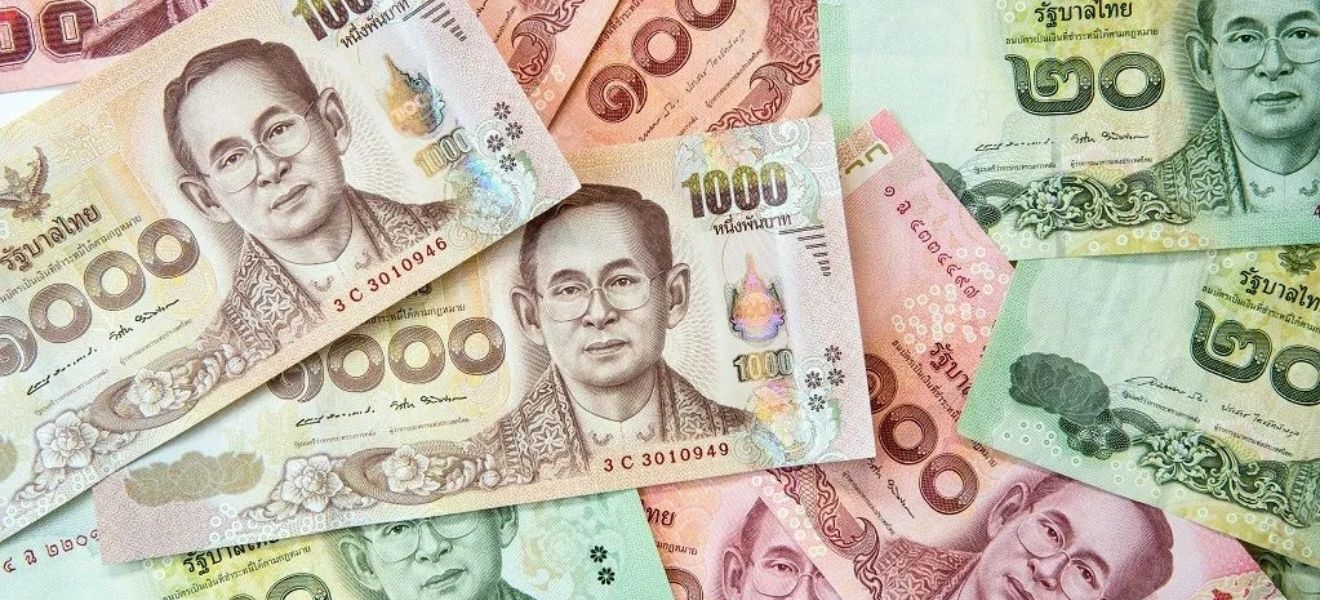
Thai banknotes are color-coded and easy to tell apart, which helps when you are paying at a busy stall or counting change in a dim restaurant. The current series features a portrait of King Maha Vajiralongkorn (Rama X) on the front. Older notes showing the late King Bhumibol Adulyadej (Rama IX) remain legal tender and are still in circulation, so do not be surprised to receive both.
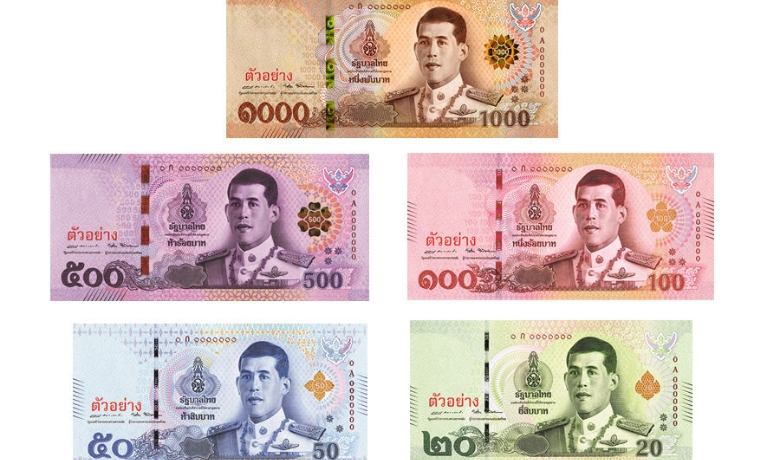
The five banknotes you will handle are:
- 20 baht (green) – the everyday note for small purchases
- 50 baht (blue)
- 100 baht (red) – the most useful note for markets, taxis, and casual meals
- 500 baht (purple)
- 1,000 baht (brown) – the note ATMs most often dispense
Some of the lower denominations, including the 20, 50, and 100 baht notes, are now printed on polymer rather than paper, so a slightly plastic feel is normal and not a sign of a counterfeit.
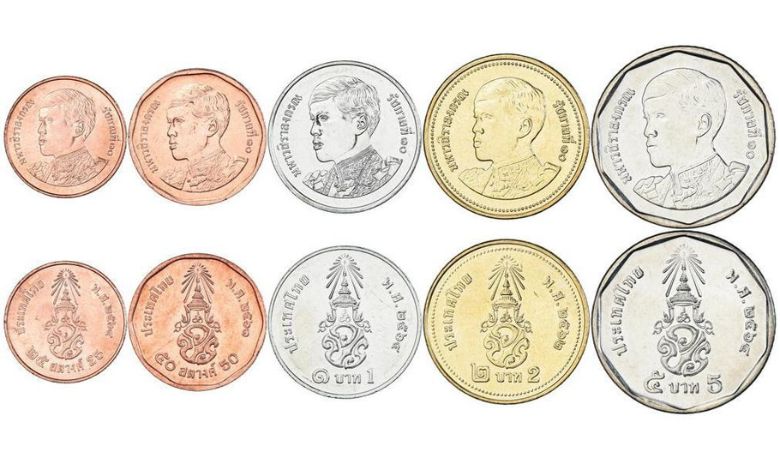
Coins come in 1, 2, 5, and 10 baht, plus 25 and 50 satang. The satang coins are mostly encountered as change in supermarkets and convenience stores. Smaller satang coins technically exist but you are unlikely to see one.
Special note: smaller notes matter more in Thailand than in many Western countries. A street vendor selling 60-baht noodles may genuinely struggle to change a 1,000-baht note, and a taxi driver may not have change for one either. Breaking large notes at convenience stores, hotel receptions, or larger restaurants, and keeping a supply of 20s and 100s, will smooth your day considerably.
2. Can You Use US Dollars or Other Foreign Currency in Thailand?
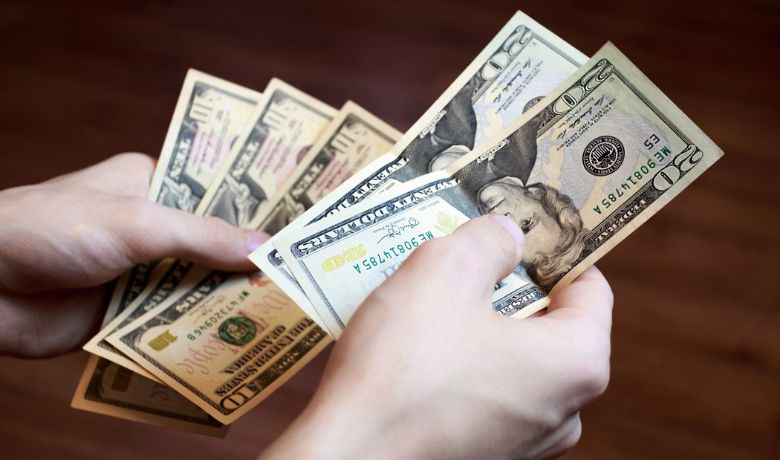
Thailand is not a dual-currency destination, where dollars circulate alongside the local currency. Thai law establishes the baht as legal tender, and businesses price and expect payment in baht.
You may occasionally encounter a hotel, upscale tour operator, or souvenir shop in a heavily touristy area that will accept US dollars or euros, but this is the exception rather than the rule. When it does happen, the exchange rate applied is usually unfavorable, and you will receive change in baht. Treat foreign cash as something to exchange, not something to spend.
Where US dollars do come in handy is as a reserve. Clean, undamaged dollar or euro notes are easy to exchange at good rates throughout Thailand, so bringing a modest amount as a backup is sensible. Torn, heavily creased, or marked foreign notes may be refused or exchanged at a lower rate, so bring crisp bills if you can.
3. Cash or Card: How Should You Pay in Thailand?
The honest answer is both, and the balance depends on where you are and what you are doing.
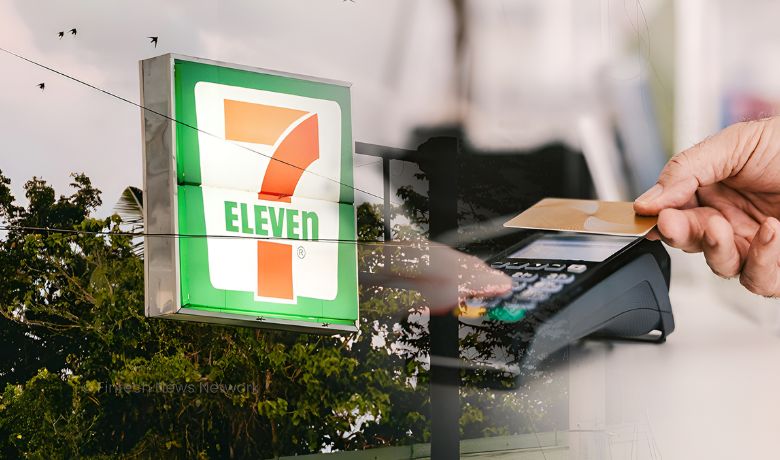
Where cards work well. Visa and Mastercard are widely accepted at hotels, resorts, mid-range and upscale restaurants, shopping malls, department stores, chain supermarkets, larger pharmacies, and airlines. Convenience stores such as 7-Eleven generally accept cards as well. Contactless payment is common in Bangkok, Chiang Mai, Phuket, and other major destinations, and Apple Pay and Google Pay function wherever contactless terminals are installed. American Express is accepted at some hotels and larger merchants but far less widely than Visa or Mastercard.
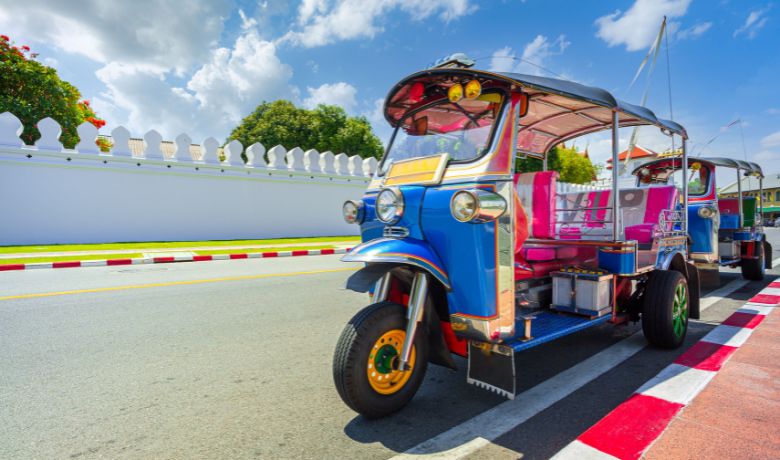
Where cash still rules. Street food stalls, local markets, small independent shops, tuk-tuks, songthaews, many metered taxis, boat crossings, temple entrance fees, massage shops, and small guesthouses or cafés in rural areas are largely cash-only. Some smaller businesses that do accept cards add a surcharge, typically a few percent, for the privilege. Tipping, where you choose to do it, is also a cash matter.
A note on card fees. Your own bank may charge a foreign transaction fee on every card purchase, and some card terminals in Thailand will offer to charge you in your home currency instead of baht. This is called dynamic currency conversion, and it almost always results in a worse rate. When given the choice, select Thai baht.
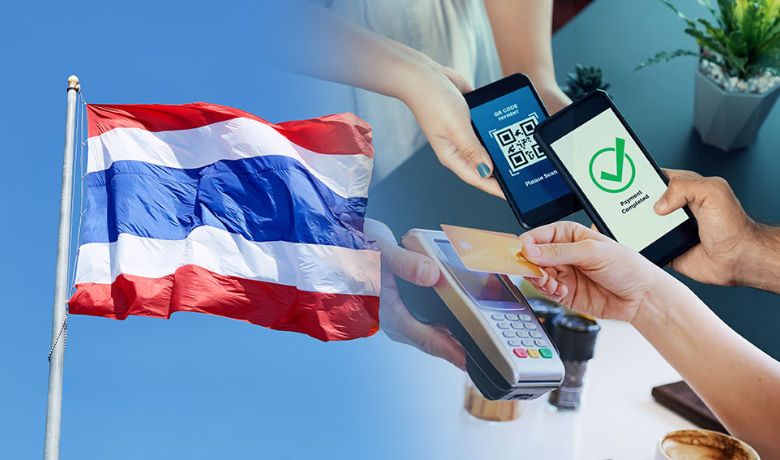
Digital and QR payments. Thais themselves pay for nearly everything, including street food, by scanning QR codes through PromptPay, the national bank-linked payment system. Until recently, this was closed to visitors, since it requires a Thai bank account and phone number. However, Thailand has been steadily linking its QR system with regional and international wallets, and travelers from several Asian countries can now scan Thai QR codes through their home banking or wallet apps. Some international wallets, including Alipay-linked services, also work at participating merchants.
There is also a tourist-oriented prepaid option, PAY&TOUR from TAGTHAi, that allows QR payments without a local bank account. These options are useful but not yet universal, and they should complement rather than replace a card and some cash. If you plan to rely on one, confirm before your trip that your specific app is supported in Thailand.
Key takeaway: use your card for hotels, larger meals, and shopping, and carry enough baht for the everyday, local side of your trip.
4. Using ATMs in Thailand
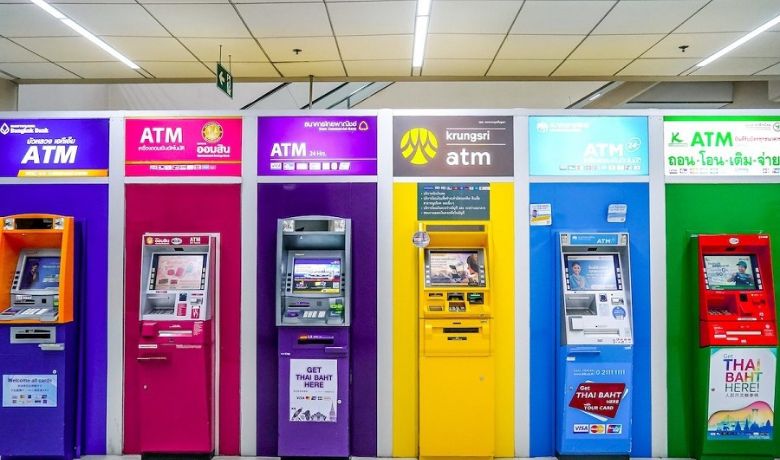
ATMs are one of the easiest ways to get baht, and they are genuinely everywhere: airports, shopping malls, convenience stores, bank branches, gas stations, tourist streets, and even small towns. Most accept foreign Visa, Mastercard, Maestro, Cirrus, and Plus cards, and virtually all offer an English-language option.
There are two costs to be aware of. First, Thai banks charge a fixed fee on every withdrawal made with a foreign card. This fee has crept upward over the years and varies by bank and card network, but it is typically a couple of hundred baht or more per transaction. The exact amount is displayed on screen before you confirm, so you can always cancel if it seems high. Second, your home bank may charge its own international withdrawal fee and a currency conversion fee on top.
Because the Thai fee is fixed regardless of the amount, fewer larger withdrawals are more economical than many small ones. Most Thai ATMs allow single withdrawals of around 20,000 to 30,000 baht, though your own bank’s daily limit may be lower. If you plan to withdraw larger sums, check or raise your limit before you travel.
As with card terminals, the ATM may ask whether you want to convert the transaction into your home currency. Decline this and choose to be charged in baht. Your bank’s rate will nearly always be better than the ATM operator’s.
For safety, favor ATMs inside bank branches, shopping malls, or well-lit convenience stores over standalone machines in quiet areas. Shield your PIN, take your card and receipt, and avoid counting large sums of cash on the street. Card skimming is not rampant in Thailand, but it is not unknown, so glancing at the card slot for anything loose or unusual is a reasonable habit.
Finally, tell your bank you will be in Thailand before you leave. A sudden withdrawal in Bangkok can trigger a fraud block, and sorting that out from a different time zone is an avoidable headache.
5. Where to Exchange Money in Thailand
If you prefer to exchange cash rather than rely on ATMs, Thailand makes it easy. There are several options, each with trade-offs.
Licensed exchange counters in city centers, particularly in Bangkok, often offer the most competitive rates. Look for the exchange rate board and the official license displayed at the counter. Rates differ between providers and change through the day, so it is worth glancing at two or three if a large sum is involved. You will usually need your passport.
Bank branches and bank-operated exchange booths are reliable, secure, and widespread. Their rates are typically slightly less favorable than the best independent counters but perfectly reasonable, and they are the safest option for exchanging larger amounts.
Airport exchange counters are convenient for getting a small amount of baht on arrival but generally offer poorer rates than those in town. Exchanging just enough for your taxi, a meal, and the first day, then doing the rest in the city, is a sensible approach. Alternatively, an airport ATM gives you baht at your bank’s rate, minus the fees mentioned above.
Hotels will often exchange money as a convenience, but the rates rarely favor the guest.
Whichever option you choose, exchange rates in Thailand are quoted for clean, undamaged notes, and higher-denomination foreign bills sometimes attract a slightly better rate than small ones. Always count your baht before leaving the counter and keep the receipt, which some counters require if you want to exchange leftover baht back at the end of your trip.
A common question is whether to buy Thai baht before leaving home. You can, and having a small amount in hand on arrival is reassuring. However, baht purchased abroad usually comes at a noticeably worse rate than you will find in Thailand itself. If you want the comfort of arriving with cash, keep the amount modest.
6. How Much Cash Should You Carry in Thailand?
There is no single correct figure, and any article that gives you one is guessing about your trip. The right amount depends on where you are going, how you are traveling, and what you enjoy doing.
Think of it in terms of what your card will and will not cover. On a tailor-made itinerary where your hotels, private transfers, guided excursions, and many meals are arranged in advance, your daily cash needs may be quite low: enough for street food, market purchases, a massage, small entrance fees, drinks, and tips. A couple of thousand baht per person per day is comfortable for many travelers in this situation, and some days you will spend far less.
If you plan to eat mainly at local restaurants, shop at markets, take public transport, or spend time in smaller towns and islands where card acceptance thins out, you will want more cash on hand. Rural areas, small islands, and national parks are places where the nearest reliable ATM may be a long ride away, so withdraw before you head somewhere remote.
A workable approach is to hold a few days’ worth of cash at a time rather than a whole trip’s worth. Keep the bulk in your hotel safe and carry only what you need for the day, split between a wallet and a second location such as a zipped inner pocket or a day bag. Top up at an ATM every few days.
And remember that the same logic applies in reverse: you do not want to leave Thailand with a large stack of baht. Converting it back at the airport is possible but rarely at a good rate, so spend down your cash in the final day or two and put larger purchases on a card.
7. Practical Money Tips for Thailand
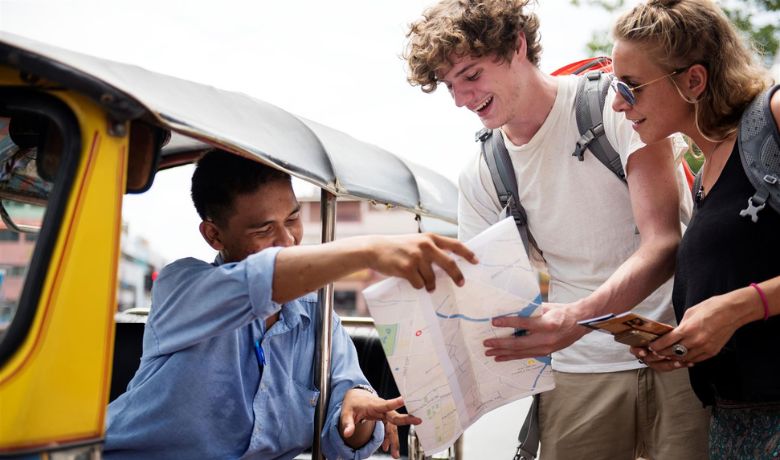
Keep small notes and coins close at hand. Hundreds and twenties are the workhorses of daily life. Break larger notes at convenience stores or your hotel whenever you can, and keep the small stuff accessible so you are not digging for change at a busy stall.
Travel with at least two cards from different networks. A Visa and a Mastercard, ideally from different banks, means a lost card, a fraud block, or a terminal that refuses one network does not leave you stranded. Store them separately.
Choose baht, always. Whether at an ATM or a card terminal, decline the offer to pay or withdraw in your home currency. Being charged in Thai baht lets your own bank set the rate, which is nearly always better.
Withdraw larger amounts, less often. Since Thai ATM fees are fixed per transaction, a single larger withdrawal every few days costs less than a daily small one.
Know your bank’s fees before you go. Foreign transaction fees and international ATM charges vary widely between banks. Some travel-focused cards charge none. Knowing your costs in advance lets you decide how to balance cash and card.
Keep your cash in more than one place. A hotel safe for the reserve, a wallet for the day’s spending, and a small backup tucked elsewhere. Losing one does not mean losing all.
Do not judge exchange counters solely by their headline rate. A rate that looks excellent may apply only to large-denomination notes or come with a commission. Ask before you hand over your money, and count what you receive.
FAQs About Currency in Thailand
1. What currency is used in Thailand?
Thailand uses the Thai baht (THB), written as ฿ or “baht.” It is the only currency you will normally use for everyday purchases in Thailand.
2. Is cash or card better to use in Thailand?
Both are useful. Cards are widely accepted at hotels, shopping malls, larger restaurants, and other established businesses, while cash is still essential for markets, street food, tuk-tuks, small shops, and other local businesses.
3. Are ATMs easy to find in Thailand?
Yes. ATMs are widely available in airports, shopping malls, bank branches, convenience stores, and tourist areas. Foreign cards are generally accepted, but Thai ATM fees and fees from your own bank may apply.
4. How much cash should I carry in Thailand?
There is no fixed amount, as it depends on your itinerary and spending habits. For travelers with hotels, transfers, and activities arranged in advance, a couple of thousand baht per person per day is often a comfortable amount for smaller expenses, though some days you may spend much less.
Final Thoughts
Money in Thailand does not need to be complicated. Arrive with a little baht or withdraw some at the airport, use your card where it is convenient, keep enough cash for the markets, street food, and small businesses that make Thailand what it is, and carry a backup card in case something goes wrong. Never keep all your funds in cash, always choose to be charged in baht, and let your bank know you are traveling. Do those few things and you will spend your trip thinking about temples, beaches, and what to order next rather than about your wallet.
If you would rather not think about the logistics at all, a private, tailor-made itinerary with Asia Pioneer Travel takes care of the big-ticket items in advance: hotels, private transfers, guides, and the experiences that matter most to you. That leaves your cash for the small pleasures along the way, and your attention free for Thailand itself.