

Hanoi is a city that keeps you curious. One minute, you’re wandering past ancient temples and narrow streets filled with the smell of street food. The next, you’re admiring French colonial villas or sipping egg coffee beside a busy railway. Vietnam’s thousand-year-old capital blends history, culture, and everyday life in a way few cities can match. This guide to the top 11 Hanoi tourist attractions covers the essential sights, local experiences, and easy day trips to help you make the most of your visit.
Top Hanoi Tourist Attractions for History and Culture Lovers
Hanoi’s history comes to life through its ancient temples, imperial buildings, and sites connected to Vietnam’s modern past. These landmarks are among the most meaningful Hanoi tourist attractions for travelers who want to understand the capital beyond its busy streets and food scene.
1. Temple of Literature
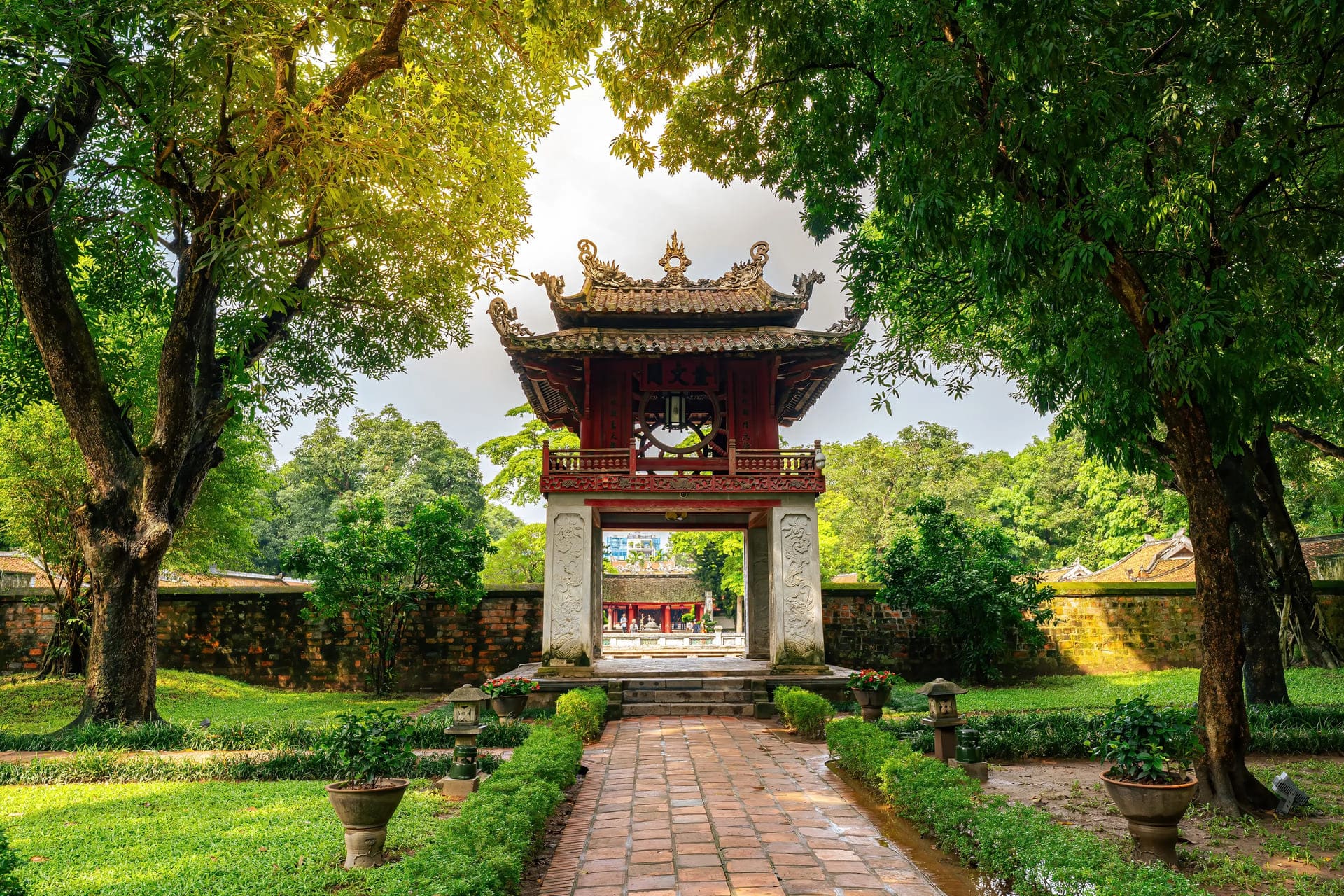
The Temple of Literature, located at 58 Quoc Tu Giam Street, is one of Hanoi’s most important historical landmarks. Built in 1070 under Emperor Ly Thanh Tong, it was dedicated to Confucius and later became home to Vietnam’s first national university in 1076. For centuries, it educated scholars who went on to serve the country as officials.
The complex features five peaceful courtyards, traditional gates, landscaped gardens, and Khue Van Pavilion, a familiar symbol of Hanoi. Its 82 stone steles, mounted on turtle statues, commemorate successful doctoral candidates from imperial examinations. For visitors planning Hanoi travel, it offers a fascinating introduction to Vietnamese education and Confucian traditions.
- Opening hours: 8:00 AM – 5:00 PM daily. The night tour runs from 6:30 PM to 9:30 PM on Wednesdays, Saturdays, and Sundays.
- Entrance fees: Adults: 70,000 VND; students with valid identification: 35,000 VND; children under 16: free.
2. Imperial Citadel of Thang Long
The Imperial Citadel of Thang Long is one of the most significant historical sites in Hanoi, Vietnam. Its origins date back to earlier fortifications, and it became the capital of Dai Viet in 1010 when King Ly Thai To moved his court from Hoa Lu. Successive dynasties used the site as a political and administrative center for centuries. UNESCO recognized the Central Sector of the Imperial Citadel as a World Heritage Site in 2010.
Today, visitors can explore historic gates, royal foundations, archaeological discoveries, and structures connected to Vietnam’s modern military history. Allow two to three hours to appreciate the site’s different layers of history. It is an essential stop in a Hanoi Vietnam travel guide focused on heritage.
- Opening hours: 8:00 AM – 5:00 PM, Tuesday to Sunday. Closed on Mondays. The night tour Decoding the Imperial Citadel of Thang Long lasts 90 minutes.
- Entrance fees: Adults: 100,000 VND; students over 16 and visitors aged 60 or above: 50,000 VND; children under 16: free. Night tour: 300,000 VND for adults and 150,000 VND for children aged 5 – 11.
3. Ho Chi Minh Mausoleum and Ba Dinh Square
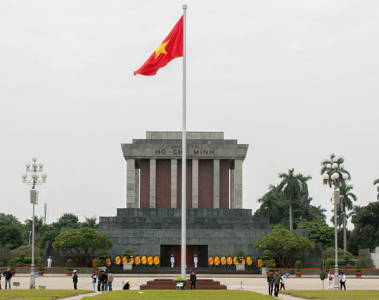
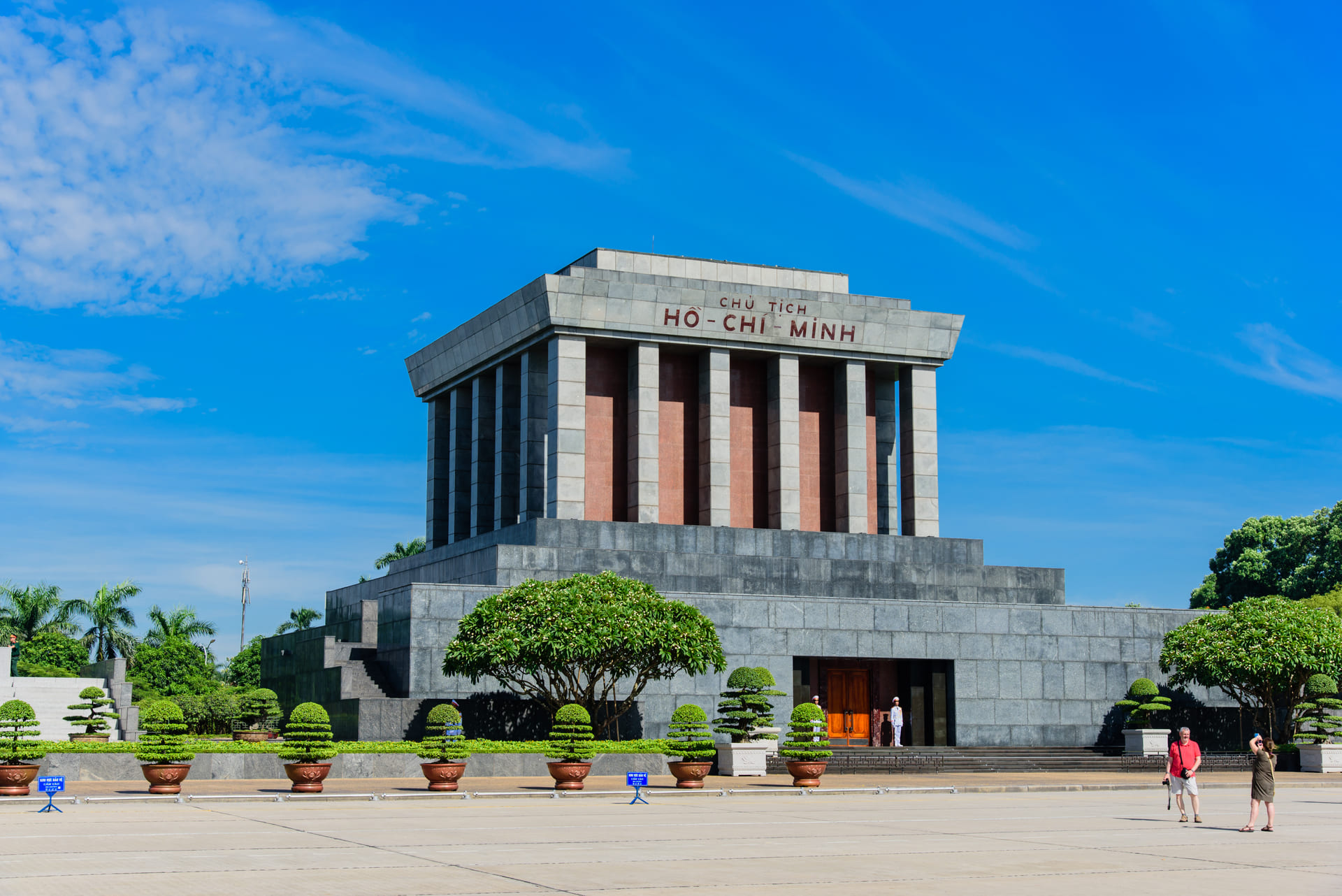
Ba Dinh Square is where President Ho Chi Minh declared Vietnam’s independence on September 2, 1945. Today, the square and Ho Chi Minh Mausoleum form an important national memorial complex in central Hanoi. The mausoleum, completed in 1975, stands at the heart of the square and is surrounded by gardens and carefully maintained grounds.
Nearby attractions include the Presidential Palace, Ho Chi Minh’s stilt house, the Ho Chi Minh Museum, and the One Pillar Pagoda, originally built in 1049. Together, these sites offer insight into Vietnam’s political history and cultural traditions. When deciding what to see in Hanoi Vietnam, set aside a morning for this area and check the mausoleum’s visiting schedule in advance.
- Opening hours: The mausoleum opens on Tuesday, Wednesday, Thursday, Saturday, and Sunday mornings. From April 1 to October 31, visiting hours are 7:30 – 10:30 AM on weekdays and until 11:00 AM on weekends. From November 1 to March 31, hours are 8:00 – 11:00 AM on weekdays and until 11:30 AM on weekends. It is closed on Mondays, Fridays, and every afternoon. Annual maintenance usually takes place for around two months in autumn.
- Entrance fees: Entry to the mausoleum is free. The Ho Chi Minh Museum and stilt house area charge separate fees of approximately 25,000 – 40,000 VND per person. Ba Dinh Square and the One Pillar Pagoda are free to visit.
4. Hoa Lo Prison Relic
Hoa Lo Prison Relic offers a sobering look at Vietnam’s colonial history and wartime experiences. Built by the French colonial administration in 1896, the prison was originally used to detain Vietnamese revolutionaries. During the Vietnam War, it also held captured American pilots, leading to its well-known nickname, the “Hanoi Hilton.” The site preserves part of the original prison complex and presents historical accounts through photographs, artifacts, and exhibitions.
Walking through the former cells reveals the difficult conditions prisoners experienced and the role the prison played in Vietnam’s struggle for independence. For travelers exploring Hanoi top tourist attractions, Hoa Lo adds historical depth to visits focused on temples and architecture. An audio guide can help explain the stories behind the exhibits.
- Opening hours: 8:00 AM – 5:00 PM daily, without a midday break.
- Entrance fees: Adults: 50,000 VND; children under 16: free.
These four landmarks are among the best things to do in Hanoi for travelers interested in the city’s history and culture. Including them in your Hanoi Vietnam trip alongside the Old Quarter and French Quarter offers a broader view of the capital.
Explore Hanoi’s Old Quarter and French Colonial Streets
5. Hanoi Old Quarter
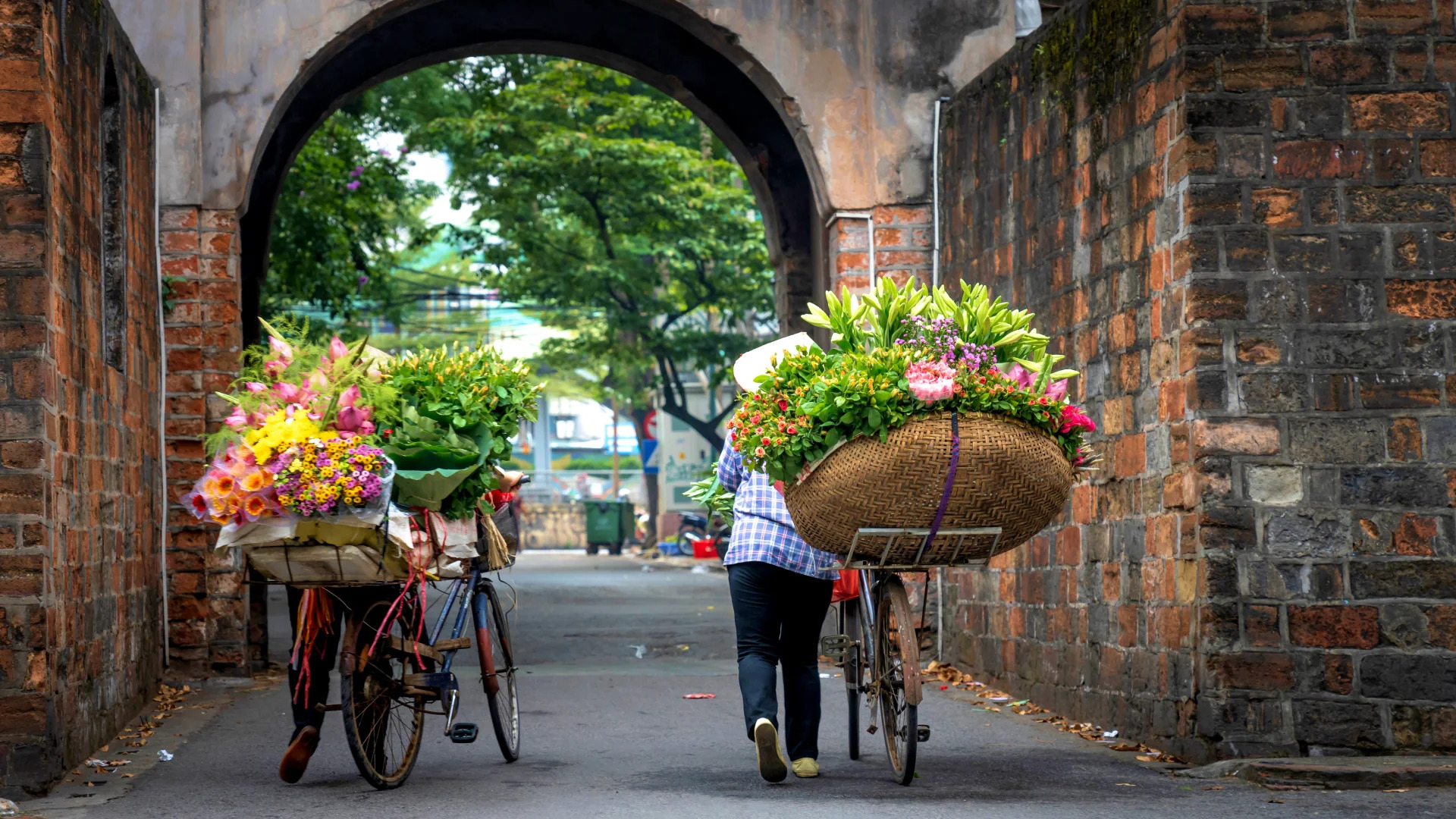
Hanoi Old Quarter, north of Hoan Kiem Lake, is one of the most vibrant Hanoi tourist attractions. Its history stretches back more than a thousand years, with streets traditionally associated with specific trades. Hang Bac is known for silverwork, Hang Gai for silk, and Hang Ma for paper decorations and lanterns. Narrow tube houses, old balconies, and busy sidewalks reveal how Hanoi’s commercial life has evolved over generations.
Explore Bach Ma Temple, one of the area’s oldest temples, and visit Dong Xuan Market to experience local trading culture. In the evening, Ta Hien Street becomes a lively meeting point for food and drinks. A cyclo ride or private street food tour offers a relaxed way to discover the neighborhood.
- Opening hours: The weekend night market operates from 6:00 PM to 11:00 PM on Fridays, Saturdays, and Sundays.
- Entrance fees: No general entrance fee is specified for exploring the Old Quarter’s streets.
6. French Quarter and Hanoi Opera House
Southeast of Hoan Kiem Lake, Hanoi’s French Quarter offers a more spacious atmosphere than the Old Quarter. Wide, tree-lined boulevards such as Trang Tien and Ngo Quyen are bordered by French colonial villas, diplomatic buildings, and elegant hotels. The architecture reflects the urban planning of the late 19th and early 20th centuries.
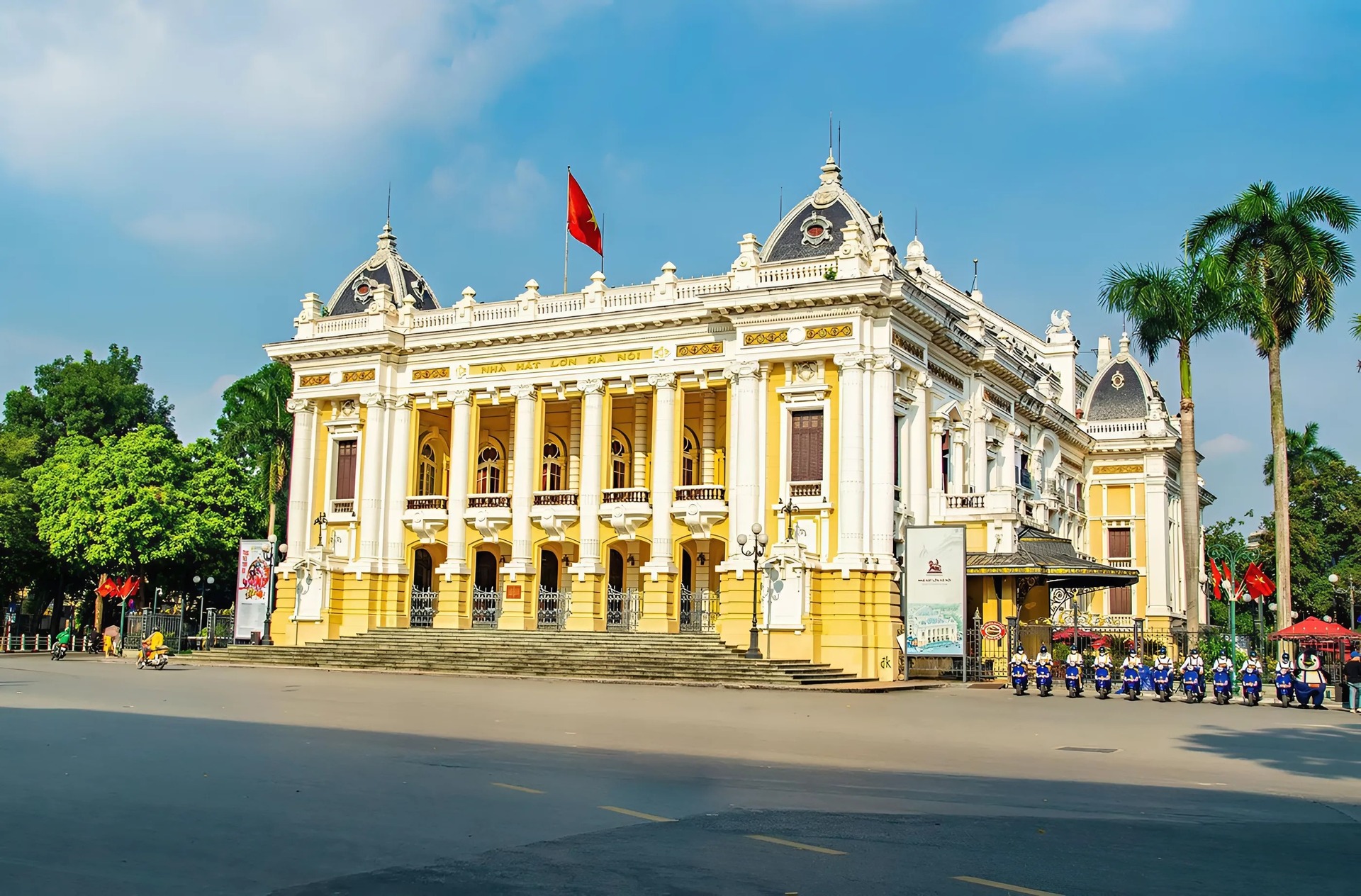
The Hanoi Opera House, at 1 Trang Tien Street, is the district’s architectural highlight. Completed in 1911, it was inspired by the Palais Garnier in Paris and features neoclassical columns and a grand auditorium. Visitors can combine a walk through the quarter with the National Museum of Vietnamese History or the Vietnamese Women’s Museum. For a memorable evening, consider attending a performance at the Opera House.
Hanoi’s Most Scenic Lakes and Historic Pagodas
7. Hoan Kiem Lake and Ngoc Son Temple
Hoan Kiem Lake sits at the heart of Hanoi, connecting the Old Quarter with the French Quarter. Its name comes from the legend of Emperor Le Thai To returning a sacred sword to the Golden Turtle. At the lake’s center, Turtle Tower stands as one of the city’s most recognizable landmarks. The surrounding paths are popular for morning exercise and evening walks.
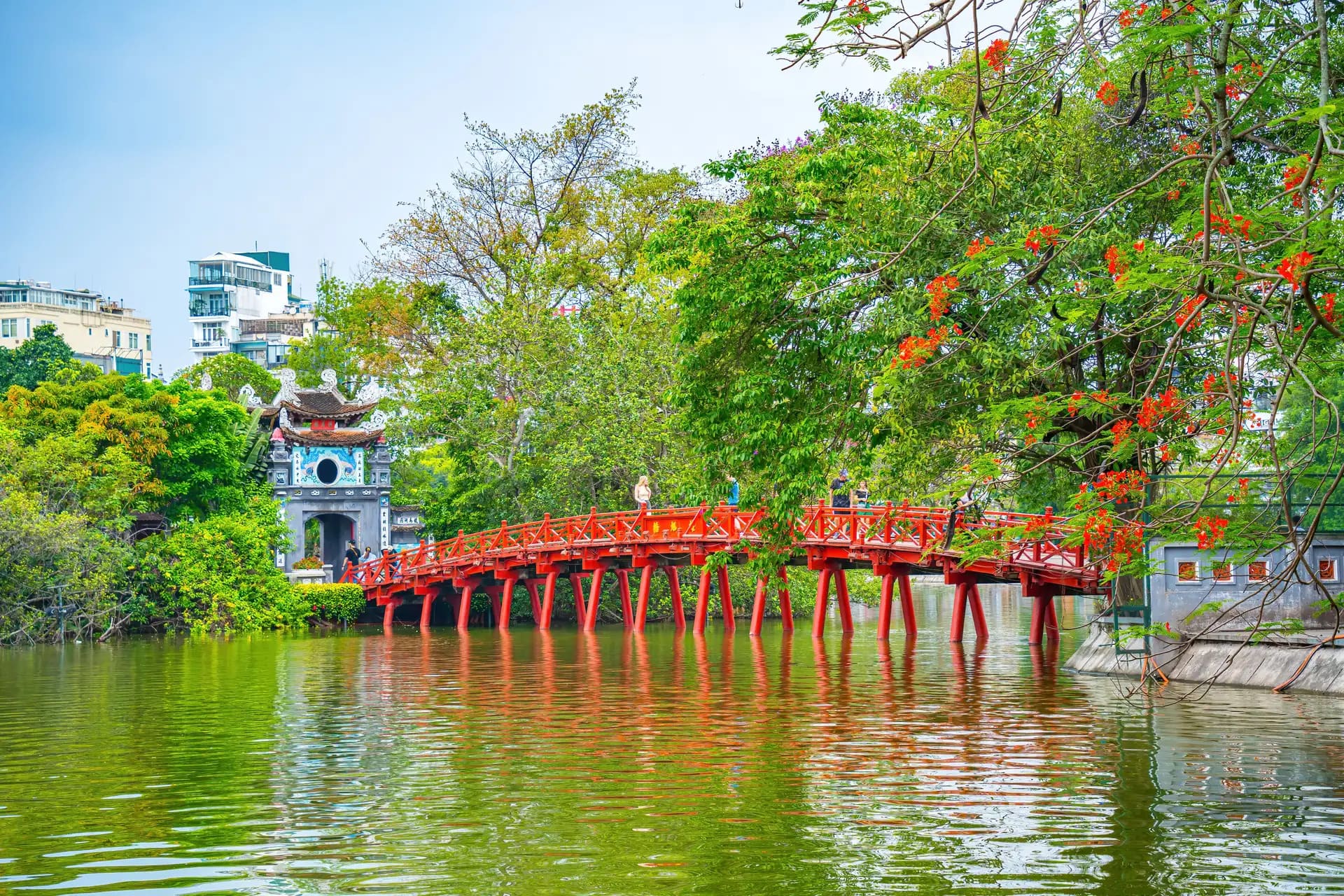
On the northeastern island, Ngoc Son Temple honors figures associated with literature and Vietnamese history, including General Tran Hung Dao. Visitors cross the bright red The Huc Bridge to reach the temple, passing the Pen Tower and Ink Slab along the way. The lakeside is free to explore, making this an easy addition to a Hanoi sightseeing itinerary.
- Opening hours: Ngoc Son Temple opens from 7:00 AM to 6:00 PM on weekdays and until 9:00 PM on Saturdays and Sundays. The lakeside is accessible at all times.
- Entrance fees: Ngoc Son Temple: 50,000 VND for adults; 25,000 VND for students with valid identification; free for children under 1.2 meters.
8. Tran Quoc Pagoda and West Lake
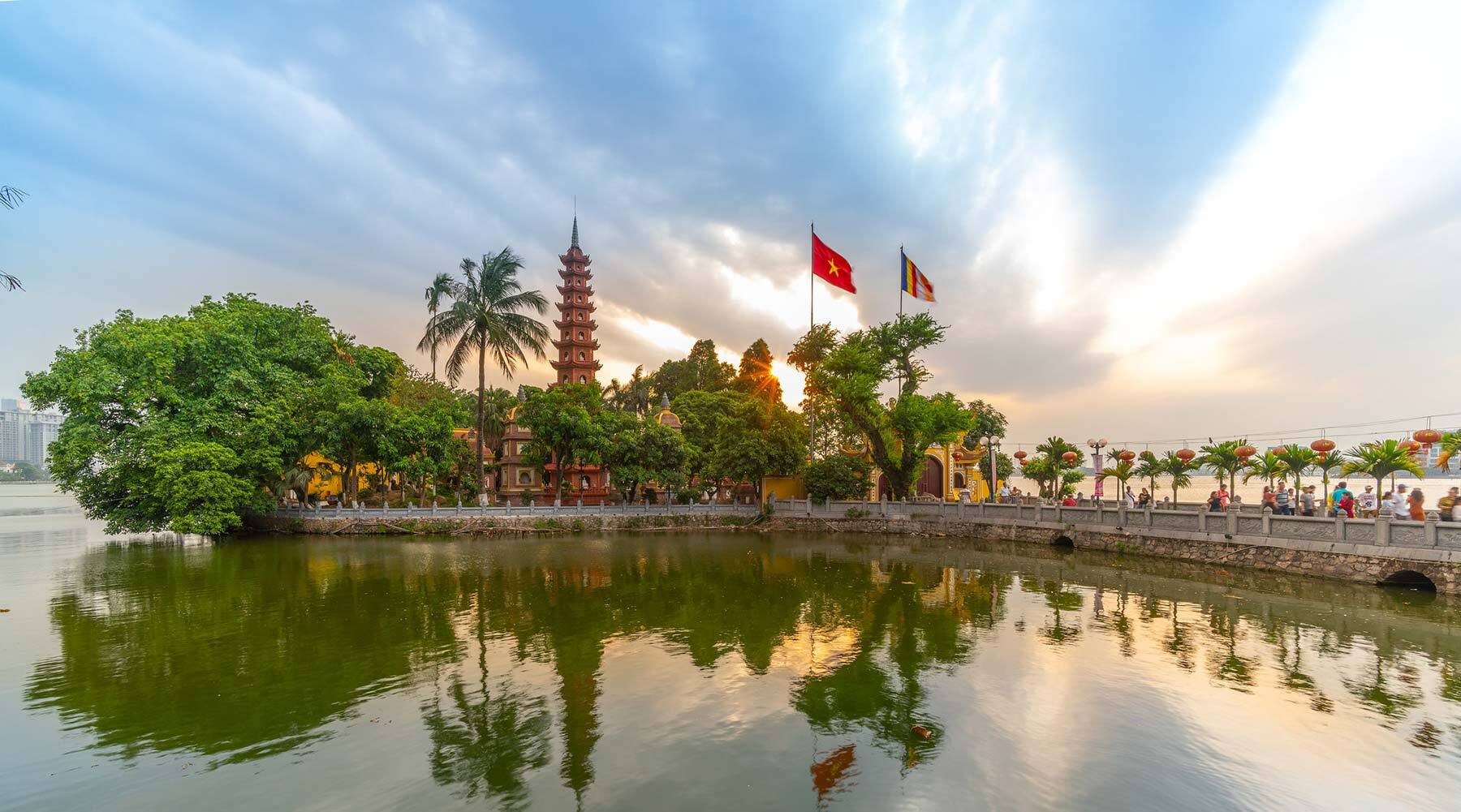
Located on a small island along West Lake, Tran Quoc Pagoda is one of Hanoi’s most historic Buddhist sites. Its origins date back more than 1,500 years, when it was known as Khai Quoc Pagoda. Today, the red-brick tower, traditional temple buildings, and Bodhi tree create a peaceful setting away from the city center. The pagoda is connected to the shore by a narrow causeway along Thanh Nien Road.
West Lake, Hanoi’s largest natural freshwater lake, offers a different experience from the crowded central districts. Its 17-kilometer shoreline features cafés, restaurants, and hotels overlooking the water. Visit in the late afternoon to see the pagoda’s reflection on the lake, then enjoy a lakeside café or meal nearby.
- Opening hours: Tran Quoc Pagoda opens daily from 7:30 AM to 6:00 PM.
- Entrance fees: Entry to Tran Quoc Pagoda is free. Visitors should dress modestly, covering their shoulders and knees.
Unique Cultural Experiences to Try in Hanoi, Vietnam
9. Thang Long Water Puppet Show
The Thang Long Water Puppet Theatre, located at 57B Dinh Tien Hoang Street beside Hoan Kiem Lake, is one of the most distinctive Hanoi cultural experiences. Vietnam water puppetry dates back to the 11th century in the north, where village performers used flooded rice fields and ponds as stages. Today, wooden puppets bring traditional rural activities, folk tales, and historical legends to life on a water-filled stage.
Each performance lasts around 45 – 50 minutes and features live traditional music, including drums, bamboo flutes, and the dan bau. The combination of movement, music, and storytelling makes the show accessible to international visitors, even without Vietnamese language skills. It is an easy cultural stop to add to an evening around Hoan Kiem Lake.
- Opening hours: Daily performances are scheduled at 3:00 PM, 4:10 PM, 5:20 PM, 6:30 PM, and 8:00 PM. Additional shows may be available on Sundays.
- Entrance fees: Approximately 100,000 VND per person.

10. Hanoi Train Street
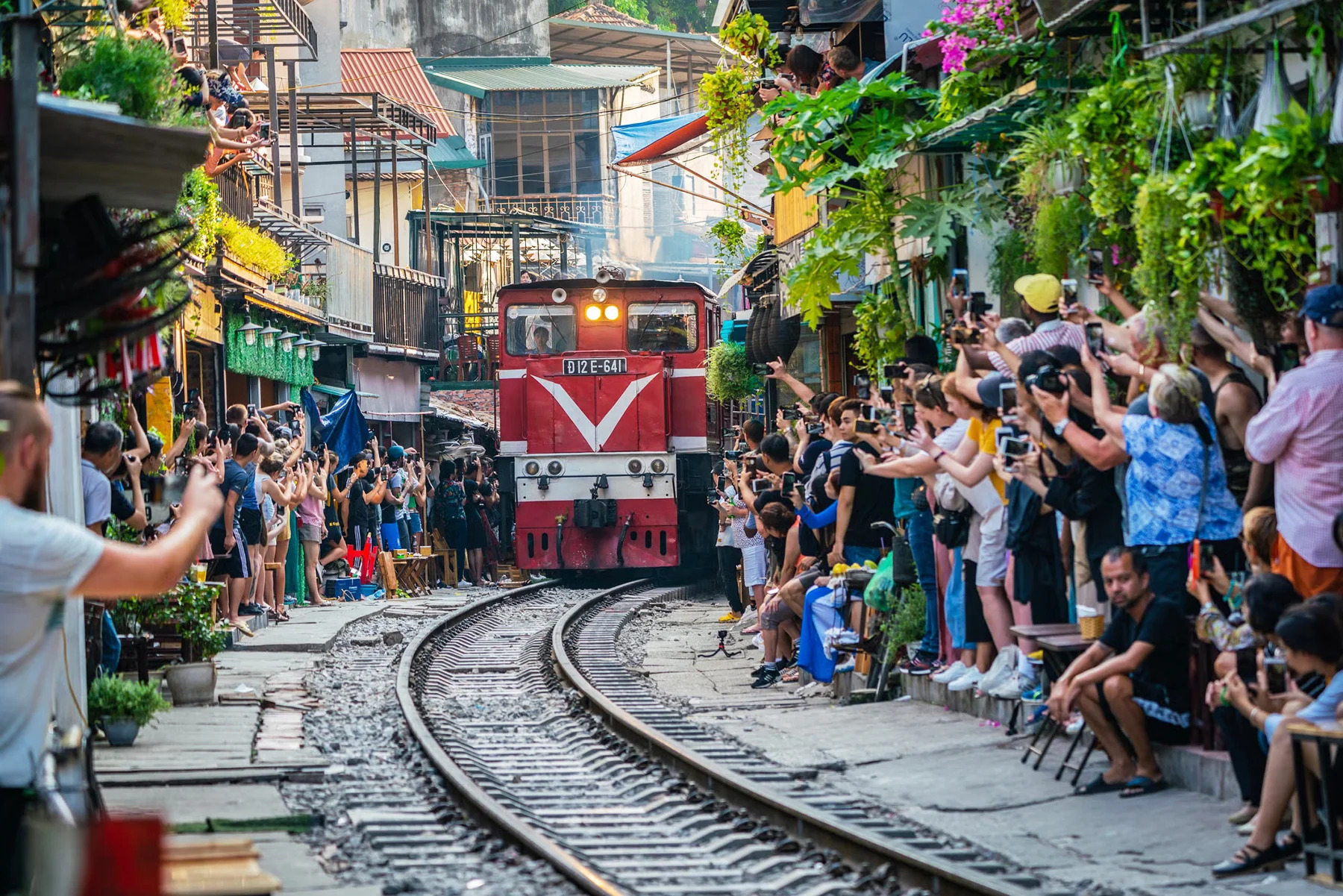
Hanoi Train Street is a narrow railway corridor where homes and cafés stand close to the tracks. Built during the French colonial period, the railway has become a distinctive part of the city’s urban landscape. The section around Phung Hung and Tran Phu is known for colorful cafés and murals, while the area near Lane 224 Le Duan offers a quieter atmosphere.
Visitors can enjoy egg coffee or coconut coffee at a café and observe daily life along the railway. Access is controlled in some areas, so enter only through authorized cafés or with permitted local guidance. Always follow staff instructions, stay away from the tracks, and never approach a moving train for photos. Conditions and access rules may change, so check locally before visiting.
11. Vietnam Museum of Ethnology
The Vietnam Museum of Ethnology, on Nguyen Van Huyen Street in Cau Giay District, introduces visitors to the cultures of Vietnam’s 54 ethnic groups. Opened in 1997, the museum combines indoor collections with outdoor displays of traditional architecture. It is one of the most educational Hanoi tourist attractions for travelers interested in the country’s cultural diversity.
Inside the Dong Son building, visitors can explore traditional clothing, household objects, photographs, and cultural exhibits. Outside, full-size structures include an Ede longhouse and a Bahnar communal house, offering a closer look at regional building traditions. The museum also has a kite-shaped exhibition building dedicated to cultures from across Southeast Asia. Allow two to three hours to explore the indoor galleries and outdoor grounds.
- Opening hours: 8:30 AM – 5:30 PM, Tuesday to Sunday. Closed on Mondays and during Lunar New Year.
- Entrance fees: Adults: 40,000 VND; children under 6: free. A specialized camera photography ticket costs 50,000 VND per camera.
Best Day Trips from Hanoi
12. Ninh Binh: Karst Landscapes and Historic Sites
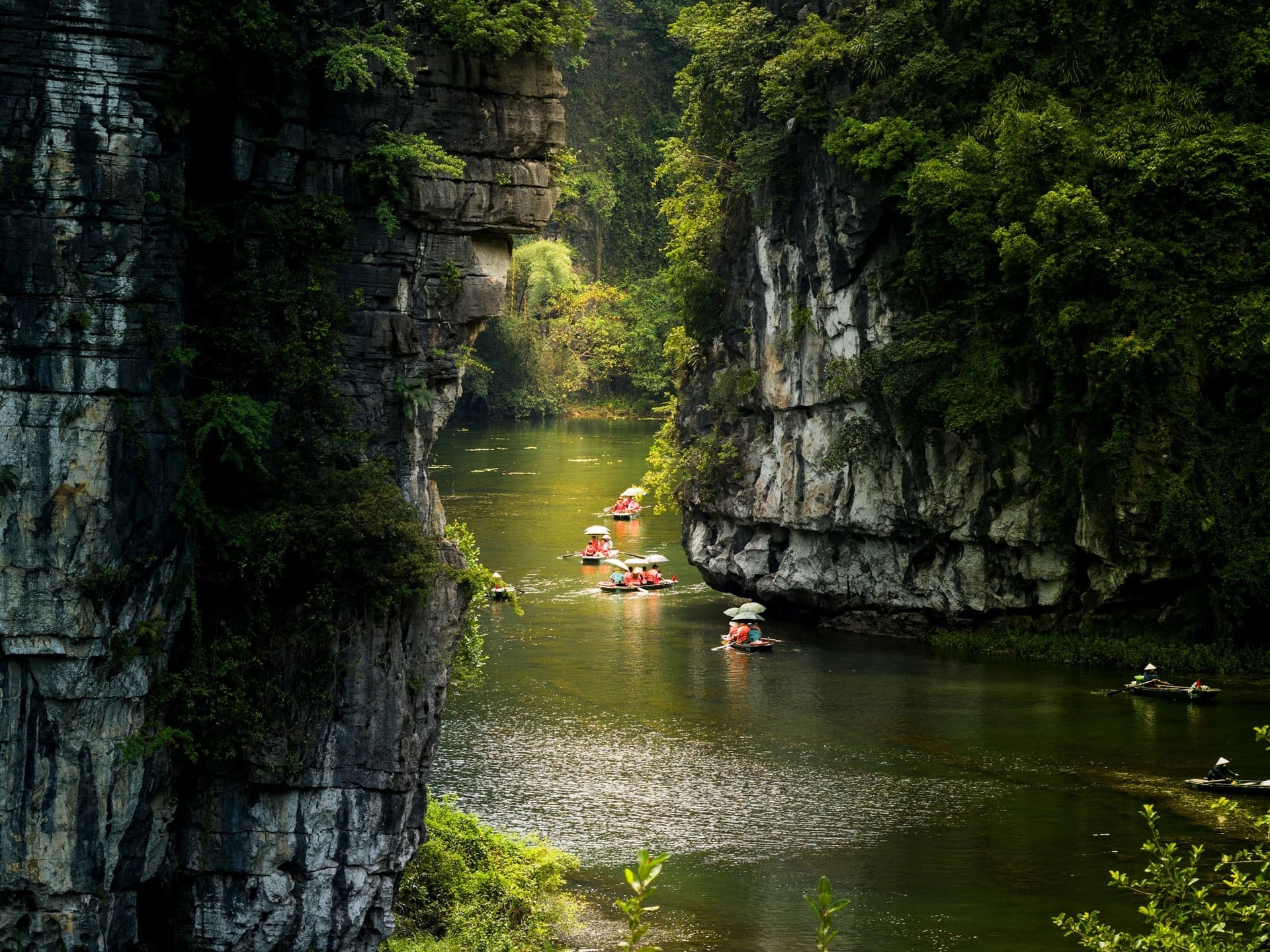
Located around 90–100 km south of Hanoi, Ninh Binh is a popular choice for travelers looking for the best day trips from Hanoi. The journey usually takes about two to two and a half hours by road. Its limestone mountains, winding rivers, and historic temples create a scenic contrast to the capital’s busy streets.
A day trip can include a Ninh Binh boat ride through the limestone landscapes of Trang An or Tam Coc, a visit to the ancient capital of Hoa Lu, and a climb up nearly 500 stone steps at Mua Cave for panoramic views over the valley. Bai Dinh Pagoda is another option for visitors interested in Buddhist architecture. Since these sites are spread across the region, a private car or organized tour can make it easier to fit several stops into one day.
13. Ha Long Bay: Cruises Among Limestone Islands
Ha Long Bay is a UNESCO World Heritage Site known for its limestone islands rising from emerald waters. Located around 2,5 to 3 hours from Hanoi by road, it is one of the most popular destinations for travelers planning a Hanoi day trip. Cruises pass dramatic rock formations and may include cave visits, kayaking, or time on small beaches, depending on the route.
A day cruise is possible, but the round trip involves around five to 6 hours of road travel, leaving less time on the water. An overnight cruise lasting two days and one night or three days and two nights offers more time to enjoy the scenery, meals, and activities at a relaxed pace. Travelers seeking a quieter route can also consider cruises around Lan Ha Bay or Bai Tu Long Bay.

Practical Hanoi Travel Tips for a Smooth Trip
Best Time to Visit Hanoi
Autumn, from September to November, is generally the most comfortable time to explore Hanoi. Temperatures usually range from 20°C to 28°C, making it pleasant to walk around the Old Quarter, visit historic landmarks, and enjoy outdoor food tours.
- Spring (March – April): Temperatures range from 15°C to 25°C, with fresh greenery and flowers. It is a good season for visiting temples and cultural sites.
- Summer (May – August): Temperatures can exceed 35°C, with high humidity and afternoon showers. Plan outdoor sightseeing for early morning or late afternoon.
- Winter (December – February): Temperatures can fall to around 10°C – 15°C, with occasional fog. Bring a warm jacket or scarf for walks around the city.
Getting Around Hanoi
Choosing the right transport makes it easier to explore Hanoi tourist attractions across different districts. Noi Bai International Airport is around 30 – 35 km from the city center, usually a 45 – 60-minute drive.
- Airport transfers: Book a private car or limousine through your hotel or a reputable travel company for a convenient arrival.
- Getting around the city: Walk or take a cyclo around the Old Quarter and Hoan Kiem Lake. For longer journeys, use ride-hailing apps such as Grab or Xanh SM.
- Weekend walking streets: Roads around Hoan Kiem Lake are closed to motor vehicles from 7:00 PM on Friday until midnight on Sunday. You may need to walk from the surrounding drop-off points.
Dress Code and Cultural Etiquette
Wear respectful clothing when visiting temples, pagodas, historical sites, and the Ho Chi Minh Mausoleum. Shoulders and knees should be covered, especially at religious sites and the mausoleum.
Carry a light scarf or jacket if you plan to visit several cultural landmarks in one day. Remove your hat and sunglasses where required, speak quietly in worship areas, and avoid touching historic artifacts. At the Temple of Literature, do not touch the doctoral steles or rub the heads of the stone turtles.
How Many Days Should You Spend in Hanoi?
Plan for 3 to 4 days to explore Hanoi at a comfortable pace. Spend the first two days visiting central landmarks, museums, the Old Quarter, and cultural performances. Use the remaining one or two days for a day trip to Ninh Binh or a cruise around Ha Long Bay.
This schedule gives you time to enjoy both the city’s historic attractions and its surrounding landscapes without rushing between destinations.
> Read more: How To Make The Most Out Of One Week In Hanoi?
Frequently Asked Questions About Hanoi Tourist Attractions
1. What is the best way to get around Hanoi attractions?
Walk or take a cyclo around the Old Quarter and Hoan Kiem Lake. For attractions farther apart, use Grab, Xanh SM, or a private car with a driver.
2. How many days do you need to see Hanoi's top attractions?
3 to 4 days is a good amount of time to explore the main landmarks, museums, cultural experiences, and nearby destinations.
3. What are the rules for visiting Ho Chi Minh Mausoleum?
The mausoleum opens on Tuesday, Wednesday, Thursday, Saturday, and Sunday mornings. Dress modestly, follow security instructions, leave restricted belongings at the storage counter, and do not take photos inside the viewing chamber.
4. Which is the better day trip from Hanoi: Ha Long Bay or Ninh Binh?
Ninh Binh is generally more convenient for a day trip, with a drive of around 2 to 2,5 hours each way. Ha Long Bay is better enjoyed on an overnight cruise if you have more time.
5. What is the best month to visit Hanoi?
October and November are excellent months for sightseeing, with comfortable temperatures, lower humidity, and pleasant conditions for exploring outdoors.
Ready to Discover Hanoi Beyond the Guidebooks?
Now you know which Hanoi tourist attractions to add to your itinerary, from ancient temples and lively street markets to peaceful lakes and cultural shows. But the best way to experience Hanoi is to go beyond sightseeing, taste local dishes, wander through hidden alleys, and discover the stories behind the city’s landmarks.
Let Asia Pioneer Travel turn your Hanoi plans into a memorable Vietnam journey. Explore our tours for inspiration and craft an itinerary that brings you closer to the city’s culture, cuisine, and everyday life.