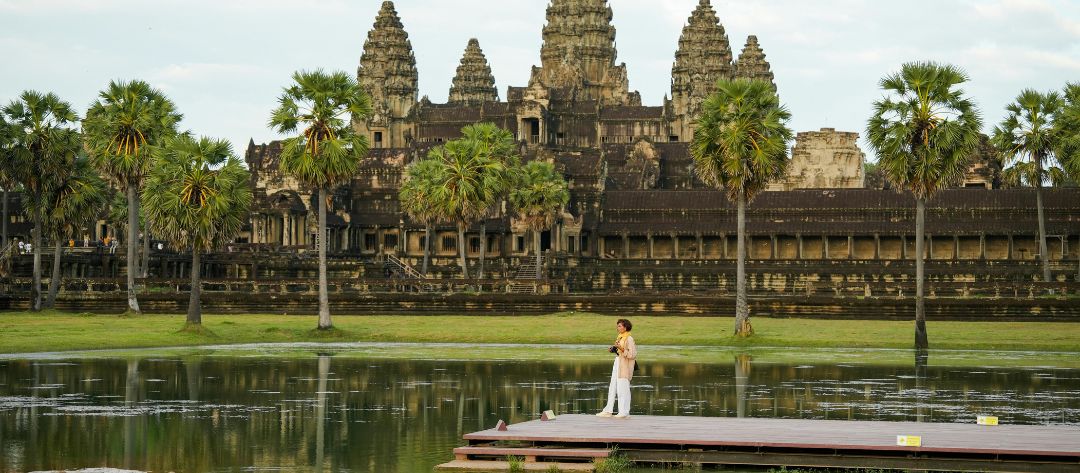


When most people think of Cambodia, one image immediately comes to mind: the towering spires of Angkor Wat. While the main Angkor complex is undeniably the crown jewel, it is just one piece of a much larger historical puzzle. The official UNESCO sites in Cambodia offer a diverse tapestry of experiences, ranging from the sprawling, temple-filled capitals of ancient kings to the peaceful mountain sanctuaries of a lost civilization.
The article will outline Cambodia’s historical significance, architectural highlights, UNESCO recognition timeline, and practical travel tips for visitors. Whether you are planning a cultural trip or researching Southeast Asian heritage, this complete overview will help you understand why these sites are globally protected and worth visiting.
Overview: Cambodia’s Legacy in Stone
Cambodia’s landscape is dotted with remnants of a glorious past, stories etched in sandstone and laterite. To walk among these ruins is to walk in the footsteps of gods and kings. Today, five sites are recognized by UNESCO for their “outstanding universal value,” each telling a unique chapter of the Khmer civilization.
The Khmer Empire’s Architectural Genius
The Khmer Empire was a powerful Hindu-Buddhist state that ruled much of Southeast Asia from the 9th to the 15th centuries, leaving behind an extraordinary architectural legacy that evolved dramatically over time. Beginning with simple brick temples, Khmer architects gradually developed more sophisticated techniques, culminating in the magnificent city of Angkor with its complex water management systems and iconic structures like Angkor Wat and the Bayon.
What makes these monuments truly remarkable is how they serve as three-dimensional representations of the cosmos. Early temples honored Hindu gods like Shiva and Vishnu, with central towers symbolizing Mount Meru—the mythical home of the deities. As the state religion shifted toward Buddhism, a fascinating fusion emerged. Buddha images were carved into existing Hindu temples, while new structures were built blending both traditions seamlessly.
Today, UNESCO recognition plays a vital role in preserving these irreplaceable treasures by bringing international expertise, funding for conservation, and protection from looting, unregulated development, and environmental damage, ensuring these ancient stones continue telling their stories for centuries to come.
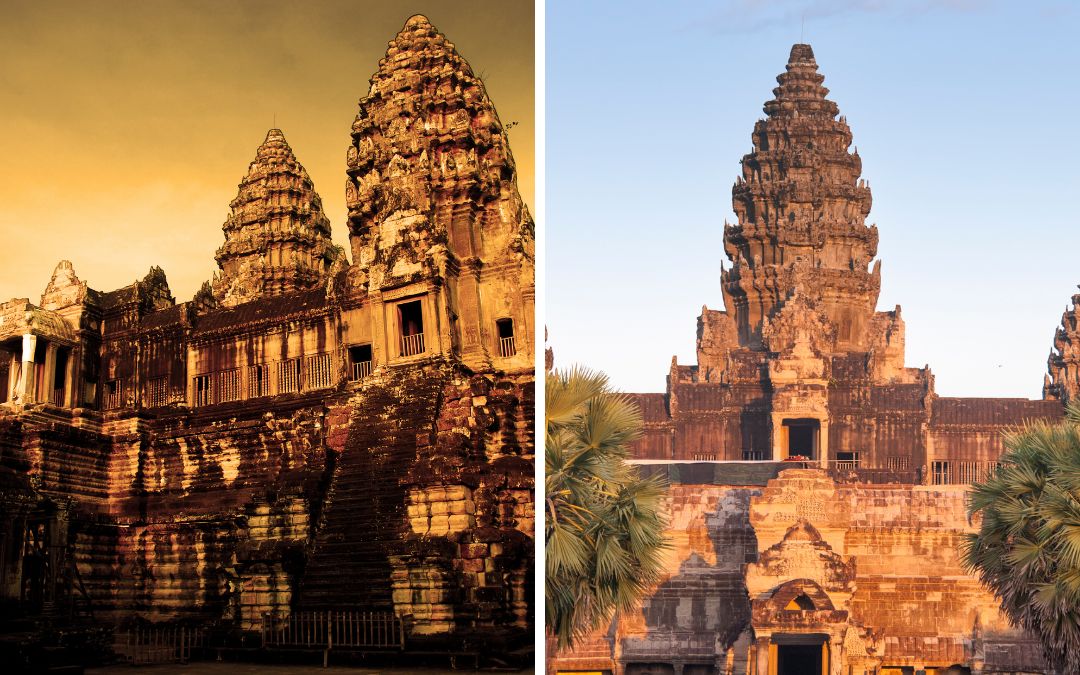
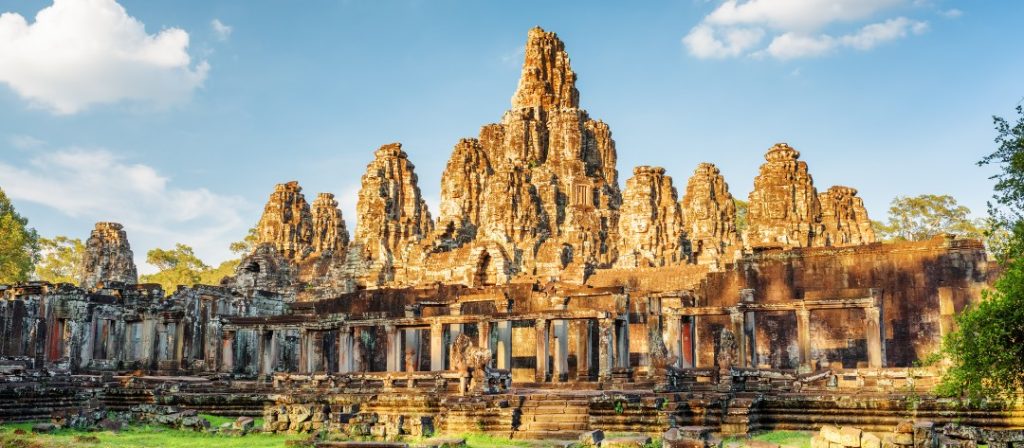
Timeless Khmer architecture with intricately carved stone towers
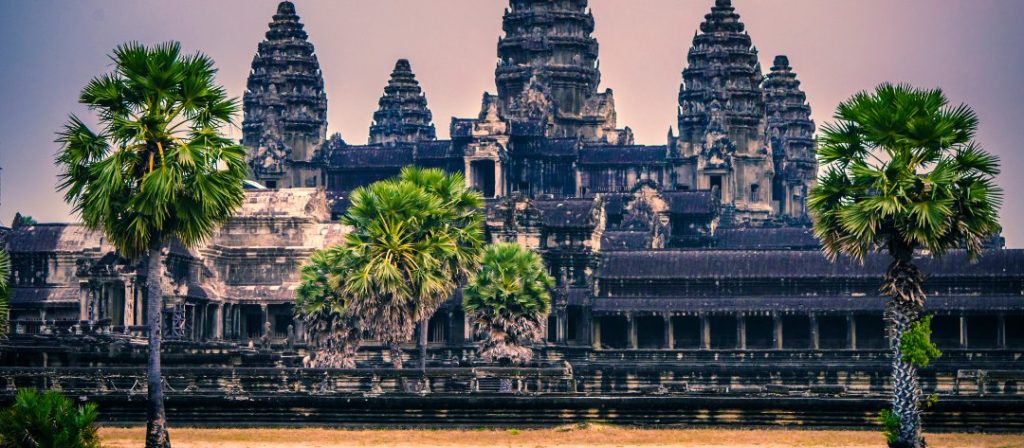
5 UNESCO World Heritage Sites in Cambodia
- Angkor (1992): The iconic temple city near Siem Reap. This is Cambodia’s most famous site, featuring the majestic Angkor Wat, the enigmatic faces of the Bayon, and the jungle-wrapped Ta Prohm. It’s the heart and soul of the Khmer civilization.
- Temple of Preah Vihear (2008): The iconic temple city near Siem Reap. This is Cambodia’s most famous site, featuring the majestic Angkor Wat, the enigmatic faces of the Bayon, and the jungle-wrapped Ta Prohm. It’s the heart and soul of the Khmer civilization.
- Temple Zone of Sambor Prei Kuk (2017): The pre-Angkorian capital of the Chenla Kingdom. This forested archaeological site features over 100 brick temples, many with stunning, intricate carvings.
- Koh Ker: Archaeological Site of Ancient Lingapura (2023): The remote pyramid city. Its centerpiece is Prasat Thom, a seven-tiered pyramid that looks more like a Mayan temple than a typical Khmer structure.
- Memorial Sites of the Khmer Rouge Regime: Toul Sleng (S-21) and Choeung Ek: Unlike the ancient temples, these sites commemorate a tragic chapter of modern history. Tuol Sleng was a high school turned prison, and Choeung Ek is the “Killing Fields” where victims were executed. They stand as a powerful reminder of the dangers of extremism and a tribute to the resilience of the Cambodian people.
Exploring Each UNESCO Site in Detail
Angkor Archaeological Park
Angkor Archaeological Park stands as the crown jewel of Cambodia’s heritage, serving as the heart of the Khmer Empire at its zenith between the 9th and 15th centuries when it functioned as the capital of one of Southeast Asia’s most powerful civilizations.
The park’s architectural highlights are nothing short of breathtaking, beginning with Angkor Wat itself—the world’s largest religious monument. Originally, it was dedicated to Vishnu and later transformed into a Buddhist temple, its five lotus-like towers appearing on Cambodia’s national flag.
Then there is the Bayon, located in the ancient city of Angkor Thom, famous for its serene and enigmatic stone faces smiling down from every tower. Other while, Ta Prohm offers a completely different experience with massive tree roots engulfing ancient stone walls in a dramatic embrace between nature and architecture.
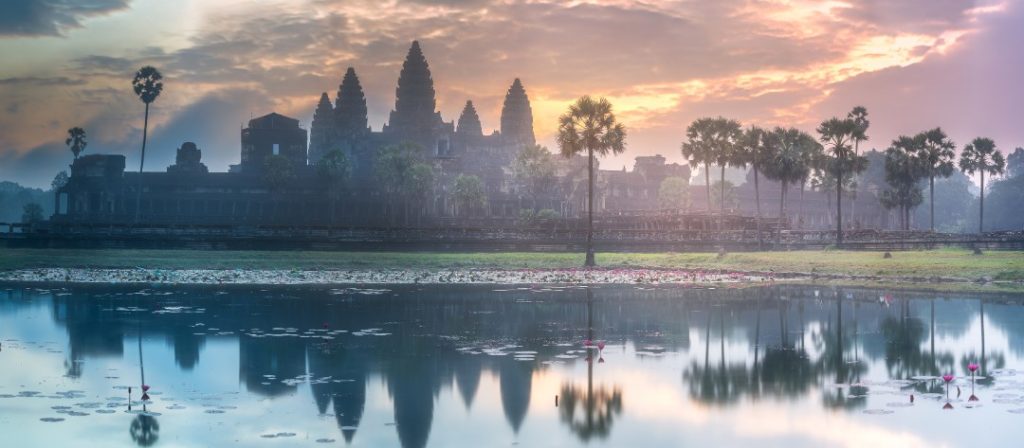
For the best visitor experience, most travelers follow either the “small circuit” or “grand circuit” routes, with passes available for one, three, or seven days. A special tip worth remembering is that sunrise at Angkor Wat draws massive crowds for good reason—the sight of the sun rising behind those iconic towers is magical. However, for the sunset, head to Phnom Bakheng hill – where you can watch the golden light fade over the entire temple complex from above.
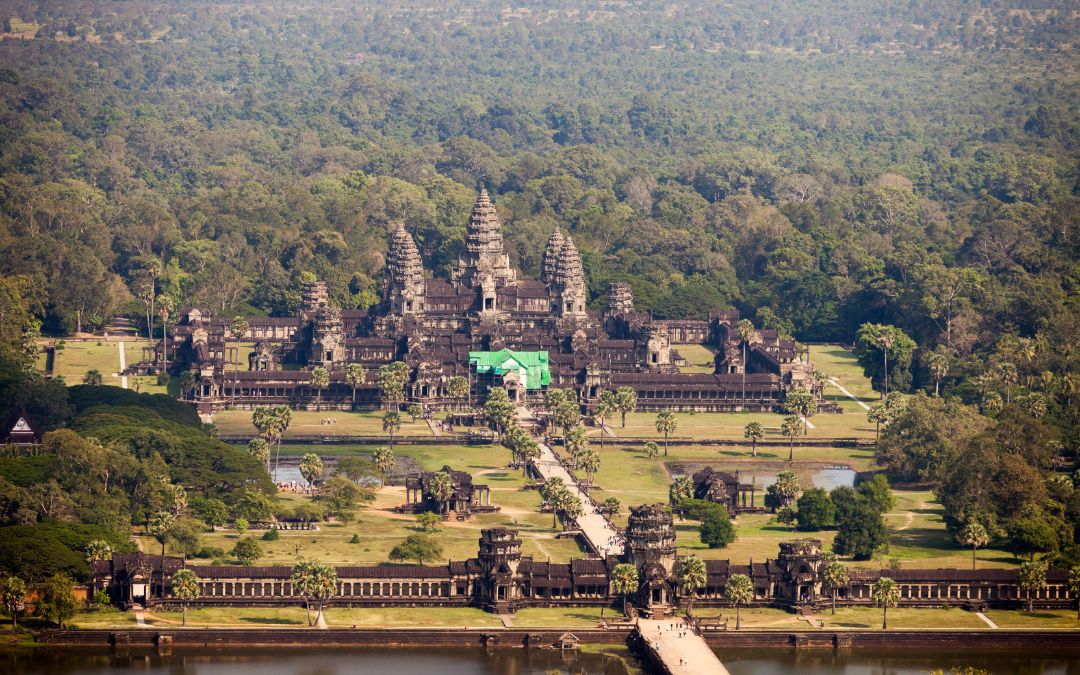
Expansive Angkor Archaeological Park, symbol of Cambodia’s heritage
Temple of Preah Vihear: The Mountain Sanctuary
Perched dramatically on a 525-meter cliff edge of the Dângrêk Mountains, the Temple of Preah Vihear offers breathtaking panoramic views over the Cambodian plains and into neighboring Thailand. This is not just a temple—it’s a mountaintop citadel that seems to float between earth and sky.
Dedicated to the Hindu god Shiva, Preah Vihear holds profound spiritual significance. Constructed over more than three centuries by successive Khmer kings, its layout follows ancient principles of sacred geography, stretching nearly a kilometer along the natural axis of the mountain ridge. Rather than imposing symmetry on the landscape, the architects adapted their vision to the contours of the mountain itself.
Reaching this remote site presents genuine challenges due to its location along the historically contentious Cambodian-Thai border. Visitors typically arrange transportation from Siem Reap (a journey of several hours) or the nearby town of Sra Em, with the road climbing steadily through rural landscapes to the mountain top.
The true magic of Preah Vihear lies in the journey through the temple itself. With every step, the horizon expands until you finally reach the cliff edge, where the temple stands with nothing but sky behind it—a moment of pure awe where human devotion meets natural grandeur.
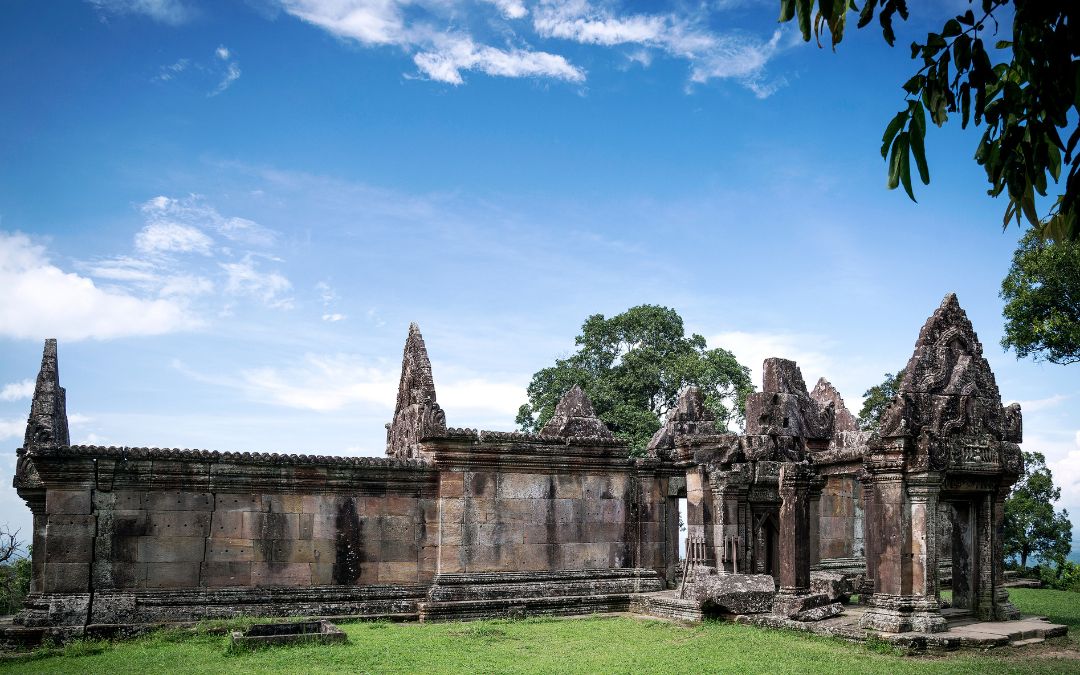
Temple of Preah Vihear majestically stretches along the cliff of the Dangrek Mountains
Sambor Prei Kuk: The Ancient Forest Capital
Long before Angkor rose to glory, Sambor Prei Kuk served as the capital of the Chenla Empire during the 6th and 7th centuries, making it one of the oldest and most significant pre-Angkorian sites in all of Southeast Asia.
Its architectural style is distinct from later Khmer constructions, featuring octagonal brick towers adorned with intricate carvings and some of the earliest examples of Khmer decorative art that would influence generations of builders to come. What makes this site truly special is its atmosphere—peaceful and meditative, with over a hundred temples scattered throughout a shaded forest setting where you can hear birds singing rather than tour bus engines rumbling.
Sambor Prei Kuk is perfect for history enthusiasts seeking to understand the origins of Khmer architecture before the massive scale of Angkor, offering an intimate glimpse into the foundations upon which the later empire was built.
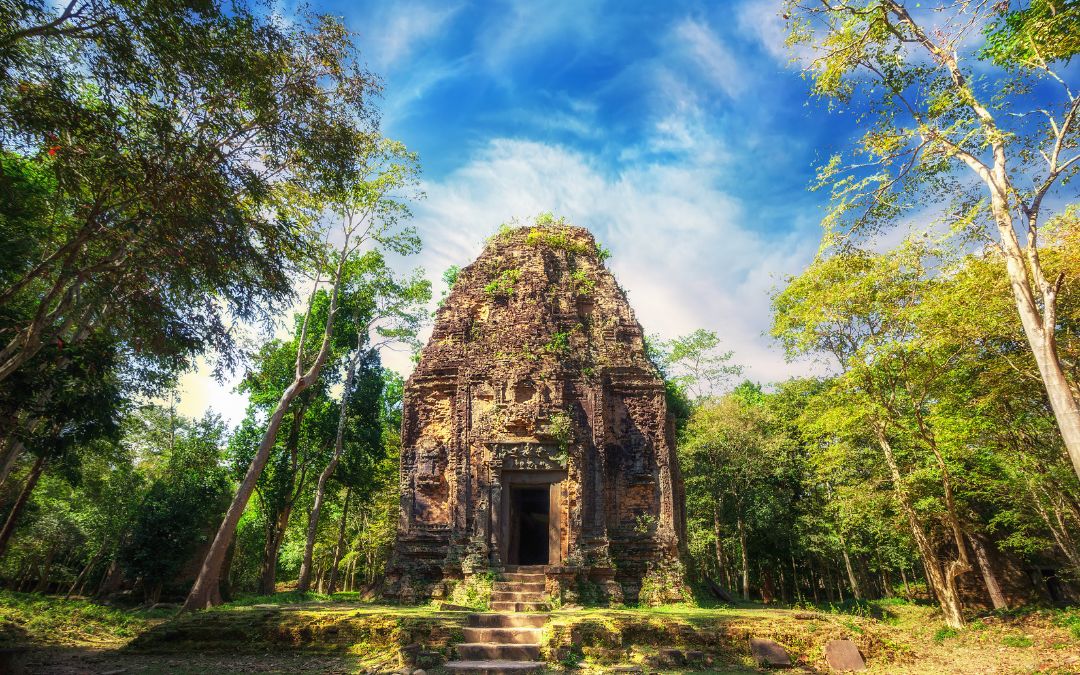
Ancient brick sanctuary hidden within the lush forests of Sambor Prei Kuk
Koh Ker: The Pyramid City
For a brief but significant period during the 10th century, Koh Ker served as the capital of the Khmer Empire under the ambitious King Jayavarman IV, who ruled from 928 to 944 CE and transformed this remote jungle area into a royal city.
The iconic structure here is Prasat Prang, a unique seven-tiered pyramid that rises abruptly from the forest floor, looking more like something from Mesoamerica than typical Khmer architecture and standing as a testament to the king’s desire to create something entirely new.
Today, visiting Koh Ker offers an adventure aspect that few other temple sites can match—it remains relatively remote and jungle-covered, giving visitors a genuine “lost city” feeling as they explore structures still being reclaimed by nature. Most travelers combine Koh Ker with a visit to Beng Mealea, another jungle-engulfed temple along the same route, creating a full day of exploration into Cambodia’s wilder archaeological landscape.
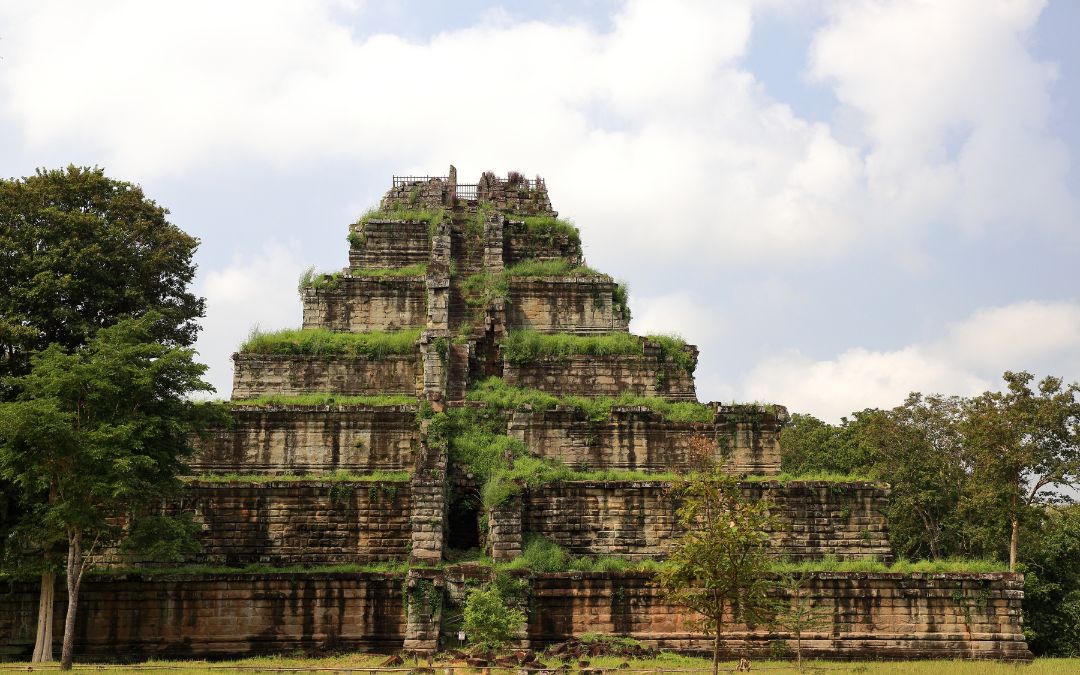
Ancient stepped pyramid of Koh Ker rising majestically above the surrounding greenery
The Memorial Sites: Places of Peace and Reflection
Unlike the ancient temples celebrating Cambodia’s glorious past, the Memorial Sites of the Khmer Rouge regime serve a different purpose. They stand as somber reminders of a tragic chapter in modern history. These places have been transformed from centers of repression into spaces for peace and reflection.
The Tuol Sleng Genocide Museum occupies what was once a peaceful high school in Phnom Penh. During the Khmer Rouge regime, it was converted into Security Prison 21, or S-21. This became the regime’s most notorious detention and torture center. Thousands of Cambodians suffered within these walls before being executed.
Today, the site is preserved as a museum. Visitors see haunting photographs of victims staring out from the walls. Documentation of the regime’s brutal methods fills display cases. Poignant personal effects humanize the statistics. They also stand as a powerful educational tool about the dangers of extremism.
Just outside Phnom Penh lies the Choeung Ek Genocidal Center. This site is better known as the Killing Fields. Here, prisoners from S-21 were transported to their deaths. Nowadays, the area has been transformed into a tranquil, somber memorial park.
The central stupa stands as the focal point of Choeung Ek. This glass-walled monument contains more than five thousand human skulls. They are arranged by age and method of death, the display creates a profound space for contemplation and remembrance.
Together, these sites honor the dead and educate future generations. They stand as sacred ground where Cambodia continues to heal. Their message is one of remembrance, peace, and hope.
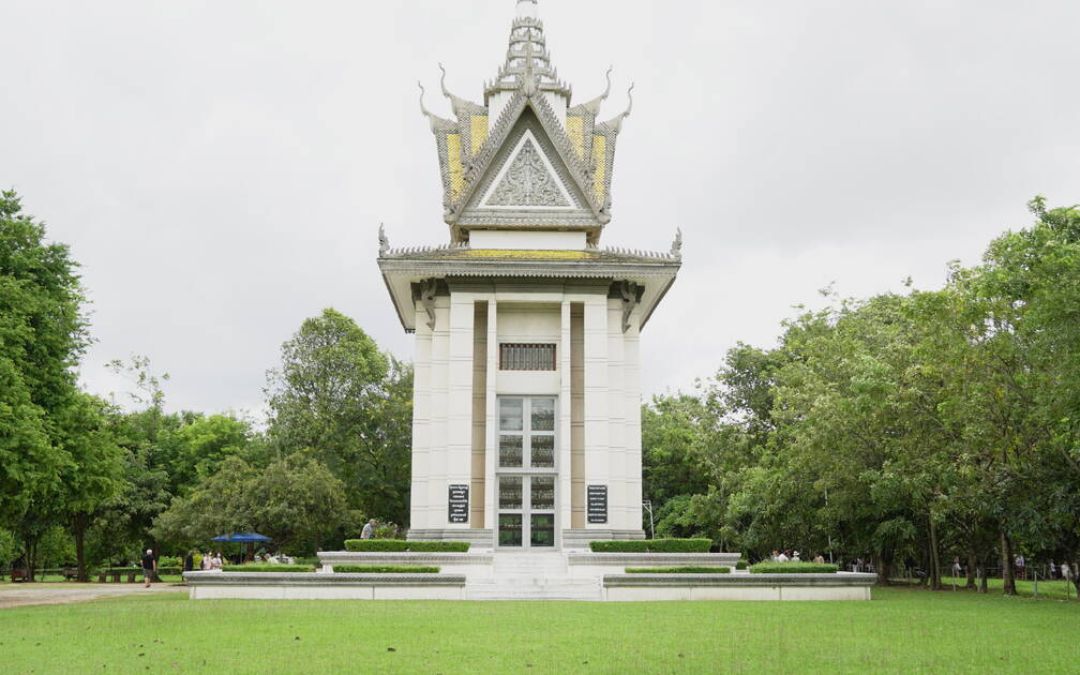
Memorial stupa at the Killing Fields, a solemn place of peace and reflection
Ideal Itineraries To Plan Your Visit To Cambodia’s UNESCO Treasures
3-4 Days Itinerary: Dive Deep into the Angkor Heartland
This itinerary focuses entirely on the Angkor Archaeological Park. It is perfect for first-time visitors, photography enthusiasts, or travelers with limited time who want to immerse themselves in the heart of the Khmer Empire.
Key experiences include:
- Sunrise at Angkor Wat, watching the famous lotus towers emerge against the golden sky.
- Exploring the enigmatic stone faces of the Bayon temple.
- Wandering through Ta Prohm, where ancient tree roots embrace crumbling stone walls.
- Following the small circuit to discover temples like Banteay Kdei and Ta Keo.
- Venturing onto the grand circuit to visit Preah Khan, Neak Pean, and East Mebon.
5 – 6 Days Itinerary: From Ancient Temples to Modern Memories
This journey extends from Siem Reap to the capital Phnom Penh, blending ancient heritage with modern history. It is ideal for travelers who want to experience both the heights of Khmer architecture and Cambodia’s poignant 20th-century story.
Key experiences include:
- A comprehensive 2-3 day exploration of the Angkor complex.
- A full-day excursion to Koh Ker, home to the unique seven-tiered pyramid, often combined with the jungle temple of Beng Mealea.
- Flight or road transfer to Phnom Penh, visiting the Royal Palace and Silver Pagoda, Cambodia’s most important royal landmarks.
- Spending a half day at the Tuol Sleng Genocide Museum (S-21 prison) and paying respects at the Choeung Ek Killing Fields memorial.
7 – 8 Days Itinerary: In Search of Lost Capitals
This deep-dive itinerary connects two of the most remote and dramatic capitals of the Khmer Empire. It is designed for history enthusiasts and adventurous travelers willing to venture off the beaten path.
Key experiences include:
- A complete 2-3 day exploration of the Angkor Archaeological Park.
- A full-day journey to Koh Ker, the pyramid city hidden deep in the jungle.
- Two days dedicated to Preah Vihear, the sacred temple perched on a 525-meter cliff.
- The pilgrimage-like ascent through ancient pavilions along the Dângrêk mountain ridge and breathtaking panoramic views over Cambodia and Thailand from the cliff edge.
- This itinerary requires good physical fitness and private transport—best suited for those seeking a true “lost capital” experience.
9 – 10 Days Itinerary: The Grand Tour of Khmer Civilization
This is the most comprehensive itinerary, connecting all four UNESCO World Heritage Sites of Cambodia. It spans from pre-Angkorian foundations to post-Angkorian capitals, offering the complete picture of Khmer civilization.
Key experiences include:
- A full 3-day exploration of the Angkor Archaeological Park.
- Day trip to Koh Ker and Beng Mealea and two days for the remote mountain sanctuary of Preah Vihear.
- A full day at Sambor Prei Kuk, the 7th-century capital of Isanapura and enjoying the peaceful, forested atmosphere far from the crowds.
Best Time to Visit Cambodia
If you’re planning a trip to Cambodia’s UNESCO sites, timing makes all the difference. Each season offers a completely different experience, so choosing when to go really depends on what you’re looking for.
- From November to February
This will hit the sweet spot. This is Cambodia at its most comfortable—cool, dry, and blessed with clear blue skies. You can climb temple steps for hours without dripping sweat, and the photography conditions are absolutely stunning. However, the temples get packed, especially at Angkor Wat during sunrise, and prices for hotels and flights shoot up. This is the best time for first-time visitors who want guaranteed good weather and don’t mind the crowds.
- From March to May
This turns up the heat—literally. By April, temperatures regularly hit 35°C or more, making midday explorations genuinely exhausting. But here’s the trade-off: tourist numbers drop, hotel rates become more reasonable, and you’ll find more space to breathe at the temples.
- From June to September
There’s the wet season. In fact, it rains almost daily. But the afternoon showers usually clear quickly, leaving behind fresh air and dramatic skies that photographers dream about. The crowds vanish completely and you’ll often have entire temple complexes to yourself. Nevertheless, you do need to plan for those daily downpours, and some remote sites like Preah Vihear might be tricky to reach if roads get muddy. This season suits experienced travelers who don’t mind getting wet and value solitude over guaranteed sunshine.
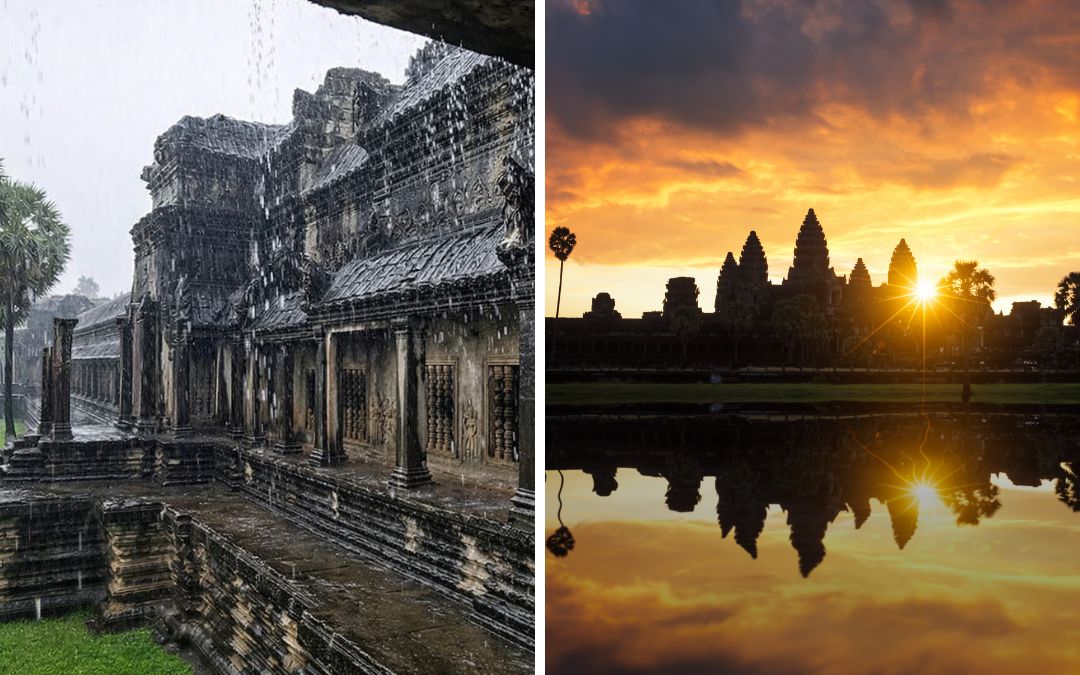
Cambodia’s changing weather from dramatic monsoon rains to vibrant dry-season skies
Essential Travel Tips When Visiting Cambodia’s UNESCO Sites
- Tickets: There’s no single pass for all of Cambodia’s UNESCO wonders. Angkor offers 1-day ($37), 3-day ($62), and 7-day ($72) passes, sold only at the official entrance. Preah Vihear, Koh Ker, and Sambor Prei Kuk each have their own separate tickets, usually around $10 per site. Keep cash handy—many remote locations don’t take cards.
- Dresscode: Even though most temples are no longer active worship sites, they remain sacred to locals. Cover your shoulders and knees. Bring a scarf or sarong—they’re cheap to buy locally and perfect for quick cover-ups. You’ll see tourists in tank tops being turned away at Angkor Wat.
- Transportation: Tuk-tuks are perfect for short distances and the Angkor small circuit, costing around $15-20 per day. For longer journeys to Koh Ker or Preah Vihear, you’ll need a private car with a driver—expect $100-150 per day including fuel.
- Guides: Hire licensed guides through official counters or reputable agencies. For sites like Sambor Prei Kuk and Preah Vihear, local guides offer insights you simply won’t find in guidebooks.
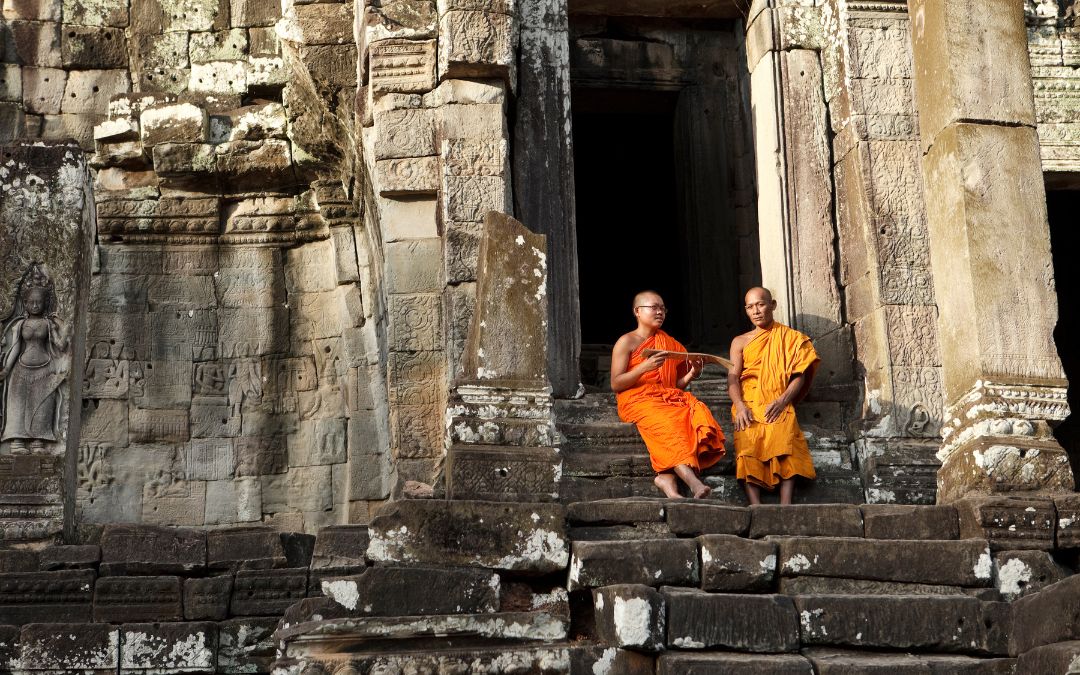
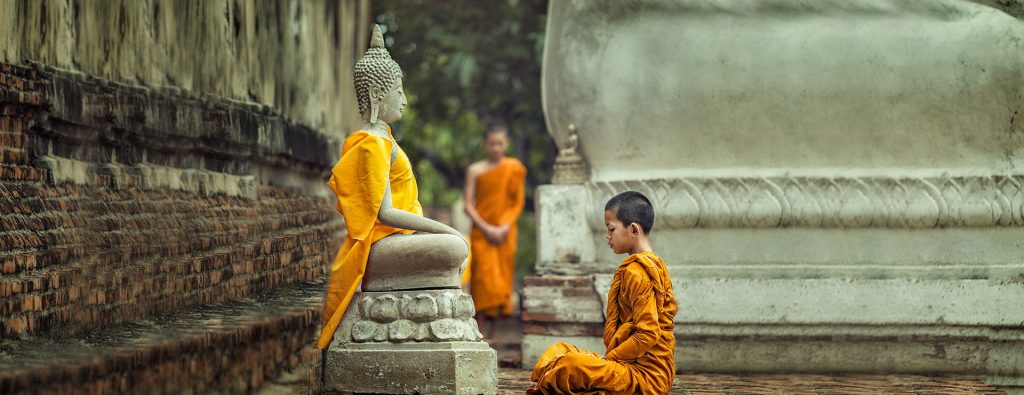
Learn about Cambodian etiquette and cultural traditions before traveling to ensure the best experience
Frequently Asked Questions (FAQs)
1. Is it safe to travel to the more remote temples like Preah Vihear and Koh Ker?
- Preah Vihear: Access is via steep, winding roads, so use a reputable tour operator or experienced private driver. Check current travel advisories for the border region.
- Koh Ker: The roads are long and can be rough, especially in the wet season, therefore, travel with a reliable vehicle and driver. Please note that there are no major facilities on-site, so bring water and snacks.
- Notes: Don’t travel alone to these sites. Hire transport through your hotel or a trusted company.
2. Do I need a guide for Angkor, or can I explore on my own with a tuk-tuk?
Without a Guide, you’ll see amazing structures but miss the profound historical, religious, and symbolic stories carved into the stone.
If you get a guide, they will bring the temples to life, explain the bas-reliefs, and navigate the massive complex efficiently. Your tuk-tuk driver handles transport; your guide handles the history.
Tips: Book a guide through your hotel or a reputable agency. A good guide is worth the investment.
3. How do I buy tickets for Angkor, and are they included in tours?
Where to buy: Officially at the Angkor Ticket Center (on the road from Siem Reap to the temples) or online in advance (recommended).
Types: 1-day ($37), 3-day ($62), or 7-day ($72) passes. The 3-day pass is the most popular.
Notes: Tours do NOT include this pass. Your tour guide will arrange transport and guiding, but you must have your valid pass with you at all times.
4. Should I get cash (USD/Riel) out before arriving, or are cards widely accepted?
- Currency: Use US Dollars for almost everything (tours, hotels, tickets). Use Cambodian Riel for small purchases (street food, local markets, small tips). USD and Riel are used interchangeably.
- Cards: Only accepted at higher-end hotels, restaurants, and some shops in Siem Reap and Phnom Penh. Do not rely on cards at temple sites, for tuk-tuks, or in rural areas.
- ATMs: Widely available in cities, dispensing primarily USD (sometimes with high fees). Withdraw cash in cities before heading to remote areas.
Final thoughts
The UNESCO sites in Cambodia are more than just ancient ruins—they are windows into the soul of a nation. From the magnificent towers of Angkor Wat to the cliff-top sanctuary of Preah Vihear, from the mysterious pyramid of Koh Ker to the peaceful forest temples of Sambor Prei Kuk, each site tells a story of divine kings, cosmic beliefs, and artistic genius. What makes visiting these places unforgettable is the contrast between past and present. The UNESCO sites in Cambodia reward those who take the time to truly experience them—not just see them.
Planning a journey through Cambodia’s UNESCO treasures can feel overwhelming. This is where Asia Pioneer Travel comes in. We specialize in tailor-made tours designed around your interests, your schedule, and your travel style. Contact Asia Pioneer Travel today to start crafting your perfect Cambodian adventure.