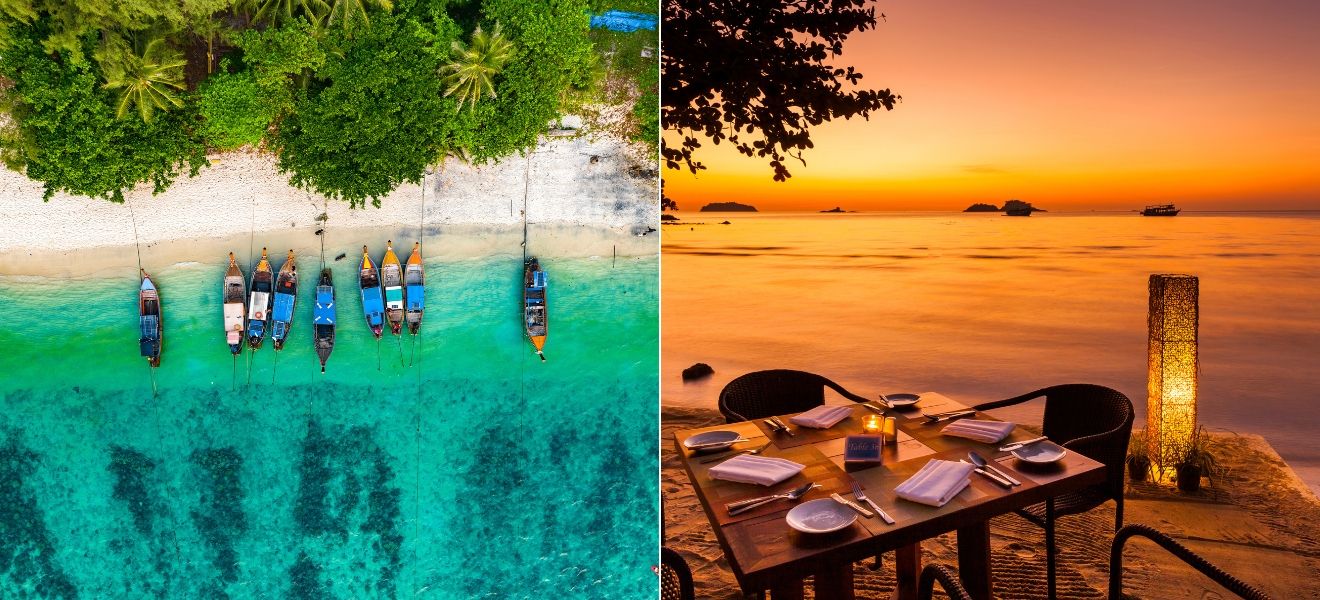


The best beaches in Thailand offer very different kinds of vacations. Railay West brings limestone cliffs and sunset views; Kata combines beach time with everyday convenience; Kantiang Bay suits an unhurried stay; and Bophut pairs the shoreline with evenings around Fisherman’s Village. Choosing between them comes down to what you want to do, how you prefer to travel, and when you plan to visit.
This guide brings together 12 beaches across the Andaman coast, the southern Gulf islands, and eastern Thailand. Some make rewarding places to settle in for several nights, while others work particularly well as excursions. Alongside the scenery, you will find the practical details that shape your experience: access, nearby facilities, atmosphere, and regional weather.
12 Best Beaches in Thailand
1. Railay West, Krabi — For Limestone Scenery and Sunset Views
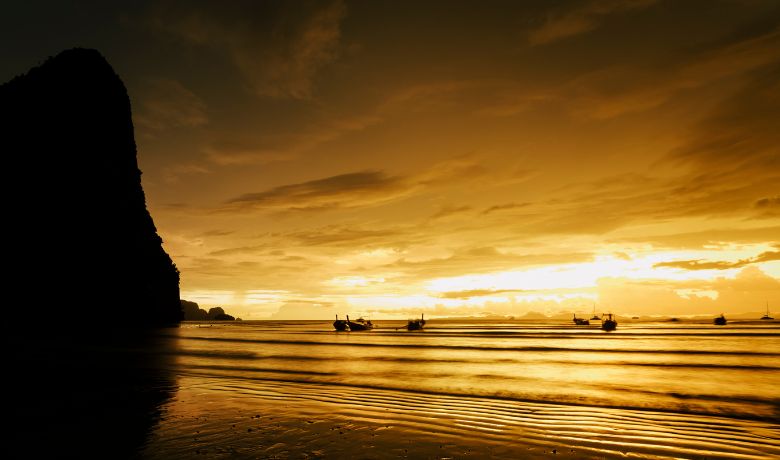
At Railay West, steep limestone cliffs frame a broad curve of sand. The setting makes the beach feel enclosed by the landscape, with longtail boats completing a scene closely associated with coastal Krabi.
Although Railay is part of the mainland, surrounding cliffs mean visitors arrive by boat. Railay West and Railay East also serve different purposes: the west is the sandy beach most visitors picture, while the east has a mangrove shoreline and boat arrivals.
Choose Railay West if you want your beach stay to include scenery you can enjoy without filling every day with excursions. An overnight stay lets you return to the shore at different times, including sunset, instead of fitting everything around a return boat.
Planning tip: Ask your hotel which arrival point it uses and whether assistance is available with luggage. Confirm boarding arrangements if stepping between a boat and the shore could be difficult.
2. Phra Nang Beach, Krabi — For a Scenic Beach Excursion
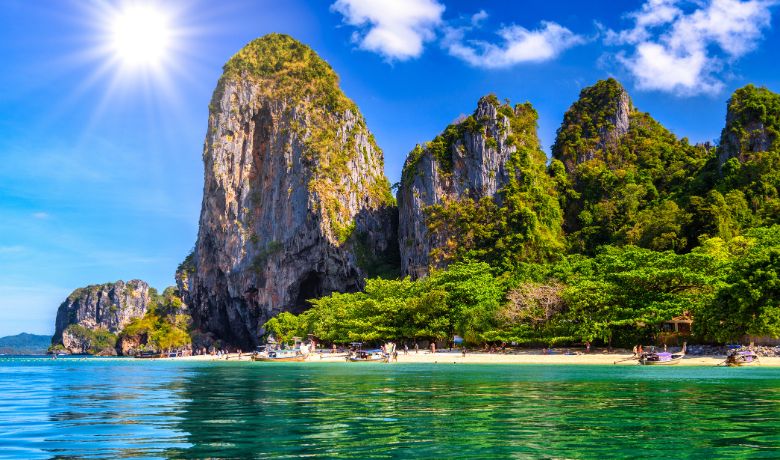
Phra Nang belongs on the same Krabi shortlist as Railay West, but it offers a different reason to visit. Cliffs rise beside the sand, offshore rock formations draw the eye, and the cave shrine adds a cultural element to the coastal setting.
A walking route connects the Railay area with Phra Nang, making it a natural addition to a stay on the peninsula. The shrine is associated with local fishermen and deserves the same respectful behavior as other sacred places.
Treat Phra Nang as a place to spend part of the day enjoying the landscape rather than assuming you need a separate hotel base here. Combining it with Railay West gives you two distinctive beaches without moving accommodation.
Planning tip: Keep the day flexible. A walk, some time on the sand, and a relaxed lunch can be more rewarding than adding several more stops.
3. Kata Beach, Phuket — For a Convenient First Beach Vacation
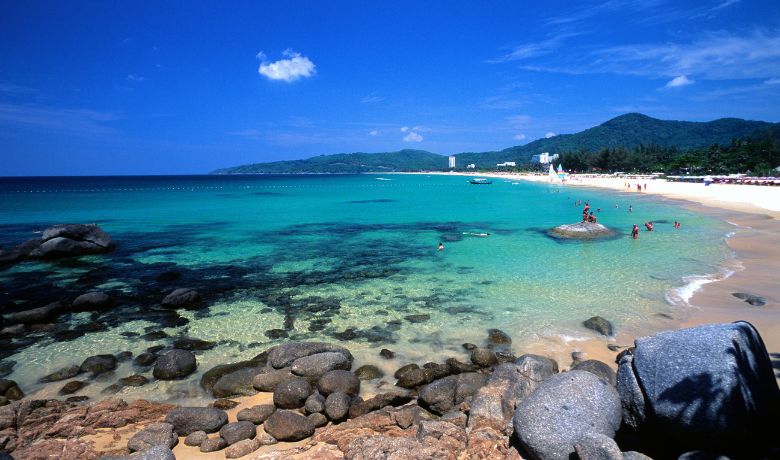
Kata is a useful starting point for travelers who want beach time alongside restaurants, shops, and accommodation choices. Phuket’s provincial guide identifies these facilities as a key part of the area’s appeal. Here, Kata refers primarily to Kata Yai, the larger beach, rather than neighboring Kata Noi.
For a first Thailand beach vacation, convenience matters. Being able to go out for breakfast or choose dinner nearby can make a stay feel more independent, particularly when you do not want to arrange transport for every outing.
Kata suits couples and families who prefer an established beach area. It is less suited to travelers whose first priority is isolation.
Planning tip: Check the actual walking route from your hotel to the sand. “Near Kata Beach” can describe accommodation with very different access, gradients, and road crossings. Check local swimming advice each day.
4. Nai Harn Beach, Phuket — For a Slower Stay in Southern Phuket
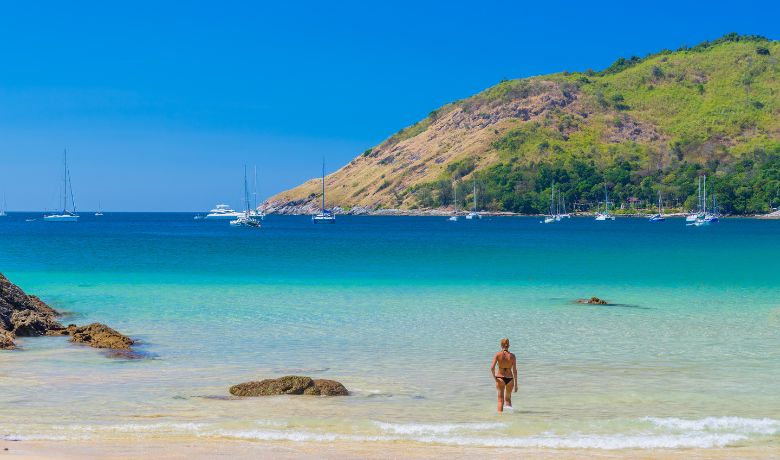
Nai Harn sits in southern Phuket, north of Promthep Cape, with a freshwater lagoon inland behind the beach. That combination gives it a different setting from a beach backed mainly by commercial streets.
Consider Nai Harn if you want to organize your stay around the beach and make selected outings around southern Phuket. Leave room for a long breakfast and an afternoon by the water rather than treating the island as a list of places to cover.
Swimming needs particular attention here. Phuket’s provincial guidance specifically warns against swimming from May to October because of strong currents. A clear sky alone does not establish that the sea is safe.
Planning tip: For a trip during the wetter months, choose accommodation you would enjoy even when sea swimming is unsuitable. Follow beach flags and local instructions.
5. Kantiang Bay, Koh Lanta — For an Unhurried Island Escape
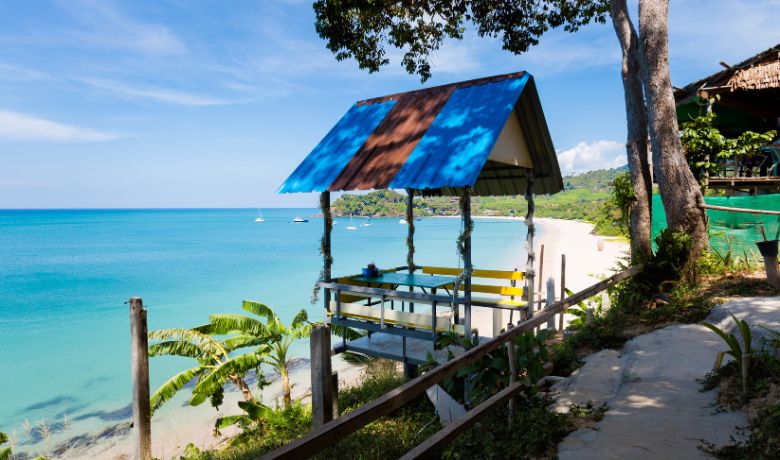
Kantiang Bay lies toward the south of Koh Lanta Yai, backed by wooded hills. Its appeal is the combination of a contained bay, a smaller settlement, and a setting that encourages you to stay put.
This is a strong choice for couples who want their beach days to have very little structure. Spend time on the sand, pause for lunch, and leave the afternoon open. A trip elsewhere on Koh Lanta can add variety without becoming a daily obligation.
The trade-off is location. If you want frequent access to northern island services or a wider spread of evening venues, check whether this southern base fits your plans.
Planning tip: Compare hotels by their immediate surroundings. Walking access to the beach and nearby food can matter more than a longer list of facilities elsewhere on the island.
6. Long Beach, Koh Phi Phi — For Island Views Beyond the Main Village
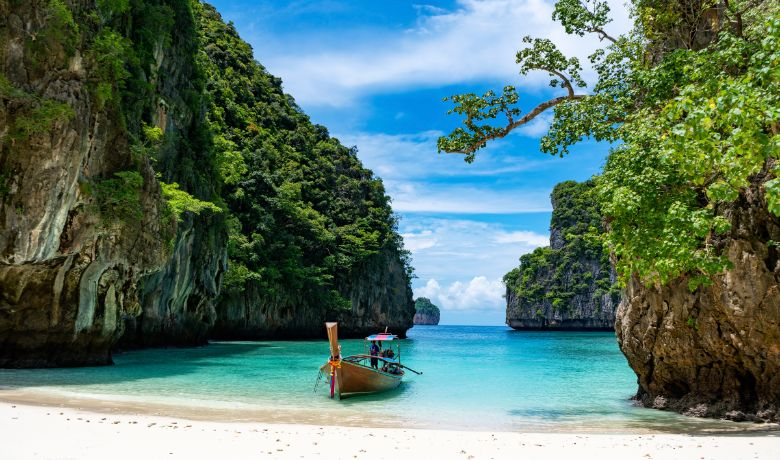
Long Beach, also called Hat Yao, offers a way to stay on Phi Phi Don beyond the main village. A longtail boat connects it with the Tonsai arrival area, according to the beach’s resort operator.
It is worth considering if you want to spend several nights on Phi Phi rather than experience the islands entirely through a day excursion. Staying here gives you a beach base from which to arrange time on the water while preserving unscheduled hours around your hotel.
This is Long Beach on Koh Phi Phi Don. It should not be confused with similarly named beaches on other Thai islands.
Planning tip: Confirm the final transfer with your hotel before booking your main boat journey. Ask about luggage, arrival conditions, and evening transport if you intend to dine in the main village.
7. Sunrise Beach, Koh Lipe — For Early Mornings by the Sea
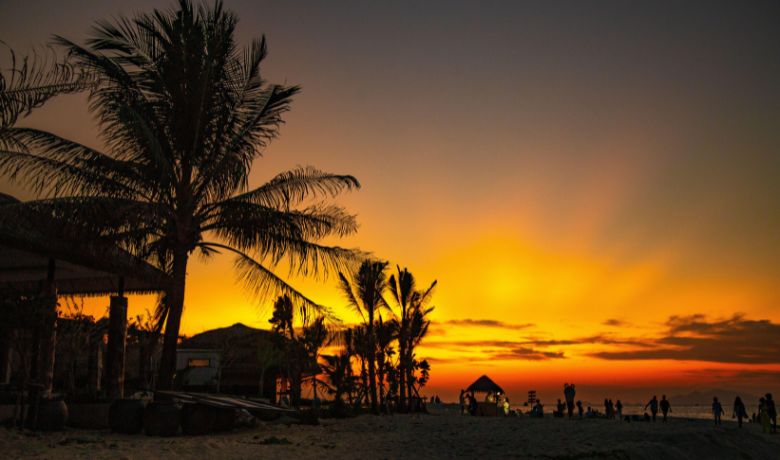
Sunrise Beach faces east along Koh Lipe, giving early risers a reason to step outside before breakfast. Longtail boats are part of its setting, and the beach can serve as a starting point for exploring surrounding waters.
Choose it if the beach itself is central to your vacation and you are happy to devote time to reaching the island. A longer stay makes more sense than arriving for one rushed night between transfers.
Do not assume the entire shoreline is equally quiet. Boat activity changes the experience from one stretch to another, and swimming areas should be chosen with local guidance.
Planning tip: Ask where boats operate in relation to your accommodation. If uninterrupted swimming is your priority, this detail deserves as much attention as the room photographs.
8. Silver Beach, Koh Samui — For a Small, Scenic Bay
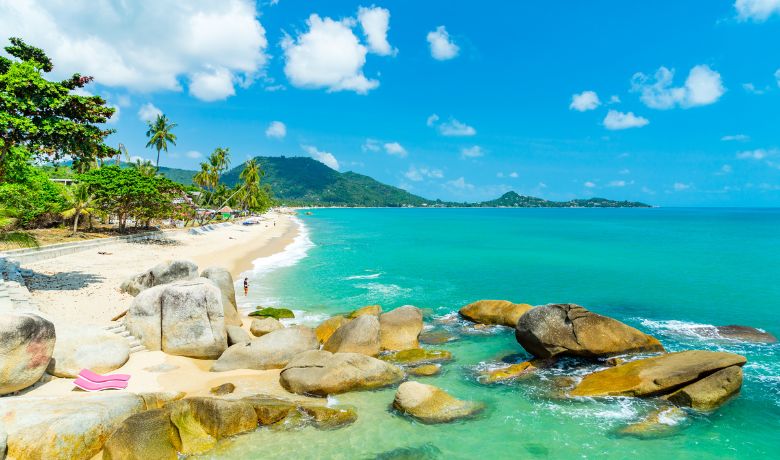
Silver Beach, also called Crystal Bay or Thong Takian, is a small cove between Chaweng and Lamai. Rounded granite boulders distinguish it from Samui’s longer stretches of sand.
It works well as a beach outing during a wider Koh Samui stay. You can enjoy the compact scenery without making this small bay the sole focus of your trip.
Its size is also the main compromise. A modest number of visitors can change the atmosphere quickly, so it should not be presented as a secluded discovery.
Planning tip: If you stay here, check how you will reach restaurants and other parts of Samui. If you visit for a few hours, arrive with flexible expectations about space and sea conditions.
9. Bophut Beach, Koh Samui — For Beach Time and Evening Dining
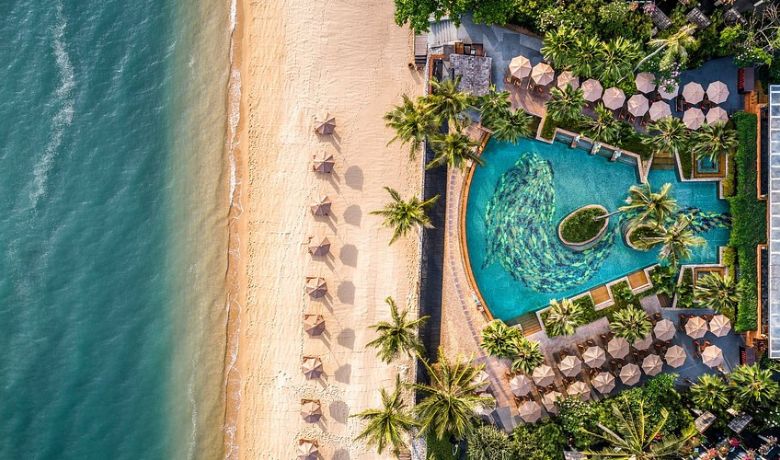
Bophut’s appeal extends beyond the sand. Fisherman’s Village brings together old shophouses, restaurants, cafés, and boutiques along the beachfront area, making evenings an important part of the experience.
It suits travelers who want a comfortable beach base and the option to go out for dinner without planning a substantial outing. For couples who enjoy browsing and choosing a restaurant as they walk, this can be a meaningful advantage over a more isolated location.
Choose Bophut for that combination of shore and neighborhood. If swimming is the main purpose of your vacation, assess the precise beachfront at your intended hotel rather than choosing from the area’s reputation alone.
Planning tip: Check the walking distance to Fisherman’s Village. A hotel described as being in Bophut may be farther from the dining area than expected.
10. Thong Nai Pan Noi, Koh Phangan — For a Restful Couples’ Retreat
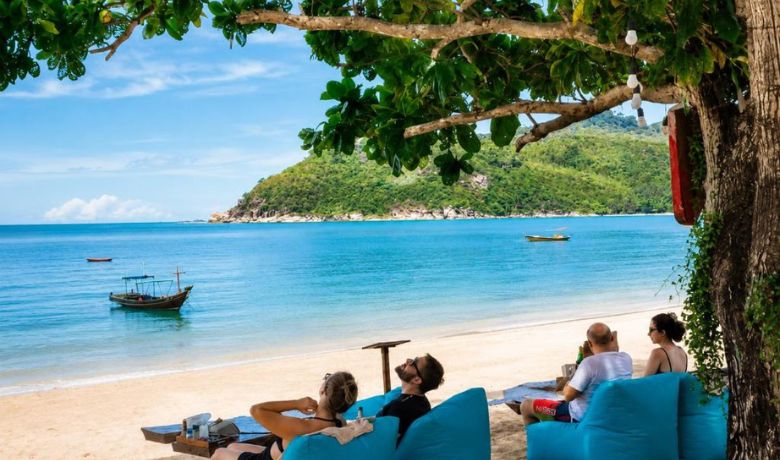
Thong Nai Pan Noi introduces a quieter side of Koh Phangan. On the island’s northeast coast, the Thong Nai Pan bays offer an alternative to planning a stay around Haad Rin and its party scene.
For couples, the attraction is time together in one place: breakfast, beach time, a leisurely lunch, and an evening close to the hotel. Choose it when you want accommodation and immediate surroundings to carry much of the vacation.
Pay attention to the name when booking. Thong Nai Pan Noi and Thong Nai Pan Yai are separate neighboring bays, and your hotel’s location will shape where you spend your days.
Planning tip: Arrange the road transfer from your arrival pier in advance. Account for the full journey, including the ferry and the drive across the island.
11. Sairee Beach, Koh Tao — For Sunsets and a Social Island Atmosphere
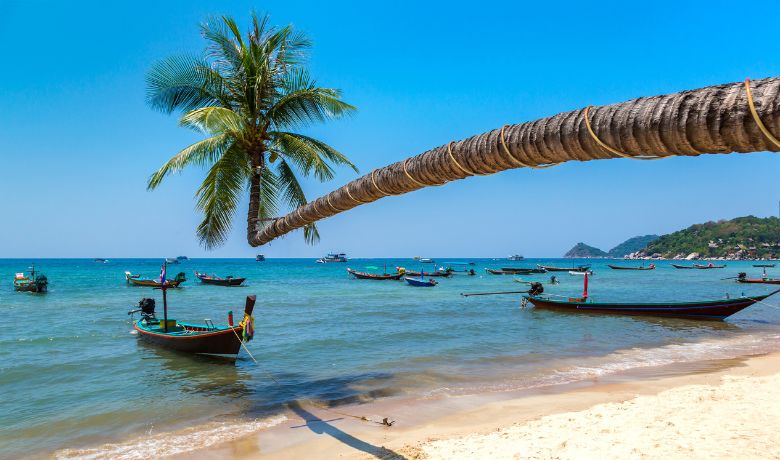
Sairee combines a long beach with dive schools, restaurants, and sunset bars. It is a sociable base for exploring Koh Tao, especially if you want access to diving activities and places to eat.
This is a good choice for travelers who enjoy some activity around them. You can organize an outing on the water, return for a relaxed afternoon, and have several options for the evening.
However, a convenient diving base is not automatically the best snorkeling spot. Discuss suitable sites with a reputable operator according to your experience and current conditions.
Planning tip: Check recent accommodation reviews for nighttime noise. The difference between a restful stay and a lively one can depend on the exact location of your room.
12. Klong Chao Beach, Koh Kood — For a Longer, Slower Beach Stay
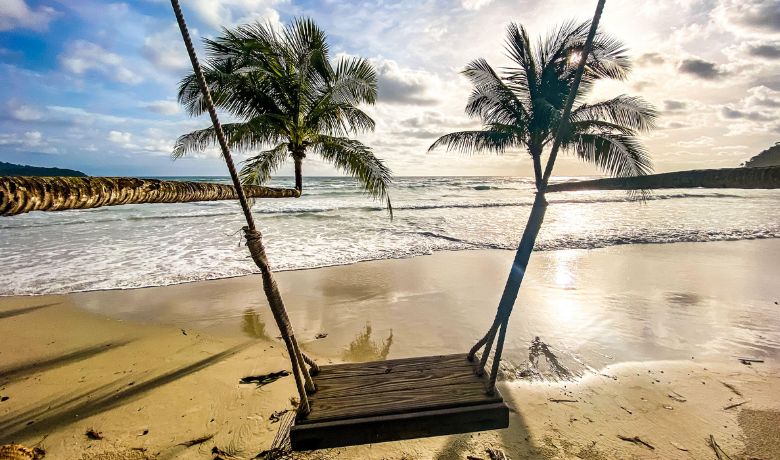
Klong Chao is one of Koh Kood’s established visitor areas, where a river meets the sea. Accommodation is spread between the beachfront, riverside, and inland areas, so the name describes more than a single line of hotels on the sand.
It is worth considering when you want to give a beach stay several uninterrupted days. The setting suits a loose rhythm, with time around your accommodation and occasional exploration rather than constant movement.
Koh Kood lies in eastern Thailand, and its location needs to make sense within your broader route. It is best approached as a deliberate part of the vacation rather than an extra island squeezed into an already busy schedule.
Planning tip: Confirm the mainland pier connection and the island transfer before finalizing flights or overland transport. Check whether your chosen room is beachfront, riverside, or inland.
When Is the Best Time to Visit Thailand’s Beaches?

The best time depends on the coast. Phuket and Krabi do not share exactly the same rainfall pattern as Koh Samui, Koh Phangan, and Koh Tao. Tourism Authority of Thailand guidance places the Andaman coast’s wetter period broadly in April–October and the southern Gulf’s main rains in September–December. These are climate patterns, not forecasts for individual travel dates.
The Andaman Coast: Phuket, Krabi, Koh Lanta, Phi Phi, and Koh Lipe
November to April is generally the main planning window for an Andaman beach vacation. Exact conditions vary at the beginning and end of the season.
During wetter months, beach stays can still appeal, but rougher seas may affect swimming and boat outings. If a particular marine excursion is essential, check seasonal operations before choosing dates.
The Gulf Islands: Koh Samui, Koh Phangan, and Koh Tao
The southern Gulf deserves separate consideration, particularly for travelers planning a Northern Hemisphere summer vacation. June to August can be worth evaluating, while the later-year rainy period needs more care.
A November beach stay in Samui should therefore be assessed differently from one in Phuket. Choose the coast first, then refine your hotel and beach shortlist.
Eastern Thailand: Koh Kood
For Koh Kood, December to March is a useful initial window to investigate. Official Thailand travel guidance identifies these months as favorable for the eastern coastal region. Always confirm boat operations and recent conditions for your dates.
How to Choose the Right Beaches In Thailand
Choose Between a Beach Base and a Day Trip
A beach can be beautiful without being the right place to stay. Phra Nang pairs naturally with a Railay visit, while Kata or Bophut may better suit someone who prioritizes convenient dining and services.
Maya Bay illustrates this distinction. It is a managed sightseeing destination on Phi Phi Leh rather than a conventional beach resort base. Current operator guidance states that swimming is prohibited; access rules and seasonal closures should be reconfirmed before arranging a visit.
Match Your Beach Stay to Your Travel Pace
As an itinerary recommendation, allow around three to five nights in one beach base if relaxation is the main goal. This gives you room for an excursion without spending every full day away from the place you chose to enjoy.
For a shorter trip, favor simpler access. For a longer vacation, an additional island can add variety, provided the transfer does not consume time you would rather spend at the beach.
Look Beyond the Beach Photo
Before booking, check the walk from your room to the sand, nearby dining, arrival arrangements, and how the beach changes with tides or weather.
A hillside room may offer a wonderful view but require steps. A waterfront hotel may be farther from a village than its description suggests. The right choice is the one that supports the everyday experience you want.
Discover Thailand’s Beaches Your Way With Asia Pioneer Travel
From the dramatic limestone scenery of Krabi to the relaxed shores of Koh Samui and Koh Lanta, Thailand offers a beach escape for every travel style. The challenge is finding the right combination of destinations, accommodations, and experiences for your trip.
At Asia Pioneer Travel, we create private, tailor-made journeys around your interests, preferred pace, and travel dates. Whether you are planning a romantic island retreat, a family beach vacation, or a longer journey combining cultural discovery with coastal relaxation, we can help you find the right fit.
Ready to explore Thailand’s coastline? Start designing your personalized Thailand journey with our team.
Frequently Asked Questions (FAQs)
1. What is the best beach in Thailand for first-time visitors?
Kata Beach in Phuket is a great choice for first-time visitors thanks to its convenient location, wide range of accommodations, and nearby restaurants and shops. For more dramatic scenery, Railay West in Krabi offers beautiful limestone cliffs and memorable sunset views.
2. Which beaches in Thailand are best for couples?
Kantiang Bay in Koh Lanta and Thong Nai Pan Noi in Koh Phangan are excellent options for couples seeking a peaceful beach getaway. Both offer a relaxed atmosphere, making them ideal for spending quality time together without a packed sightseeing schedule.
3. What is the best month to visit Thailand's beaches?
December to March is generally a favorable period for beaches along Thailand's Andaman coast, including Phuket, Krabi, and Koh Lanta. For Koh Samui, Koh Phangan, and Koh Tao in the Gulf of Thailand, June to August can also be a good option. The ideal time depends on which coast you plan to visit.
4. How many days should you spend on a beach vacation in Thailand?
Three to five nights in one beach destination is a good starting point for a relaxing getaway. If you want to explore multiple islands or combine beach time with cultural experiences, consider seven to ten days or longer, depending on travel distances and your preferred pace.