

In Thailand, a friendly smile can go a long way, but even small gestures can carry a different meaning than you expect. Point your feet toward a Buddha statue, forget to remove your shoes at a temple, or mishandle a greeting, and you could offend someone without realizing it. Thai etiquette and customs shape everyday interactions, from how people greet elders to how they behave in sacred spaces. Here’s what to know before your trip to avoid awkward moments and connect more respectfully with local people.
Essential Thai Cultural Etiquette Every Traveler Should Know
Thai culture places great importance on social harmony, respect, and consideration for others. Three concepts offer a useful glimpse into these values and how they influence everyday interactions.
- Kreng Jai (เกรงใจ): Being considerate and avoiding actions that inconvenience others. On a group tour, this means arriving on time, listening to your guide, and respecting fellow travelers’ space and preferences.
- Jai Yen (ใจเย็น): Keeping a “cool heart” by staying calm and speaking politely, even when something goes wrong. Raising your voice or showing anger in public can cause embarrassment and make it harder to resolve a problem.
- Sanuk (สนุก) and Mai Pen Rai (ไม่เป็นไร): Sanuk reflects the importance of enjoyment, while Mai Pen Rai means something like “never mind” or “it’s okay.” If plans change or a minor misunderstanding occurs, staying flexible and responding with a friendly attitude can help keep the experience pleasant.
These values are not strict rules for every situation, but they explain why patience, courtesy, and a relaxed attitude are appreciated in many social settings across Thailand.
How to Use the Thai Wai Greeting and Everyday Greetings
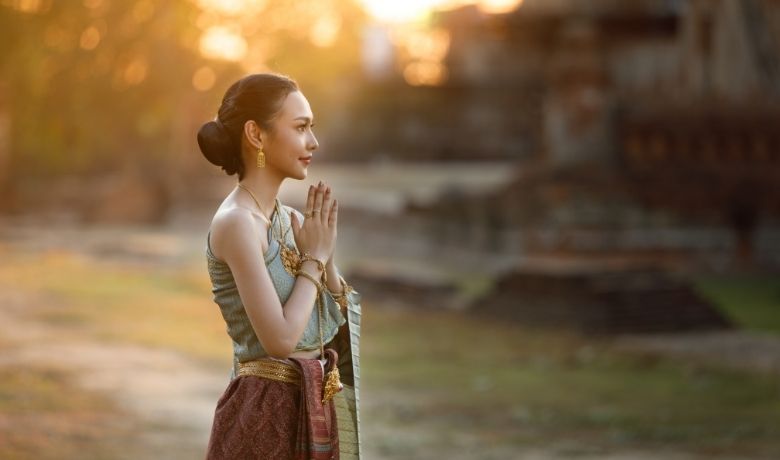
The wai (ไหว้) is a traditional Thai greeting made by placing your palms together and slightly bowing your head. The gesture expresses respect, and its form can vary depending on the relationship between the people greeting each other.
Here are a few common situations:
- Greeting monks: The wai is generally held higher, with the thumbs near the forehead, accompanied by a deeper bow.
- Greeting elders or parents: Place your palms together around nose level and bow your head respectfully.
- Greeting friends or peers: Hold your palms together at chest level and give a slight bow.
As a visitor, you do not need to initiate a wai in every interaction. A warm smile and a slight nod are usually appropriate when greeting service staff, drivers, or children. If someone offers you a wai, returning the gesture is a polite response.
For everyday greetings, use “Sawatdee” followed by a polite ending:
- Men: Sawatdee khrap
- Women: Sawatdee kha
When addressing someone by name, Khun is a polite title similar to Mr. or Ms. Place it before the person’s name, such as Khun Anong, in both formal and everyday conversations.
These simple Thai greeting etiquette tips are particularly useful when meeting local hosts, joining a guided tour, or visiting smaller communities where personal interactions are an important part of the experience.
Why Head and Feet Etiquette Matters in Thai Culture
In Thai tradition, the head is considered the highest and most sacred part of the body, while the feet are seen as the lowest and least clean. These beliefs influence how people sit, interact, and behave in temples, private homes, and other shared spaces.
Here are a few simple rules to remember:
- Avoid touching someone’s head. Even a friendly gesture like ruffling a child’s hair can be considered disrespectful. You should also avoid passing objects over someone’s head unnecessarily.
- Keep your feet to yourself. Never point your feet at people, Buddha statues, royal portraits, or food. Avoid placing your feet on tables or chairs, and do not point the soles of your feet toward another person or a sacred object.
- Sit respectfully on the floor. In temples and Thai homes, fold your legs to one side or tuck your feet behind you. This helps keep the soles of your feet from facing other people.
- Remove your shoes when required. Take off your footwear before entering private homes, temple prayer halls, and other spaces where shoes are not allowed. Some traditional shops may also ask you to remove them. Place your shoes neatly to the side and avoid stepping directly on the threshold.
These Thai cultural customs may be unfamiliar to first-time visitors, but they are easy to follow once you know what to look out for. When in doubt, observe local behavior and follow your host’s lead.
Thai Temple Etiquette: Dress Codes and Rules for Visitors
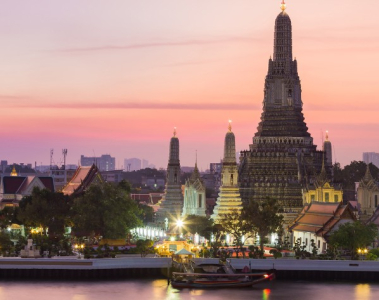
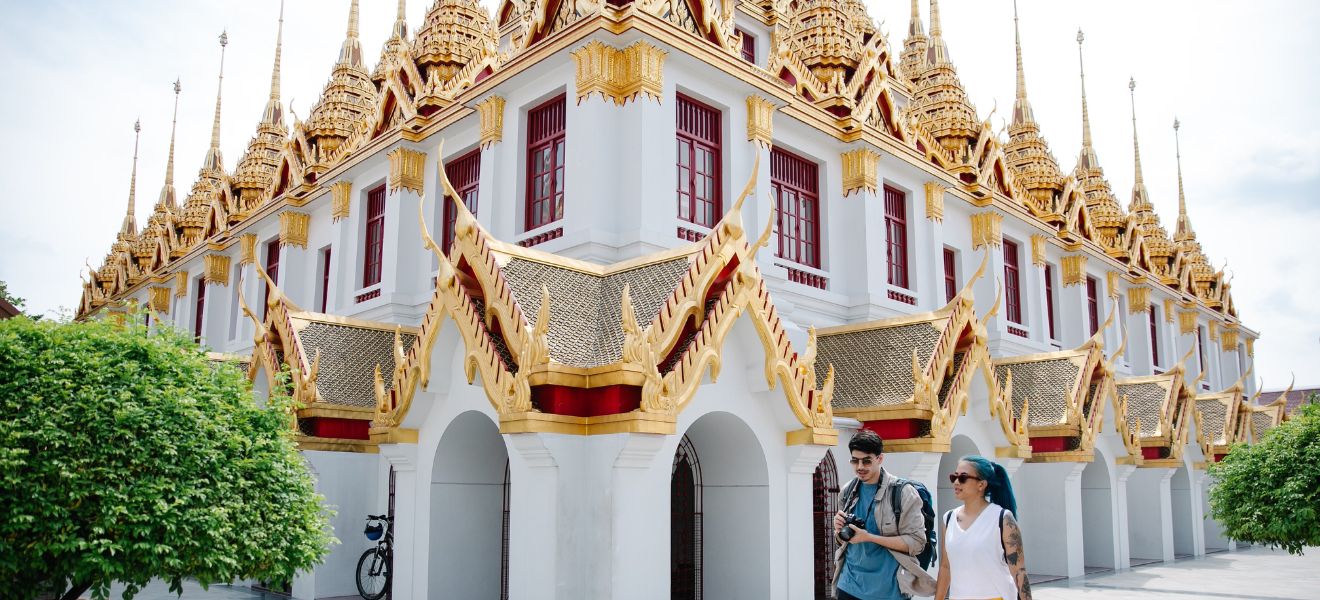
Thai temples, known as wat, are active places of worship, not just sightseeing stops. Visitors are welcome, but modest clothing and respectful behavior are essential when entering these sacred spaces.
What Should You Wear to a Thai Temple?
Most temples expect visitors to dress modestly, with shoulders and knees covered. This applies to visitors of all genders.
- Cover your shoulders and chest. Avoid sleeveless tops, thin straps, off-the-shoulder clothing, and see-through fabrics.
- Cover your knees. Choose long trousers or a skirt that extends below the knees.
- Wear shoes that are easy to remove. You may need to take them off before entering certain temple buildings or prayer halls.
Some popular temples may have additional dress requirements, so check the rules before visiting. Carrying a lightweight scarf or cover-up can be useful if you plan to visit several temples in one day.
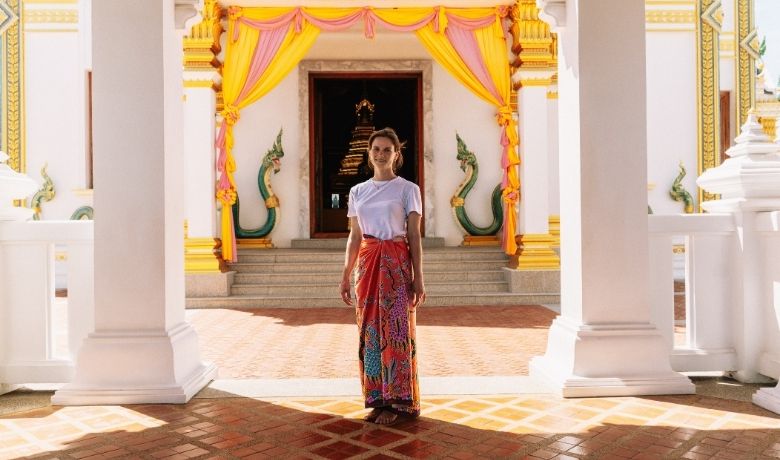
How Should You Behave Inside Thai Temples?
Inside a temple, remove your hat and sunglasses, keep your voice low, and silence your phone. Avoid posing for disrespectful photos in front of Buddha images. If you’re unsure whether photography is allowed, look for signs or ask someone before taking pictures.
Women should also be aware of customs involving Buddhist monks. Under Theravada Buddhist monastic rules, monks are generally expected to avoid physical contact with women. If you’re a woman offering something to a monk, follow the instructions given at the temple. You may be asked to place the item on a designated cloth, table, or tray rather than handing it directly to the monk.
Treat the temple as you would any place of worship: dress modestly, pay attention to local instructions, and remember that people may be there to pray rather than to sightsee. Following these Thai temple etiquette guidelines helps you visit respectfully without disrupting religious activities.
Respect for Thailand’s Monarchy and Royal Customs
Thailand’s monarchy holds a deeply respected place in the country’s public life, and visitors should be careful when discussing or interacting with anything related to the royal family. Avoid jokes, insults, or gestures that could be interpreted as disrespectful.
Thailand also has strict lèse-majesté laws. Section 112 of the Thai Criminal Code covers defamation, insults, or threats against the King, Queen, Heir-apparent, or Regent. The law provides penalties of three to fifteen years in prison for each offense. Because the subject is legally and culturally sensitive, avoid making assumptions about what is acceptable and speak respectfully.
There are also a few public customs worth knowing:
- Stand still during the national anthem. The Thai national anthem is commonly played in public spaces, including train stations and parks, at around 8:00 AM and 6:00 PM. If people around you stop and stand, do the same and remain still until it ends.
- Stand for the royal anthem when appropriate. Sansoen Phra Barami, the royal anthem, is played before film screenings in cinemas and at certain public events. Follow the example of the people around you and stand respectfully.
- Handle Thai money carefully. Banknotes and coins feature the monarch’s image. Never step on money to stop it from blowing away, and avoid deliberately tearing, damaging, or defacing it.
These customs may be unfamiliar to visitors, but observing local behavior and treating royal symbols respectfully can help prevent unnecessary misunderstandings.
Thai Dining Etiquette and Tipping Practices for Tour Guests
Food is a big part of experiencing Thailand, and many traditional meals are meant to be shared. At the table, Thai dining etiquette is generally straightforward: use the appropriate cutlery, share dishes considerately, and follow your hosts’ lead when dining with a local family.
How Do You Use Cutlery in Thailand?
Thai dishes are usually eaten with a spoon and fork rather than a knife and fork. The spoon is held in the right hand and used to bring food to your mouth, while the fork in your left hand helps push food onto the spoon. Most dishes are prepared in bite-sized pieces, so a knife isn’t usually needed. Chopsticks are mainly used for noodle dishes.
How Is Food Shared at a Traditional Thai Meal?
In a traditional Thai meal, several dishes are placed in the middle of the table for everyone to share, often alongside individual plates of rice. Rather than ordering one main dish per person, you can try a little of everything and discover different flavors in the same meal.
In some traditional family settings, younger family members may help serve rice to older relatives as a sign of respect. If you’re dining with a local family, take your cues from your hosts and follow their lead.
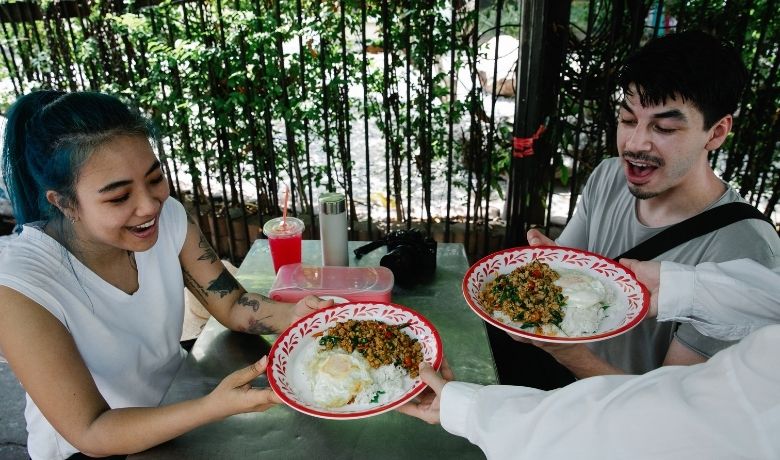
How Much Should You Tip in Thailand?
Tipping isn’t traditionally compulsory in Thailand, but it’s appreciated when you receive good service. The amount depends on the setting, and there’s no need to feel pressured to tip everywhere.
- Mid-range and upscale restaurants: Check your bill before leaving a tip. Some restaurants add a 10% service charge and 7% VAT. If a service charge hasn’t been included, a tip of around 10% is a considerate option for good service.
- Tour guides and private drivers: For a full day of service, around 100 – 300 baht per person is a possible guideline, depending on the quality of the experience and your budget.
- Massage and spa services: A tip of around 50 – 100 baht for a 60-minute treatment is a common guideline. You can hand it directly to the therapist as a thank-you.
The simplest rule is to check the bill, consider the service you’ve received, and tip what feels appropriate. A genuine thank-you and a friendly attitude go a long way, too.
> Read more: Tipping Culture in Southeast Asia: A Smart Traveler’s Guide
Thailand Customs Regulations and Prohibited Items for Travelers
Beyond cultural etiquette, travelers should check Thailand customs regulations before packing. Some everyday items have strict import limits, while others are prohibited or require special permission. Knowing the difference can save you time and trouble at the airport.
What Can You Bring Into Thailand Duty-Free?
According to the Thai Customs Department, arriving passengers can generally bring the following items within the stated duty-free allowances, provided the goods meet the other customs requirements:
- Cigarettes: Up to 200 cigarettes per person, or up to 250 grams of tobacco. The applicable combined weight limit should be checked if carrying different types of tobacco products.
- Alcohol: Up to 1 litre of alcoholic beverages.
- Personal belongings: Items for personal use in reasonable quantities, with a total value not exceeding 20,000 baht, provided they are not prohibited or restricted goods and are not intended for commercial use.
If you have goods that exceed the applicable allowances or require declaration, follow the customs instructions and use the appropriate Red Channel (Goods to Declare). These allowances are not permission to bring in restricted items.
Check the latest official guidance before departure, as customs requirements can change and additional conditions may apply.
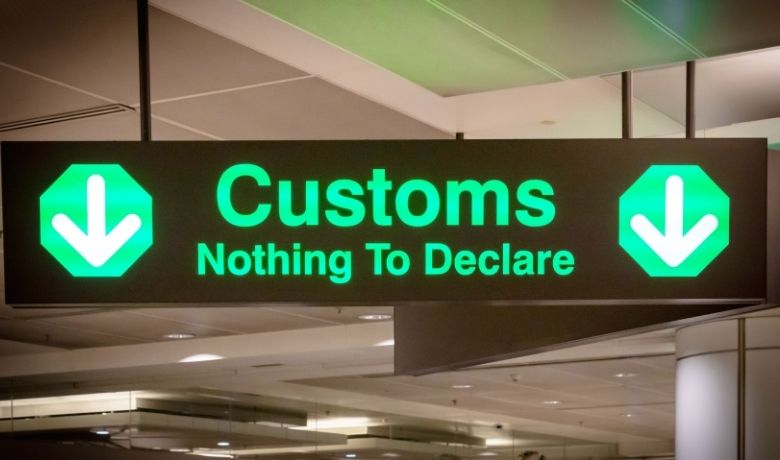
Which Items Are Prohibited in Thailand?
Thailand restricts or prohibits several categories of goods. These include:
- Electronic cigarettes and vaping devices, as well as shisha or hookah products.
- Illegal drugs and other prohibited substances.
- Obscene materials.
- Counterfeit goods and items that infringe intellectual property rights.
Rules can differ depending on the item, so do not assume that something permitted in your home country is also allowed in Thailand. Check the latest official guidance before travelling, especially if you’re carrying equipment, specialist products, or items that may be subject to import restrictions.
Can You Bring Prescription Medication Into Thailand?
If you need medication during your trip, check its ingredients and Thailand’s rules before packing it. Some medicines containing controlled narcotic or psychotropic substances require advance permission, even when prescribed by a doctor.
The requirements depend on the active ingredient and its classification. Certain medicines have quantity limits, documentation requirements, or advance permit requirements, and some applications must be submitted at least 15 days before travel.
Check the official Thai Food and Drug Administration (FDA) guidance and permit portal before departure. Do not rely on the medication’s brand name alone; verify its active ingredient and the category it falls under.
Frequently Asked Questions About Thai Etiquette and Customs
1. Do foreign tourists need to perform the wai greeting to everyone in Thailand?
No. A smile and slight nod are usually enough for casual interactions. If someone offers you a wai, returning the gesture is a polite response.
2. What should I wear when visiting temples in Thailand on a guided tour?
Wear clothes that cover your shoulders and knees. Remove your shoes before entering designated temple buildings, and keep your voice low inside places of worship.
3. Is tipping mandatory for private tour drivers and guides in Thailand?
No, but it's appreciated for good service. For a full day, around 100 – 300 baht per person is a general guideline, depending on your experience and budget.
4. Can women interact directly with Buddhist monks during a trip?
Yes, women can speak respectfully with monks, but physical contact is generally avoided. When offering something, follow the temple's instructions and use a designated cloth, table, or tray if required.
5. What are the strict customs rules on e-cigarettes and medications entering Thailand?
E-cigarettes and vaping devices are prohibited or restricted, so avoid bringing them. Some prescription medicines containing controlled substances require advance permission. Check the Thai FDA's official guidance before departure.
Mind the Manners, Savor the Journey
Getting Thai etiquette and customs right isn’t about being flawless. It’s about showing genuine respect so you can connect deeper with locals and wander beyond the surface. Don’t sweat every tiny detail on the road, though. If you’d rather dive straight into the street food alleys and hidden temples without second-guessing local norms, let the trip designers at Asia Pioneer Travel map out your seamless, tailor-made itinerary. Pack your curiosity and we will handle the rest.