Did you know that Phuket became Southeast Asia’s first UNESCO Creative City of Gastronomy in 2015? That same mix of cultures is what makes Phuket Old Town so fascinating. Once a thriving tin-mining port on the Andaman coast, this historic district brings together Thai traditions, Hokkien Chinese heritage, Malay influences, and European architecture. Its colorful shophouses, old mansions, and family-run eateries tell stories you won’t find on the beach. This guide covers what to see, eat, and experience, including how to enjoy a relaxed morning exploring the old town with private transport from your beachside resort.
Phuket Old Town: History and Sino-Portuguese Architecture
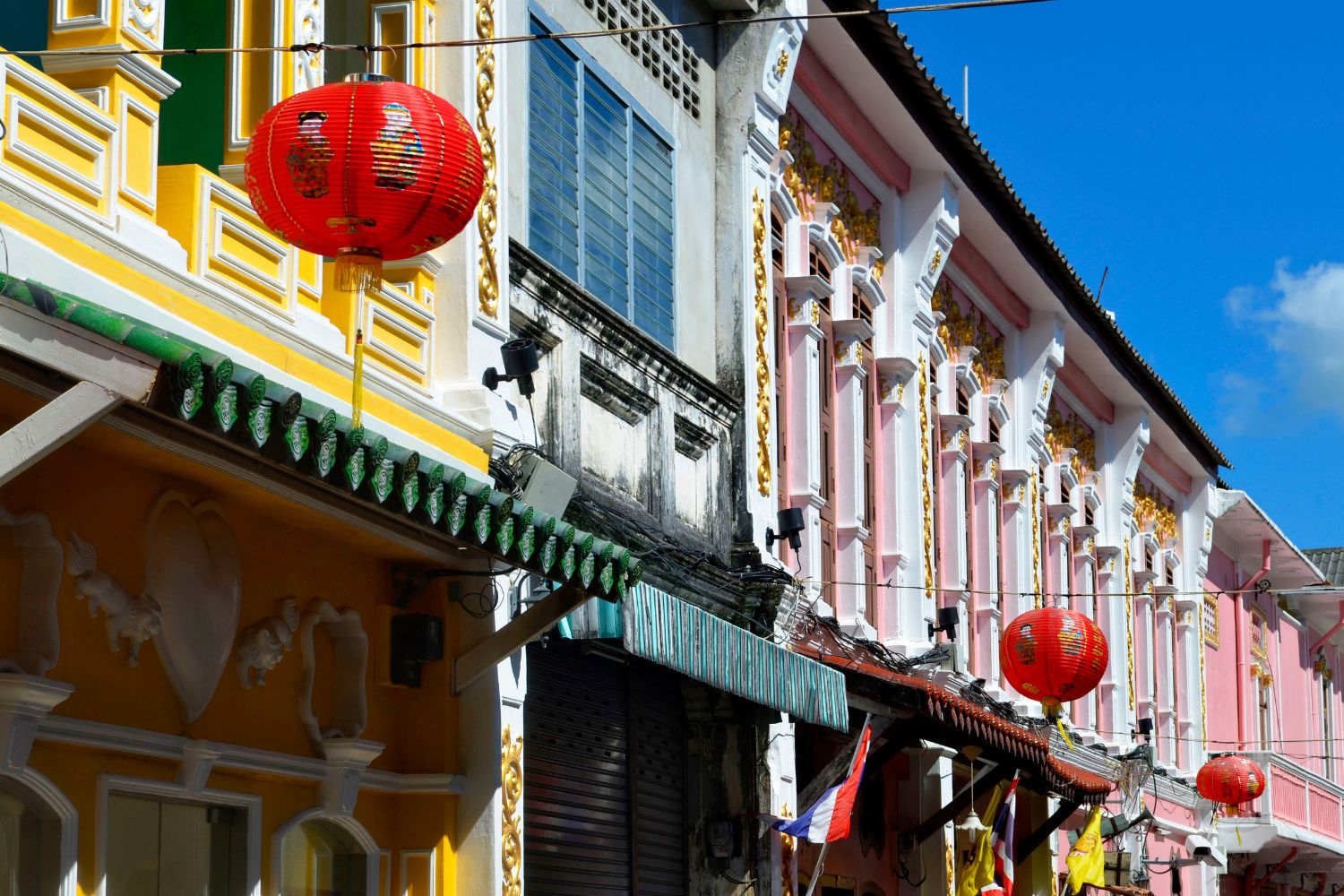
Old Phuket Town offers a glimpse into Phuket’s rich past, where Chinese heritage, European influences, and local Thai traditions come together. Its colorful shophouses, historic mansions, and distinctive cultural identity reflect the island’s transformation into a prosperous trading center during the 19th century.
The Tin Mining Boom of the 19th Century
Phuket’s tin mining industry attracted Chinese immigrants, particularly from Fujian, alongside European merchants seeking new business opportunities. Their growing prosperity shaped the town’s historic streetscape, leaving behind elegant mansions and rows of traditional shophouses.
Sino-Portuguese Architecture
The town’s signature architecture blends European-inspired building layouts with Chinese decorative details, including traditional roof tiles and intricate motifs. Covered walkways known as five-foot ways run along the shophouses, protecting pedestrians from the tropical sun and rain while connecting the streets into a walkable historic district.
Baba-Peranakan Culture
Old Phuket Town is also home to the Baba-Peranakan, or Baba-Yaya, culture, which developed through generations of Chinese and local Thai families. This distinctive heritage lives on through traditional kebaya clothing, local cuisine, family customs, and religious ceremonies, adding another layer of cultural richness to the town’s architectural charm.
Things to Do in Phuket Old Town
From wandering historic streets to discovering local art and heritage, there are plenty of things to do in Phuket Old Town for travelers who want to experience the island beyond its beaches. These activities offer a closer look at Phuket’s Sino-Portuguese architecture, Chinese heritage, and distinctive Baba-Peranakan culture.
1. Stroll Along the Iconic Historic Streets
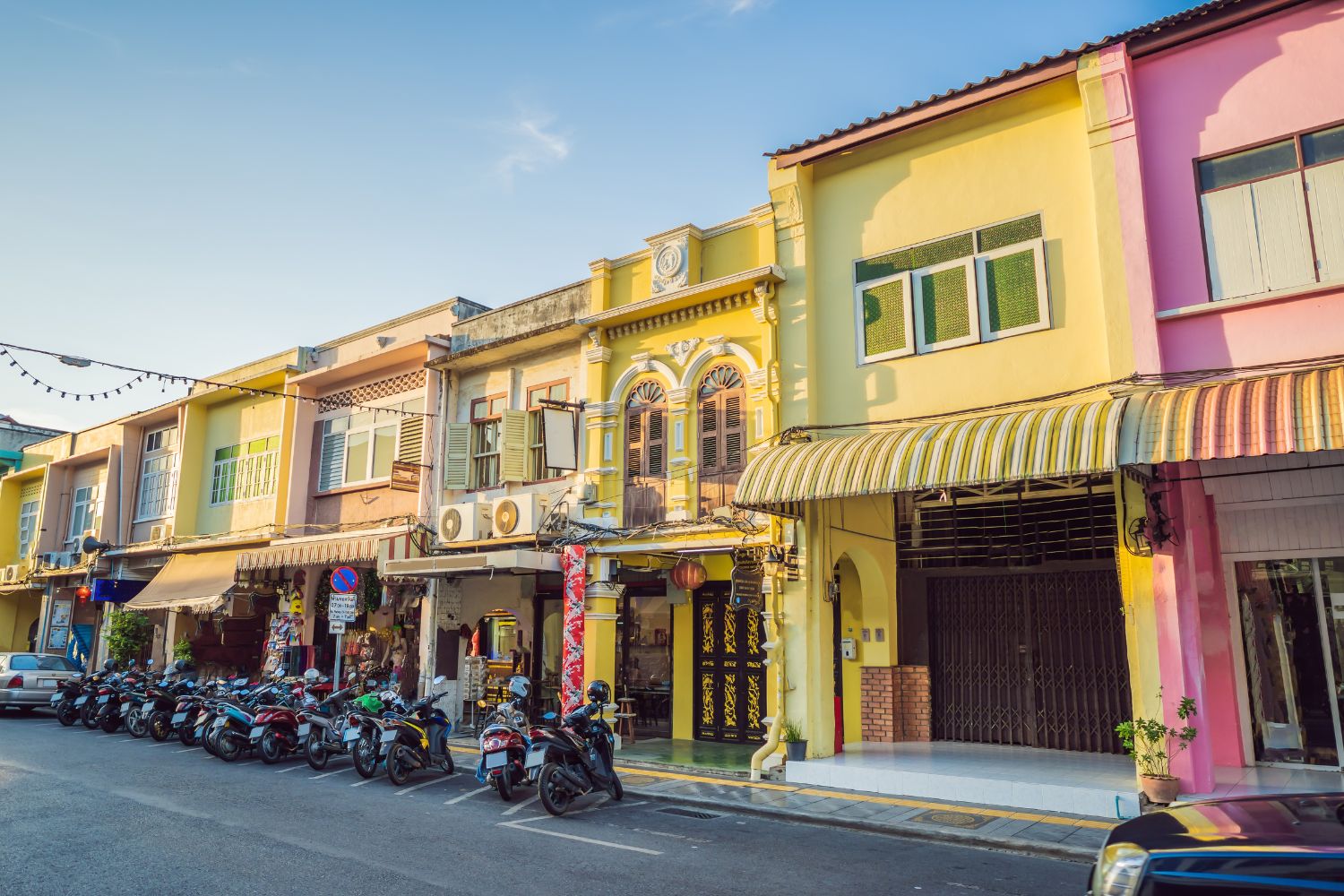
One of the best things to do in Phuket Old Town is simply wander its historic streets. The district is compact, measuring roughly 1 km by 500 m, so most attractions are within a relaxed 10 – 15-minute walk of one another. Start on Thalang Road, where pastel-colored Sino-Portuguese shophouses, wooden shutters, and covered walkways give the street its character.
Then head to Soi Romanee, a photogenic lane lined with colorful facades, boutique cafes, and ice cream shops. Dibuk, Phang Nga, and Krabi roads are worth exploring too, especially if you want to see historic mansions and quieter corners of the old town.
- Where to go: Thalang Road, Soi Romanee, Dibuk Road, Phang Nga Road, and Krabi Road.
- Travel tip: Start between 7:30 and 9:30 AM to beat the heat and enjoy quieter streets.
2. Admire Contemporary Street Art and Cultural Murals
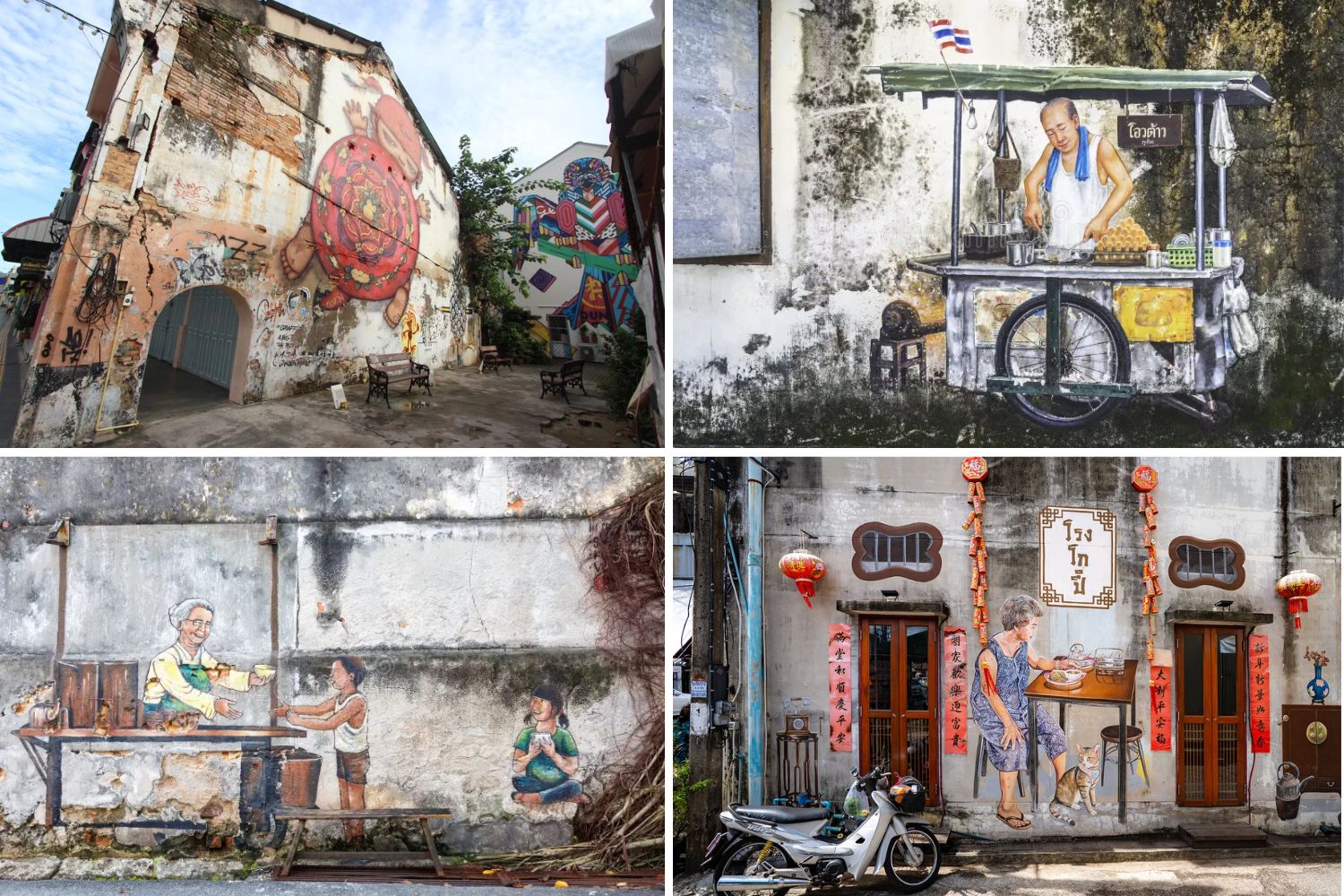
Phuket Old Town isn’t just about old buildings. Its street art adds a modern twist to the historic streets, with murals celebrating local food, Chinese heritage, and everyday island life.
Many of these works are part of the F.A.T. (Food Art Old Town) initiative, which followed Phuket’s designation as a UNESCO Creative City of Gastronomy in 2015. Look for the Red Tortoise Mardi mural near Soi Romanee, inspired by the traditional Chinese red tortoise cake, and the colorful Geometric Eagle nearby. On Phang Nga Road, the Kopi Tiger mural pays tribute to the island’s coffee culture.
- What to look for: The Red Tortoise Mardi, Geometric Eagle, Kopi Tiger, and Uncle and Auntie murals.
- Travel tip: Some murals are on private properties or active businesses, so be respectful when taking photos.
3. Step Inside Heritage Mansions and Museums
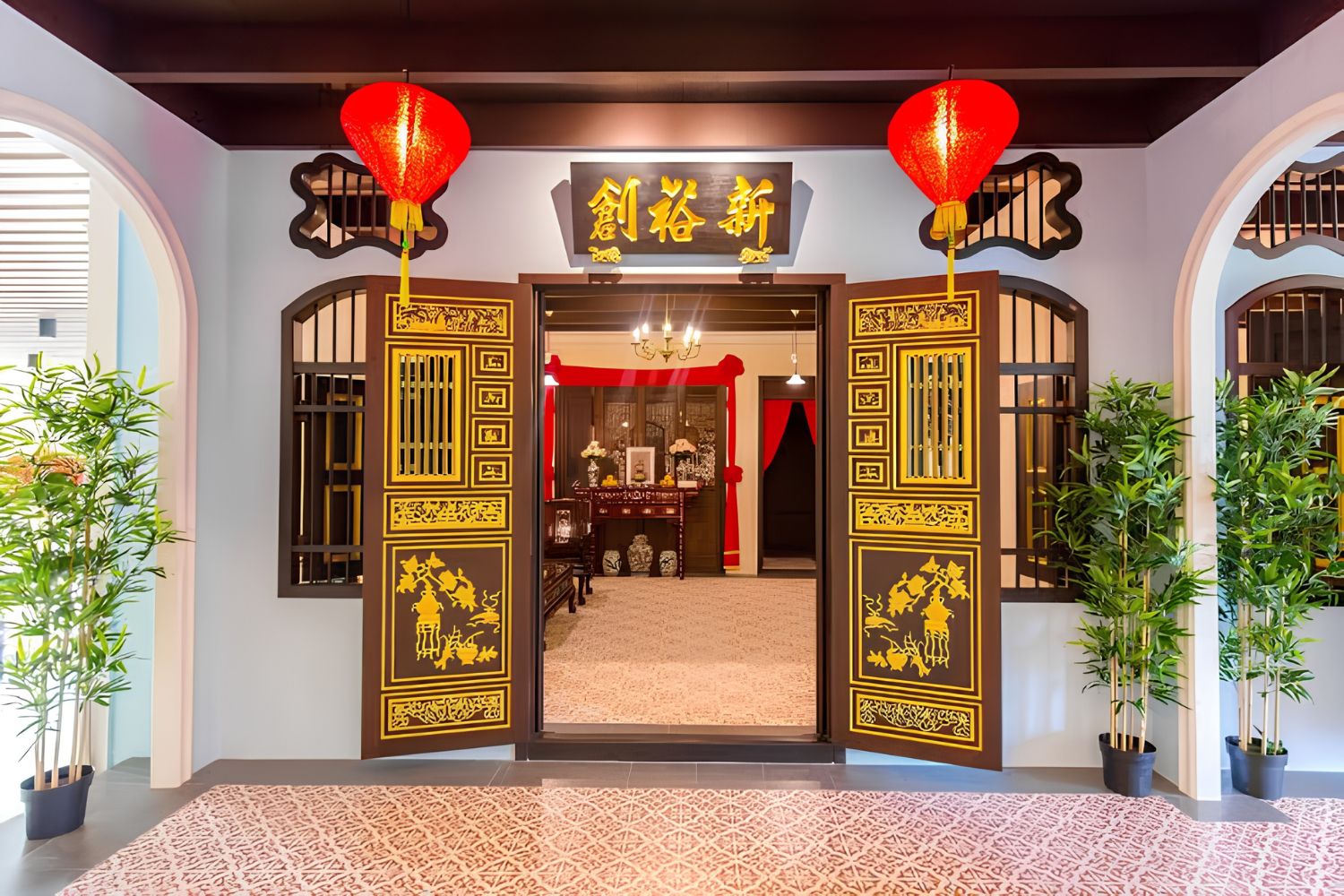
The colorful facades tell only part of Phuket’s story. Step inside its heritage mansions and museums to learn how the island’s tin-mining boom shaped local life. Built in 1903, Baan Chinpracha on Krabi Road offers a glimpse into the lifestyle of a wealthy Chinese mining family, with antique furnishings, imported floor tiles, and a central courtyard.
At Phuket Thai Hua Museum, you can learn about Chinese immigration, the tin industry, and the growth of the Baba-Peranakan community. The Peranakan Phuket Museum explores traditional clothing, family customs, and the craftsmanship behind the community’s distinctive heritage.
- Where to go: Baan Chinpracha, Phuket Thai Hua Museum, and Peranakan Phuket Museum.
- Travel tip: Check opening hours and admission fees before visiting, as access arrangements vary between properties.
4. Visit Sacred Taoist Shrines
For a different perspective on local culture, visit the Chinese shrines scattered throughout Phuket Old Town. These places of worship reflect the beliefs and traditions brought by Chinese immigrants during the island’s tin-mining era.
Jui Tui Shrine and Put Jaw Temple, both on Ranong Road, are important religious landmarks associated with Phuket’s annual Vegetarian Festival, held in September or October. On Phang Nga Road, the Shrine of the Serene Light, also known as Sang Tham Shrine, offers a quieter place to admire traditional decorations and experience the town’s spiritual side.
- Where to go: Jui Tui Shrine, Put Jaw Temple, and Sang Tham Shrine.
- Travel tip: Dress modestly, keep your voice down, and avoid disrupting worshippers or religious ceremonies.
5. Experience the Sunday Walking Street Market (Lard Yai)
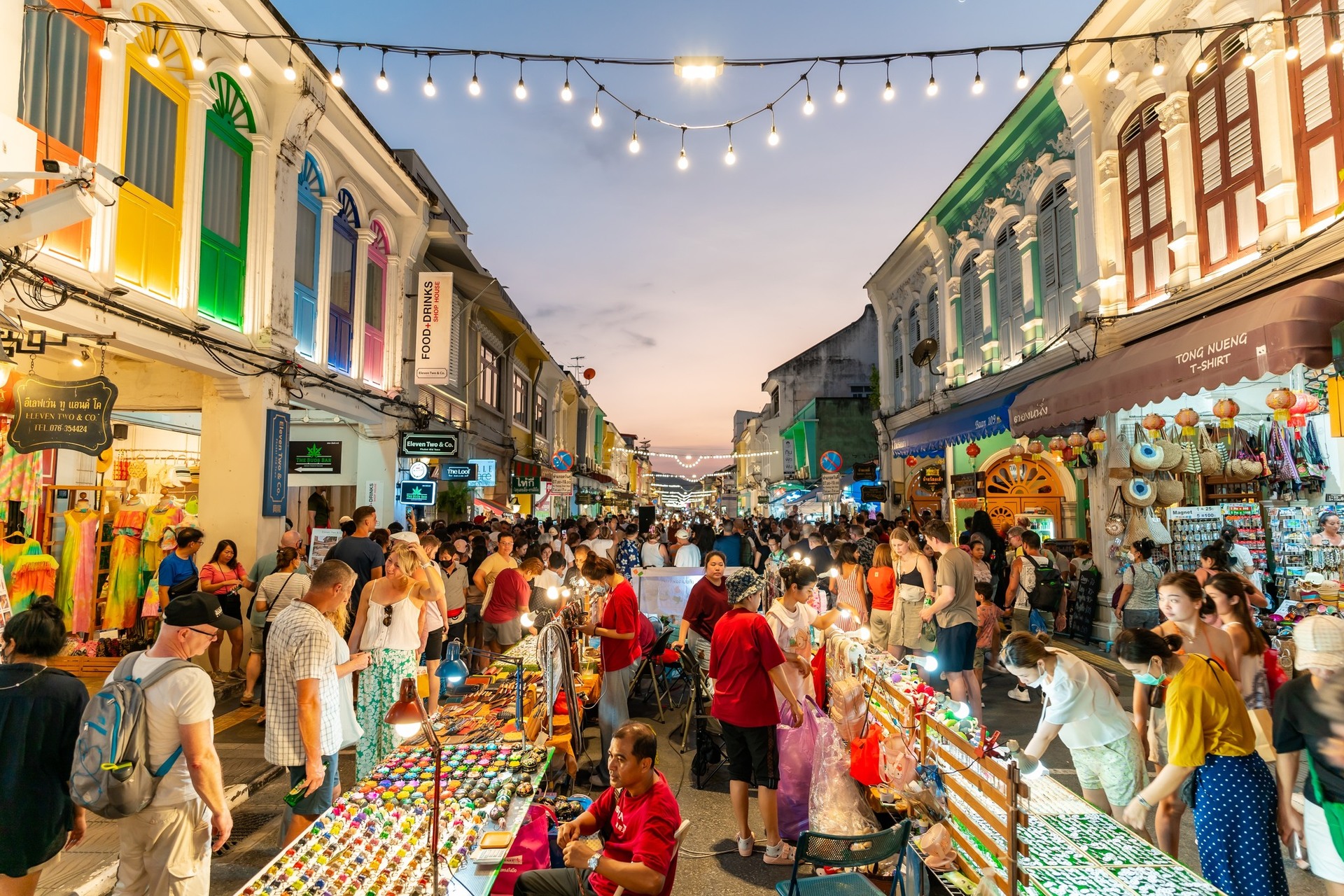
If you’re in town on a Sunday, make time for Lard Yai, Phuket’s popular Walking Street Market. From around 4 PM, Thalang Road fills with food stalls, handmade crafts, clothing, and souvenirs, while musicians and performers bring the street to life.
The historic Sino-Portuguese buildings provide a colorful backdrop, especially after the lights come on in the evening. It’s a good place to sample local snacks, browse independent stalls, and see how the old town shifts from a quiet heritage district into a lively gathering place for locals and visitors.
- What to do: Sample Phuket street food, shop for local crafts, and catch live music or traditional performances.
- Travel tip: The market typically runs every Sunday from 4 PM until 9 or 10 PM. Arrive around 4:30 PM to explore before the busiest hours, and check the schedule before you go.
Phuket Town: UNESCO Gastronomy and Heritage Dining
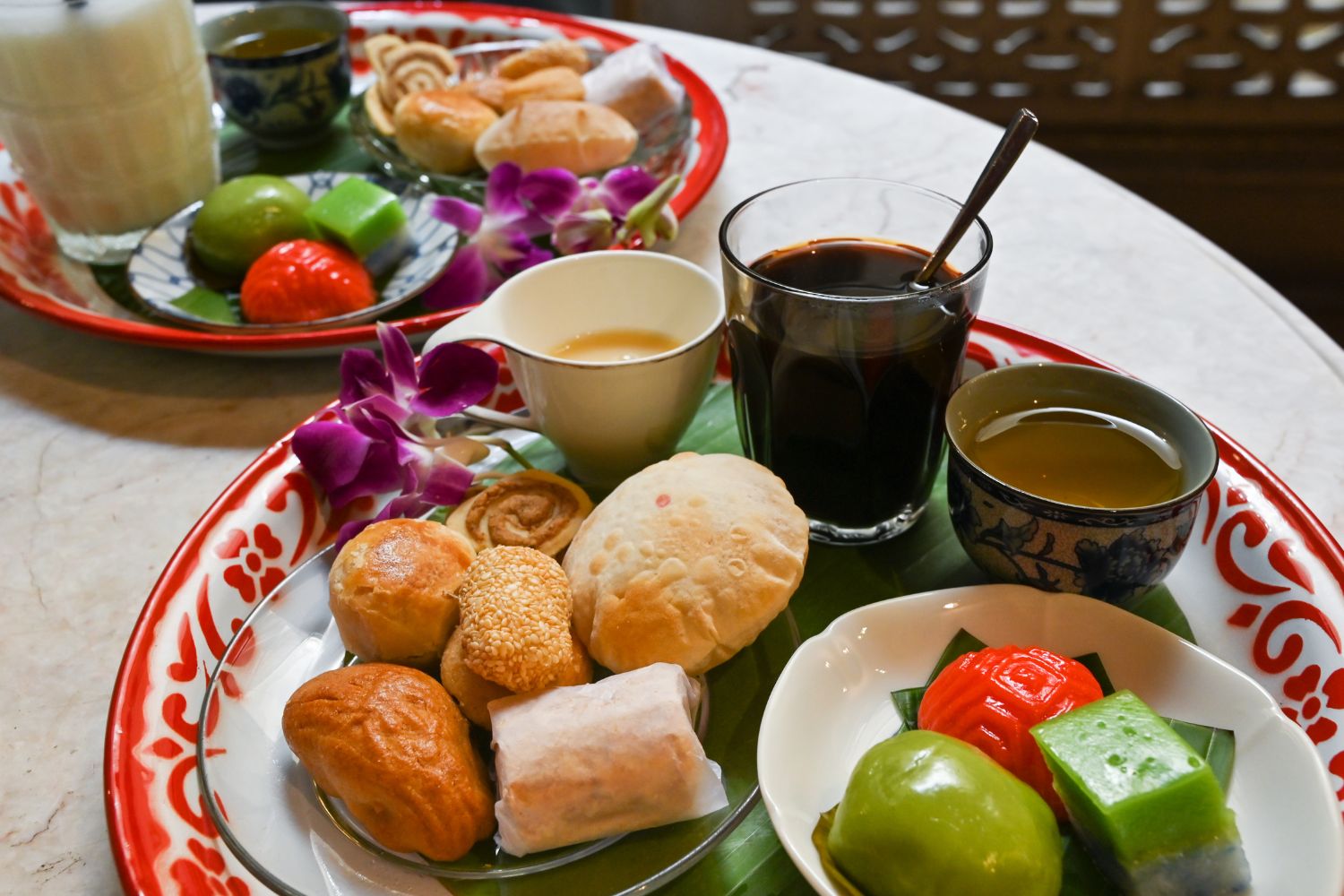
Food is one of the best ways to understand Phuket’s history. The island’s cuisine blends Thai, Chinese, Malay, and European influences, with Baba-Peranakan traditions adding their own distinctive flavors. Here’s what to eat and where to find it in Phuket Old Town.
Phuket’s UNESCO Gastronomy Heritage
In 2015, Phuket became the first city in Southeast Asia to receive UNESCO Creative City of Gastronomy recognition. Its food culture reflects centuries of migration and trade, particularly the influence of Chinese immigrants from Fujian.
Must-Try Local Dishes
- Moo Hong: Slow-braised pork belly seasoned with black pepper, garlic, and soy sauce.
- Mee Hokkien: Yellow egg noodles stir-fried with seafood, pork, and a rich broth.
- O-aew: A refreshing shaved-ice dessert made with local plant-based jelly and red beans.
- O-Taw: A savory oyster and taro dish topped with crispy pork cracklings.
Where to Eat in Phuket Old Town
- One Chun: A Bib Gourmand restaurant known for Southern Thai specialties and Moo Hong. Arrive before 11:45 AM to avoid the busiest lunch period.
- Blue Elephant: Dine in a historic mansion serving refined Thai cuisine. Reservations are recommended.
- Tu Kab Khao: A heritage-style restaurant serving spicy Southern Thai dishes and seafood.
- Torry’s Ice Cream: Stop on Soi Romanee for creative local-inspired flavors, including O-aew ice cream and Bi Co Moi.
Practical tip: Explore the streets in the morning, then take a break at a local restaurant or heritage cafe during the hottest part of the day.
Old Town Phuket: Practical Travel Guide and Curated Itineraries
A little planning goes a long way when visiting Phuket Old Town, especially if you want to explore its historic streets without spending the day in the tropical heat. The trick is to start early, save indoor attractions for midday, and leave the late afternoon for cafes, local food, and the lively streets.
Best Time to Visit Phuket Old Town
The best time to explore Phuket Old Town on foot is between 7:30 and 10 AM, when the streets are quieter, temperatures are more comfortable, and the morning light is ideal for photographing colorful Sino-Portuguese buildings.
From 11:30 AM to 3 PM, take a break indoors at a museum, join a cooking class, or enjoy a leisurely lunch at a heritage restaurant. By 4:30 PM, the streets begin to take on a different atmosphere as the light softens and cafes and shops welcome the late-afternoon crowd.
> Read more: Best Time to Visit Phuket & Explore The Island’s Perfect Season
How to Get Around Comfortably
Phuket Old Town is compact, measuring approximately 1 km by 500 m, so walking is the easiest way to explore the historic center. If you’re staying at one of the west coast beaches, including Patong, Kata, or Karon, expect a drive of around 30 – 45 minutes, depending on traffic.
For a more comfortable journey, book a private air-conditioned car rather than relying on open-air transport in hot or rainy weather. Ask your driver to drop you near Thalang Road or Krabi Road, then explore the surrounding streets on foot.
- From the Phuket’s beaches: Arrange a return pickup in advance if you prefer not to find transport after dinner.
- Around the old town: Wear comfortable walking shoes and carry water, especially if you plan to visit several streets and museums.
Suggested Half-Day Private Tour Itinerary
If you’d rather avoid figuring out transport and timing yourself, a half-day private tour makes it easy to combine architecture, local culture, and food at a relaxed pace.
- 8:30 AM: Meet your driver at your beachside hotel and travel to Phuket Old Town in a private air-conditioned car.
- 9:15 AM: Walk along Thalang Road and Soi Romanee with a local guide, admiring the historic facades, Sino-Portuguese architecture, and street murals.
- 10:30 AM: Discover the history of a prominent tin-mining family and see how Chinese and European influences shaped Phuket’s heritage homes. Check visiting arrangements before your trip.
- 11:30 AM: Stop at Torry’s Ice Cream for handcrafted desserts inspired by local flavors and Baba-Peranakan food traditions.
- 12:30 PM: Try Southern Thai specialties at One Chun or book a table at Blue Elephant for a more formal dining experience in a historic mansion.
- 2 PM: Head back to your hotel for a quiet afternoon by the pool or some downtime before your next island adventure.
Practical tip: This itinerary works best for travelers who want a comfortable introduction to Phuket Old Town without rushing. If you prefer to visit several museums or spend longer exploring local shops, allow a full day instead.
Frequently Asked Questions About Phuket Old Town
1. Is a guided tour recommended for exploring Phuket Old Town?
A guided tour is helpful if you want to understand the history behind the Sino-Portuguese architecture, Chinese shrines, and Baba-Peranakan culture. However, the historic district is compact and easy to explore independently on foot. If you prefer flexibility, you can wander the streets at your own pace and stop at cafes, museums, and local shops along the way.
2. How far is Phuket Old Town from the main beach resorts?
Phuket Old Town is approximately 30 - 45 minutes by car from popular west coast beach areas, including Patong, Kata, and Karon, depending on traffic. A private car is a convenient option, especially if you're planning to stay for lunch or explore into the evening.
3. What is the dress code when visiting Phuket Old Town?
Casual, lightweight clothing and comfortable walking shoes are ideal for exploring the historic streets in Phuket's tropical climate. If you plan to visit Chinese shrines or temples, dress modestly by covering your shoulders and knees, and remove your shoes where required.
4. What is the best day of the week to visit Phuket Old Town?
Sunday is a great choice if you want to experience the Lard Yai Walking Street Market, which typically runs from 4 PM until 9 or 10 PM along Thalang Road. For a quieter visit focused on architecture, museums, and cafes, consider a weekday morning instead.
5. How much time should travelers allocate for Phuket Old Town?
Allow half a day to explore the main streets, admire the murals, visit a heritage attraction, and enjoy a local meal. If you're interested in several museums, shopping, and sampling more of Phuket's local cuisine, a full day will give you a more relaxed experience without rushing between stops.
Discover Phuket Old Town with Asia Pioneer Travel
From its tin-mining heritage and Sino-Portuguese architecture to its distinctive Baba-Peranakan cuisine, every corner in Phuket Old Town reveals another side of the island’s cultural identity. Whether you want to explore local markets, visit heritage mansions, or sample authentic Southern Thai dishes, this historic district deserves a place on your Phuket itinerary.
Ready to discover a different side of Phuket? Let Asia Pioneer Travel help you plan a personalized journey, with private transfers, knowledgeable local guides, and time to explore at your own pace. Trade a few hours on the beach for a taste of Phuket’s history, culture, and flavors.