

Cambodia’s performing arts tell stories that stretch from ancient Angkorian beliefs to royal traditions and everyday village life. Cambodia cultural performances offer a chance to see this heritage come alive through movement, music, masks, and storytelling. In Siem Reap or Phnom Penh, you can watch elegant Khmer classical dance and Apsara performances, or choose something more dramatic like Cambodian circus, shadow theatre, masked theatre, and lively folk dances. This guide explains what makes each tradition special and how to experience them beyond a typical tourist show.
1. Classical Khmer Dance and the Royal Ballet of Cambodia
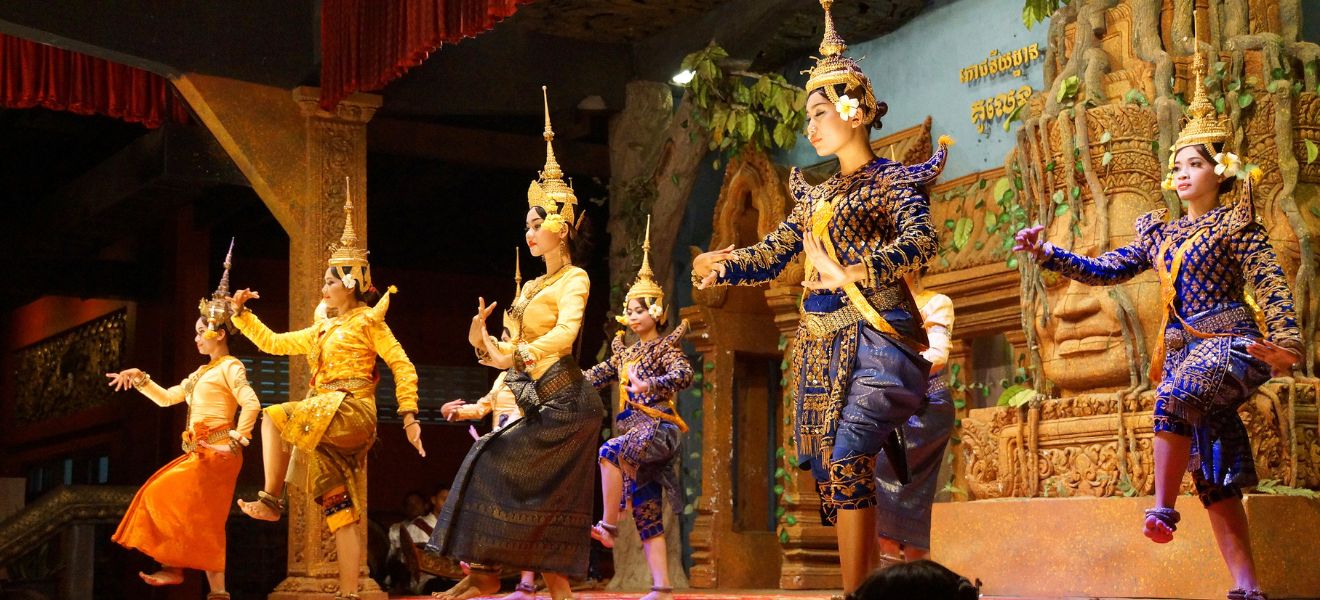
Classical Khmer Dance is one of Cambodia’s most distinctive performing arts. Its roots can be traced to the Angkor era, when images of Apsaras and Devatas appeared on temple walls. Over time, the dance became closely linked to the royal court and religious ceremonies.
Today, the tradition is known as the Royal Ballet of Cambodia, or Robam Preah Reach Trop. It was preserved within the royal court for centuries and later brought to international audiences. Queen Sisowath Kossamak played an important role in its revival, while Princess Norodom Buppha Devi became one of its most celebrated modern dancers.
UNESCO recognized the Royal Ballet of Cambodia as a Masterpiece of the Oral and Intangible Heritage of Humanity in 2003. It was added to the Representative List of the Intangible Cultural Heritage of Humanity in 2008.
Artistic Highlights: Apsara Dance, Costumes and Music
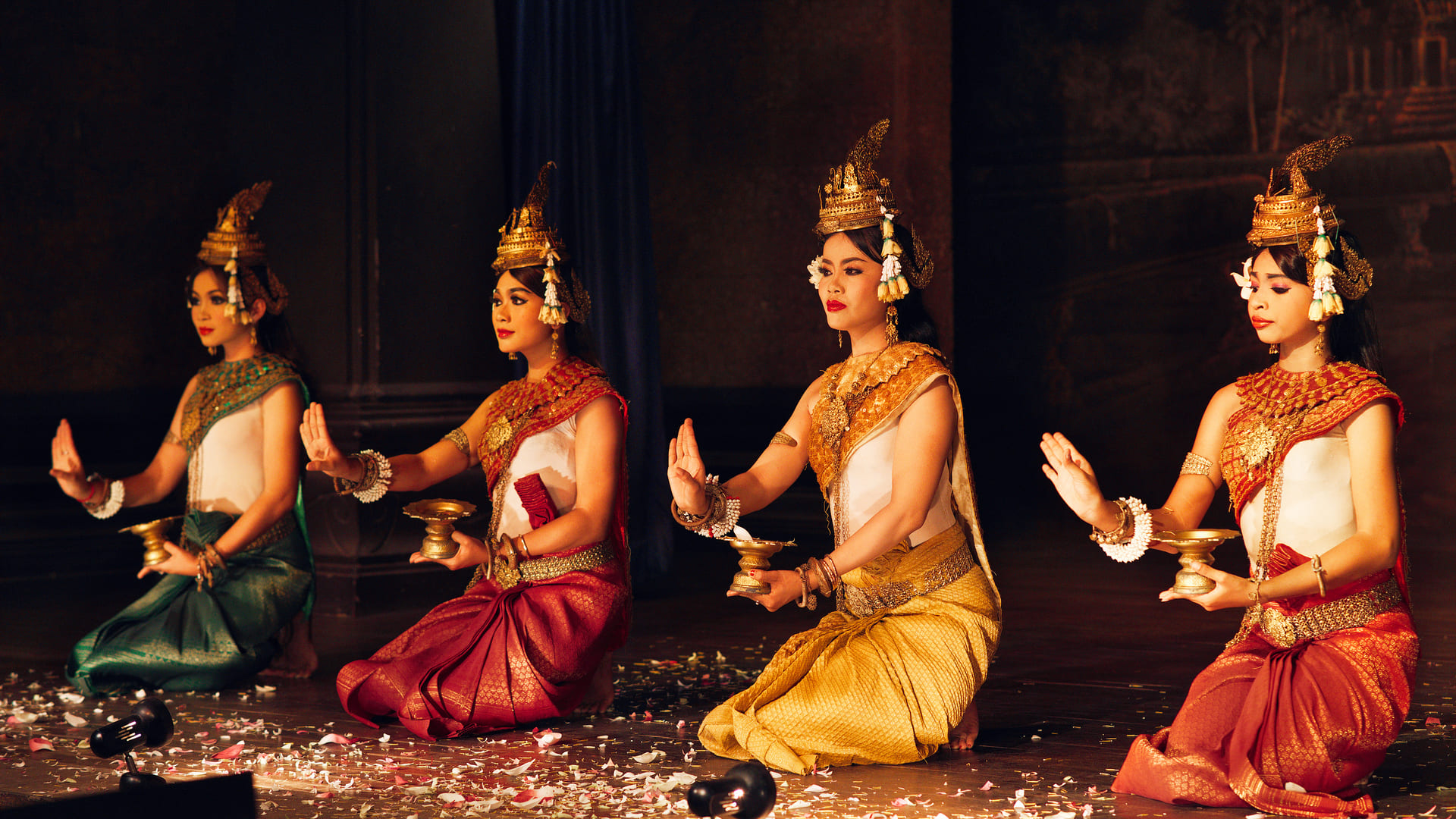
The beauty of Khmer classical dance comes from its precise movements and symbolism. Dancers use a complex system of hand gestures known as Kbach, with curved fingers and carefully controlled arm movements.
Costumes are equally important. Dancers wear elaborate silk garments, jewelry, and tall golden crowns inspired by figures seen in Angkorian temples. Every movement, expression, and costume detail helps communicate the story.
Performances are accompanied by the traditional Pinpeat orchestra, featuring instruments such as the roneat, skor thom, samphor, khong vong, sralai, and ching. Live music gives the performance its distinctive rhythm and atmosphere.
How to Experience an Apsara Dinner
An apsara dinner combines Khmer food with traditional dance, making it an easy way to experience Cambodian culture in one evening.
- In Siem Reap, Apsara shows are commonly offered at cultural restaurants and hotels, often alongside set menus or buffet dinners. Some performances combine classical dance with other Cambodian traditions.
- In Phnom Penh, performances can be found at cultural venues, hotels, and restaurants, depending on the season and schedule.
When choosing a show, look for a program with live Pinpeat music, clearly listed performances, and enough time to enjoy both dinner and the dance. Booking ahead is useful if you want seats with a clear view of the stage.
2. Phare, the Cambodian Circus: Contemporary Storytelling and Acrobatics
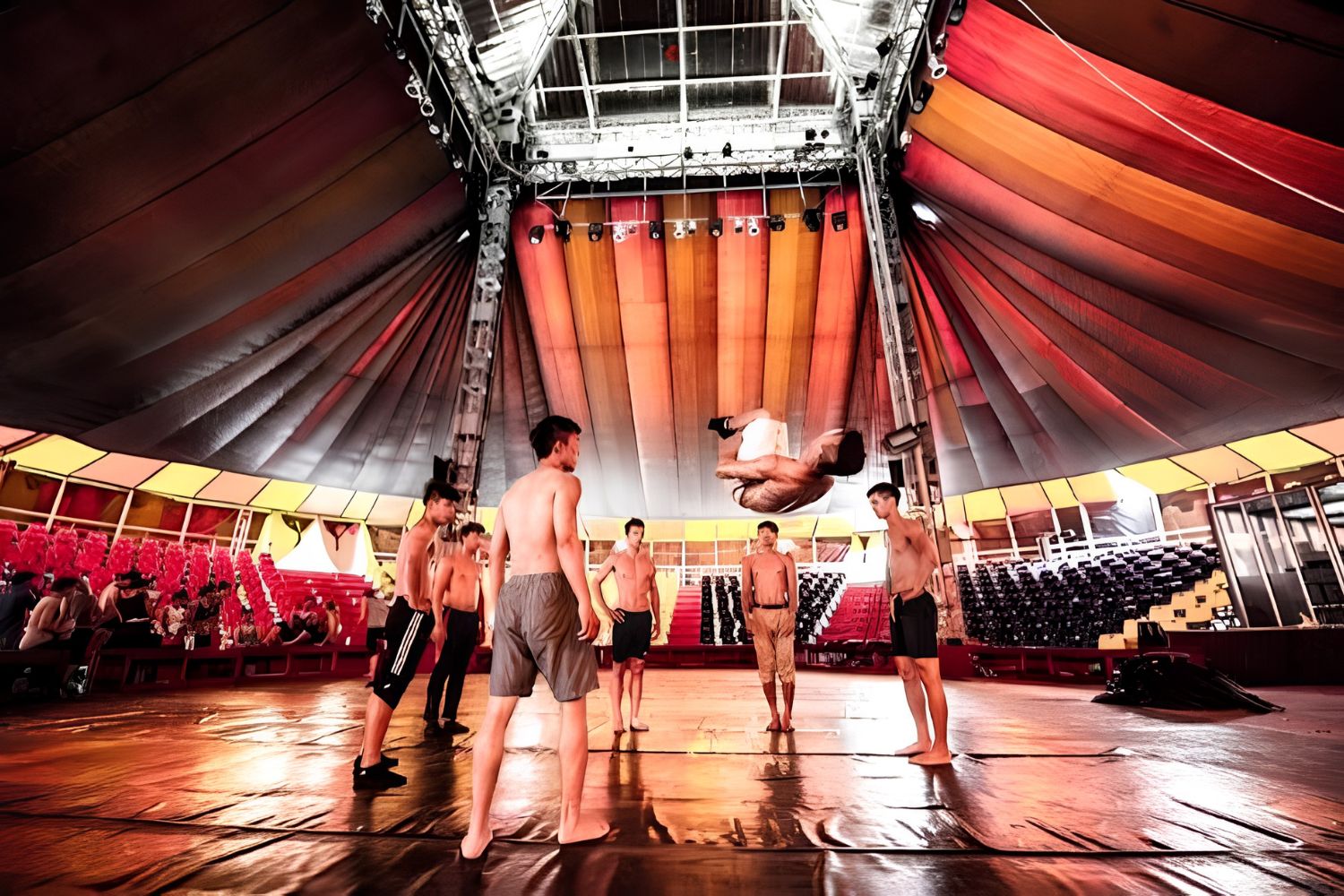
Phare, The Cambodian Circus brings a very different energy to Cambodia cultural performances. Instead of retelling ancient legends through classical dance, its shows combine acrobatics, contemporary movement, theatre, and live music to tell modern Cambodian stories.
Origin and Social Mission of Phare Ponleu Selpak
The story of Phare began in 1985 at the Site Two refugee camp on the Thai-Cambodian border. French humanitarian worker Véronique Decrop organized art classes there to help children affected by war and the Khmer Rouge period process their trauma through painting.
In 1995, Decrop and nine former students officially founded Phare Ponleu Selpak (PPS) in Battambang. The nonprofit organization uses art and education to help young people rebuild their lives while preserving Cambodia’s cultural identity.
To create a sustainable source of funding, Phare Performing Social Enterprise (PPSE) was established in 2013. It later launched the modern circus tent in Siem Reap. Revenue from performances helps support free arts education in Battambang, while graduates gain opportunities to build professional careers as artists.
What Makes the Cambodian Circus Performance Unique
Phare is not a traditional circus built around spectacle alone. Its Cambodia cultural performances combine several art forms, including:
- Acrobatics, aerial work, juggling, and contortion
- Contemporary dance and physical theatre
- Live music and theatrical storytelling
- Personal experiences drawn from the artists’ own lives
There are also no animals in the shows. The performances focus entirely on human strength, creativity, emotion, and storytelling.
Each production explores a different theme. Shows such as White Gold, Chrouy, and Sokha have addressed subjects ranging from Cambodian history and folklore to social change and the experiences of young people. Performances usually last around one hour, making them easy to fit into an evening in Siem Reap.
Best Ways to Enjoy Phare Cambodian Circus in Siem Reap
The colorful circus tent is located on the Ring Road, just south of the Sok San Road intersection. It is an easy tuk-tuk ride from central Siem Reap.
- Arrive early: The venue and services open before the main performance, so arriving around 18:00 gives you time to explore without rushing.
- Have dinner before the show: Stop at Phare Cafe for Khmer dishes and drinks before taking your seat.
- Browse local crafts: Phare Boutique sells handmade products created by local artists and artisans.
- Choose your seats carefully: Central or Preferred Seating gives you a more direct view of the stage and the performers’ expressions and movements.
- Book ahead: Evening shows can fill up, especially during busy travel periods.
The main performance starts at 20:00, with the venue opening for guests from around 19:30. Pairing the show with dinner beforehand makes it an easy cultural evening without adding another major stop to your itinerary.
3. Sbek Thom: The Sacred Khmer Shadow Theatre
Sbek Thom is one of Cambodia’s oldest and most distinctive forms of traditional theatre. Also known as Lakhaon Nang Sbek, this sacred shadow puppet art combines giant leather figures, dance, narration, and live Pinpeat music.
The tradition predates the Angkor period and was originally performed as a religious ritual rather than popular entertainment. Traditional Cambodia cultural performances were reserved for important occasions, including Khmer New Year, royal celebrations, and ceremonies honoring respected figures.
Sbek Thom was inscribed on UNESCO’s Representative List of the Intangible Cultural Heritage of Humanity, recognizing its cultural and ritual significance.
Origins and Sacred Rituals of Sbek Thom
The puppets themselves are works of traditional craftsmanship. Artists make them from a single piece of cowhide, which is treated and naturally dyed before the design is drawn onto the leather. Intricate patterns are then cut by hand and attached to bamboo poles used by the performers.
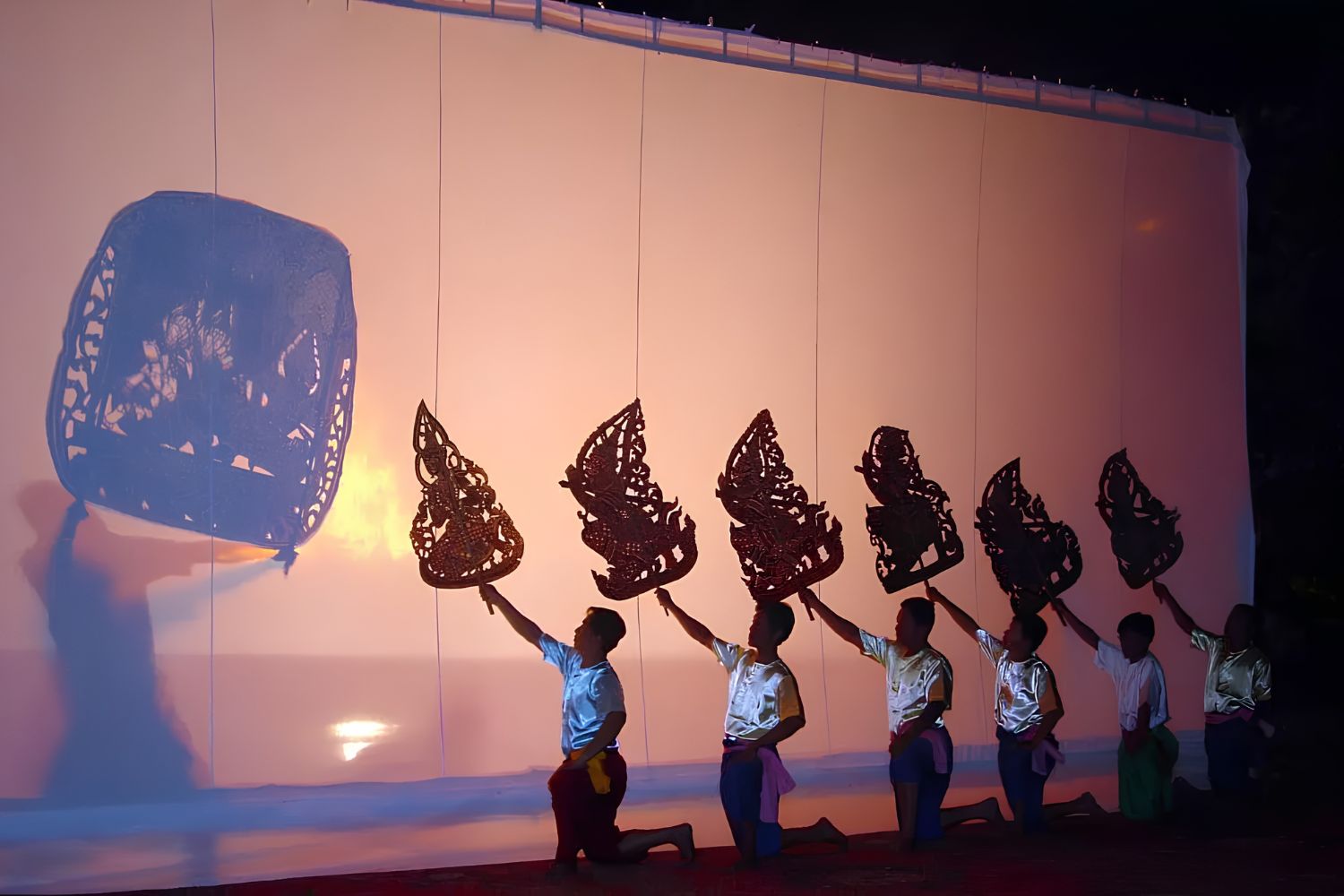
Unlike smaller shadow puppets, Sbek Thom figures are large, often reaching up to two meters tall. They are generally non-articulated, so the story comes from the movement of the performers rather than moving joints in the puppets.
The leather figures can depict gods, mythical characters, animals, or scenes from Cambodia’s epic traditions. Their preparation is traditionally accompanied by rituals that reflect the sacred status of the art form.
Highlights of the Performance Art
A Sbek Thom performance is as much about movement and music as it is about the shadows on the screen. Performers carry the large leather figures above their heads and move in carefully choreographed steps while narrators recite the story.
Most traditional performances draw from the Reamker, Cambodia’s version of the Ramayana. The story unfolds through the interaction of the puppets, dancers, narrators, and Pinpeat orchestra.
The traditional setting is particularly atmospheric. Performances are traditionally held outdoors at night, often near pagodas or rice fields. A large white screen is stretched between bamboo poles, with a fire or light source behind it. The carved leather figures then appear as dramatic silhouettes across the screen.
A full performance can involve a large collection of puppets, with some productions using up to 160 figures.
Where and How to Watch Sbek Thom in Cambodia
Sbek Thom is less frequently performed for tourists than Apsara dance or modern Cambodian circus, so schedules can vary.
In Siem Reap, look for performances associated with the Wat Bo Sbek Thom Troupe or traditional artists such as Chien Sophan. In Phnom Penh, the Sovanna Phum Art Association and Kok Thlok Artists Association are among the organizations associated with Cambodia cultural performances.
For a more traditional experience, consider shows connected to:
- Pagodas and cultural spaces, where the religious and community context is easier to understand.
- Arts schools and heritage programs, which often focus on preserving traditional performance techniques.
- Major festivals, including Khmer New Year and Bon Om Touk, when traditional arts may feature in wider cultural programs.
If you find a performance that includes the Pithi Sampeah Kru ceremony, live Pinpeat music, and a clear explanation of the Reamker story, you are likely seeing more than a short tourist-oriented puppet show. Checking the current schedule and booking ahead is recommended, as authentic performances may not run every evening.
4. Lakhon Khol: The Dramatic Khmer Masked Theatre
Lakhon Khol, also known as Lkhaôn Khaôl, is Cambodia’s traditional masked theatre. Its roots reach back to the Angkor period, with records from the 10th century linked to masked dancers and temple traditions. The art developed alongside Sbek Thom and was further organized under King Ang Duong in the 19th century, drawing on Reamker scenes at Angkor Wat.
History and Cultural Heritage of Masked Drama
The strongest living tradition is associated with Wat Svay Andet in Taskor village, Kandal province, about 15–18 km from Phnom Penh across the Mekong. Kings Sisowath and Norodom Sihanouk reportedly attended performances there in the mid-20th century.
At Wat Svay Andet, Lakhon Khol has a spiritual role beyond entertainment. Performances honor Neak Ta, local guardian spirits, and traditionally seek rain, good harvests, and protection for the community.
In 2018, Lkhon Khol Wat Svay Andet was added to UNESCO’s List of Intangible Cultural Heritage in Need of Urgent Safeguarding.
Highlights: Detailed Masks and Epic Battles of the Reamker
Traditional Lakhon Khol uses an all-male cast. Male dancers perform both male and female characters, including Sita and other female figures.
The stories come from the Reamker, Cambodia’s version of the Ramayana. Dramatic scenes often center on battles between Hanuman’s monkey army (Sva) and the demons (Yeak or Asura) led by Krong Reap, the Khmer name for Ravana.
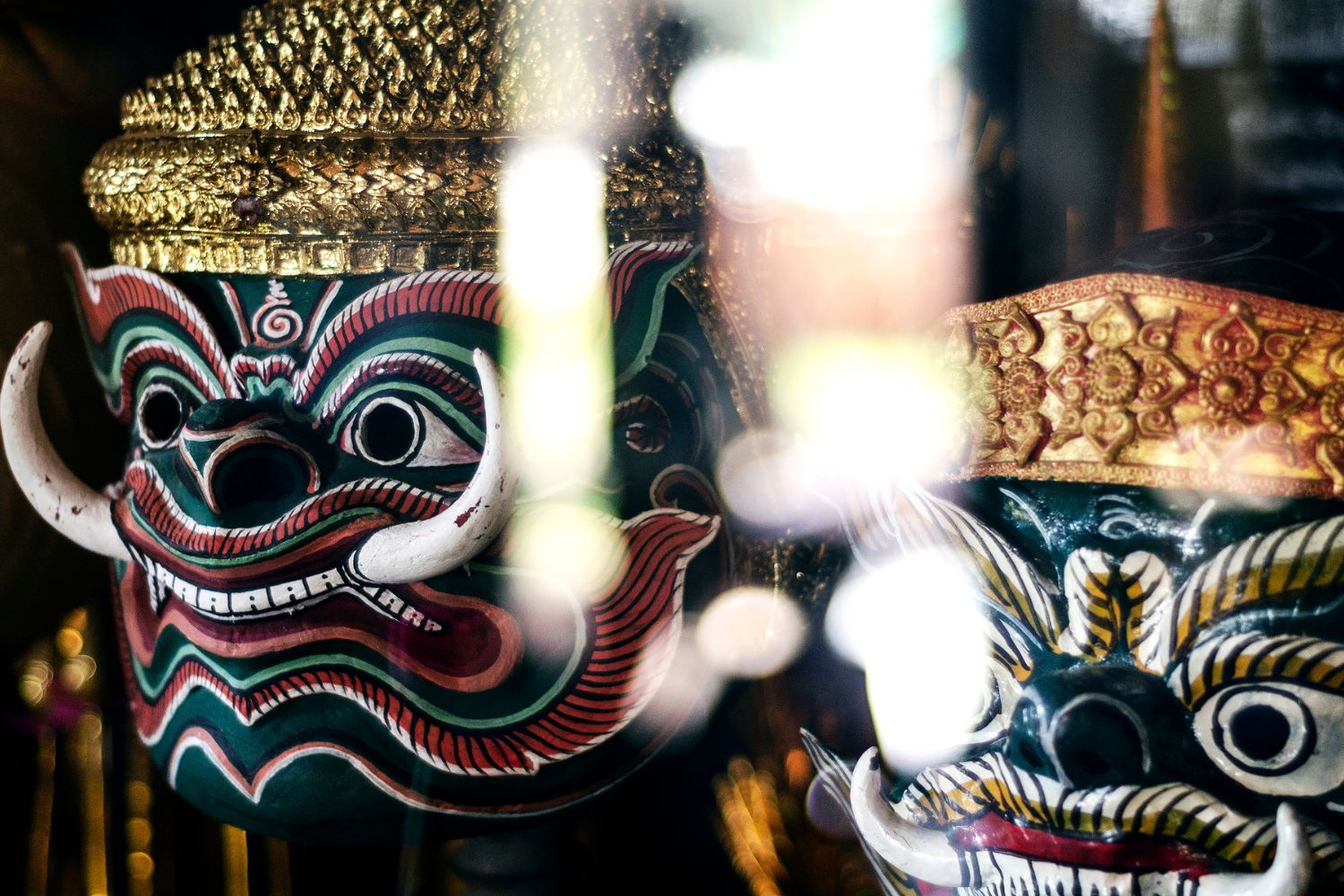
Masks help audiences identify the characters. Hanuman wears white, Vali and Angkot green, Nillaphat black, and Nilla Ek red. Demon masks feature prominent fangs and tiered Mokot crowns, while Ravana’s mask is particularly elaborate, with nine smaller faces above the crown.
The dancers communicate through movement and combat choreography, while narrators deliver the story and a live Pinpeat orchestra provides the musical rhythm.
How to Attend a Lakhon Khol Performance
For the strongest connection to its community roots, look for performances at Wat Svay Andet, particularly around the annual festival held after Khmer New Year (Chaul Chnam Thmey).
Other opportunities may appear through:
- Royal University of Fine Arts (RUFA) and the Secondary School of Fine Arts in Phnom Penh
- Cambodia-Korea Cooperation Center (CKCC) and cultural heritage events
- Programs supported by Cambodia’s Ministry of Culture and Fine Arts
For a traditional experience, prioritize community or arts-school performances with live Pinpeat music and storytelling rather than short dance segments included in tourist buffet shows.
5. Folk Dances and Regional Traditions: Robam Nesat and Beyond
Cambodian folk dances offer a more everyday view of the country’s culture. Developed mainly in the mid-20th century, especially through the Royal University of Fine Arts (RUFA), these dances draw on village life, farming, fishing, festivals, and courtship.
Unlike the formal movements of classical Khmer dance, folk performances are often faster and more playful. They are commonly accompanied by Mahori music, creating a lighter atmosphere.
Origins and Cultural Themes of Cambodian Folk Dance
Many dances portray familiar scenes from communities around the Mekong River, Tonle Sap, and rural highlands. Fishing, hunting, harvests, rain rituals, and romance all appear in the repertoire.
Three examples stand out:
- Robam Nesat (Cambodian Fishing Dance): Created at RUFA in the 1960s, it portrays fishermen around Tonle Sap. Male dancers use angrut trey fishing traps, while women carry chneang baskets. The playful performance ends with a romantic reconciliation.
- Robam Trot (Trot Dance): Traditionally performed around Khmer New Year (Chaul Chnam Thmey), this hunting dance symbolizes driving away bad luck and welcoming prosperity, rain, and a successful harvest.
- Coconut Dance (Robam Kseak): Originating around 1960 in Romeas Haek, Svay Rieng, this lively dance uses pairs of coconut shells as percussion. The rhythm reflects the joy of rural life after hard work.
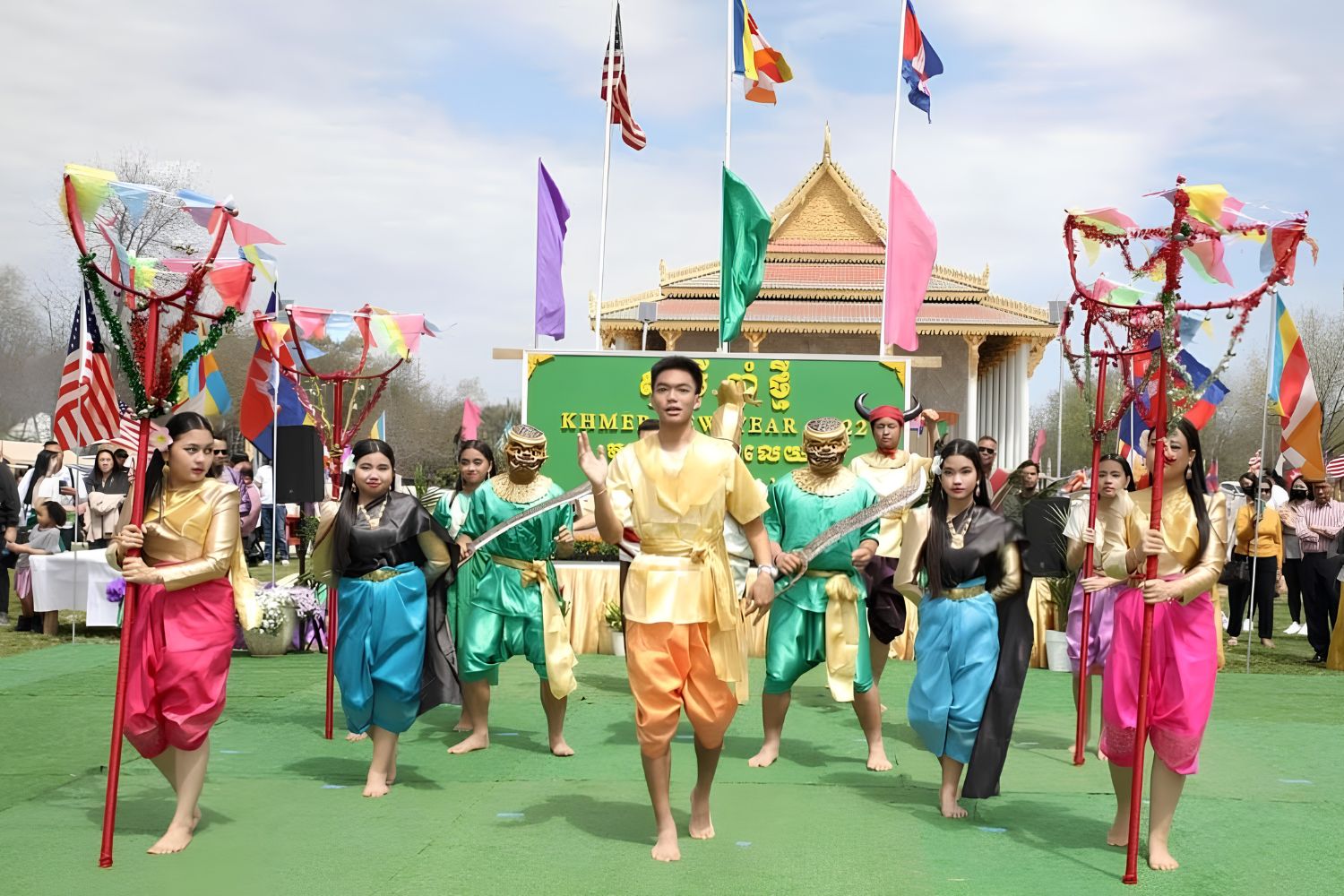
Folk Dance vs. Classical Khmer Dance
The contrast is easy to spot. Classical dance is linked to royal and religious traditions, with controlled Kbach gestures, elaborate costumes, and Pinpeat music. Folk dance is more closely connected to daily life, using quicker movements, practical props, simpler clothing, and Mahori or other folk instruments.
How to Experience Folk Performances
In Siem Reap, cultural dinner shows at venues such as Apsara Theatre, Kanell Restaurant, and Koulen Restaurant may include folk dances alongside classical performances.
For a more community-based experience, look during major festivals:
- Bon Om Touk: Water Festival celebrations in November feature boat races, parades, and cultural performances.
- Chaul Chnam Thmey: Khmer New Year in April is a good time to see Robam Trot and social dances such as Romvong at pagodas and local celebrations.
- RUFA and MCFA events: Special performances in Phnom Penh may showcase traditional dances in a more educational setting.
6. Practical Tips for Booking and Enjoying Cambodia Cultural Performances
A little planning can make Cambodia cultural performances much more rewarding. Before booking, check what type of show you are actually getting and how closely it follows the traditional format.
- Look for live traditional music: Classical dance and theatre often use live Pinpeat, while folk performances may use Mahori. Live accompaniment adds rhythm and depth to the performance.
- Check the program: Look for named pieces such as Robam Apsara, Robam Chuon Por, or Reamker excerpts if you want to see traditional works.
- Dress respectfully: For shows at pagodas, heritage sites, or traditional Cambodia festivals, wear clothing that covers your shoulders and knees.
- Book ahead: Smaller venues and popular shows such as Phare, The Cambodian Circus can sell out, particularly during busy travel periods.
- Confirm the practical details: Check the venue, opening time, show duration, and seating arrangement. Most performances last around 45–60 minutes.
- Choose shows with explanations: English subtitles, program notes, or narration can make symbolic gestures, masks, and storylines much easier to understand.
FAQs
1. What is the difference between Apsara dance and the Royal Ballet of Cambodia?
Robam Apsara is one specific classical dance within the broader tradition of the Royal Ballet of Cambodia, also known as Robam Preah Reach Trop. The Royal Ballet encompasses different characters, dance forms, and stories.
2. What should I expect from an Apsara dinner show in Siem Reap?
An apsara dinner usually combines Khmer cuisine with around one hour of traditional entertainment. Programs may include classical court dances, scenes from the Reamker, and lively folk performances.
3. Is Phare, The Cambodian Circus suitable for families?
Phare combines acrobatics, theatre, contemporary movement, and live music without using animals. Its storytelling and energetic performances can work well for families with children.
4. What should I wear to a cultural show in Cambodia?
Smart-casual clothing is generally suitable for commercial shows. At pagodas, heritage sites, and religious ceremonies, choose clothes that cover the shoulders and knees.
5. Where can I watch Sbek Thom and Lakhon Khol?
For Sbek Thom, look for performances associated with the Wat Bo troupe in Siem Reap or Sovanna Phum and Kok Thlok in Phnom Penh. For Lakhon Khol, Wat Svay Andet in Kandal and arts institutions in Phnom Penh are important places to look for traditional performances.
Experience Cambodia Through Its Cultural Performances
From classical Apsara dance and masked theatre to Cambodian circus and lively folk traditions, Cambodia cultural performances offer a memorable way to understand the country’s heritage. Each show reveals a different side of Khmer culture, from royal traditions to village life.
Want to experience these traditions as part of a well-planned Cambodia journey? Explore Cambodia with Asia Pioneer Travel and discover cultural performances alongside the country’s temples, food, and local communities.