

Vietnamese cuisine is a masterclass in balance, blending fresh herbs with a distinct regional identity. While Pho and Banh Mi are world-famous, they only scratch the surface of traditional Vietnamese dishes. From the salty, bold flavors of the North to the spicy kicks in Central Vietnam and the sweet notes of the South, every province offers a new palate.
This guide dives into the heart of Vietnam’s food culture. You will discover exactly what to eat, where to find the best local spots, and how to experience these flavors like a seasoned traveler.
1. What Makes Traditional Vietnamese Dishes So Unique?
Vietnamese cuisine stands out globally because it is light, healthy, and deeply thoughtful. Here is what makes traditional Vietnamese dishes truly special:
1.1 The Philosophy of Balance: Yin-Yang and Hot-Cold
At the heart of every meal is the concept of balance. Ingredients are often categorized as “cooling” (Yin) or “warming” (Yang). For example, seafood is considered “cool,” so it is often cooked with “warm” ginger or chili to protect the stomach and balance the flavor. A perfect dish must harmonize five basic tastes: sweet, sour, salty, bitter, and spicy. No single flavor is allowed to overwhelm the others.
1.2 Fresh Herbs Over Heavy Spices
While many neighboring cuisines rely on dried spices or heavy oils, Vietnamese cooking prioritizes freshness. Huge platters of raw herbs like mint, Thai basil, cilantro, and perilla are served with almost every meal. Instead of using thick sauces, cooks use fish sauce to add a savory depth that remains light and refreshing.
1.3 A Mix of Global Influences
Vietnam has a long history of absorbing flavors from other cultures and making them uniquely its own:
- China: Introduced stir-frying, noodles, and the use of chopsticks.
- France: Brought the baguette (which became the bánh mì) and a love for coffee.
- Champa and Southeast Asia: Influenced the use of coconut milk and spicy curries in the South.
1.4 Street Food vs. Family Meals
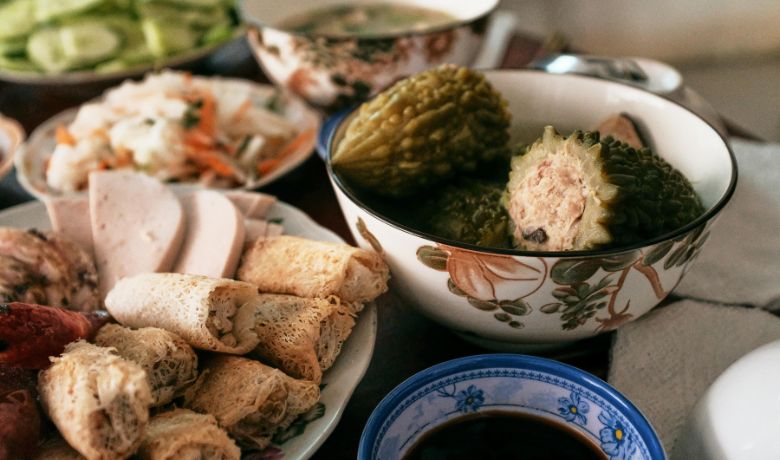
Vietnamese food culture lives in two places. On the street, food is fast, exciting, and bold, think of a quick bowl of Pho on a sidewalk stool. At home, meals are about connection. Families share several small dishes with rice, focusing on tradition, seasonal vegetables, and simple comfort.
1.5 Regional Diversity
Because Vietnam is a long country with different climates and histories, traditional Vietnamese dishes change significantly as you travel from North to South:
- Northern Vietnam – Subtle and balanced: In the North, especially Hanoi, flavors are light and elegant. Cooks use very little sugar, focusing instead on clear, savory broths and the natural taste of ingredients. Black pepper is often preferred over chili for a gentle warmth.
- Central Vietnam – Bold and spicy: This region is famous for its intense flavors. The food is much spicier and features vibrant colors. Here, you will find the sophisticated “Imperial Cuisine” of Hue, which consists of many small, beautifully presented dishes.
- Southern Vietnam – Sweet and abundant: In the tropical South, dishes tend to be sweeter and use plenty of coconut milk. Thanks to the Mekong Delta and long coastline, seafood is incredibly fresh and abundant. You can also taste the unique influence of Khmer flavors in many local specialties.
2. Which Traditional Vietnamese Dishes Should First-Time Visitors Try?
Vietnamese cuisine offers an incredible variety for first-time visitors, blending fresh ingredients and balanced flavors. Here is your essential guide to the most iconic traditional Vietnamese dishes, including where to find them and how much they cost.
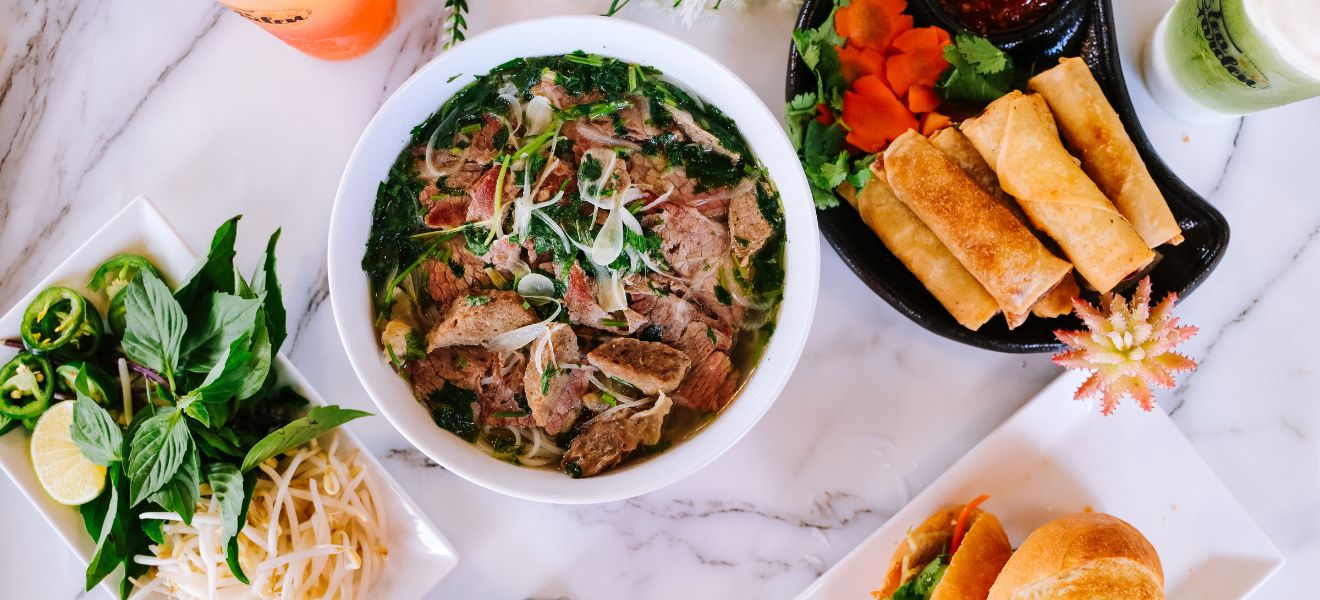
2.1 Pho – Vietnam’s Most Famous Noodle Soup
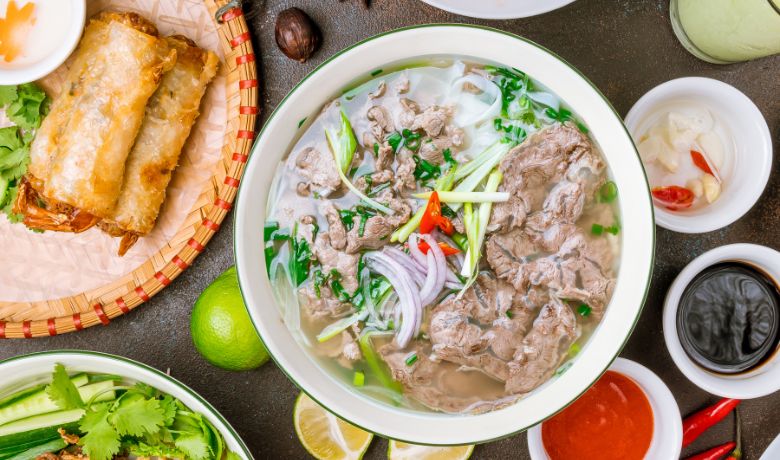
Originating in Northern Vietnam over a century ago, Pho is the ultimate soul food. What makes it delicious is the fragrant broth, simmered for hours with cinnamon, star anise, and charred ginger.
There is a famous debate between Northern and Southern styles. Hanoi Pho is subtle and clear, focusing on the pure taste of beef and black pepper, while Saigon Pho is sweeter, richer, and served with a mountain of fresh herbs and bean sprouts. To eat like a local, sip the broth first to appreciate its depth, then add lime, chili, or herbs to your liking.
- Pho 10 Ly Quoc Su (Hanoi): ~50,000 – 100,000 VND
- Pho Gia Truyen Bat Dan (Hanoi): ~50,000 – 80,000 VND
- Pho Le (Ho Chi Minh City): ~40,000 – 80,000 VND
2.2 Banh Mi – The French Influence Done Vietnamese
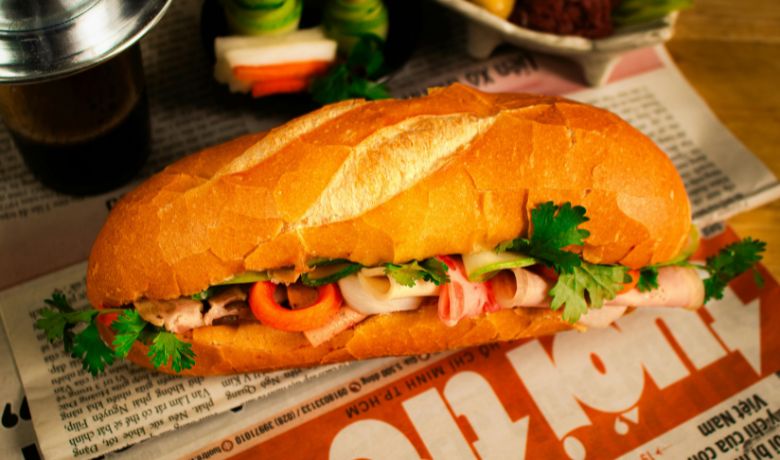
This is the perfect East-West fusion. The French brought the baguette, but the Vietnamese filled it with savory pâté, pickled daikon and carrots, cilantro, chili, and various meats.
Every shop has a “secret recipe” for their pâté and butter, and the bread must be light and crispy. Northern versions usually focus on high-quality pâté, while Southern versions are larger and packed with more diverse fillings and sauces.
- Banh Mi 25 (Hanoi): ~25,000 – 45,000 VND
- Banh Mi Pho Co (Hanoi): ~25,000 – 40,000 VND
- Banh Mi Huynh Hoa (Ho Chi Minh City): ~40,000 – 70,000 VND
2.3 Bun Cha – A Hanoi Classic Loved by Travelers
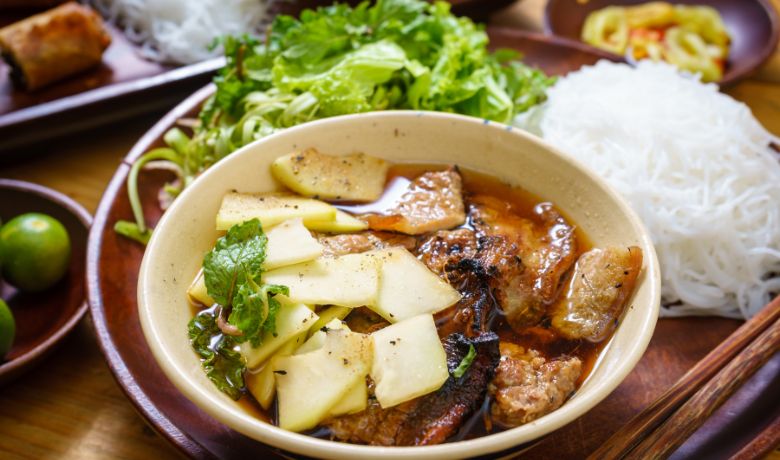
Bun Cha gained worldwide fame after President Obama enjoyed a bowl in Hanoi. It features smoky, charcoal-grilled pork patties and pork belly served in a bowl of warm, sweet-and-sour fish sauce broth.
You eat it by dipping cold vermicelli noodles and fresh greens (like lettuce and mint) into the sauce. The contrast between the hot, savory meat and the cold, fresh herbs is what makes it addictive.
- Bun Cha Huong Lien (Hanoi): ~85,000 – 120,000 VND
- Bun Cha Dac Kim (Hanoi): ~50,000 – 100,000 VND
- Bun Cha Ta (Hanoi): ~60,000 – 110,000 VND
> Read more: Best Recommendations For An Authentic Food Tour In Hanoi
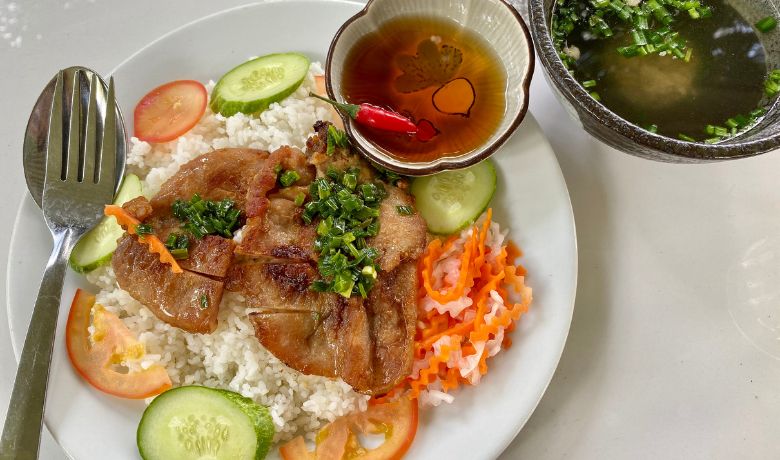
2.4 Com Tam – Southern Comfort Food
Originally a meal for farmers made from “broken” rice grains, Com Tam is now a staple of Saigon’s vibrant breakfast culture. The star of the dish is the marinated grilled pork chop (sườn nướng), which is sweet and smoky.
It is served with an egg, pickled vegetables, and a side of thick, sweet fish sauce. It’s a hearty, satisfying meal that represents the energetic spirit of the South.
- Com Tam Ba Ghien (Ho Chi Minh City): ~60,000 – 100,000 VND
- Com Tam 352 (Ho Chi Minh City): ~25,000 – 60,000 VND
- Com Tam Moc (Ho Chi Minh City): ~50,000 – 80,000 VND
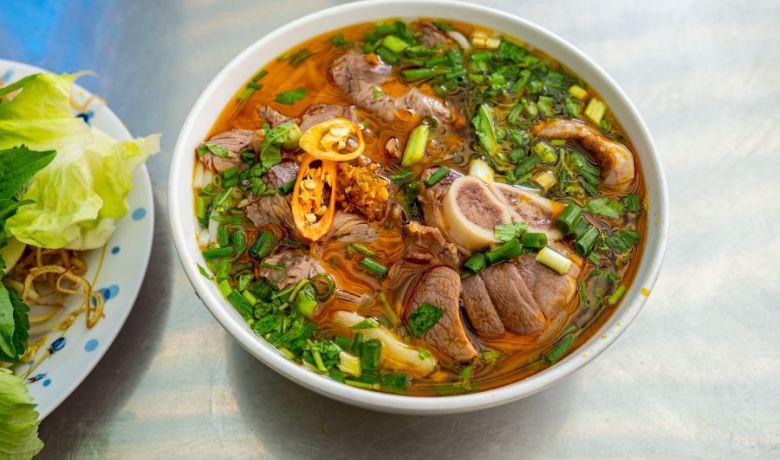
2.5 Bun Bo Hue– Spicy Royal Noodle Soup from Central Vietnam
Hailing from the ancient imperial city of Hue, this soup is bolder and spicier than Pho. The broth is deeply infused with lemongrass and fermented shrimp paste, giving it a powerful aroma.
Unlike the flat noodles in Pho, Bun Bo uses thick, round noodles and comes with diverse toppings like beef shank, pork hock, blood cake, and crab balls. It is a complex, heartier experience for those who love bold spices.
- Bun Bo Hue Sen (Hue): ~40,000 – 70,000 VND
- Bun Bo Hue 14B (Ho Chi Minh City): ~50,000 – 100,000 VND
- Bun Bo Hue Nam Giao (Ho Chi Minh City): ~60,000 – 95,000 VND
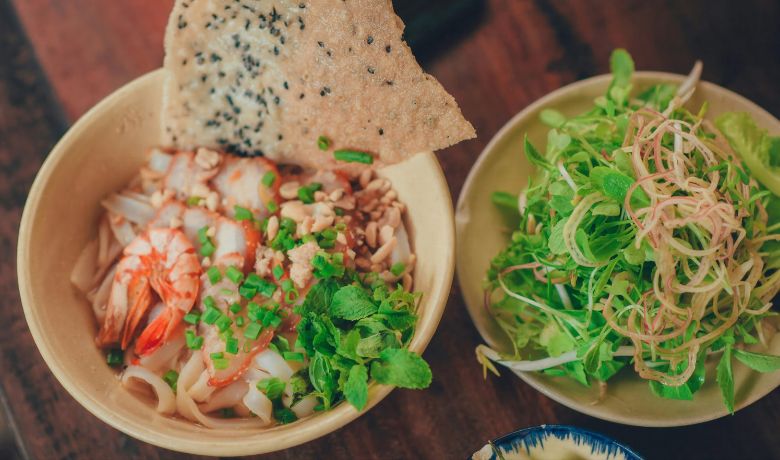
2.6 Cao Lau – Hoi An’s Signature Noodles
You can only find authentic Cao Lau in Hoi An food tour because the noodles are traditionally made using water from local ancient wells and ash from nearby islands. This creates a unique, chewy texture similar to Japanese udon.
It is influenced by Hoi An’s history as a trading port with Japan and China. Served with very little broth, it features sliced pork, fresh greens, and crispy rice crackers.
- Cao Lau Thanh (Hoi An): ~30,000 – 50,000 VND
- Cao Lau Ba Le (Hoi An): ~30,000 – 50,000 VND
- Trung Bac Restaurant (Hoi An): ~30,000 – 60,000 VND
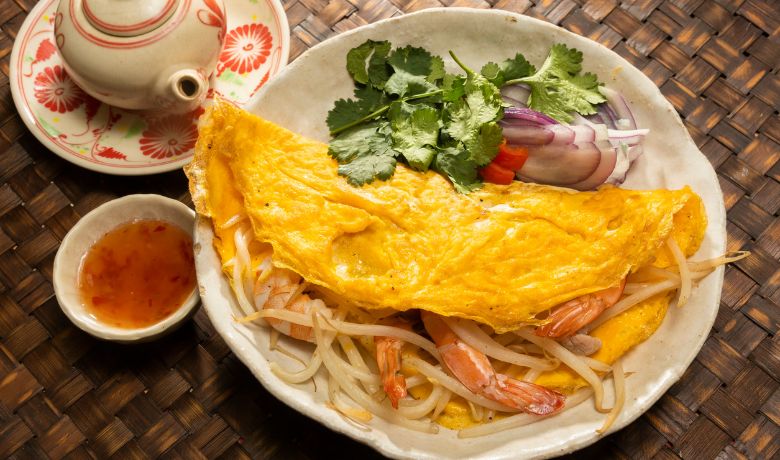
2.7 Banh Xeo – Crispy Vietnamese Savory Pancake
Known as the “sizzling pancake” because of the sound it makes when the batter hits the hot pan, Banh Xeo is a crispy yellow crepe filled with shrimp, pork, and bean sprouts.
Southern versions are huge and thin, while Central versions are smaller and thicker. To enjoy this traditional Vietnamese dish properly, tear off a piece, wrap it in a large lettuce leaf with fresh herbs, and dip it into a sweet and tangy fish sauce.
- Banh Xeo 46A (Ho Chi Minh City): ~90,000 – 150,000 VND
- Banh Xeo Ngoc Son (Ho Chi Minh City): ~50,000 – 100,000 VND
- Banh Xeo Muoi Xiem (Ho Chi Minh City): ~60,000 – 110,000 VND
2.8 Hu Tieu – Southern Light Noodle Soup
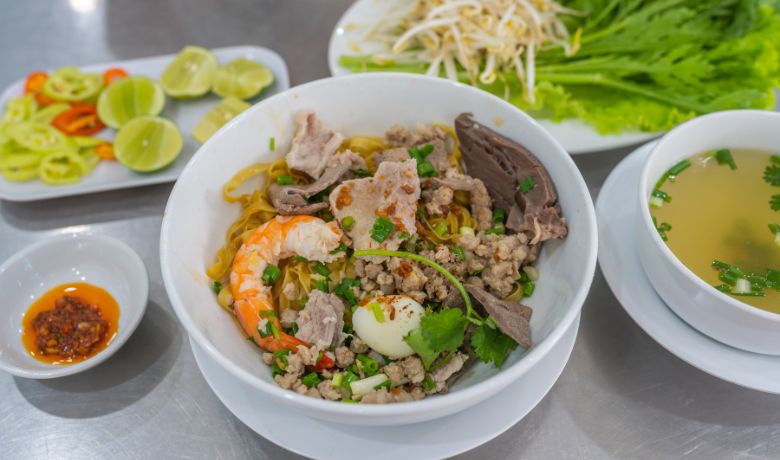
Hugely popular in the South, Hu Tieu reflects a mix of Chinese and Khmer influences. It has a clear, slightly sweet pork broth and can be served “wet” (with soup) or “dry” (sauce on the side). Common toppings include shrimp, minced pork, quail eggs, and liver. It is lighter than Pho and is a favorite quick meal for Saigonese locals at any time of day.
- Hu Tieu Hong Phat (Ho Chi Minh City): ~70,000 – 110,000 VND
- Hu Tieu Nam Vang Quynh (Ho Chi Minh City): ~50,000 – 95,000 VND
- Hu Tieu Mi Nam Loi (Ho Chi Minh City): ~60,000 – 90,000 VND
2.9 Mi Quang – Central Vietnam’s Turmeric Noodles
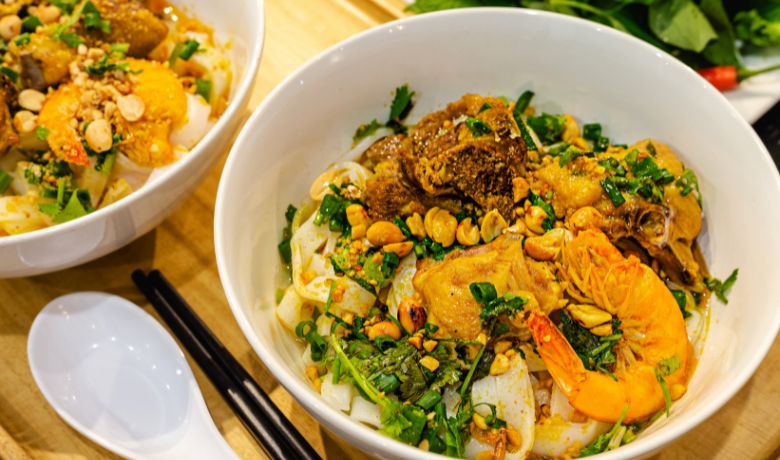
This specialty from Quang Nam and Da Nang is easily recognized by its bright yellow noodles, colored with turmeric. Unlike other noodle soups, Mi Quang uses very little broth, just enough to coat the noodles.
It is topped with pork, shrimp, boiled quail eggs, roasted peanuts, and crunchy sesame rice crackers. It has a bold, slightly spicy taste and a wonderful mix of textures.
- Mi Quang 1A (Da Nang): ~30,000 – 60,000 VND
- Mi Quang Co Sau (Da Nang): ~35,000 – 55,000 VND
- Mi Quang Ba Mua (Da Nang): ~40,000 – 50,000 VND
2.10 Banh Hue – The Art of Imperial Small Plates
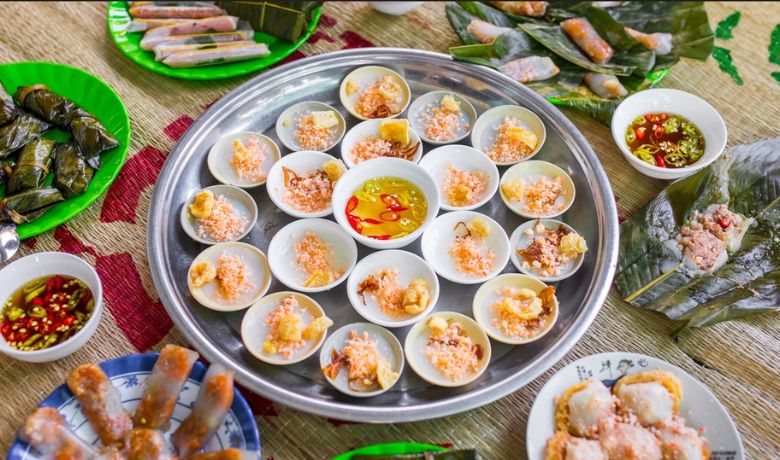
Hue’s imperial cuisine is famous for these delicate rice cakes that were once served exclusively to the Nguyen Dynasty Emperors. Unlike the hearty portions found elsewhere, Bánh Huế is all about sophistication and meticulous preparation.
Each tiny plate requires great skill: the rice batter must be steamed to a perfect silkiness, and the toppings, like hand-ground dried shrimp or slow-cooked pork, are prepared with extreme care. Whether it is the transparent Bánh bột lọc or the dainty Bánh bèo served in small porcelain bowls, these dishes represent the pinnacle of Vietnamese culinary elegance, offering a sophisticated explosion of textures in every bite.
- Banh Ganh (Hue): ~50,000 – 100,000 VND (platters)
- Quan Hanh (Hue): ~60,000 – 120,000 VND
- Ba Hoa (Hue): ~20,000 – 50,000 VND per type
2.11 Bun Thang – Hanoi’s Most Elegant Noodle Soup
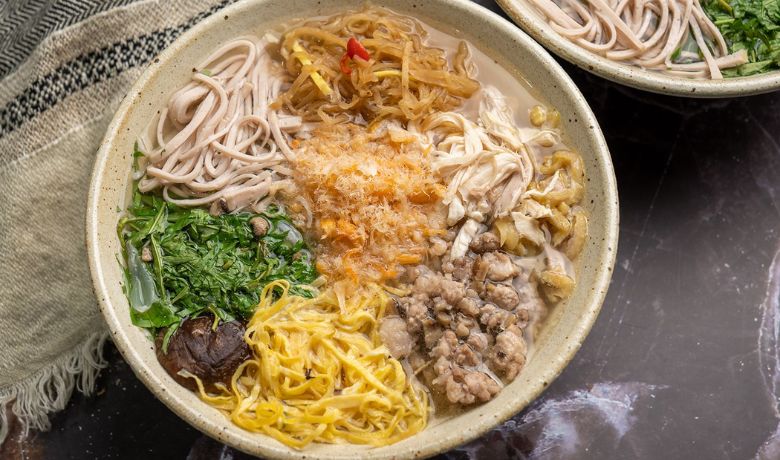
Bun Thang is often called the most sophisticated traditional Vietnamese dish. Traditionally served during the Lunar New Year (Tết), it requires great skill to prepare. The clear chicken broth is delicate, and the toppings are shredded into fine, beautiful threads: chicken, thin omelet strips, Vietnamese ham (giò lụa), and mushrooms. It is a refined, colorful bowl that represents the elegant culinary traditions of old Hanoi.
- Bun Thang Ba Am (Hanoi): ~40,000 – 60,000 VND
- Bun Thang Ba Duc (Hanoi): ~40,000 – 60,000 VND
- Bun Thang Ha Hoi (Hanoi): ~25,000 – 55,000 VND
3. Can You Experience Traditional Vietnamese Dishes Beyond Restaurants?
Traditional Vietnamese cuisine isn’t confined to four walls and a printed menu. In fact, the most soul-stirring meals rarely happen in a formal dining room. To truly understand why Vietnam is a global food powerhouse, you have to leave the tourist trail and head toward the riverbanks, the family kitchens, and the misty morning markets.
3.1 The Floating Breakfast
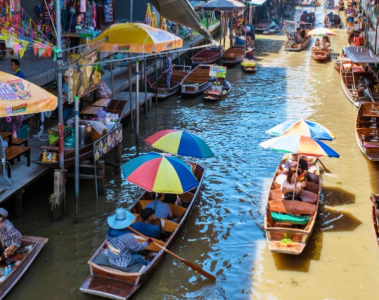
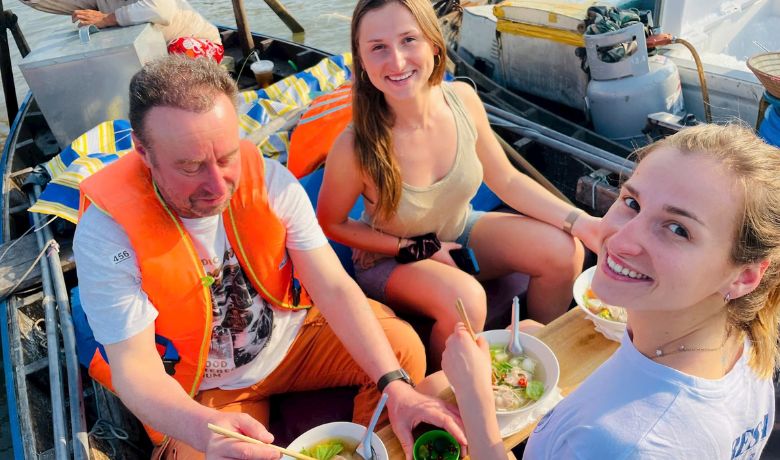
The Mekong Delta’s floating markets, like Cai Rang or Phong Dien, serve as living museums of a water-bound lifestyle. Here, your breakfast table is a wooden boat bobbing on the waves. Sellers use long hooks to pull your vessel close, swiftly serving steaming bowls of hu tieu, bun rieu, or chao long directly across the water.
3.2 Homestay Family Dinners
A family meal at a local homestay offers a cultural intimacy that no commercial kitchen can replicate. The boundary between guest and host vanishes the moment you step into the kitchen. In Hanoi, home-visit tours invite you to sit on floor mats for elaborate feasts of bun thang or nem ran. As you share dishes from the same central bowl, you’ll hear family histories and learn the subtle etiquette of Vietnamese dining.
3.3 Artisanal Villages
Traveling to the source of a staple ingredient reveals the sheer grit and artistry behind Vietnamese food. At heritage villages like Phu Do or Van Cu, you can see the meticulous process of noodle-making.
A standout is the Song Than noodle in Binh Dinh, a “royal gift” once reserved for kings. Made entirely from expensive mung beans, artisans must grind the flour late at night to avoid the harsh sun, drying the delicate strands on bamboo mats along the Kon River.
3.4 Farm-to-Table: The 3F Experience (Feed-Farm-Food)
The “Farm-to-Table” movement is thriving in Vietnam, focusing on organic, traceable, and safe ingredients. In the Mekong provinces like Dong Thap or Ben Tre, this experience becomes an adventure. Travelers can wade into muddy canals to catch silver carp with their bare hands, harvest sun-ripened mangoes, or pluck herbs from the backyard.
3.5 The Morning Market
To find the best food in any Vietnamese town, you must be awake between 5:30 and 8:00 AM. The morning market is a sensory explosion: the clatter of bargaining, the steam rising from giant pho pots, and the sharp scent of fresh Thai basil. Sitting on a tiny plastic stool, you can dive into a crispy banh mi or a bowl of hot xoi. It is the ultimate community hub where the food is always at its freshest and cheapest.
4. A Culinary Itinerary Around Traditional Vietnamese Dishes
This 13-day tour is a dream for food lovers, taking you on a flavorful journey from North to South. You will go beyond famous sights to discover the heart of Vietnamese culture through its kitchen.
Imagine enjoying an authentic family dinner in a local Hanoi home, savoring Royal cuisine in Hue, and joining a hands-on cooking class in the charming town of Hoi An. From tasting “world-class” street food in hidden alleys to exploring the vibrant floating markets of the Mekong Delta, every day offers a new flavor. Whether it’s a crispy Banh Xeo on a Vespa tour or fresh seafood on a luxury cruise, this trip is the ultimate treat for your taste buds.
Day 1: Arrival in Hanoi
- Warm welcome at Noi Bai Airport with a transfer to the Old Quarter.
- Free time to relax and explore Hanoi at your own pace.
Day 2: Hanoi Sightseeing & Cyclo Ride
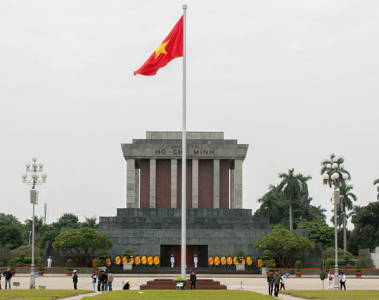
- Visit Ho Chi Minh Mausoleum, Temple of Literature, and Hoa Lo Prison.
- Enjoy a cyclo ride through the French Quarter and a home-hosted Vietnamese dinner with a local family.
Day 3: Hanoi – Lan Ha Bay Overnight Cruise
- Drive to Halong Bay and board the Ginger Cruise for a journey through Lan Ha Bay.
- Cycle through Viet Hai Village and join a cooking class onboard for a hands-on Vietnamese culinary experience.
Day 4: Lan Ha Bay – Return to Hanoi – Flight to Hue
- Early morning Tai Chi and kayaking at Frog Lake, followed by a relaxing brunch.
- Transfer to Hanoi for a flight to Hue, and arrival in the royal city for a restful evening.
Day 5: Hue – Imperial Citadel & Royal Banquet
- Explore the Imperial Citadel and Thien Mu Pagoda, then enjoy a Royal Meal lunch.
- Visit the tombs of Emperor Tu Duc and Khai Dinh and try Hue’s famous Bun Bo Hue at Dong Ba Market.
Day 6: Hue – Royal Legacy & Evening Food Tour
- Discover the heritage of Thuy Bieu village, including Tiger Arena and local handicrafts.
- Evening cyclo ride through Hue’s local food spots, tasting street food and specialty drinks.
Day 7: Hue – Hoi An
- Scenic drive from Hue to Hoi An with stops at Marble Mountain and Lang Co Beach.
- Afternoon walking tour of Hoi An’s Ancient Town, followed by a street food tour and lantern release on the Hoai River.
Day 8: Hoi An – Farming & Cooking Class
- Visit Tra Que Organic Village and a local market for fresh ingredients.
- Join a cooking class at Red Bridge Cooking School and savor your handmade Vietnamese dishes.
Day 9: Hoi An – Free Morning & Flight to HCM City
- Spend the morning shopping or relaxing in Hoi An’s picturesque streets.
- Afternoon flight to Ho Chi Minh City and free time to explore the city.
Day 10: HCM City – City Highlights & Vespa Night Tour
- Visit key landmarks such as Reunification Palace, War Remnants Museum, and Notre Dame Cathedral.
- Evening Vespa tour of Saigon’s nightlife, enjoying local seafood and live music.
Day 11: HCM City – Mekong Delta Discovery
- Motorized boat trip through Ben Tre and Can Tho, exploring local industries and rural life.
- Visit the Vinh Trang Pagoda, and explore the bustling Can Tho night market.
Day 12: Can Tho – Cai Rang Floating Market & Return to HCM City
- Early boat trip through Cai Rang Floating Market, followed by a traditional noodle breakfast.
- Visit the Binh Thuy Old House before returning to HCM City for the night.
Day 13: Departure from HCM City
- Transfer to Tan Son Nhat International Airport for your departure flight.
- End of your Vietnam adventure.
> See tour: Flavory Vietnam Food Tour For Gourment
5. What Should Travelers Know Before Ordering Traditional Vietnamese Food?
Vietnamese dining is an art form of community and balance. If you are used to individual plates and quiet bistros, a busy Vietnamese eatery might feel like a chaotic puzzle. But once you understand the “unspoken rhythm” of the table, you’ll find it is one of the most welcoming ways to eat in the world.
To help you blend in like a local, here is everything you need to know before the first dish arrives.
- The “shout to order” method: In local spots, don’t wait for a server to come to you with a leather-bound menu. If you’re ready, make eye contact and give a slight wave or a friendly “Em ơi!” (pronounced em-oy). It’s the standard way to get attention in a busy, high-energy eatery.
- Using fish sauce: Fish sauce is the salt of Vietnam, but it is rarely used straight from the bottle. Most dishes come with a small side bowl of fish sauce diluted with lime, sugar, garlic, and chili. Always taste the food first before adding more. If you need a kick, use the fresh sliced chilies on the table, but remember: one or two tiny slices go a very long way.
- Embrace the “shared table” culture: Vietnamese dining is communal. Even if you order your own bowl of Pho, the plates of fresh herbs, lime wedges, and chili sauce are for everyone. If you’re eating “Family Style”, use the serving spoons provided to move food to your bowl rather than eating directly from the shared plate.
- Mastering the chopstick etiquette: Never stick your chopsticks vertically into a bowl of rice; it looks like incense burnt for the dead and is considered bad luck. When you aren’t using them, rest them across the top of your bowl or on the provided rest. Also, avoid using your chopsticks to pass food directly to someone else’s chopsticks.
- Beat the “tourist price”: Most authentic local spots have prices clearly written on a board on the wall or a printed sheet. If there are no prices, ask “Bao nhieu?” (how much?) before sitting down. Generally, if a street food stall is packed with locals sitting on tiny plastic stools, you have found the right price and the best flavor.
- Decoding the basic menu: You don’t need to be fluent, but a few keywords save your life. Bo is beef, Ga is chicken, and Heo (or Thit) is pork. Com is rice, while Bun or Pho refers to different types of noodles. If you see Khong followed by a word, it usually means “without.” For example, “Khong hanh” means no green onions.
FAQs
1. What is the most traditional Vietnamese dish?
The most traditional Vietnamese dish is Pho, a flavorful noodle soup made with broth, rice noodles, herbs, and typically beef or chicken. It’s a beloved dish, often enjoyed for breakfast, and represents the heart of Vietnamese cuisine.
2. Is Vietnamese food spicy?
No, Vietnamese food is not typically very spicy. However, certain dishes can be spiced up with fresh chili, particularly in southern Vietnam. Many dishes use herbs and aromatic flavors like lemongrass, ginger, and garlic, rather than heavy spice.
3. Can vegetarians enjoy traditional Vietnamese dishes?
Yes, vegetarians can enjoy traditional Vietnamese dishes! There are plenty of plant-based options such as Vegetarian Pho, Banh Xeo (Vietnamese pancakes), and various vegetable stir-fries, soups, and fresh salads. Many restaurants also offer vegetarian versions of popular dishes.
4. Is street food safe in Vietnam?
Street food in Vietnam is generally safe to eat, especially when it's freshly made in front of you. Look for vendors with high turnover, as this usually indicates that the food is fresh. As with any destination, it's important to use common sense: ensure the food is cooked properly, the vendor maintains cleanliness, and the ingredients are fresh.
Let Asia Pioneer Travel Guide Your Palate
Don’t let a language barrier keep you away from the best flavors in Asia. Whether you want to navigate a hectic street food market or find a quiet family kitchen that doesn’t appear on Google Maps, we can help. Asia Pioneer Travel designs culinary journeys that bridge the gap between “tourist” and “local guest”.