

Quy Nhon, a hidden gem of Vietnam’s central coast, offers a quieter alternative to the bustling cities of Da Nang and Nha Trang, with no less beauty. Known for its pristine beaches, ancient Cham relics, fresh seafood, and affordable prices, it’s a perfect destination for those seeking both relaxation and adventure. The warm, friendly locals add to the charm of this underrated town. In this guide, you will discover what to do in Quy Nhon, practical tips, and secrets to avoid the crowds, making your visit unforgettable.
The Best Beaches in Quy Nhon (The Real Star of the Show)
Nestled on Vietnam’s central coast, Quy Nhon is a one of the best beach towns that blends serenity with adventure, offering some of the country’s most untouched beaches and dramatic landscapes. Here’s your ultimate guide to the best beaches and what to do in Quy Nhon.
Ky Co Beach – The “Maldives of Vietnam”
Often referred to as the “Maldives of Vietnam,” Ky Co Beach is a true paradise. With its sparkling turquoise waters, pristine white sand, and dramatic limestone cliffs, it’s the perfect spot for those seeking untouched natural beauty. The tranquil atmosphere and breathtaking scenery make Ky Co ideal for photography, sunbathing, or just unwinding in a secluded setting.
What to do in Ky Co Beach:
- Swimming and snorkeling in crystal-clear waters, where you can explore vibrant underwater life.
- Relaxing under beach huts or lounging on the soft sand while soaking up the serene atmosphere.
- Photography opportunities at iconic spots like Hang Yen Bridge, capturing breathtaking vistas of the bay.
- Exploring hidden caves and rock formations, perfect for adventure seekers and photographers alike.
- Optional water activities such as sea lion shows during the peak season.
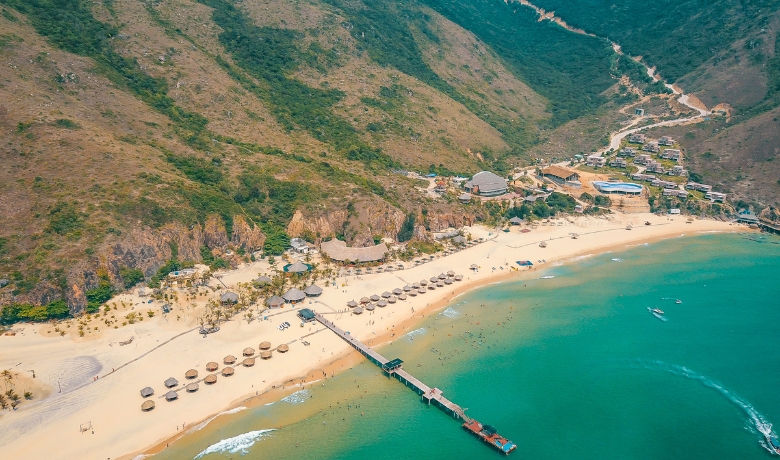
How to get there: Ky Co Beach is located 25 km northeast of Quy Nhon city center on the Phuong Mai Peninsula. You can reach the beach via a motorbike ride, taxi, or join a guided tour. From the nearby fishing villages (Nhon Ly or Eo Gio), a short boat ride (300,000–400,000 VND round-trip) or scenic road drive leads you to the beach.
Eo Gio Cape and Cliffs – Dramatic Coastal Scenery
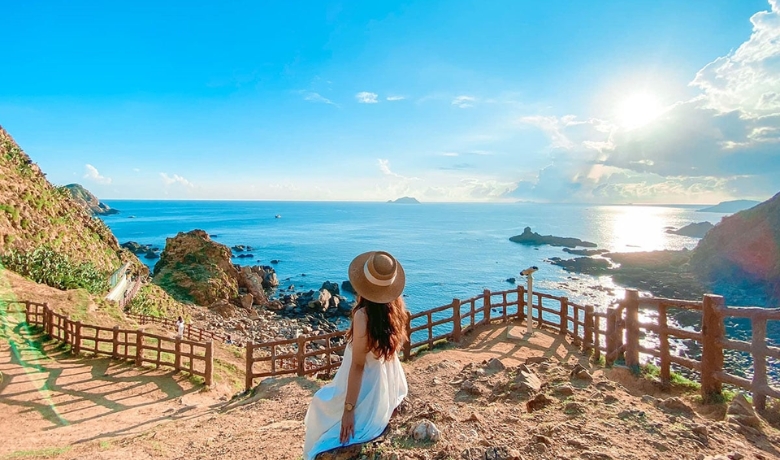
For those who appreciate raw, rugged beauty, Eo Gio is a must-visit. This coastal gem offers towering cliffs, wind-swept formations, and a crescent-shaped bay where waves crash against the shore. It’s considered even more scenic than Ky Co, with stunning cliffside trails and panoramic views perfect for nature lovers and photographers.
What to do in Eo Gio :
- Hiking along cliffside trails with panoramic ocean views, perfect for a scenic escape.
- Watching the sunset from the cliff paths, offering one of the best vantage points in the region.
- Photography of crashing waves and rugged rock formations that make this spot so unique.
- Relaxing by the beach where the wind adds a refreshing breeze to the atmosphere.
- People-watching at the nearby fishing villages, experiencing the local coastal life.
How to get there: Located 20-25 km northeast of Quy Nhon, Eo Gio can be reached by motorbike, taxi, or bus from the city center. It’s often paired with a visit to Ky Co Beach, just 5-6 km away.
Quy Nhon City Beach and Promenade – Perfect for Evening Walks
If you’re looking for a laid-back beach experience in the city, Quy Nhon City Beach is the place to be. Located right along the An Duong Vuong Street, this clean stretch of sand is perfect for a casual evening stroll or to people-watch while soaking up the local atmosphere. With a gentle sea breeze and palm-lined walkways, this beach offers a true sense of local life in Quy Nhon.
What to do in Quy Nhon City Beach:
- Evening walks or jogs along the palm-lined promenade, ideal for taking in the vibrant local atmosphere.
- Street food sampling from local vendors, with fresh seafood, grilled delicacies, and traditional snacks like tre or bun ram.
- People-watching as locals exercise, skate, or relax along the beach at sunset.
- Relaxing on the beach, ideal for a calm moment after a busy day of sightseeing.
- Exploring nearby markets or squares for a deeper local experience and photo ops.
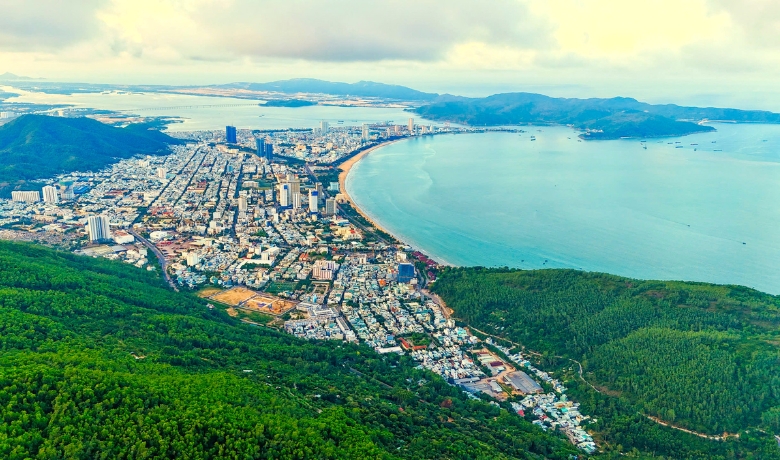
How to Get There: Located right in the city center, this beach is easily accessible on foot from most hotels or accommodations.
Other Beautiful Beaches Worth Visiting
Beyond the famous beaches, Quy Nhon offers a range of other spots that are quieter and less crowded, making them perfect for a more relaxed experience.
- Bai Xep Beach – A serene, golden-sand crescent bay in a lively fishing village, just 10-13 km south of the city center. Perfect for a quiet day at the beach, swimming, and exploring local village life.
- Nhon Hai Beach – A peaceful stretch of beach with golden sand and calm waters, ideal for those seeking local vibes and a more authentic experience.
- Phuong Mai Sand Dunes – Explore vast golden dunes near Ky Co and Eo Gio, perfect for sandboarding, photography, or simply marveling at the unique desert-like landscape.
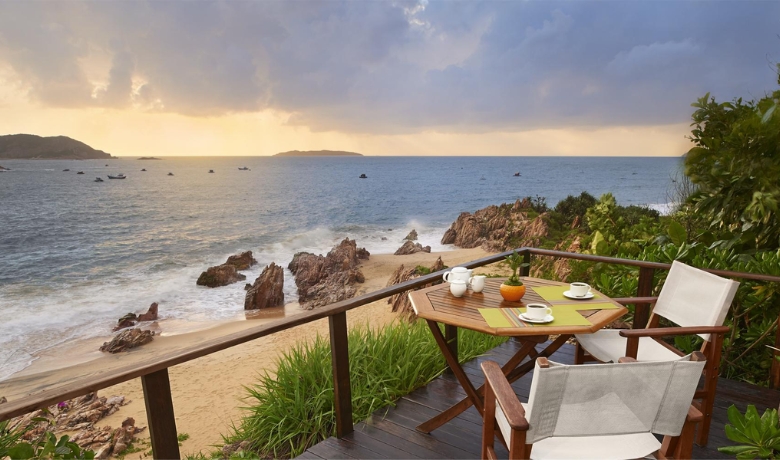
- Ghenh Rang Tien Sa – A poetic rocky area offering hilltop viewpoints, picturesque Queen’s Beach, and scenic paths blending sea, rocks, and greenery. Ideal for a relaxing hike or capturing stunning photographs.
> See tour: Splendours of Vietnam Beach Tour
Cultural and Historical Sites in Quy Nhon
Beyond its stunning beaches, Quy Nhon offers a treasure trove of cultural and historical sites, rooted in the ancient Champa Kingdom and the birthplace of the Tay Son dynasty. Visiting these sites provides an enriching experience that connects travelers to Vietnam’s rich history, from the grandeur of Champa architecture to the revolutionary tales of the Tay Son heroes.
Cham Towers You Can’t Miss
Quy Nhon boasts several impressive Cham towers, remnants of the once-powerful Champa civilization that flourished from the 4th to the 15th century. These sites showcase intricate red-brick architecture and carvings, offering a window into the region’s Hindu roots and spiritual significance.
Thap Doi (Twin Towers), built in the late 12th to early 13th century, stand as the city’s most iconic Cham structures. These two towers, approximately 20 meters and 18 meters tall, are known for their ornate sandstone sculptures and steep internal stairs. The quiet, park-like setting offers visitors a peaceful atmosphere to explore and photograph the intricate designs and surrounding views.
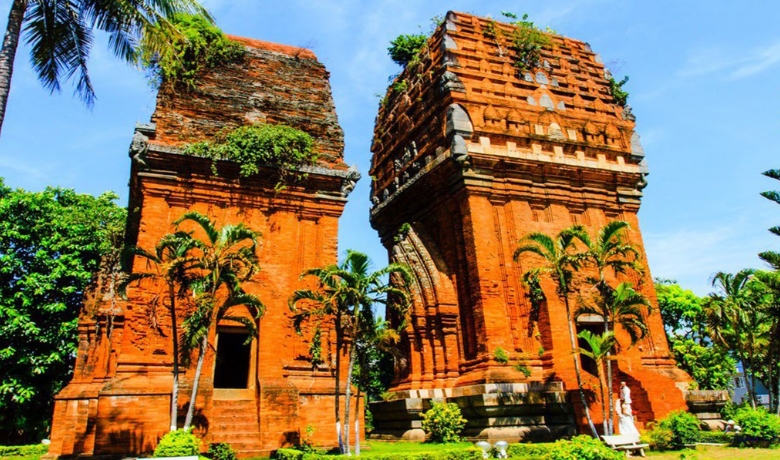
- How to get there: Located just 2-3 km northwest of Quy Nhon city center, you can easily reach Thap Doi (Twin Towers) by motorbike, taxi, or a short walk from the downtown area.
- Entrance fee: Approximately 20,000 VND per person.
- What to do: Climb the steep stairs to enjoy panoramic views from the towers, capture stunning photographs of the intricate carvings, and explore the surrounding park to enjoy the serenity of the site.
Looking for a unique experience of what to do in Quy Nhon? Further south, Banh It Cham Temple (Silver Towers) offers a more scenic and elevated perspective. These four towers, dating back to the 11th century, are perched on a hilltop overlooking the Kon River, providing breathtaking views of the surrounding countryside. The site’s restored brickwork and secluded location make it a perfect spot for peaceful reflection.
- How to get there: Situated 15-20 km south of Quy Nhon in Tuy Phuoc District, it is a 20–30-minute ride by motorbike or taxi. From the parking area, climb about 100 concrete steps to the towers.
- Entrance fee: Around 18,000–20,000 VND per person.
- What to do: Hike up to the towers, take in the scenic countryside views, and capture the historical and architectural beauty of the site.
Long Khanh Pagoda and Ong Nui Temple (Giant Buddha)
Quy Nhon is also home to several important Buddhist sites, where tranquility and spiritual reflection abound. Long Khanh Pagoda, founded in the 18th century, provides a serene environment for those looking to meditate or connect with local religious traditions.
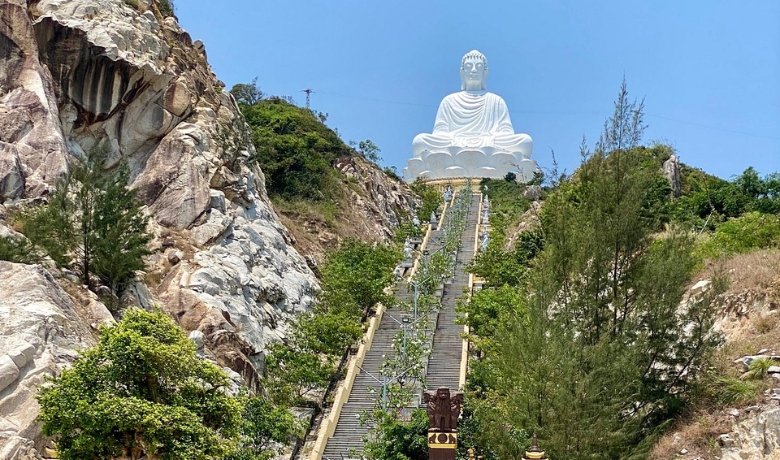
Meanwhile, Ong Nui Temple, located at the top of Chop Vung Peak, is home to one of Southeast Asia’s largest seated Buddha statues. At an elevation of around 600 meters, the temple offers expansive views of the coastline and nearby mountains, creating a peaceful atmosphere perfect for reflection.
- How to get there: Long Khanh Pagoda is centrally located in Quy Nhon, easily accessible by taxi or motorbike (10-15 minutes). Ong Nui Temple is about 30-45 km away, located in Phu Cat District, with a scenic but winding road.
- Entrance fee: Free (donations are welcomed).
- What to do: Visit Long Khanh Pagoda for peaceful walks and meditation. At Ong Nui, climb the 600 steps to reach the summit and admire the monumental Buddha statue while enjoying panoramic views of Quy Nhon.
Binh Dinh Museum and Quang Trung Heritage
For those interested in the revolutionary history of the region, a visit to the Binh Dinh Museum is a must. The museum houses a wealth of Cham artifacts, historical documents, and displays detailing the cultural evolution of the region. It’s an essential stop for understanding the broader context of Quy Nhon’s history.
Not far from the museum is the Quang Trung Museum, dedicated to the heroes of the Tay Son dynasty, specifically Emperor Quang Trung (Nguyen Hue). The museum is located at the site where the Tay Son family led a revolution against invaders in the 18th century. The museum showcases artifacts, weapons, and documents that chronicle the military and political accomplishments of this historic dynasty.

- How to get there: Binh Dinh Museum is centrally located in Quy Nhon. The Quang Trung Museum is about 45-50 km northwest of the city, a 1-hour drive by motorbike or taxi.
- Entrance fee: Binh Dinh Museum typically has a low entrance fee (or free). The Quang Trung Museum charges around 50,000 VND per adult (discounts for children under 15).
- What to do: Explore the museum’s historical exhibits to learn about the Tay Son dynasty’s victories, view the impressive Cham sculptures, and immerse yourself in the region’s revolutionary history.
Authentic Local Experiences and Day Trips
Quy Nhon shines when you step away from the main tourist attractions and dive into the everyday coastal life and raw natural beauty of the region. These off-the-beaten-path experiences are perfect for travelers wanting to discover the real soul of Quy Nhon.
Explore Fishing Villages (Nhon Hai and Nhon Ly)
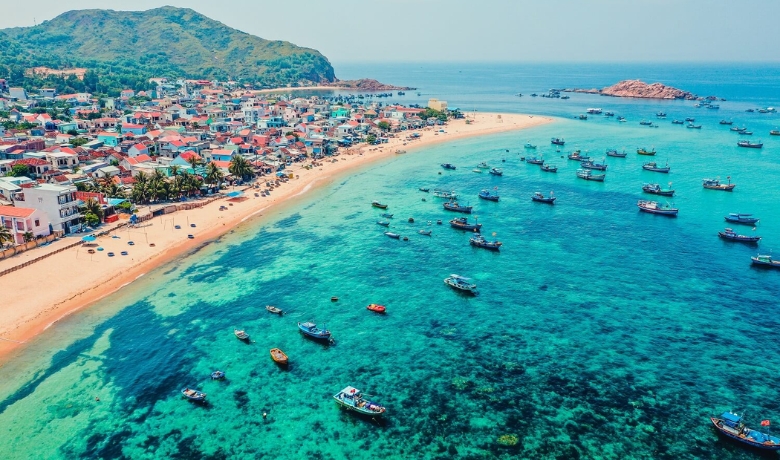
When looking for what to do in Quy Nhon, visiting its charming fishing villages, such as Nhon Hai and Nhon Ly, is a must. Here, colorful wooden boats bob in the harbor, fishermen mend nets at dawn, and the day-to-day rhythms of coastal life unfold in front of you.
Nhon Ly, located on the Phuong Mai Peninsula, is a lively village where you can explore the bustling rural market, offering fresh catches, fruits, and local snacks. Nhon Hai, on the other hand, offers a quieter vibe with access to coral reefs and pristine shores, making it ideal for those seeking a more tranquil coastal experience.
- How to get there: Nhon Ly is located around 20–25 km northeast of Quy Nhon, accessible by motorbike, taxi, or Grab. Nhon Hai is nearby (16–20 km from the city). For flexibility, consider renting a motorbike or joining a guided tour.
- Entrance fee: Free to wander the villages (small fees may apply for markets or specific activities).
- What to do: Watch fishermen at work, take a boat ride around the harbor, enjoy a fresh seafood lunch prepared by locals, or join a squid fishing tour in Nhon Ly at night for an authentic fisherman’s experience. You can also opt for a homestay for an overnight immersion and cultural exchange with the villagers.
Hon Kho Island and Cu Lao Xanh – Island Hopping
If you’re wondering what to do in Quy Nhon and seek a quiet escape to nature, Hon Kho Island and Cu Lao Xanh are perfect choices. Both islands provide pristine, uncrowded beaches with crystal-clear turquoise waters, vibrant coral reefs, and a laid-back atmosphere that lets you relax and disconnect from the world.
Hon Kho Island features stunning marine life, colorful coral, and seaweed forests, while Cu Lao Xanh offers even more seclusion with its peaceful fishing community and starry nights.
- How to get there: From Nhon Hai, Hon Kho Island is just a 10–15 minute boat ride. Cu Lao Xanh can be reached from Ham Tu Pier in Quy Nhon, taking about 30-40 minutes by high-speed canoe or about 2 hours by slower wooden boat.
- Entrance fee/boat price: For Hon Kho, boat rides cost around 100,000–200,000 VND per person round-trip (depending on boat type). For Cu Lao Xanh, wooden boat rides cost around 30,000–60,000 VND, while high-speed canoes are about 200,000 VND per person one-way.
- What to do: Snorkel among vibrant coral reefs, paddleboard across the calm waters, or simply relax on the beach. Enjoy fresh seafood meals like lobster or grouper, and spend a night camping on the beach for stargazing and listening to the waves.
Phuong Mai Peninsula and Sand Dunes Adventure
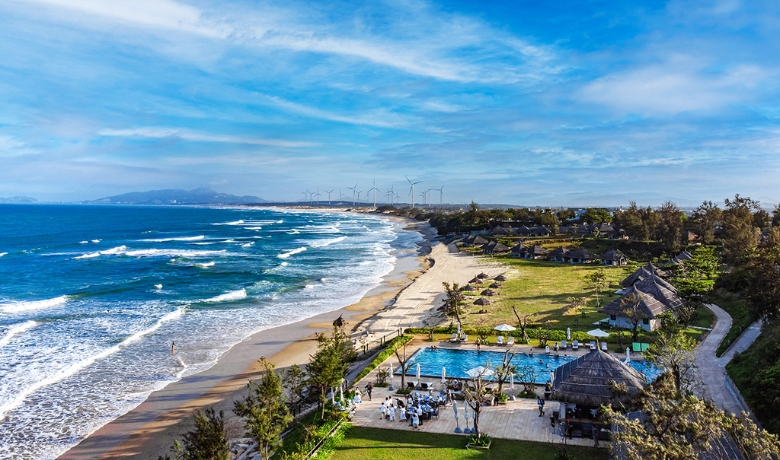
Head to Phuong Mai Peninsula, a vast stretch of land home to wind farms, wild beaches, and golden sand dunes. This area offers an exciting contrast to Quy Nhon’s coastal scenery, with thrilling activities like sandboarding and off-road buggy rides across the dunes.
- How to get there: Phuong Mai is about 20 km northeast of Quy Nhon. To get there, cross Thi Nai Bridge and follow the Quy Nhon–Nhon Hoi route. It’s a 30–45-minute ride by motorbike or taxi.
- Entrance fee: Free, but small fees may apply for parking or activities.
- What to do: Try sandboarding down the dunes, rent a buggy for an off-road adventure, explore wild beaches, and take stunning photographs of the dunes against the backdrop of wind turbines. Sunrise and sunset are perfect times for dramatic shots.

Ham Ho and Other Nature Escapes
If you’re looking for more serene activities, Ham Ho Eco-Tourism Area offers a peaceful retreat. This lush river valley in the Truong Son foothills is an ideal destination for nature lovers seeking tranquility. The area is known for its clear waters, large rocks, and green surroundings, offering a peaceful contrast to Quy Nhon’s beaches.
- How to get there: Ham Ho is located about 50 km northwest of Quy Nhon, in Tay Son District. It’s a 1–1.5-hour drive from the city center.
- Entrance fee: The fee is low, typically around 25,000 to 50,000 VND.
- What to do: Take a boat ride along the river, hike or climb over rocks, swim in the natural pools, or simply relax in the peaceful environment. You can combine your visit with a trip to the nearby Quang Trung Museum for a historical twist.
> Read more: Offbeat Places in Vietnam: 14 Hidden Gems & Unique Experiences Beyond the Tourist Trail
Food Guide: What and Where to Eat in Quy Nhon
Quy Nhon’s cuisine is a delicious reflection of its coastal location and Binh Dinh heritage – think ultra-fresh seafood, bold flavors from peanuts and herbs, and hearty local specialties that highlight the sea’s bounty. The food scene mixes street eats, family-run spots, and simple grilled catches, often affordable and full of authentic taste. Whether you’re craving raw fish salads or crispy pancakes with “jumping” shrimp, eating here feels genuine and satisfying.
Must-Try Local Specialties
These iconic dishes showcase Quy Nhon’s unique twist on Vietnamese coastal fare, emphasizing freshness and regional ingredients.
Goi ca mai (Raw Sardine Salad / “Vietnamese Sashimi”)
A refreshing, no-cook salad of fresh white sardines (filleted raw), topped with crushed peanuts, garlic, chili, lime, and herbs. Wrapped in rice paper with greens and dipped in fish sauce or peanut sauce – delicate, zesty, and incredibly fresh.
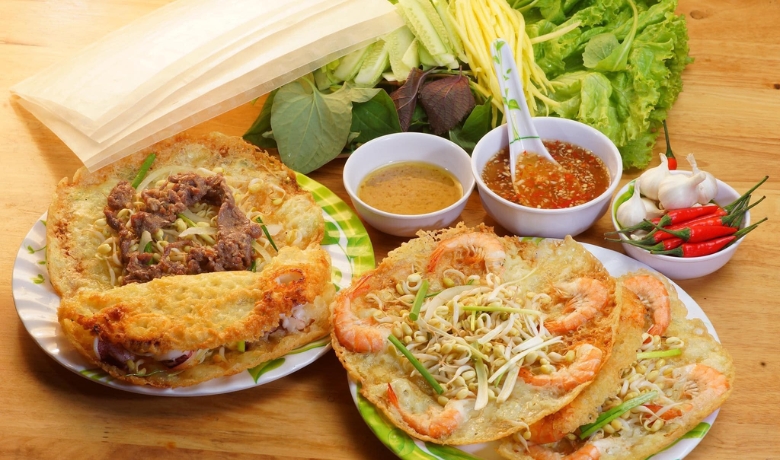
Banh xeo tom nhay (Jumping shrimp pancakes)
Crispy turmeric rice-flour pancakes filled with bean sprouts, pork, onions, and live “jumping” fresh shrimp that sizzle in the hot pan. Served with fresh herbs and sweet-sour fish sauce – iconic for the playful “nhảy” (jumping) element and perfect crunch.
Bun cha ca (Fish cake noodle soup)
Light, savory broth with rice vermicelli, topped with grilled or fried fish cakes (cha ca), fresh herbs, and sometimes peanuts or greens. A comforting, everyday staple with clean seafood flavors.
Fresh live seafood
Grilled, steamed, or sautéed catches like crab, prawns, squid, lobster, clams, and more – often chosen live from tanks and prepared simply to highlight natural sweetness. Quy Nhon’s proximity to fishing villages ensures top-quality, affordable seafood.
Best Seafood Restaurants and Street Food Spots
Quy Nhon excels at fresh-from-the-sea dining, from bustling markets to casual spots.
- Cho Dam (Dam Market): The main central market buzzes with vendors selling fresh seafood, produce, and street snacks. Grab grilled items, fresh catches, or local treats like banh hoi or che (Vietnamese dessert).
- Vo Thi Sau Street: A lively street lined with seafood spots, often featuring outdoor seating, fresh grilled seafood, and local dishes. Popular for evening hangs with beer and simple preparations – great for people-watching and value.
- Night Market (Quy Nhon Night Market / Food Street areas like Bach Dang or Phan Boi Chau): Evening hubs with stalls offering grilled seafood, pancakes, tre (Binh Dinh pork roll), fried snacks, desserts, and more. Affordable, vibrant, and full of local energy, ideal for sampling variety under lights.

Where to Eat Like a Local
For an authentic, less-touristy experience, seek these spots loved by locals.
- Goi Ca Thanh Kieu (69/1 Tran Hung Dao Street) – A low-key favorite for exceptional goi ca mai – fresh, simple, and often praised as top-tier “Vietnamese sashimi.”
- Gia Vy 2 Restaurant (or similar on Dien Hong Street) – Legendary for banh xeo tom nhay – crispy, flavorful pancakes with jumping shrimp; a must for this specialty.
- Bun Ram My Hanh – Busy morning spot for bun ram (crab noodle dish with separate components for mixing) – a true local gem, chaotic and delicious.
- Banh Beo Kim Dinh – Long-standing (since 1977) for soft banh beo topped with shrimp floss, peanuts, and fish sauce, chewy, savory, and heritage-rich.
- Tau Hu Co Vang (multiple locations) – Cool ginger tofu dessert with pandan jellies and coconut, refreshing sweet treat that’s a local favorite.
Other tips: Wander Ngo Van So Street for street food variety, or hit fishing village spots (like Nhon Ly/Nhon Hai) for ultra-fresh seafood lunches during day trips. Prices are generally low (dishes ~50,000–200,000 VND), and freshness is key. Eat where locals do for the real deal.
> See tour: Flavory Vietnam Food Tour For Gourment
Practical Tips for Tourists in Quy Nhon City
Best Time to Visit Quy Nhon
Quy Nhon enjoys a tropical climate with year-round warmth, but the dry season from January to August is ideal for beach time, outdoor activities, and clear skies. Temperatures hover around 25–32°C (77–90°F), with low humidity early on and hotter conditions mid-year.
- Peak recommendations: February to April (or March–May) offers the best balance, pleasant weather (22–28°C, sunny, low rain), comfortable for exploring beaches and sites, and fewer crowds compared to summer.
- June to August: Hotter and sunnier (up to 35°C), great for beaches and calm seas, but busier with domestic Vietnamese tourists (especially families and tour groups). Expect more people at popular spots for summer vacation like Ky Co.
- September to December: Rainy season (heavier showers, possible typhoons), quieter and cheaper, with lush scenery but rougher seas and potential disruptions to island/boat trips. Best for cultural sites if you don’t mind occasional rain.
Avoid peak domestic holidays (e.g., Tet in January/February) if you want minimal crowds. Overall, Quy Nhon stays relatively uncrowded year-round compared to bigger spots.
How to Get Around (Scooter, Grab, Taxi, Tour)
Quy Nhon is scooter-friendly with light traffic, making it perfect for independent exploration, especially along coastal drives.
- Scooter rental: Rent a scooter for 100,000–180,000 VND/day ($4–7 USD) from hotels or local shops. Roads are good, but always wear a helmet and park securely. Ideal for day trips to Ky Co or nearby beaches.
- Grab (ride-hailing): Available for both cars and motorbikes, great for short city rides (13,000–50,000 VND) or longer trips. A convenient option if you prefer not to drive.
- Taxis: Let’s go Taxi, Mai Linh and Sun Taxi are common. Use for airport transfers or group trips. Fixed prices or meter-based fares.
- Tours: Organized half- or full-day tours to Ky Co, Eo Gio, and other sites, including transport, guides, and often lunch (300,000–600,000 VND/person). Perfect for non-drivers or first-timers.

Tip: Download Grab in advance and keep small VND cash for some locations.
Where to Stay in Quy Nhon (Best Areas and Hotels)
Quy Nhon offers options from beachfront resorts to budget city spots—most cluster around the city beach for convenience.
- Quy Nhon City Center/Beachfront: Walkable to promenade, night market, restaurants, and easy day-trip access. Lively yet relaxed vibe. Top picks: Fleur De Lys Hotel Quy Nhon (highly rated, beach views), Sala Quy Nhon Beach Hotel (modern, seafront), or Anya Premier Beachfront Hotel (stylish). Budget: Mid-range hotels near An Duong Vuong Street.
- Bai Xep / Ghenh Rang area (south, ~15 min from center): Quieter, poetic rocky beaches, local seafood, and chill guesthouses/homestays. Great for relaxed stays with village feel.
- Nhon Ly / Phuong Mai Peninsula (northeast, near Ky Co/Eo Gio): More remote, wild beaches, fishing village homestays, ideal for nature lovers but farther from city action.
Book in advance for dry season; prices are affordable (~$30–100/night mid-range).
What to Pack and What to Wear
Pack light and breathable for the heat and humidity. Choose quick-dry, modest clothing (cover shoulders/knees at temples).
- Clothing: Lightweight cotton/linen shirts, t-shirts, knee-length shorts/skirts, long pants for sun protection, swimwear, and a sarong. A rain jacket/umbrella is useful.
- Footwear: Flip-flops/sandals for the beach, walking shoes for hikes and city streets.
- Essentials: Sunscreen (high SPF), hat/sunglasses, reusable water bottle, insect repellent, quick-dry towel, first-aid kit, modest cover-up for temples.
- Other tips: Carry small VND cash, light layers for cooler evenings, and eco-friendly items like reef-safe sunscreen.
Frequently Asked Questions (FAQ)
1. Is Quy Nhon worth visiting?
Yes! Quy Nhon offers stunning beaches, rich history, and authentic local experiences. It's less touristy than other destinations in Vietnam, providing a more peaceful and relaxed atmosphere.
2. What is the best beach in Quy Nhon?
Ky Co Beach is often considered the best, known for its crystal-clear water, pristine sand, and breathtaking views. It's perfect for swimming, snorkeling, and relaxation.
3. How do you get to Ky Co Beach and Eo Gio?
Ky Co Beach and Eo Gio are accessible from Quy Nhon city by motorbike, taxi, or Grab. From Nhon Ly village, a short boat ride will take you to Ky Co, while Eo Gio can be reached via scenic coastal roads.
4. Where to eat the best seafood in Quy Nhon?
For fresh seafood, try Ngoc Luong Seafood Restaurant or Ba Cu Restaurant in Quy Nhon. Both offer a variety of local dishes, including lobster, squid, and fish, often caught the same day.
5. Can you do a day trip to Quy Nhon from Da Nang or Nha Trang?
Yes, Quy Nhon is a feasible day trip from both Da Nang and Nha Trang. It's about a 5-hour drive from Da Nang and 3–4 hours from Nha Trang, making it possible to explore in a single day, though staying overnight is recommended for a fuller experience.
Quy Nhon is a true hidden gem, offering a perfect blend of natural beauty, rich history, and authentic local experiences. Whether you’re exploring its stunning beaches, delving into ancient Cham culture, or enjoying fresh seafood, Quy Nhon promises an unforgettable journey.
If you’re ready to experience this tranquil paradise, contact Asia Pioneer Travel to craft the perfect itinerary tailored to your needs. Let us help you discover the best of Quy Nhon while avoiding the crowds, ensuring a seamless and memorable trip.