

Visiting Cambodia in July often raises one big question: what’s the weather really like? In this guide, you’ll get a clear picture of the country’s mid-monsoon conditions — warm days, short tropical downpours, and surprisingly long stretches of sunshine.
You’ll also see why visiting Cambodia in July is still worth it, from quieter temples to greener landscapes and better-value travel. Moreover, this blog walks you through where to go during the rainy season, the top experiences that shine in July, and a smart packing checklist to help you prepare with confidence.
What is the Weather Like When Visiting Cambodia in July?
In July, Cambodia sits squarely in its wet season, thanks to the southwest monsoon. Temperatures are still quite warm and tropical: daytime highs typically reach 31–33 °C (88–91 °F), while nights cool to around 24–25 °C (75–77 °F). Humidity levels are high (around 80 % or more), which makes the air feel heavier and more humid than the raw temperature suggests.
Rainfall is significant but manageable. On average, you can expect 200–300 mm of rain over the month, depending on the region. In Phnom Penh, for example, July brings about 196 mm of rain over around 19–20 rainy days. In contrast, coastal areas like Sihanoukville can get even more, at an average of about 340 mm during July.
But here’s the important nuance: rain rarely lasts all day. According to several sources, showers tend to be heavy but short, usually striking in the afternoon or evening. In many cases, the morning and early afternoon will be dry and fairly clear, giving you solid windows to explore.
There are also regional differences:
- Inland & Central Plains (e.g., Phnom Penh, Siem Reap): Warm, humid, lots of short downpours.
- Coastal Region (e.g., Sihanoukville, Kep): More rain overall, but sea breezes can moderate the heat.
- Highland or rural areas: Similar monsoon pattern, though remote roads might become muddy or harder to access because of rain.
In terms of sunshine, you’ll still get some daylight, but it’s less consistent. For instance, in Phnom Penh, average daily sunshine can drop to around 4.6 hours in July. Clouds and rain obviously contribute to that, but they’re often broken up by clearer spells.
To conclude, when visiting Cambodia in July, expect heat and humidity, frequent but short rain showers, and a generally lush, green landscape. The weather demands some flexibility, but it’s far from a washout, and the climatic conditions actually set the stage for a very different, often more peaceful experience of Cambodia compared to the dry season.
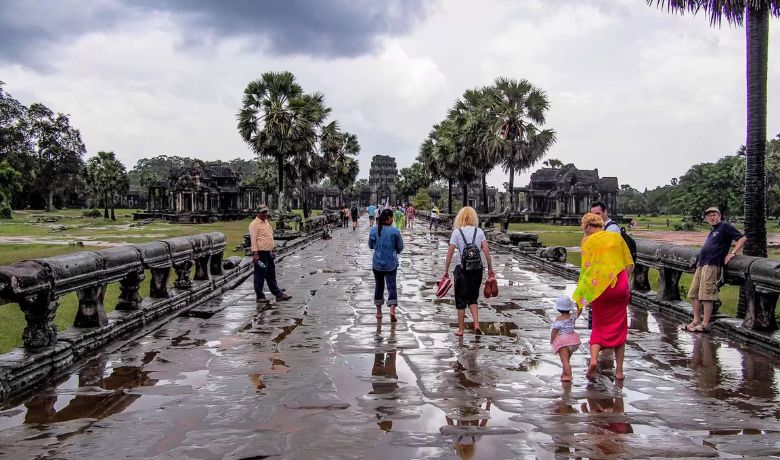
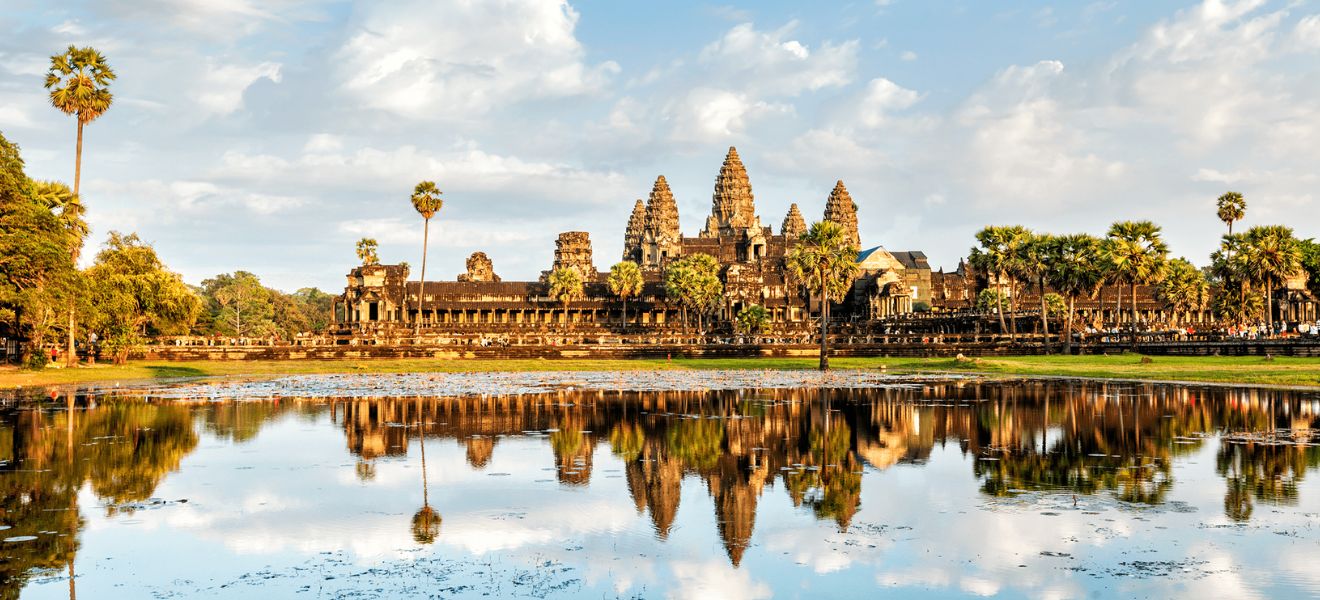
Monsoon rains transform Angkor Wat’s ancient causeway into a shimmering mirror, reflecting Cambodia’s dramatic July weather.
5 Reasons Why Visiting Cambodia in July is Worth It
Fewer Tourists and a More Relaxed Travel Experience
July marks the heart of Cambodia’s green season, which naturally brings a drop in visitor numbers. As a result, places like Angkor Wat, Bayon, and Ta Prohm feel noticeably calmer. Instead of weaving through large tour groups or rushing to secure the best photo spots, you’ll have more breathing room, and more time to appreciate details you might normally overlook.
This quieter atmosphere carries into local markets, cafés, and even small villages, creating a more unhurried and genuine connection with everyday Cambodian life.
Better Value for Money
Because July is off-peak, your travel budget stretches further. Hotels often offer excellent rates, and you can upgrade to higher room categories without paying high-season prices. Tours, transport, and local experiences also tend to be more flexible, and guides have more time to personalize their service. This means you’re not just saving money, you’re getting more quality for the same cost when visiting Cambodia in July.
Lush Green Landscapes at Their Best
Thanks to the regular showers, visiting Cambodia in July can lead you to a vivid palette of green. Rice terraces glow with new growth, forests look dense and refreshed, and waterfalls roar back to life. Even the iconic temples take on a different charm — darkened stones look richer after the rain, and moss or vines appear brighter against damp surfaces. This creates a dramatic, almost cinematic backdrop for photography.
Additionally, Tonlé Sap Lake reaches one of its highest water levels, making floating villages more active and lively. The entire country feels alive, and this natural vibrancy is something travelers not visiting Cambodia in July often miss.
Cooler Temperatures Compared to the Hottest Months
While July is still warm and humid, the rain provides relief from the intense heat of Cambodia’s March–May period. Cloud cover softens the sun, and many mornings are surprisingly pleasant for sightseeing. Even if showers arrive later in the day, they help clear the air and cool things down again, making evenings comfortable for strolling night markets or dining outdoors.
This shift in temperature makes temple-hopping and outdoor exploration feel less exhausting than the scorching months before.
A More Authentic Cultural Experience
Visiting Cambodia in July gives you a closer look at the seasonal rhythms. This is the beginning of the rice-planting season, so rural life is especially active. Villages bustle with farmers working in bright green paddies, and the connection between nature and Khmer culture becomes much more visible.
On the spiritual side, visiting Cambodia in July also aligns with Buddhist observances such as the start of Vassa (Buddhist Lent), when monks return to their pagodas for meditation and study. Temples feel more reflective, and you may witness ceremonies or offerings that don’t happen during the busier winter months. Combined with dramatic monsoon skies and softer light, the atmosphere feels deeply authentic, soulful, and memorable.
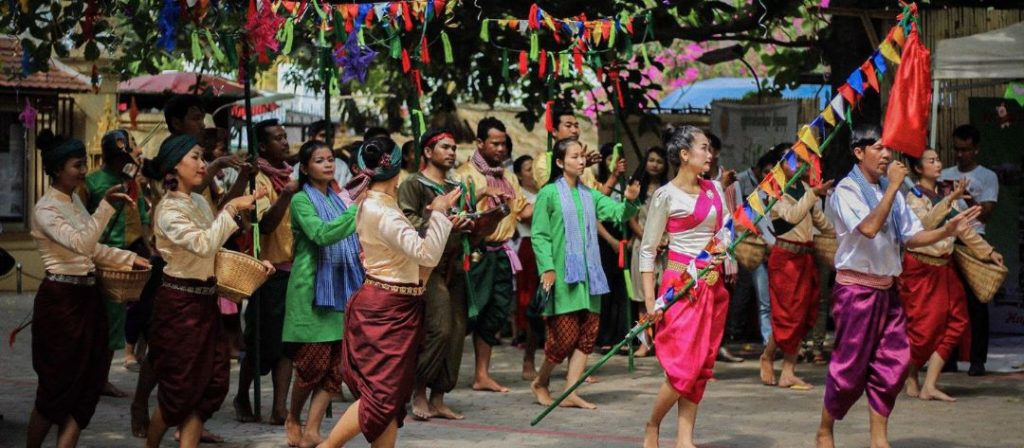
Where to Go in Cambodia During the Rainy Season
Even when the rains arrive, visiting Cambodia in July still offers unforgettable journeys. Here are the best places to explore during the rainy season.
Siem Reap & Angkor Region
Angkor Temples (Angkor Wat, Bayon, Ta Prohm, West Mebon, etc.)
In July, many of the temple moats and reservoirs refill, especially around West Mebon, which becomes an island when the water level rises. This water reflects the temples, giving them a magical, mirrored quality.
The greenery around the temples is at its peak — vines grow more lush, moss is vivid, and the forested surroundings feel alive.
Because there are fewer tourists in the wet season, you’ll often have quieter, more contemplative visits, which is ideal for photography, meditation, or just soaking in the architecture.
** Tip: Plan to visit temples early in the morning, ideally at sunrise. Rain often comes later in the day, and in the morning you can catch mist over the moats or barays which creates dreamy photo opportunities.
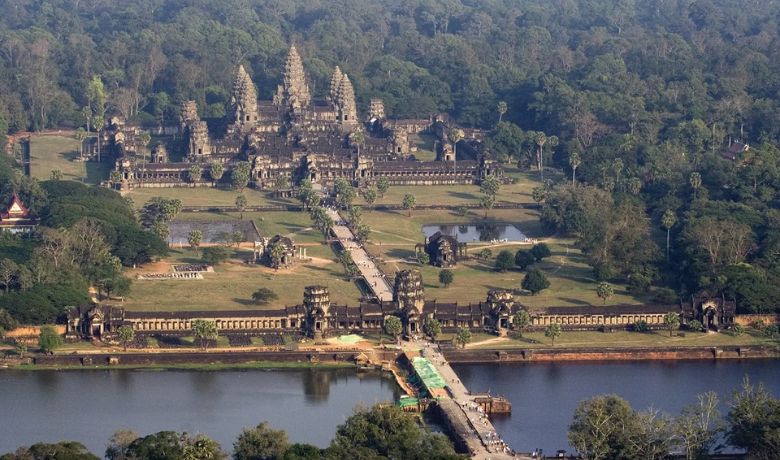
The legendary temple complex rises from Cambodia’s jungle, its five lotus-shaped towers perfectly aligned with celestial precision.
Phnom Krom Hill
Phnom Krom, a rocky hill about 12 km southwest of Siem Reap, offers great viewpoints from the top, where you can see Tonlé Sap Lake and flooded countryside. In July, with the lake’s water higher, the view from Phnom Krom feels different — the lake seems more expansive, and the landscape glows with lush vegetation.
** Tip: Bring a lightweight rain jacket or poncho and go for a sunrise hike. The early morning light, combined with lingering mist, gives a spectacular panoramic view over the flooded lake and farmland.
Tonlé Sap Lake & Floating Villages (e.g., Kampong Phluk)
In the wet season, Tonlé Sap Lake swells dramatically. Boats can go deeper into flooded forests and to floating villages that feel more “water-centric” when visiting Cambodia in July than in dry season.
Kampong Phluk, in particular, is built on very tall stilts (6 to 9 meters) because the water level rises so much during the wet season. You’ll see stilt houses, submerged trees, and a way of life that only really exists when the lake is high.
** Tip: Take a boat tour in the late morning or early afternoon when the rain hasn’t started yet. This timing gives you calmer water, good light, and a better chance to navigate deeper into those flooded areas without being caught in a heavy downpour later.
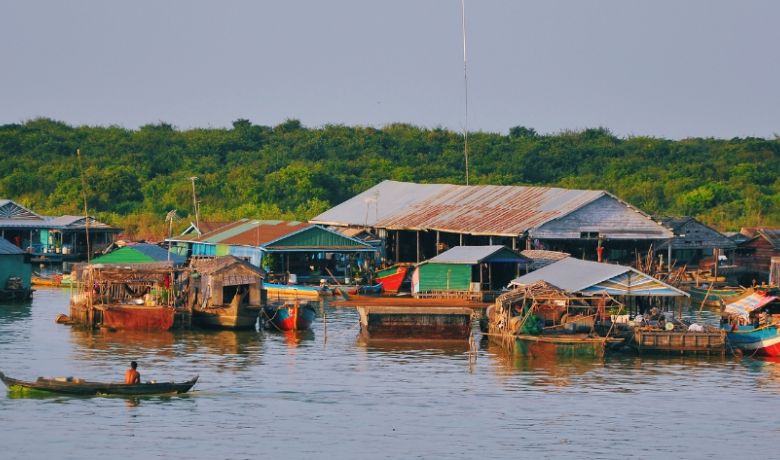
Entire communities drift on Southeast Asia’s largest freshwater lake, where houses, schools, and markets float with the changing water levels.
Phnom Kulen National Park
This spot is a little further out but very rewarding when visiting Cambodia in July: waterfalls in Phnom Kulen are more powerful, and the forest is dense, green, and vibrant. There’s also the famous “River of a Thousand Lingas”, a riverbed carved with ancient Hindu symbols. When water flows over it, the carvings look even more mystical.
** Tip: Because trails can be slippery after rain, hire a local guide who knows the safest paths. That way, you can time waterfall visits for right after the rain when water flow is strong but trails haven’t turned too muddy.
Phnom Penh & Cultural Sites
Royal Palace & Silver Pagoda
These iconic sites are great when visiting Cambodia in July because many of the tour groups have thinned out. You’ll likely experience them more peacefully. What’s more, the lush gardens around the palace also look especially vibrant after rain, and the reflective surfaces around the pagoda catch the light beautifully.
** Tip: Visit in the late morning or early afternoon, then retreat to a nearby café when the forecast calls for rain. Phnom Penh has many charming riverside cafés around Sisowath Quay where you can relax while waiting for showers to pass.
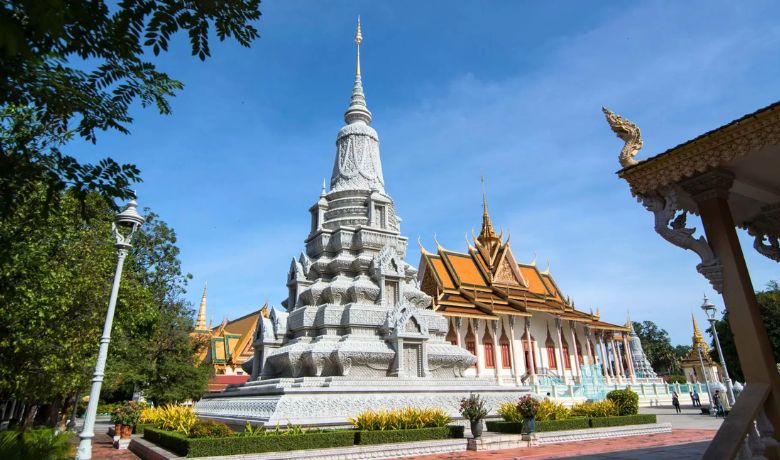
Phnom Penh’s palace complex showcases Khmer architecture with its gilded spires and a pagoda floor made of 5,000 silver tiles.
National Museum & Tuol Sleng Genocide Museum
These museums are perfect rainy-season destinations since they are indoors and offer cultural or historical refuge from monsoon showers. You’ll also experience a different ambiance: fewer people, more space to reflect, and a slower pace, which suits a contemplative rainy-day visit.
** Tip: Combine a museum visit with a cooking class in the afternoon. Use the downtime during rain to learn Khmer cuisine — it’s a great way to stay dry, learn something, and connect with local culture.
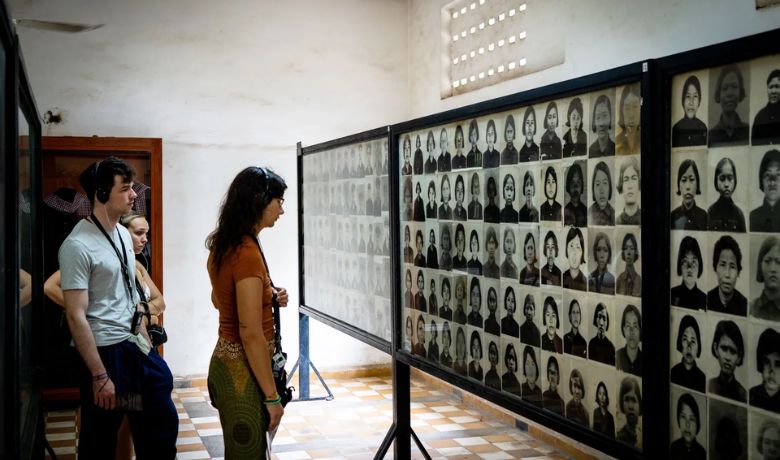
A haunting memorial, where thousands of prisoner photographs bear witness to the Khmer Rouge’s brutal regime.
Riverside & Sisowath Quay
The riverside promenade along Tonlé Sap is lush and refreshed after rain, offering a cool, breezy walk. In the rainy season, when reflections shimmer on the water, it’s a lovely spot for photography or just sitting in a café and watching life go by.
** Tip: Bring a foldable umbrella and plan a sunset walk. Rain often comes and goes quickly, and a sudden shower could give way to glowing light over the river.
Cardamom Mountains & Highland Nature Escapes
Cardamom Mountains (Eco-lodges, Waterfalls, Jungle)
In July, the rainforest in the Cardamom Mountains is at its most lush: waterfalls are powerful, vegetation is dense, and wildlife is more active. Eco-lodges in the area often operate with the green season in mind, which is proofed by the fact that many have covered observation decks, rain-friendly activities, and local guides who know how to plan around the monsoon.
** Tip: Book an eco-lodge that offers rain-pattern tours. Local guides can take you on hikes or river trips timed precisely after rain when waterfalls are flowing, but trails are still safe.
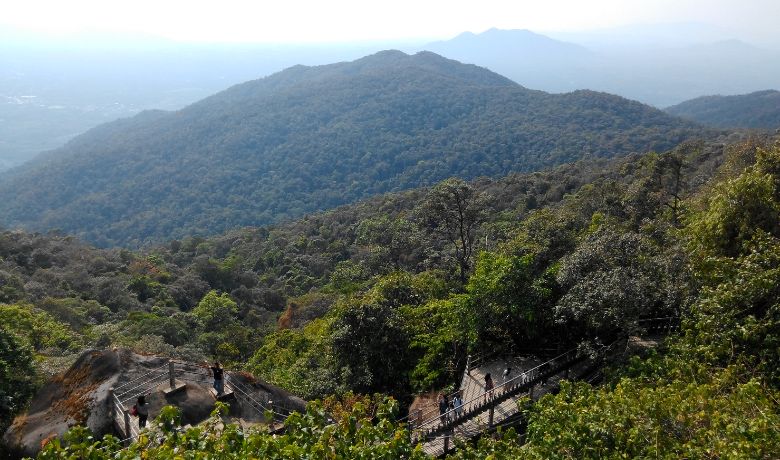
Cardamom Mountains harbor one of Southeast Asia’s last intact rainforest ecosystems.
Mondulkiri (Eastern Highlands)
Though not mentioned heavily in every guide, the highlands (including Mondulkiri) are especially attractive when visiting Cambodia in July. The rainy season invigorates forests, makes waterfalls more impressive, and gives the region a cool, misty feel. It’s less crowded, and the terrain offers a refreshing break from Cambodia’s lowland heat.
** Tip: Use a 4×4 transport and opt for a multi-day trek. That way, you can hike in early mornings (when rain is less likely), take advantage of the cooler mountain air, and wait out heavier showers under shelter when needed.
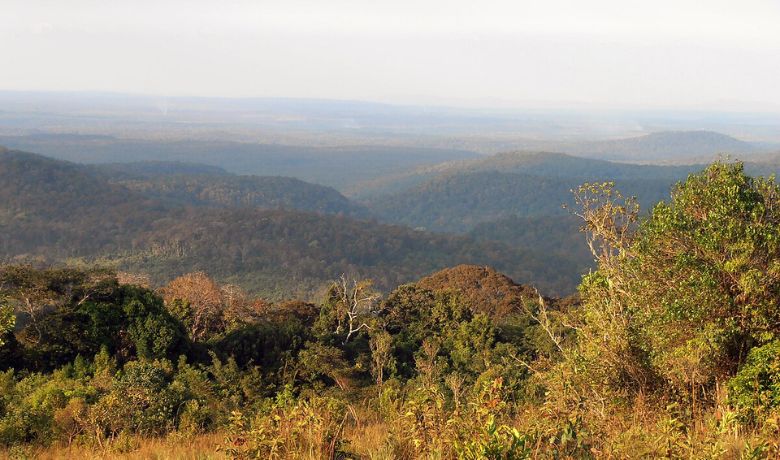
Rolling hills and cool temperatures distinguish Mondulkiri’s highland landscape.
Battambang & Rural Cambodia
Wat Ek Phnom (near Battambang)
This ancient Khmer temple is just outside Battambang, with a striking white Buddha statue and well-carved ruins. In July, the surrounding area turns emerald green, making the temple feel more alive. The surrounding rice paddies and countryside seem particularly lush after rain, which makes walking or cycling to the site memorable.
** Tip: Rent a bicycle in the morning and ride out to Wat Ek Phnom before the heat and possible rain build up. The paths are quieter, and you’ll catch the temple in soft, diffused light when the fields are sparkling.
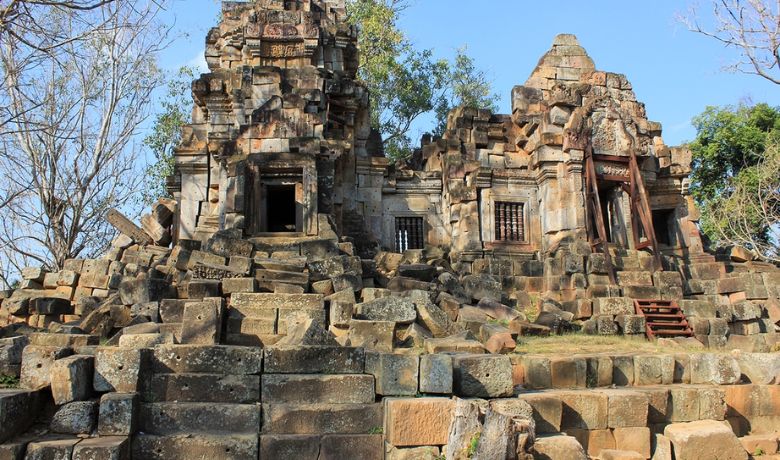
Wat Ek Phnom’s crumbling sandstone towers stand entwined with fig roots amid scattered ancient carvings.
Battambang Countryside & Bamboo Train
July’s rain refreshes the rural landscape, making rice fields look glossy and vibrant. Taking the bamboo train (a locally made flat wooden “train” on rails) is especially fun in the green season. On this journey, the surrounding countryside is rich and scenic, and the slower pace lets you absorb the landscape.
** Tip: Try to time your bamboo train ride for just after a rainfall. The tracks may be damp, but the fields will be freshly washed and brilliantly green, offering some of the most picturesque views in the region.
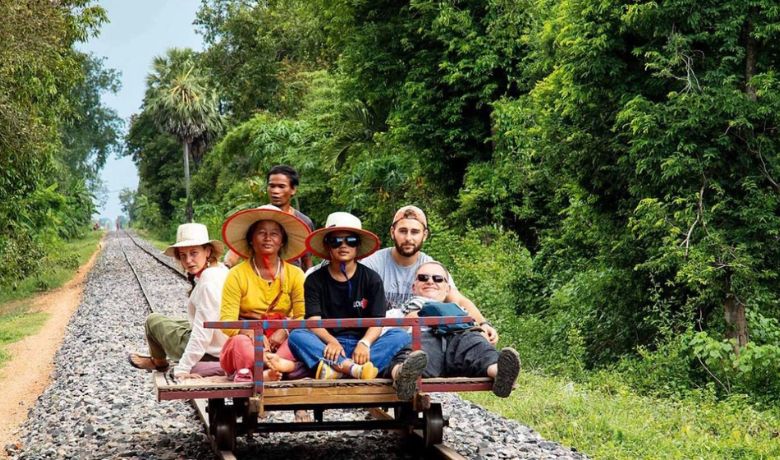
Battambang’s famous bamboo train rattles through lush countryside on makeshift platforms, offering a unique Cambodian experience.
Coastal Region (Kampot, Kep & Nearby)
Kampot (Pepper Plantations, River Views)
In July, Kampot’s hills and riverbanks become lush, misty, and more atmospheric. The pepper plantations (Kampot is famous for its pepper) are especially verdant. The river (Kampot River) can be very pleasant for short boat rides or riverside meals when rain is light.
** Tip: Book a boat ride in the late morning, when rain hasn’t yet built up, to float along the river banks and soak in the moody green hills. Then, on the way back, stop at a local pepper farm for tasting as the plantations are especially alive in this season.
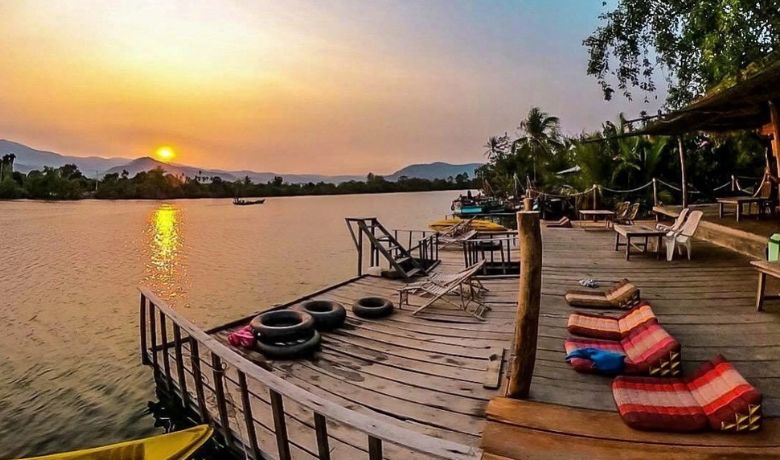
Kampot’s riverside charm blends French colonial architecture with pepper plantations and lazy waterfront sunsets.
Kep (Crab Market, Coastal Scenery)
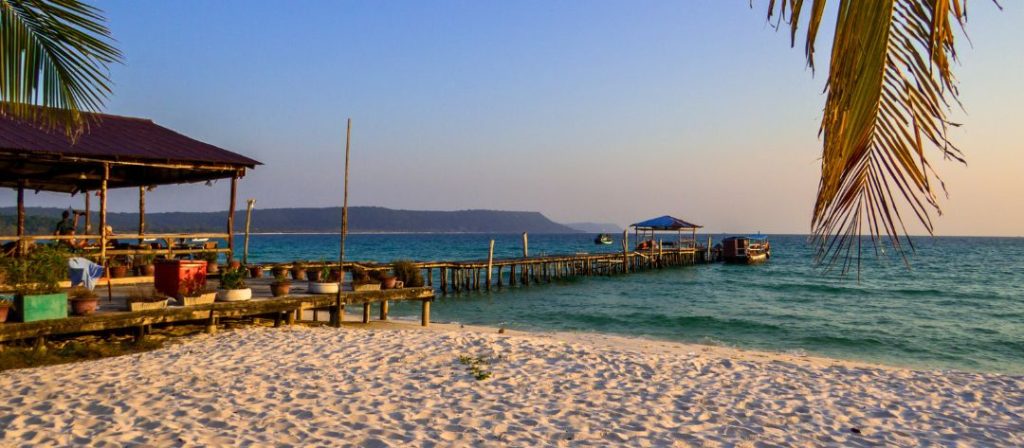
Kep is quieter in July, but that’s part of its charm. The Kep Crab Market is still lively, and the seafood is fresh. The hills around Kep, particularly Bokor Hill, get misty during rain, creating a very atmospheric and peaceful scene.
** Tip: Climb slightly into the hills or go for a hilltop viewpoint after a rain shower. The low clouds and mist around Bokor create dreamlike scenery, and you might catch glimpses of the sea peeking through the fog.
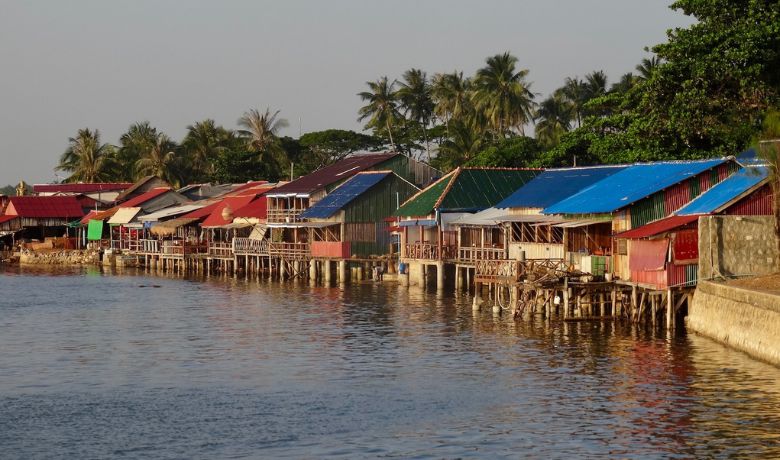
Kep’s colorful stilt houses cluster along the coast, famous for their fresh crab markets and the laid-back atmosphere.
Top Experiences for a July Trip to Cambodia
Here are the most rewarding experiences that make a July trip special.
Sunrise Over Angkor Wat and Hidden Temples
Watching Angkor Wat at sunrise when visiting Cambodia in July is mesmerizing. Mist often lingers over the temple moats, creating a mystical atmosphere that photographers and travelers alike cherish. Exploring smaller, less-visited temples like Ta Nei, Preah Khan, and Neak Pean gives a sense of discovery. The lush green surroundings contrast beautifully with the ancient stone, offering a serene and almost magical environment.
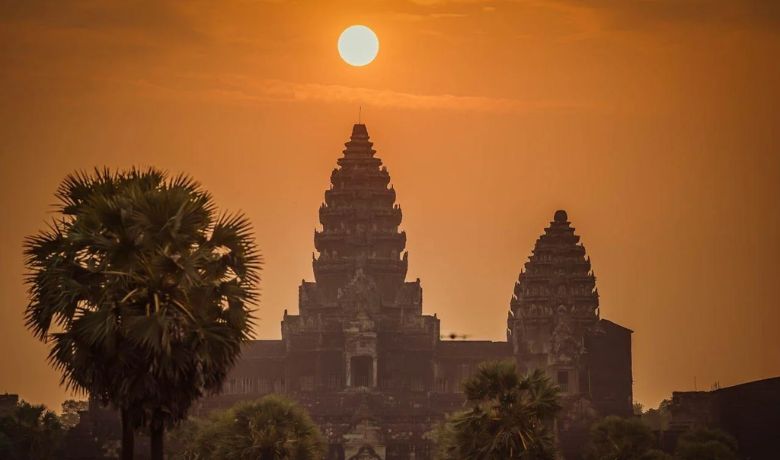
Dawn breaks behind Angkor Wat’s iconic silhouette, painting the sky in fiery hues.
Immersive Village Life on Tonlé Sap Lake
July brings the peak of the lake’s floodwaters, transforming local villages into floating communities. You can witness daily life from boats, such as children playing, fishermen rowing, and families maintaining floating homes. Traveling through the flooded forests and canals offers a unique insight into Cambodia’s water-based culture, an experience impossible to replicate in the dry season.
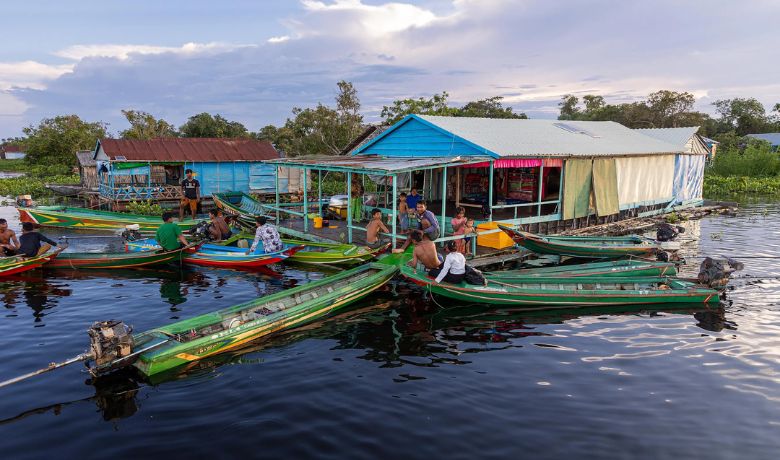
Life unfolds entirely on water, where brightly painted boats serve as transportation between bobbing homes and shops.
Cycling Through Vibrant Rice Fields and Countryside
The Cambodian countryside bursts into brilliant shades of green in July. Fields glisten after rain, and the pace of village life feels gentle and authentic. Riding through quiet country roads, small bridges, and river crossings offers an intimate connection to rural life, from seeing farmers planting rice to spotting water buffalo in the paddies.
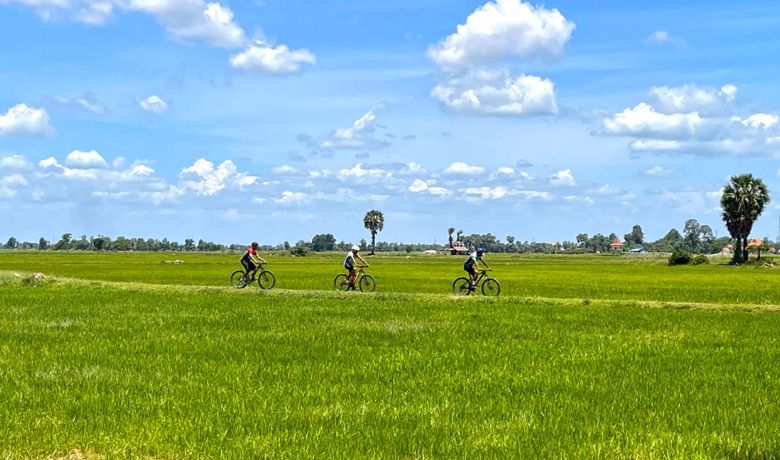
Cyclists glide along rural paths past sugar palms and traditional villages across the Cambodia countryside.
Waterfall Adventures in the Highlands
The highlands, including Phnom Kulen, Mondulkiri, and the Cardamom Mountains, showcase waterfalls in their most impressive form. Streams and cascades swell from the rains, creating majestic natural spectacles. Trekking through misty forests or along flowing rivers feels refreshing and adventurous, offering a dynamic contrast to temple visits and city exploration.
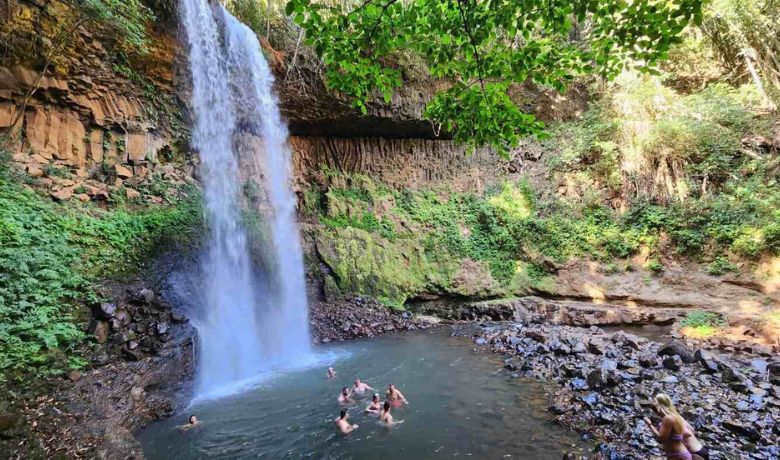
Hidden waterfalls cascade through Cambodia’s jungle highlands, creating refreshing natural pools perfect for swimming.
Experiencing Seasonal Khmer Cuisine
July’s rains boost the production of fresh herbs, vegetables, and river fish, making seasonal dishes particularly vibrant and flavorful. Sampling crab specialties in Kep, pepper-infused dishes in Kampot, or river fish curries provides a culinary journey that reflects the country’s seasonality and local traditions.
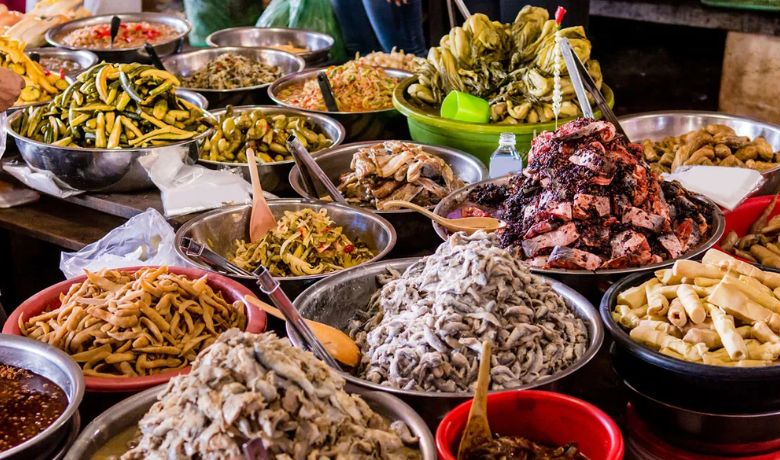
Traditional Khmer dishes featuring aromatic curries, tangy fish amok, and the distinctive flavors of Kampot pepper.
Spiritual Immersion During Vassa (Buddhist Lent)
The rainy season coincides with the beginning of Buddhist Lent, a period when monks settle into monasteries for meditation. Visiting smaller temples during this time offers a quieter, more intimate experience of rituals and local devotion.
Participating respectfully in ceremonies or observing monks’ daily routines gives insight into Cambodia’s deep spiritual culture, which is more pronounced and reflective in the green season.
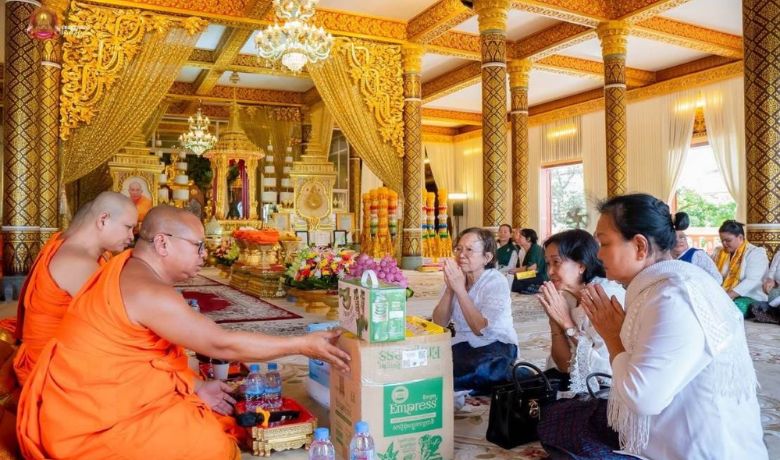
Buddhist Lent marks Cambodia’s three-month rainy season retreat when monks remain in their temples for intensified meditation and devotees bring daily offerings.
Experiencing the Lush Coastal Atmosphere
Coastal towns like Kampot and Kep take on a peaceful, misty charm in July. The hills and riversides are lush, and quiet beaches or riverside paths offer moments of calm. Exploring the surroundings, including Bokor Hill or the scenic riverfront, highlights Cambodia’s lesser-known natural beauty, with dramatic cloud formations and fresh, fragrant air.
Photography and Nature Immersion
The wet season turns Cambodia into a photographer’s paradise. Every corner, from reflective temple moats to glistening rice paddies, is filled with vivid colors and textures. Misty mornings, post-rain light, and water-laden landscapes create a dynamic and visually rich environment, perfect for capturing unique memories.
What to Pack When Visiting Cambodia in July: The Smart Traveler’s Checklist
Visiting Cambodia in July means experiencing the lush, rainy season, so packing smartly is essential for comfort, convenience, and safety.
Lightweight, Quick-Dry Clothing
- Breathable fabrics like cotton or linen help you stay cool in Cambodia’s hot, humid climate.
- Lightweight long sleeves and pants are useful for sun protection during sunny periods and mosquito protection in the evenings.
- Quick-dry clothes make it easier to handle sudden downpours or muddy excursions, so you won’t spend the day in wet, uncomfortable layers.
Rain Gear Essentials
- Compact umbrella or foldable raincoat: July showers are frequent but often short, so having a portable solution is key.
- Waterproof poncho: Perfect for temple visits, boat rides on Tonlé Sap, or hiking through rainforest trails.
- Waterproof bag or backpack cover: Protects electronics, documents, and valuables from sudden rain.
Footwear for Wet Conditions
- Sturdy walking shoes or lightweight hiking shoes: Essential for temples, waterfalls, and trails that can get slippery in the rain.
- Sandals or flip-flops: Comfortable for casual strolls, riverside areas, and beaches, and allow wet feet to dry easily.
- Waterproof socks or quick-dry socks: Helps prevent blisters when shoes get damp during heavy rain.
Sun Protection and Comfort Items
- Wide-brim hat or cap: Provides shade for sunny mornings or afternoons.
- Sunglasses and sunscreen: Even during the rainy season, the sun can be intense, and UV protection is crucial.
- Light scarf or shawl: Versatile for sun protection, modest temple attire, or sudden cool breezes in the highlands.
Health and Hygiene Essentials
- Insect repellent: Mosquitoes are more active during the wet season, especially near rivers and rice paddies.
- Hand sanitizer and wet wipes: Helpful when traveling through rural villages or taking boat trips.
- Travel first-aid kit: Include basics like band-aids, antiseptic, and any personal medications.
Electronics and Travel Gear
- Power bank: Frequent outdoor excursions may limit charging opportunities.
- Waterproof phone case or pouch: Protects your phone during boat rides, waterfall visits, or unexpected showers.
- Camera or action camera: July’s vibrant scenery — from flooded fields to misty waterfalls — is perfect for photography.
Miscellaneous but Useful Items
- Reusable water bottle: Stay hydrated in the humid climate.
- Lightweight backpack or daypack: Ideal for day trips to temples, villages, or waterfalls.
- Travel laundry detergent: Quick-dry clothes might need refreshing during multi-day stays in humid conditions.
Cultural Considerations
- Modest clothing: Covering shoulders and knees is expected when visiting temples or religious sites.
- Reusable shopping bag: Handy for local markets or minimizing plastic use.
FAQs
- Is it worth visiting Cambodia in July despite the rainy season?
→ Yes, July offers fewer tourists, lush landscapes, and lower prices, making it a rewarding time to visit.
- What is the weather like in Cambodia during July?
→ Expect warm, humid days (31–33 °C) with frequent but short tropical showers and cooler nights around 24–25 °C.
- Will rain ruin outdoor plans?
→ Not usually. Showers are short and often in the afternoon, leaving mornings and early afternoons clear for exploration.
- Which regions are best to visit in July?
→ Siem Reap & Angkor, Phnom Penh, the Cardamom Mountains, Mondulkiri, Battambang, Kampot, and Kep all have unique rainy-season charms.
- What are the top experiences in July?
→ Highlights include sunrise at Angkor Wat, Tonlé Sap boat tours, cycling rice fields, waterfalls, seasonal cuisine, spiritual observances, and coastal escapes.
- How should I dress and pack for July?
→ Pack lightweight, quick-dry clothing, rain gear, sturdy shoes, sun protection, insect repellent, and modest attire for temple visits.
- Are travel costs higher in July?
→ No. July is off-peak, so hotels, tours, and transport are cheaper and often more flexible than in high season.
Final Words
Although July falls in the rainy season, don’t let the showers stop you from discovering Cambodia’s beauty. This period brings lush greenery, flowing rivers, vibrant floating villages, and quieter, more contemplative temples. While the weather may be less predictable, preparing with the right tips and packing essentials ensures that visiting Cambodia in July is a safe, comfortable, and memorable journey.
With Asia Pioneer Travel’s local expertise and hands-on experience, every aspect of your trip — from planning to exploring — is handled seamlessly. Connect now and let us guide you through a remarkable July adventure in Cambodia.