The remarkably varied landscapes open the door to an impressive range of outdoor activities in Vietnam. When paired with a climate that shifts clearly by season, these settings offer experiences that change in character rather than limit possibility, making timing an essential part of the adventure.
This guide takes a closer look at how weather patterns shape each activity, what distinct features emerge throughout the year, and how thoughtful preparation helps travelers enjoy every season at its best. So, stay on for the very essential information!
Understanding Vietnam’s Climate Zones
Vietnam stretches more than 1,600 kilometers from north to south, crossing different latitudes, elevations, and monsoon paths along the way. This elongated geography, combined with mountain ranges and a long coastline, creates clear climate contrasts between regions rather than a single, uniform weather pattern. As a result, outdoor activities in Vietnam that work well in one part of the country may feel completely different just a few hundred kilometers away.
In the north, higher latitudes and mountainous terrain allow cooler air masses to influence the weather, especially in winter. Moving south, temperatures rise steadily as the country enters a fully tropical zone with less seasonal temperature variation. Central Vietnam sits in between, facing the East Sea directly and absorbing the impact of seasonal winds and tropical storms, which explains its reputation as the nation’s typhoon corridor.
Northern Vietnam (Hanoi, Sapa, Ha Giang, Ha Long)
This region experiences the clearest four-season cycle, with noticeable temperature shifts throughout the year. Mountainous areas can feel dramatically cooler than the lowlands.
- Spring runs from February to April, bringing mild temperatures and rising humidity.
- Summer, from May to August, is hot and rainy, particularly in lowland cities.
- Autumn arrives between September and November with cooler air and clearer skies, often considered the most balanced season.
- Winter, from December to January, introduces colder conditions, with mist and occasional frost in the highlands.

Golden rice terraces cascade down the mountainsides of Northern Vietnam.
Central Vietnam (Hue, Hoi An, Phong Nha, Da Nang)
The weather here is strongly influenced by monsoon winds and sea exposure. Rainfall patterns differ between the north and south, with wetter periods often arriving later in the year.
- Spring and early summer, roughly February to July, tend to be warm and relatively dry, creating stable conditions for outdoor exploration.
- Late summer and autumn, from August to November, mark the peak rainy season, with storms and typhoons affecting coastal and low-lying areas.
- Winter months feel cooler and damp rather than cold, especially in historic cities like Hue.

Central Vietnam’s dramatic coastline meets lush mountain ranges.
Southern Vietnam (Ho Chi Minh City, Mekong Delta, Phu Quoc)
The climate remains consistently warm year-round, shaped more by rainfall than by temperature changes. Seasons are generally defined by dry and wet periods rather than by heat or cold.
- The dry season lasts from December to April, offering lower humidity and minimal rainfall.
- The wet season follows from May to November, characterized by short, intense downpours that usually pass quickly, while temperatures remain largely unchanged.

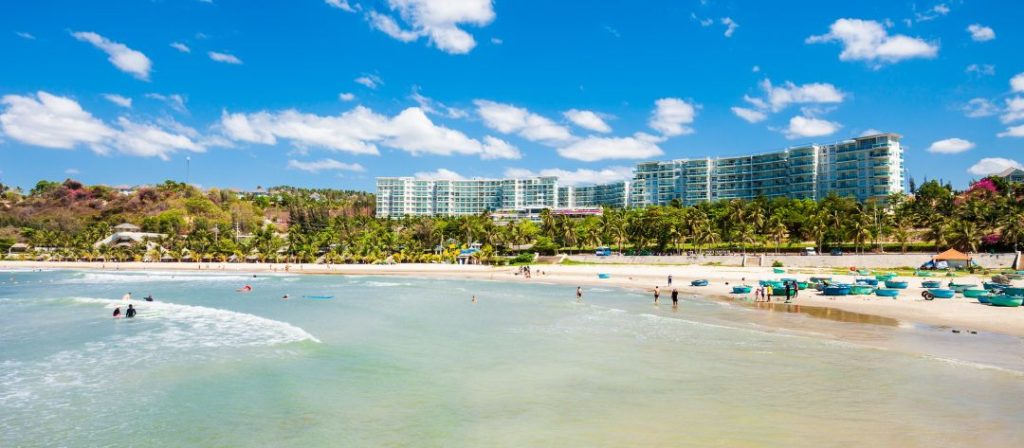
Southern Vietnam’s bustling metropolis blends modern skyscrapers with tropical warmth.
Best Outdoor Activities by Season
Seasonal shifts in Vietnam do more than change the weather; they reshape landscapes, influence accessibility, and subtly alter how each destination feels. By aligning travel plans with these natural rhythms, outdoor experiences become more immersive, comfortable, and rewarding across the country.
Spring (Feb–Apr) — Ideal for Many Regions
As winter fades and summer heat has yet to arrive, spring creates a balanced window for outdoor activities in Vietnam across much of Vietnam. Temperatures remain comfortable, rainfall is relatively low in many areas, and landscapes begin to show fresh growth, especially in upland regions.
Recommended activities
- Trekking in northern Vietnam: Mountain trails around Sapa and Ha Giang become more accessible as fog thins and temperatures rise slightly. Terraced fields start to green, while village paths remain firm enough for multi day hikes.

Trekking through Northern Vietnam’s terraced valleys helps travelers connect with vibrant local culture and breathtaking mountain scenery.
- Early season island trips: Coastal islands such as Phu Quoc and parts of the central coast enjoy calmer seas and clearer visibility. These conditions support swimming, snorkeling, and relaxed coastal walking before peak summer crowds arrive.
- Cave exploration in Phong Nha: Early spring marks the start of safer cave access, with river levels still low and interior conditions stable. This period suits both guided show caves and adventure routes that require wading or climbing.
- Motorbike loops: Spring weather supports longer riding days, particularly in the northern highlands and central regions. Roads are generally dry, and visibility improves, making scenic routes more enjoyable and less demanding.

Mountain passes wind through dramatic karst landscapes on Vietnam’s legendary motorbike loops.
Why spring works so well
- Moderate temperatures: Daytime heat stays manageable across most regions, reducing physical strain during outdoor activities in Vietnam.
- Seasonal landscape changes: New growth appears in rice terraces and valleys, adding visual depth to mountain and rural routes.
- Lower rainfall in many areas: Compared to summer, spring sees fewer prolonged downpours, which helps keep trails, roads, and rivers in better condition.
Practical tips
- Arrange trekking support early: Local guides and homestays in popular trekking areas can fill quickly during spring, especially around public holidays.
- Prepare for cool starts at altitude: Mornings and evenings in the highlands remain chilly, so layered clothing is useful even when daytime temperatures rise.
Summer (May–Aug) — Water Sports, Highland Escapes
Summer brings higher temperatures and stronger sunlight, naturally shifting outdoor activities in Vietnam toward water-based experiences and cooler elevations. While heat and rain define this season, thoughtful destination choices allow travelers to stay active without discomfort.
Recommended activities
- Island hopping with alternatives to Halong Bay: Quieter bays such as Lan Ha and Bai Tu Long offer similar limestone scenery with fewer vessels. These areas benefit from more sheltered waters, which helps maintain smoother sailing conditions during summer months.
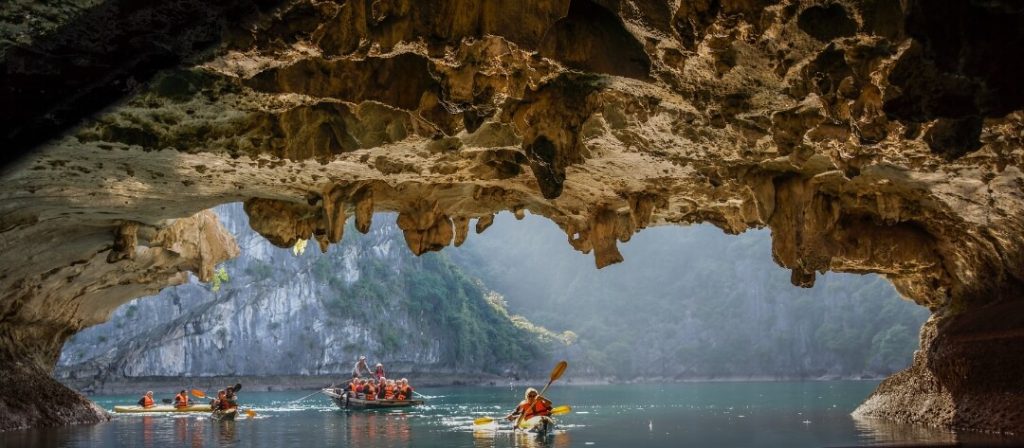
- Kayaking and stand-up paddleboarding in Lan Ha and Cat Ba: Calmer inlets and enclosed lagoons create suitable conditions for paddling, particularly in the morning. Visibility remains good, and routes often pass through fishing villages and narrow karst corridors.

Kayaking through Ha Long Bay’s emerald waters reveals hidden lagoons and towering limestone pillars up close.
- Diving in selected central and southern sites: Summer can work well for diving in parts of the south and specific central locations where currents remain manageable. Conditions vary significantly by site, making local operator advice essential before planning.
- Mountain escapes to cooler regions: Highland destinations such as Da Lat or northern uplands provide relief from coastal heat. Cooler air and forested terrain make hiking and cycling more comfortable, despite the season.

Seasonal considerations
- Monsoon rainfall in the north and central regions: Frequent afternoon showers and occasional heavy rain are common, affecting trail conditions and visibility.
- Challenging road conditions in mountainous areas: Sustained rainfall can make mountain passes slick and increase the risk of landslides, particularly on remote routes.
Practical tips
- Monitor local forecasts closely: Weather patterns can change quickly in summer, so daily checks help adjust plans before heading out.
- Choose flexible booking options for boat activities: Open dated or easily changeable reservations provide room to adapt when sea conditions or rainfall disrupt schedules.
Autumn (Sept–Nov) — Photography & Trekking Sweet Spot
As summer rains ease and temperatures begin to soften, autumn creates a narrow but highly rewarding window for outdoor activities in Vietnam, particularly in the north. Landscapes shift quickly during these months, offering strong visual contrast and more stable conditions for longer days outside.
Recommended activities
- Exploring northern rice terraces: Mu Cang Chai and Sapa reach peak visual impact as rice fields turn golden before harvest. Hillsides become layered with color, while walking routes remain accessible between villages and viewpoints.

- Cruising and kayaking in Ha Long and Lan Ha Bay: Certain autumn months bring calmer seas and improved visibility. With reduced haze and gentler light, limestone formations appear more defined, which suits both relaxed cruising and short paddling routes.
- Riding the Ha Giang loop: Late October through November introduces buckwheat flower blooms across high mountain plateaus. Combined with cooler air and clearer skies, road conditions often feel more manageable than in summer.
Why autumn stands out
- Lower temperatures in northern regions: Daytime conditions become noticeably cooler, reducing fatigue during trekking and long drives.
- Seasonal color at its peak: Harvest season transforms valleys and terraced slopes, creating depth and texture that are difficult to find at other times of year.
- Improved light and visibility: Clearer skies enhance long range views, making autumn especially favorable for landscape photography.
Practical tips
- Plan photography focused trips for late autumn: October and November are particularly strong months for capturing scenes in Ha Giang and Ninh Binh, when light, color, and weather align most consistently.
Winter (Dec–Jan) — Dry Beaches in The South & Northern Mountain Chill
Winter draws a clear contrast between regions, making destination choice especially important. While the south settles into its driest and most stable period, northern highlands experience colder air, shifting the focus toward different types of outdoor activities in Vietnam.
Recommended activities
- Beach time and diving in southern waters: Phu Quoc and Con Dao enter their prime season, with calm seas and strong underwater visibility. Nha Trang can also offer suitable conditions during certain periods, although site selection remains important due to local currents.

- High altitude trekking in Sapa: Cool temperatures create a distinct mountain atmosphere, with early mornings often revealing cloud layers drifting through valleys. Camping and multi day hikes feel more comfortable without summer heat, provided cold weather preparation is in place.
- Cave exploration where conditions allow: Select cave routes remain accessible during winter, particularly those less affected by seasonal water levels. Dry weather improves safety and ease of movement inside cave systems.

Vietnam’s extensive cave systems in Phong Nha reveal underground rivers, massive chambers, and stunning geological formations.
Practical tips
- Prepare for cold and reduced visibility in the north: Temperatures in mountainous areas can drop sharply, and fog is common, especially in the early hours. Warm layers and flexible schedules help manage changing conditions.
Safety, Weather Risks & Climate Change Considerations
Outdoor activities in Vietnam are closely shaped by seasonal weather patterns, and recent climate shifts have made some risks more pronounced. Understanding where and when these challenges occur allows travelers to plan responsibly and adjust expectations without compromising safety.
Key Weather Risks to Consider
- Central Vietnam is most vulnerable to typhoons between October and December. During this period, coastal storms can bring prolonged rain, strong winds, and flooding that disrupt road access, halt boat services, and temporarily close caves and heritage sites.
- In northern and mountainous regions, heavy rainfall can lead to flash floods and landslides, particularly along remote roads and trekking routes. These events may develop quickly, affecting access to villages and high altitude trails.
- Climate change has increased weather variability, with more intense rainfall occurring over shorter periods and less predictable transitions between wet and dry seasons.
Practical Actions to Reduce Risk
- Travel insurance that includes coverage for weather related delays, outdoor activities, and emergency evacuation is strongly recommended, especially for trekking, diving, and motorbike travel.
- Flexible bookings for transport, accommodation, and tours make it easier to adjust plans when storms or heavy rain affect schedules.
- Engaging a local guide is advisable for remote or mountainous routes, as on the ground knowledge helps identify safe alternatives and changing trail conditions.
- Regularly checking government travel advisories and local weather bulletins provides up to date information on storm movements, regional warnings, and infrastructure disruptions.
Practical Trip-Planning Checklist
Careful preparation plays a decisive role in shaping outdoor activities in Vietnam, particularly in a country where conditions vary widely by region and season. A well considered checklist helps reduce uncertainty and allows each activity to unfold more smoothly.
Seasonal packing essentials
- Lightweight layers suit most regions year-round, while warmer clothing becomes necessary for winter travel in northern and highland areas where temperatures drop quickly.
- Rain protection, such as a compact poncho or breathable rain jacket is essential during the wet season, especially for trekking and motorbike travel.
- Sun protectio,n including hats, sunscreen, and UV protective clothi,ng is important in all seasons, as cloud cover does not always reduce exposure.
- Waterproof bags or dry sacks help protect electronics and documents during boat trips, kayaking, and heavy rain.
Health and safety considerations
- Routine travel vaccinations should be reviewed well before departure, particularly for extended travel or time spent in rural areas.
- Insect repellent remains important throughout the year, with higher priority during warmer and wetter months when mosquitoes are more active.
- Regular hydration is essential in Vietnam’s humid climate, especially during summer activities or long days outdoors.
Booking and timing advice
- Trekking guides in northern Vietnam are best reserved in advance during spring and autumn, when weather conditions attract the highest demand.
- Boat trips, kayaking tours, and diving excursions fill quickly during peak dry seasons in coastal and island destinations, making early reservations advisable.
- Flexible scheduling remains valuable during monsoon periods, when weather may force last-minute changes.
Gear rental guidance
- Kayaks are most safely rented through licensed operators in places such as Lan Ha Bay, Cat Ba, and Phong Nha, where routes and safety standards are clearly managed.
- Motorbikes should be rented from established shops that provide helmets, maintenance records, and clear rental terms, particularly in mountain regions.
- Diving equipment is best sourced directly from certified dive centers, which maintain gear regularly and adjust plans based on sea conditions.
FAQs
- When is the best time to visit Vietnam for outdoor activities?
→ Spring (February – April) and autumn (September – November) offer the most balanced conditions for outdoor activities in Vietnam. Weather is generally milder, with lower humidity and better visibility. Southern Vietnam is best from December to April, while summer suits water activities and cooler highland destinations.
- Which season is best for trekking in Vietnam?
→ Autumn and spring are the most suitable for trekking. Cooler temperatures, clearer skies, and more stable trails make these seasons ideal, especially in northern regions such as Sapa and Ha Giang. Winter trekking is possible with preparation, while summer conditions can be challenging due to heat and rain.
- Is summer a good time for outdoor activities in Vietnam?
→ Summer works well for water-based activities and highland travel. Kayaking, island hopping, and diving are possible in selected areas, while mountains offer relief from heat. Monsoon rains require flexible planning and close attention to weather conditions.
- When is the rainy season in Vietnam?
→ Rainy season runs from May to October in the north and south, while central Vietnam receives heavier rain from September to December. Rainfall can affect trekking and boat trips, but activities remain possible with region-specific planning.
- Where are the best places for outdoor activities in autumn?
→ Northern destinations such as Mu Cang Chai, Sapa, Ha Giang, and Ninh Binh stand out in autumn. Cooler weather, harvest season landscapes, and clearer skies support trekking and photography. Some periods also suit cruising in Ha Long and Lan Ha Bay.
- Is winter a good time for beach travel in Vietnam?
→ Winter is the best season for beaches in southern Vietnam. Phu Quoc and Con Dao enjoy dry weather and calm seas, supporting swimming, snorkeling, and diving. Northern and central beaches are less reliable during this period.
- Are typhoons common in Vietnam?
→ Typhoons mainly affect central Vietnam between October and December. These storms can disrupt coastal travel, boat trips, and outdoor activities. Flexible scheduling and monitoring forecasts are important during this season.
- What should be packed for outdoor activities in Vietnam?
→ Lightweight layers work year-round, with warmer clothing needed for northern winters. Rain gear is essential during wet months, while sun protection and insect repellent are necessary in all seasons. Waterproof bags are useful for water activities.
- Should outdoor activities be booked in advance?
→ Advance booking is recommended during spring and autumn, especially for trekking guides and boat tours. Peak demand and limited availability can affect plans. Off-season travel allows more flexibility but still depends on weather conditions.
- How does climate change affect outdoor travel in Vietnam?
→ Climate change has increased weather variability, with heavier rain and less predictable seasons. Checking forecasts, using local expertise, and keeping plans flexible are increasingly important for safe outdoor activities in Vietnam.
Final Words
Seasonal awareness plays a defining role in shaping outdoor experiences, especially when it comes to outdoor activities in Vietnam. The country’s varied terrain and shifting climate patterns along its S shaped stretch mean that the same activity can feel entirely different depending on timing and location. By breaking down regional weather and seasonal opportunities, this guide is designed to help travelers plan with clarity, reduce uncertainty, and approach each adventure with realistic expectations.
For those seeking journeys that move in step with Vietnam’s natural cycles, Asia Pioneer Travel offers expert support grounded in local insight. Contact us now to customize a journey that aligns perfectly with the season, location, and outdoor experiences you have in mind.