

The Hue tombs are among the most remarkable historical landmarks in central Vietnam, reflecting the power, artistry, and philosophy of the Nguyen Dynasty. Located along the poetic banks of the Perfume River, these royal mausoleums were built as eternal resting places for emperors and are masterpieces of traditional architecture and landscape design.
In this guide to Hue tomb attractions, we will explore the most famous imperial tombs, including the majestic Tomb of Khai Dinh, the harmonious Tomb of Minh Mang, and the romantic Tomb of Tu Duc. The article also covers historical background, architectural highlights, ticket information, and practical travel tips to help you plan your visit to Hue’s royal heritage sites.
Overview of the Sacred Geography of Hue’s Tombs
Understanding the Nguyen Dynasty (1802-1945)
The Nguyen Dynasty, Vietnam’s last royal lineage, ruled from 1802 to 1945 and established Hue as their imperial capital, transforming this central Vietnamese city into the political, cultural, and spiritual heart of the nation.
When Emperor Gia Long unified Vietnam in 1802, he initiated a tradition where each emperor would personally oversee the construction of their own mausoleum during their lifetime—a practice that distinguished the Nguyen rulers from many other royal dynasties. These massive construction projects sometimes lasted decades and employed thousands of workers, serving dual purposes as both pleasure palaces during the emperor’s life and eternal resting places after death.
The architectural evolution of these tombs reflects the dynasty’s journey through time, beginning with traditional Vietnamese and Chinese imperial design principles in early tombs like Gia Long’s and Minh Mang’s, progressing through the peak of Vietnamese aesthetics in Tu Duc’s romantic landscape design, and culminating in the dramatic French colonial influences visible in Khai Dinh’s fusion masterpiece. This blend of Vietnamese, Chinese, and French architectural elements creates a unique cultural hybrid found nowhere else in the world, documenting over a century of political change, cultural exchange, and artistic innovation.
Understanding Tomb Symbolism
Understanding the symbolic language embedded in every aspect of the Hue tombs transforms a simple visit into a profound cultural experience, as each element carries meaning rooted in Vietnamese cosmology, Confucian philosophy, and feng shui principles.
The careful selection of tomb locations followed strict geomantic requirements, with the ideal site featuring mountains behind for protection and solid backing. Water in front represents prosperity and life force, and protective hills on either side like armrests on a throne—the Perfume River playing a crucial role as the continuous flow of cosmic energy.
The decorative elements throughout the tombs form a rich symbolic vocabulary where dragons represent imperial power and the connection between heaven and earth, stone turtles carrying massive inscribed tablets symbolize longevity and stability, and lotus flowers blooming pure from muddy waters represent spiritual enlightenment and moral purity.
The spatial organization of each tomb follows a hierarchical progression from public ceremonial courtyards at the front through personal living quarters in the middle sections to the sacred burial chambers at the innermost areas, mirroring both the structure of the imperial palace and the spiritual journey from earthly power to ancestral veneration. This deliberate use of specific numbers also carries profound meaning—three bridges representing heaven, earth, and humanity; five steps symbolizing the five Confucian virtues; nine levels on burial mounds representing the nine levels of heaven.
Why the Tombs Matter
The Hue Imperial Tombs matter far beyond their function as burial sites because each tomb serves as an intensely personal expression of the individual emperor’s character, philosophical beliefs, and response to the historical challenges of their reign.
Minh Mang’s tomb, with its perfect symmetry and formal grandeur, reflects his conservative Confucian values and strong administrative control, while Tu Duc’s romantic, irregular layout reveals his artistic temperament and melancholic nature as a poet-emperor trapped by duty and historical forces. And Khai Dinh’s eclectic fusion style demonstrates his controversial embrace of modernization and Western influences despite criticism from traditionalists.
These monuments represent masterpieces of landscape architecture where designers worked with natural topography, water features, and vegetation to create harmonious compositions rather than imposing geometric structures onto the land—reflecting the Vietnamese aesthetic principle of integrating human creations with nature rather than dominating it.
In 1993, UNESCO recognized the Complex of Hue Monuments as a World Heritage Site. This prestigious title acknowledged the outstanding universal value of the royal tombs and citadels, and also brought international support for their preservation. However, this recognition came with significant responsibility. Authorities must now carefully balance tourism development with conservation needs and maintaining the site’s historical authenticity is a constant challenge. These ongoing efforts ensure the monuments will survive for future generations. Thanks to this work, visitors can experience a profound intersection of art, philosophy, nature, and history. This unique combination is what makes the Hue tombs truly irreplaceable windows into Vietnam’s royal past.

The Must – Visit Tomb in Hue Tomb
Tomb of Minh Mang (1840-1843): The Perfect Symmetry
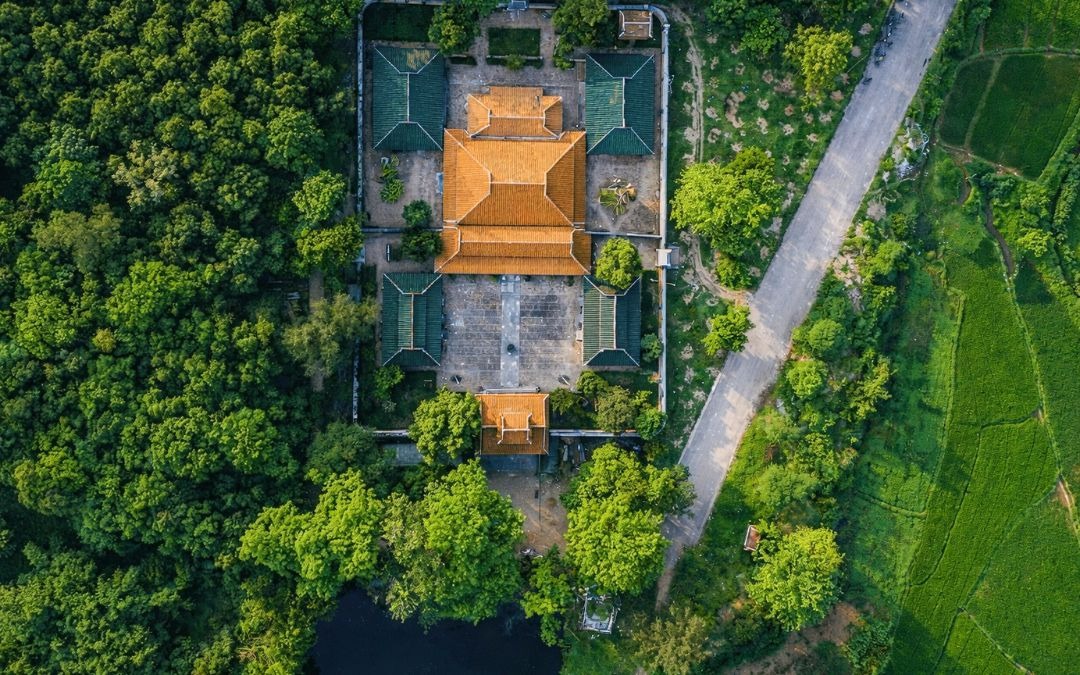
Located on Cam Ke Hill approximately 12 kilometers from Hue city center, the Tomb of Minh Mang stands as the grandest and most formally designed of all the royal mausoleums, representing the pinnacle of classical Confucian architecture in Vietnam. Construction began in 1840 under the emperor’s direct supervision, but when Minh Mang passed away in 1841 before its completion, his successor Emperor Thieu Tri faithfully continued the work according to the original designs, finally finishing the complex in 1843.
The tomb’s location near the confluence of the Perfume River was carefully chosen according to feng shui principles, with mountains providing protection behind while the river flows gracefully in front to carry cosmic energy. The entire complex features approximately 40 structures—including palaces, temples, and pavilions—all arranged symmetrically along a single 700-meter sacred axis known as Than Dao, creating a profound sense of cosmic order and imperial authority.
Visitors first cross a three-arched bridge to enter the Honour Courtyard, where rows of stone elephants, horses, and mandarins stand in silent guard, before proceeding to the Stele Pavilion housing a massive stone tablet inscribed with the emperor’s biography written by his own son. Beyond lies the Sung An Temple for worship, and finally the circular burial mound surrounded by a tranquil artificial lake, where the emperor’s body rests in eternal peace.
The sheer scale and perfect balance of Minh Mang’s tomb reflect his conservative Confucian values and strong administrative control during his 21-year reign, making it an essential visit for those who appreciate architectural harmony and historical grandeur. The entrance fee for the Tomb of Minh Mang is approximately 150,000 VND per person, which is around $6 USD.
Tomb of Tu Duc (1864-1867): The Poet Emperor’s Retreat
Situated in Thuy Xuan Ward just 5 kilometers from Hue city center amidst a valley of pine trees and tranquil hills, the Tomb of Tu Duc offers a completely different experience that feels more like a poetic retreat than a royal mausoleum.
Emperor Tu Duc, who reigned from 1848 to 1883, was a philosopher-king with an artistic soul who loved literature and poetry far more than the burdens of ruling a kingdom facing increasing French colonial pressure. He began constructing this tomb between 1864 and 1867, intending it to serve as a pleasure palace where he could escape court formalities and indulge his creative passions during his lifetime, before becoming his eternal resting place afterward.
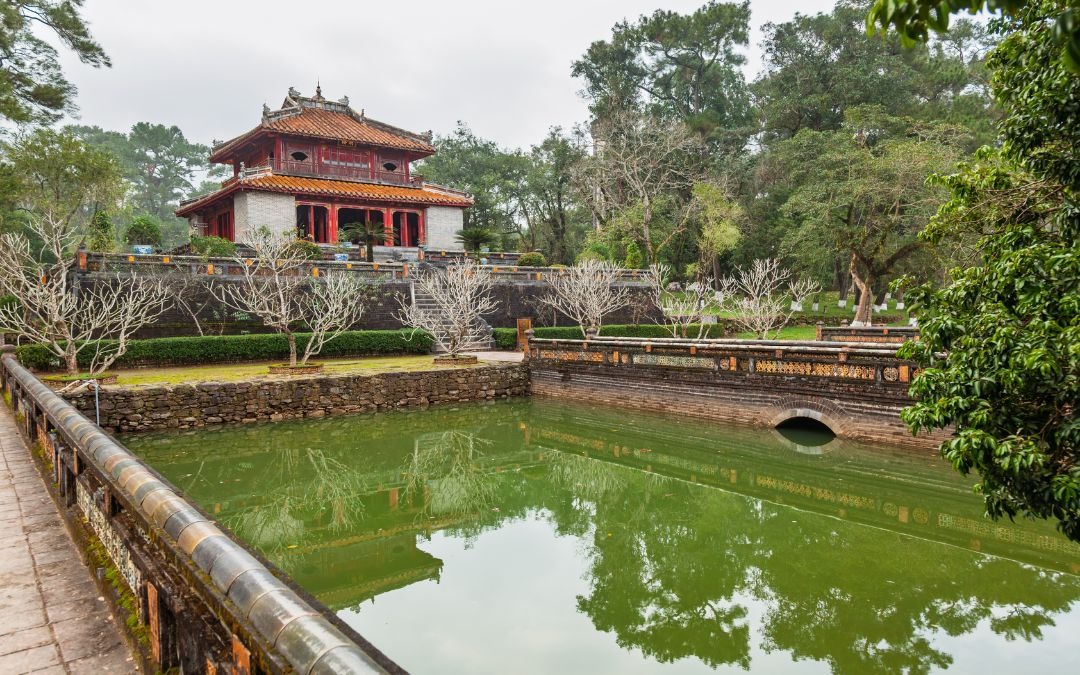
The complex is said to have employed thousands of laborers and soldiers, a fact that later sparked controversy and even a rebellion against his rule. Unlike the rigid symmetry of Minh Mang’s tomb, Tu Duc’s layout is irregular and romantic, designed to harmonize with the natural landscape rather than dominate it. The centerpiece is a large, lotus-filled lake called Luu Khiem Lake, where the emperor would compose poetry aboard small boats or hunt small game from an island pavilion.
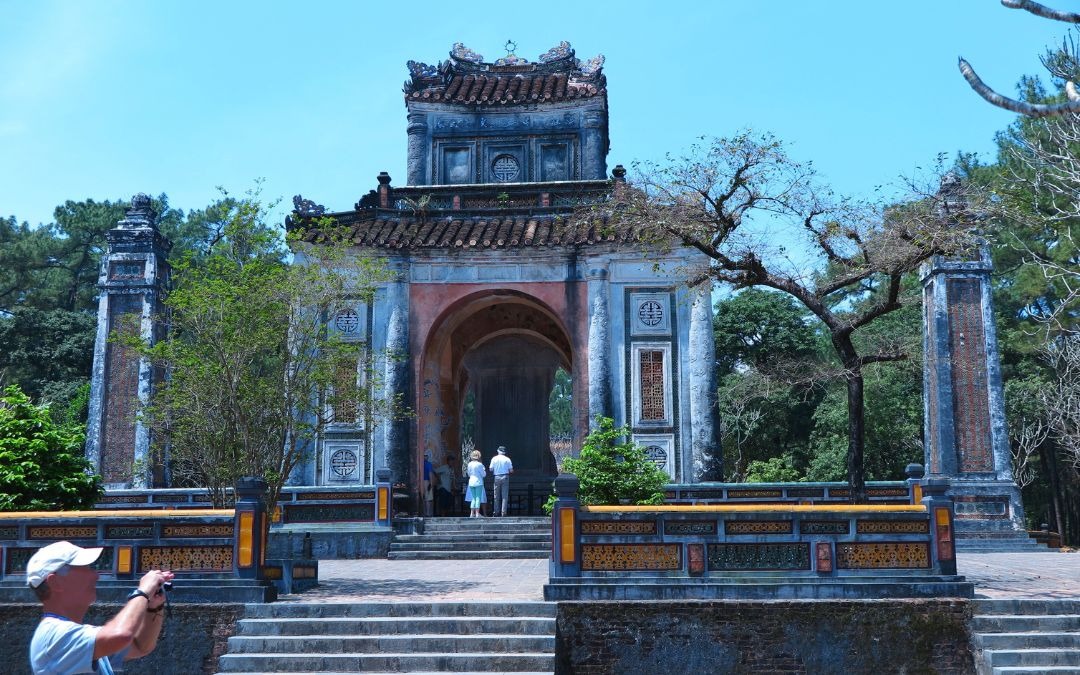
Surrounding the lake are numerous buildings, including a miniature wooden opera house where he could watch performances, and the Hoa Khiem Temple, which was used as a palace during his life and later converted for worship after his death. The most striking feature is the magnificent Stele Pavilion, housing an enormous stone tablet weighing approximately 20 tons upon which Tu Duc composed his own epitaph—a rare and remarkably honest reflection on his reign, including his perceived failures and regrets as a ruler.
Wandering through this sprawling, atmospheric complex with its shady paths, tranquil waters, and poetic inscriptions, visitors can truly feel the melancholic soul of the emperor who once said he wished he could have been born a simple poet rather than a king. The entrance fee for the Tomb of Tu Duc is approximately 150,000 VND per person, which is around $6 USD.
Tomb of Khai Dinh (1920-1931): The Fusion Masterpiece
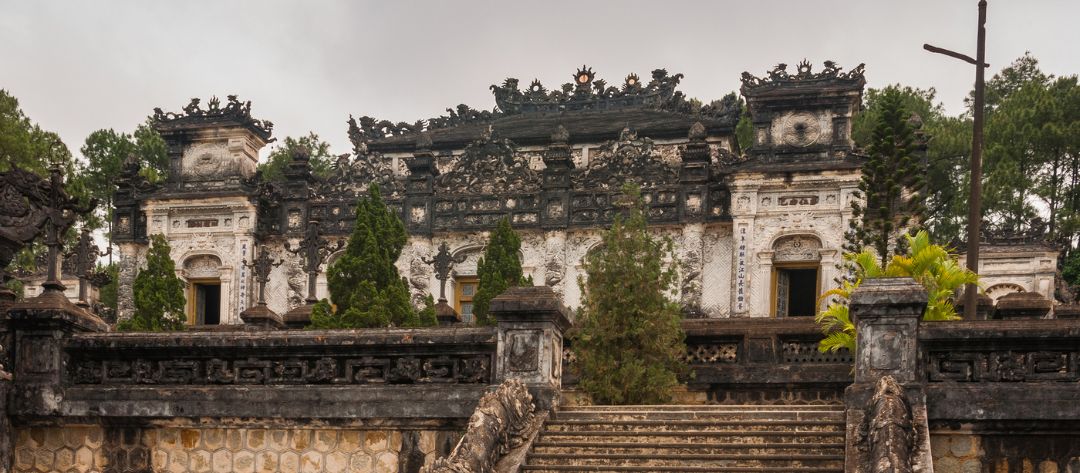
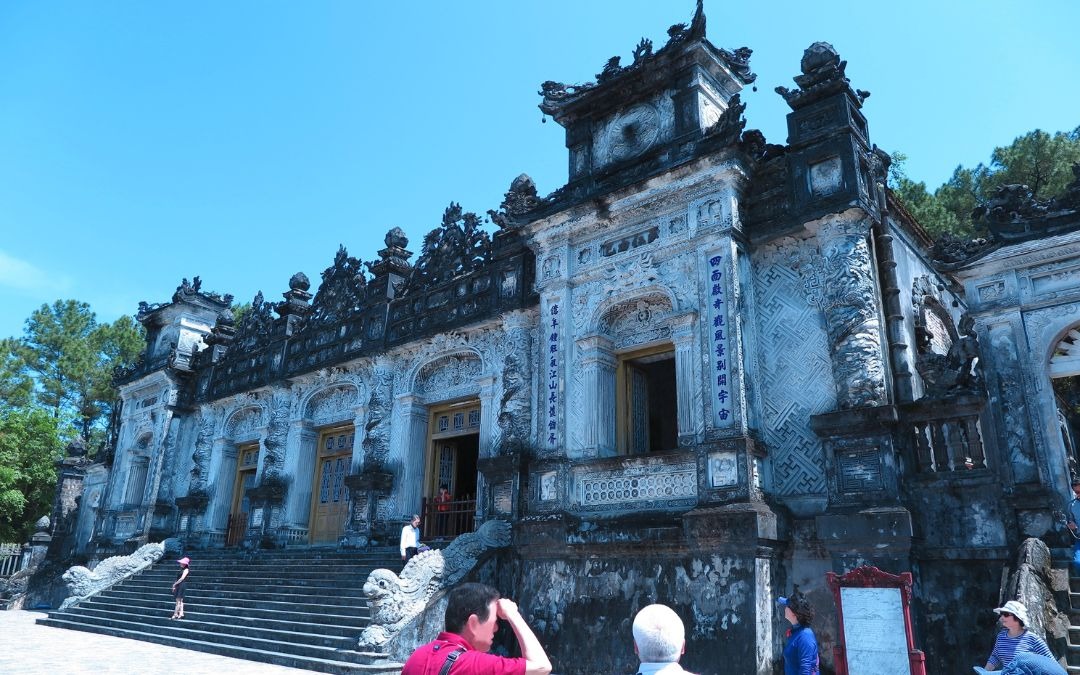
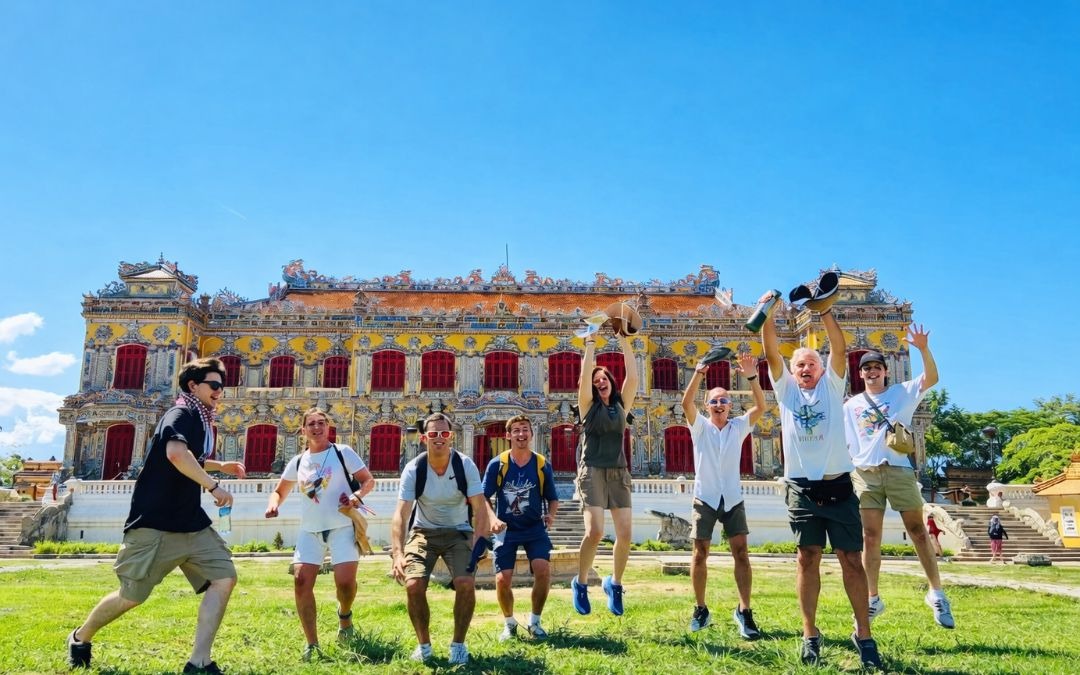
Perched dramatically on the slopes of Chau Chu Mountain approximately 10 kilometers from Hue, the Tomb of Khai Dinh stands in stark contrast to all previous royal mausoleums, representing a bold and controversial fusion of Vietnamese, French, Gothic, and Baroque architectural elements.
Emperor Khai Dinh, who reigned from 1916 to 1925, was a controversial figure who collaborated closely with the French colonial authorities, making him unpopular among Vietnamese nationalists but also exposing him to Western artistic influences that would shape his extraordinary tomb. Construction took 11 years, from 1920 to 1931, making it the longest-built and most expensive tomb of the dynasty, yet also the smallest in terms of ground area.
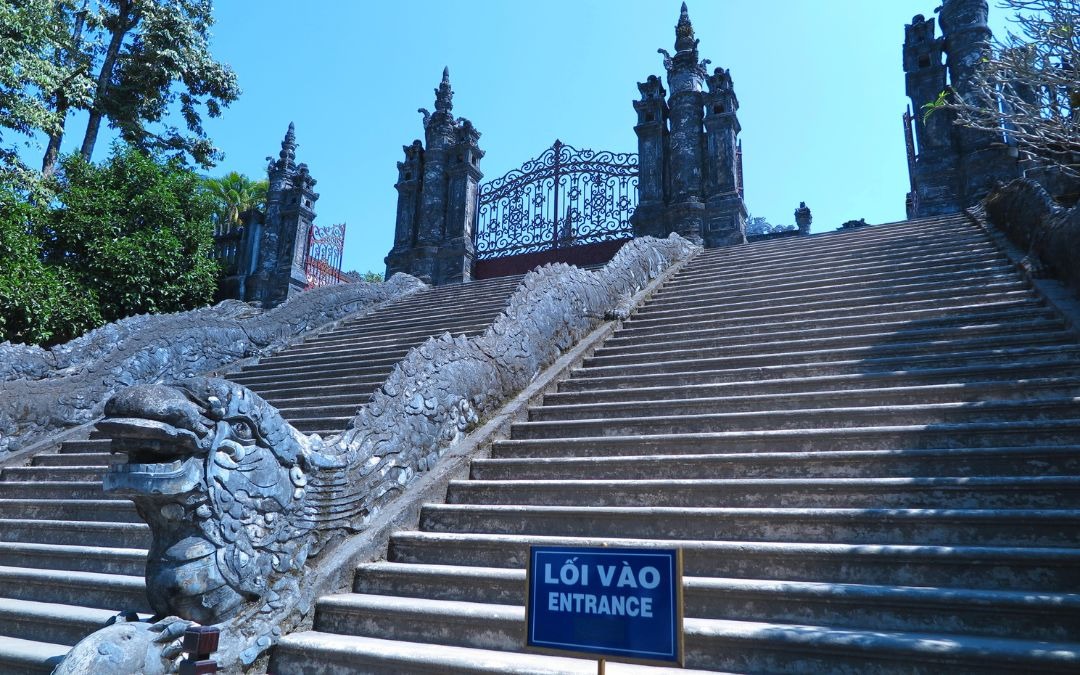
Unlike the traditional tombs that harmonize with the landscape, Khai Dinh’s mausoleum is a dark, imposing concrete structure that seems to challenge the mountain itself, reached by a steep staircase of 37 steps flanked by dragons and stone guardians. The exterior appears severe and gothic, but the interior reveals an explosion of artistic creativity that leaves visitors breathless.
The walls and ceilings of the main palace are completely covered in intricate mosaic murals made from shattered glass and porcelain ceramic tiles—a technique that required immense labor and skill, as each tiny piece was carefully arranged to create stunning scenes of dragons, clouds, and daily life.
The centerpiece is the emperor’s bronze gilt statue seated beneath an elaborate concrete canopy painted to resemble a cloudy sky, while the ceiling above bursts with a magnificent mural of nine dragons emerging from swirling clouds. Despite his unpopular reign, Khai Dinh spared no expense in creating this unique architectural masterpiece that captures the cultural crossroads of early 20th-century Vietnam.
The steep climb to the top is physically demanding, especially under the hot sun, but the breathtaking artistry of the throne room makes every step worthwhile, offering a fascinating glimpse into an emperor caught between tradition and modernity. The entrance fee for the Tomb of Khai Dinh is approximately 150,000 VND per person, which is around $6 USD.
Other Notable Tombs
Beyond the “Big Three,” several other tombs are worth exploring if you have extra time. The Tomb of Gia Long is the most remote and least visited, offering a wild, natural setting as the final resting place of the dynasty’s founder; it is best visited by boat or as part of a longer motorbike tour. The Tomb of Dong Khanh is smaller and more intimate, showcasing the transition between traditional styles and the modern influences seen in Khai Dinh’s tomb. Finally, the Tomb of Thieu Tri is known for its simple elegance and symmetrical design, and because it is often overlooked by tourists, it offers a peaceful and quiet visit.
Practical tips when visiting Hue Tomb
Transportation
Getting to the tombs, which are scattered across the countryside surrounding Hue, requires some planning. Each transportation option offers different advantages depending on your budget, time, and travel style.
Motorbike or Scooter: most popular choice for independent travelers and backpackers seeking flexibility and adventure, with rental costs around 100,000 to 150,000 VND per day (approximately $4 to $6 USD) plus a small amount for fuel. Most hotels and rental shops in Hue offer scooters, though some require a valid international driver’s license.
Private Car with Driver: most comfortable and stress-free option, especially for families, groups, or anyone who prefers air conditioning during Hue’s intense midday heat. Renting a private car for a half-day (4 hours) costs around 800,000 to 1,000,000 VND ($35 to $45 USD), while a full-day (8 hours) ranges from 1,200,000 to 1,500,000 VND ($50 to $65 USD), depending on vehicle type and itinerary.
Boat Tour: offers a unique and scenic approach to visiting the tombs, allowing you to experience the Perfume River just as the Nguyen emperors once did. For approximately 500,000 to 800,000 VND ($20 to $35 USD) for a private boat, you can spend a leisurely day on the water, typically visiting riverside tombs like Minh Mang and sometimes Tu Duc, depending on water levels. However, this option is slower than road transport and usually only covers tombs accessible from the river.
Cyclo or Taxi: suitable option for visiting individual tombs closer to the city center, particularly Tu Duc which is only 5 kilometers away. A taxi for a short trip costs around 50,000 to 80,000 VND ($2 to $3.50 USD) each way, while hiring a cyclo for a few hours might cost 150,000 to 200,000 VND ($6 to $9 USD).
Tickets & Opening Hours
- Opening Hours: All royal tombs are generally open daily from 7:00 AM to 5:30 PM, including weekends and public holidays. It is advisable to arrive early in the morning or late in the afternoon to avoid the peak crowds and the intense midday heat.
- Single Tickets: Each tomb charges an entrance fee of approximately 150,000 VND per person (around $6 USD). This applies to the three major tombs—Minh Mang, Tu Duc, and Khai Dinh—as well as most other royal mausoleums.
- Combination Tickets: For better value, consider purchasing a combination ticket that grants access to multiple monuments. The most common option is the Citadel and Tombs combo, which costs around 360,000 to 500,000 VND ($15 to $20 USD) and covers the Imperial City plus two or three tombs. These tickets can be purchased at the entrance of any major site or through travel agencies and hotels in Hue.
- Payment Methods: Entrance fees are typically paid in cash (Vietnamese Dong), though some major sites now accept credit cards. It is wise to carry sufficient cash with you, especially when visiting more remote tombs where card payment may not be available.
- Guided Tours: Official guides are available for hire at each tomb, with prices ranging from 150,000 to 300,000 VND per hour depending on language and group size. Alternatively, you can book a guided tour through your hotel or a travel agency, which often includes transportation, entrance fees, and a guide in one package price. Audio guides are also available at some sites for a small fee.
Suggested Itineraries When Visiting Hue Tomb
One-Day Highlight Tour
Morning: Start your day early at the Tomb of Tu Duc, located just 5 kilometers from the city center. Arriving at 8:00 AM allows you to experience this poetic complex in the soft morning light before the crowds arrive. Take your time wandering the shady paths, exploring the miniature opera house where the emperor once enjoyed performances, and reading the introspective epitaph the poet-king wrote for himself.
Lunch: After finishing at Tu Duc, head to the nearby Thuy Bieu Village, a charming rural community famous for its specialty dishes and tranquil garden houses. This area is renowned for its pomelos, and many local restaurants serve delicious meals featuring this local fruit in salads, desserts, and even savory dishes.
Afternoon: With the hottest part of the day approaching, make your way to the Tomb of Khai Dinh, approximately 10 kilometers from the city center. While the steep climb up 37 steps to reach the main structure might seem daunting in the afternoon heat, the payoff is well worth the effort. The interior of this fusion masterpiece is an explosion of color and detail, with walls and ceilings covered in intricate mosaic murals made from shattered glass and ceramic tiles. The dramatic contrast between the severe Gothic exterior and the lavish Baroque interior perfectly illustrates Khai Dinh’s controversial embrace of Western culture and makes this tomb an unforgettable highlight.
Late Afternoon: If you still have energy, make the short journey to the Tomb of Minh Mang, which remains open until 5:30 PM. This is the grandest and most formal of the tombs, with 40 structures arranged along a single sacred axis. The sense of cosmic order and imperial authority is palpable as you walk through the Honour Courtyard lined with stone elephants and mandarins, cross the three-arched bridge, and approach the circular burial mound where the emperor rests.
Two-Day Comprehensive Exploration
Day 1: The Riverside Classics
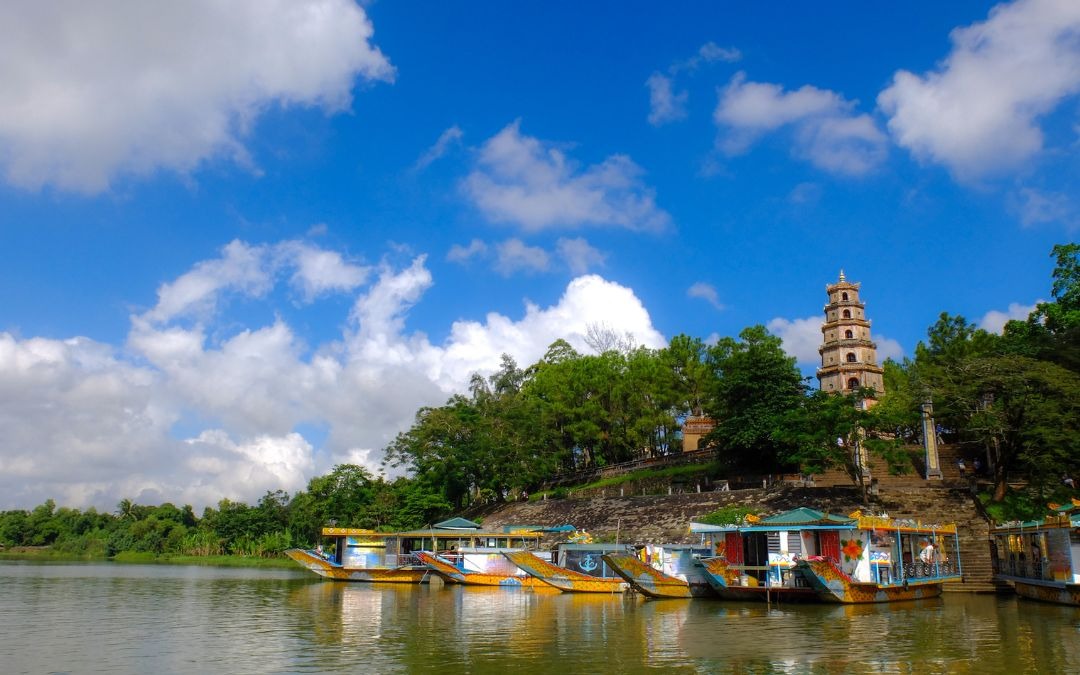
Begin your first day with the Tomb of Tu Duc in the morning, allowing plenty of time to absorb its romantic, poetic atmosphere. After lunch, continue to the Tomb of Minh Mang, where you can appreciate the perfect symmetry and formal grandeur that defines classical Confucian architecture. On your way back toward the city, make a stop at the iconic Thien Mu Pagoda, perched gracefully on the banks of the Perfume River. This seven-story pagoda is the unofficial symbol of Hue and offers beautiful river views, particularly lovely in the late afternoon light.
Day 2: Architectural Evolution and Remote Exploration
Your second day focuses on the architectural evolution of the dynasty, from transitional styles to the remote natural setting of the founder’s tomb. Start at the Tomb of Khai Dinh in the morning, when the light is best for appreciating the intricate mosaic details inside.
Next, visit the nearby Tomb of Dong Khanh, a smaller and more intimate site that shows the transition between traditional Vietnamese design and the modern influences that would fully blossom in Khai Dinh’s tomb. For the adventurous, continue to the most remote of all royal mausoleums—the Tomb of Gia Long, founder of the Nguyen Dynasty. This tomb offers a wild, natural setting far from the tourist crowds, providing a profound sense of connection to the dynasty’s origins.
Best Time to Visit
The optimal time to explore the Hue Imperial Tombs is during the dry season from February to April, when pleasant temperatures of 20-28°C (68-82°F) and minimal rainfall create ideal conditions for extensive walking through these historical complexes.
Spring offers blooming flowers, clear skies for photography, and lush landscapes from winter rains, though it coincides with peak tourist season and higher prices. For those seeking fewer crowds, the shoulder season of September to early October provides a good alternative with warm temperatures and occasional brief showers that create dramatic atmospheric effects.
Otherwhile, the rainy season from October to December brings heavy monsoons and possible flooding despite incredibly lush scenery and rock-bottom prices. Summer months from May to August should be avoided due to extreme heat exceeding 35°C (95°F) and oppressive humidity that makes outdoor exploration exhausting.
Regardless of season, timing your visits is crucial: early morning from 7:00 – 9:00 AM offers the best experience with soft golden light perfect for photography, cooler temperatures, morning mist rising from lotus ponds, and minimal crowds, while late afternoon from 3:00-5:00 PM provides beautiful warm lighting and comfortable temperatures but with more tour groups present.
For photographers, these golden hours are essential for capturing reflection pools at Minh Mang, intricate mosaic details at Khai Dinh, and the poetic settings at Tu Duc, so bring wide-angle lenses for architecture, macro capabilities for decorative details, and consider a tripod for interior shots where lighting can be challenging.
Cultural Insights & Etiquette in Hue Tomb
- Dress Code: Appropriate attire includes shirts covering shoulders, pants or skirts extending to the knee, and comfortable walking shoes for the extensive grounds. Tank tops, short shorts, and beachwear should be avoided as they are considered inappropriate for these sacred spaces.
- Behavior: The tombs are places of reverence where Vietnamese people come to honor their ancestors and history, so maintaining a quiet and respectful demeanor is essential. Speak softly, stay on designated paths, and supervise children to ensure they understand the significance of these sites. Loud conversations, running, or boisterous behavior disturbs both the peaceful atmosphere and other visitors trying to absorb the experience.
- Photography: While photography is generally permitted throughout the tomb complexes, certain restrictions must be observed to protect both the artifacts and the spiritual atmosphere. Always heed posted “no photography” signs, particularly inside temple buildings where spirit tablets are kept and in the most sacred interior chambers. Using flash is also discouraged as it can damage delicate artifacts and disturb other visitors.
- Offerings: Throughout the tombs, you will encounter offerings such as incense, flowers, fruit, and other items placed by visitors honoring the deceased emperors. These offerings are sacred and should never be touched, moved, or disturbed under any circumstances. Similarly, do not touch spirit tablets, altars, or religious objects inside temple buildings, as handling these items is considered deeply disrespectful to Vietnamese spiritual traditions.
FAQs
Which is the best tomb in Hue?
Tomb of Khai Dinh is generally considered to be the best. It stands out for its unique blend of Vietnamese and European architectural styles. Unlike other tombs, it features elaborate mosaics made from glass and porcelain, along with richly decorated interiors.
How to see the tombs in Hue?
The best way to visit them is by renting a motorbike, getting a taxi, or hiring a private car. A private tour is preferred because it offers comfortable transportation and flexible timing.
What not to miss in Hue, Vietnam?
When visiting Hue, the must-see attraction is the Imperial City of Hue.
Beyond the royal tombs, travelers should cruise the Perfume River and visit the iconic Thien Mu Pagoda. Hue is also famous for its cuisine, including Bún bò Huế.
Final Words
The Hue tomb complex stands as a testament to Vietnam’s rich cultural heritage, offering visitors a rare opportunity to step back in time and connect with the souls of a dynasty that navigated tradition, change, and colonial influence. Whether you marveled at the intricate mosaics of Khai Dinh, wandered the romantic grounds of Tu Duc, or stood in awe before the symmetrical grandeur of Minh Mang, you have touched something timeless and deeply Vietnamese.
Ready to explore Vietnam’s royal legacy? Let Asia Pioneer Travel transform your fascination into an unforgettable experience. Our expertly crafted tours take you beyond the guidebooks, providing deep historical insights, seamless transportation, and knowledgeable local guides who bring the stories of the Nguyen emperors to life. Whether you prefer a private tour tailored to your interests or a small group experience with fellow history enthusiasts, we have the perfect itinerary waiting for you. Contact Asia Pioneer Travel today to start planning your Hue tomb adventure—where history, culture, and breathtaking beauty await around every corner.