

Vietnam is home to thousands of open-air markets, which operate on personal interaction rather than fixed pricing, so haggling naturally becomes part of the travel experience. In this guide on how to haggle in Vietnam, you’ll also discover the most common tourist mistakes, the markets where you can confidently practice your skills, and easy Vietnamese phrases that help you connect with vendors.
Understanding Haggling in Vietnamese Culture
To truly haggle like a local in Vietnam, it helps to first understand why bargaining exists, how it works, and the cultural mindset behind it.
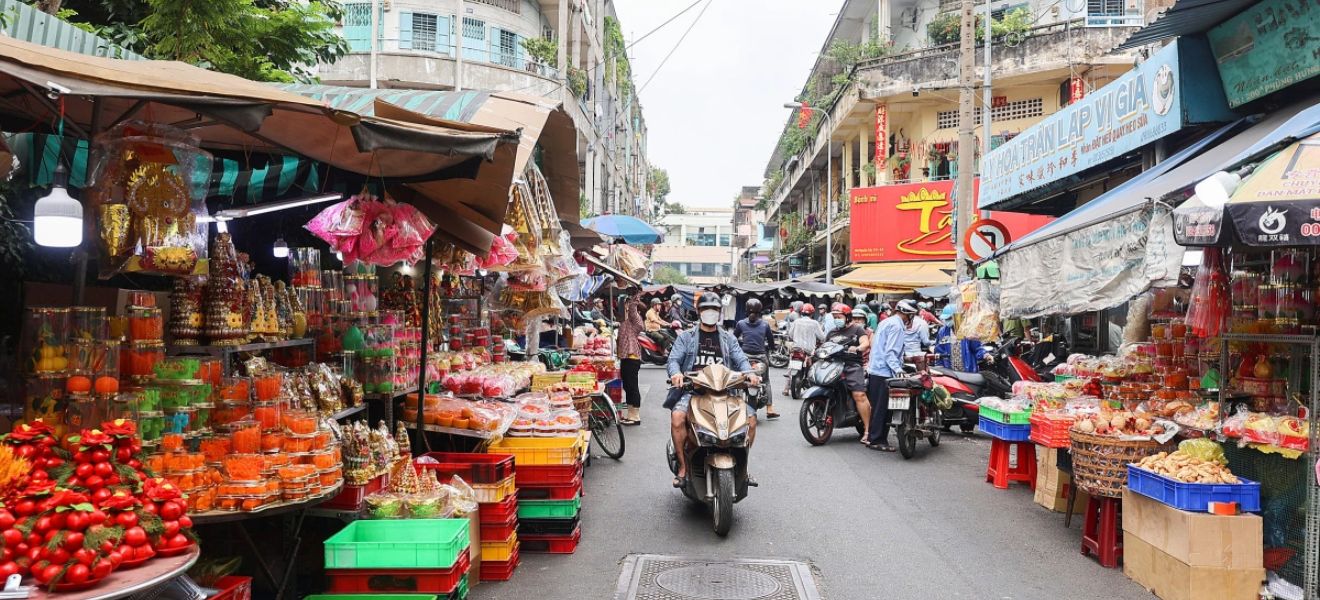
Haggling has deep roots in Vietnam because the country has always relied on open-air markets where prices aren’t fixed and personal interaction shapes every transaction. For generations, these markets have worked on flexible pricing, allowing buyers and sellers to adjust costs based on demand, quality, and even the mood of the moment. That’s why bargaining still feels natural today, especially in places where daily life is built on relationships rather than rigid rules.
More importantly, bargaining in Vietnam is seen as a conversation, not a confrontation. Locals treat it almost like a social exchange — a quick back-and-forth that blends curiosity, humor, and gentle negotiation. Vendors expect a bit of playfulness, and many enjoy the interaction just as much as the sale. When you understand how to haggle in Vietnam, it becomes easier to relax and lean into the rhythm of the market.
Knowing where bargaining is appropriate matters just as much. The golden rule of how to haggle in Vietnam: if there’s a barcode or a printed price tag, the cost is usually non-negotiable.
- It’s common at street markets, souvenir stalls, night markets, craft shops, and tailor stores where the price is flexible and competition is high. However, haggling isn’t used everywhere.
- Restaurants, cafes, malls, supermarkets, convenience stores, and branded boutiques operate with fixed pricing, so attempting to bargain there can feel disrespectful or confusing to staff.
Above all, when learning how to haggle in Vietnam, the tone you bring into the negotiation shapes the entire experience. Respect, patience, and a little humor go a long way in Vietnam. A warm smile or a light joke can soften the conversation faster than any number you offer. In the end, haggling is about connection, not combat, and the more you embrace that spirit, the more natural and enjoyable the experience becomes.
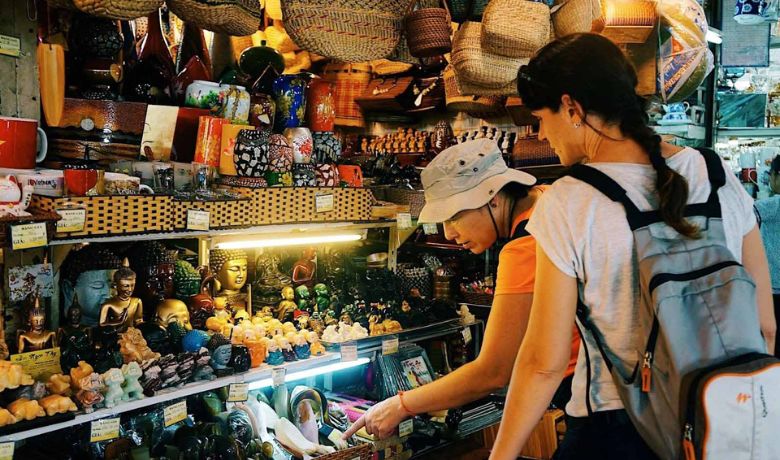
Travelers browsing colorful handcrafted souvenirs and traditional Vietnamese artisan products.
How to Haggle — Step-by-Step Guide
If you’re learning how to haggle in Vietnam, this simple step-by-step guide will show you exactly how locals negotiate with ease and how you can do it confidently too.
- Start with a smile as friendliness sets the tone
The first secret of how to haggle in Vietnam is that it always begins with a genuine smile. It may seem simple, but this small gesture immediately makes the interaction warmer and less transactional. Vietnamese markets run on personal connections, so approaching a vendor with friendliness shows respect and sets the stage for a smoother negotiation and of course, better prices.
- Ask for the price first, never show too much interest early
Once you’ve broken the ice, ask for the price before making any comments about how much you like the item. This is important because showing too much enthusiasm early can make the seller think you’re willing to pay more. Simply point to the item and say, “How much?” then listen and take a moment to think.
Asking for the price first also helps you gauge how flexible the vendor might be, since most will quote a higher amount to foreign visitors. So, always remember to stay neutral, stay curious, and gather information before offering your number.
- Offer around half the asking price, then meet in the middle
Once you know the starting price, here’s how to haggle in Vietnam with your opening counter-offer: A common strategy is to offer about half of what the vendor first suggests. This isn’t meant to be aggressive, it’s simply how the game works in many tourist-heavy markets. From there:
– Expect the seller to counter.
– Move slowly upward.
– Aim to settle somewhere in the middle.
This back-and-forth is normal, and vendors are used to it. Most fair deals land between 50%–70% of the original quote, depending on the item and the location.
- Use body language, stay calm, laugh a little, avoid frustration
One often-overlooked aspect of how to haggle in Vietnam is nonverbal communication. Vendors can sense when a buyer becomes stressed or impatient, and that tension rarely helps. Instead, keep your tone easy and your posture relaxed. Laugh a little. Shake your head gently if the price is too high. Show with your movement, not just your words, that you’re open but not desperate. A calm, playful attitude usually works better than firm or forceful language.
- Walk away gracefully. Often, the vendor calls you back
One powerful technique in how to haggle in Vietnam is: if the negotiation feels stuck, simply thank the vendor and walk away politely. This isn’t rude, it’s part of the bargaining rhythm. Very often, the seller will call you back with a better offer. And if they don’t, that’s okay. You’ve indicated your limit without pressure or frustration. A graceful exit is often the final move that gets you the price you want.
- Have small bills ready helping close the deal smoothly
Once you’ve agreed on a price, having exact or small change makes everything easier. Vendors may not always have the right bills to return change, especially in busy markets. Paying the agreed amount immediately keeps the mood positive and avoids any awkwardness. Carrying small denominations is one of the simplest ways to finish a negotiation well.
- Know when to stop as a fair price is a good price
The final step is knowing when to end the process. If the price feels fair and the vendor has shown good will, there’s no need to push further. Bargaining too hard can sour the interaction and make the seller uncomfortable. Remember, a small difference in cost might mean much more to them than to you. A respectful finish leaves both sides satisfied, and that’s the real sign of a successful haggle.
**Pro Tip: Vietnamese vendors appreciate humor. A light laugh or polite joke can make negotiation smoother than hard numbers ever could.

Travelers sampling fresh tropical fruits and engaging warmly with local vendors at a vibrant Vietnamese market.
Common Mistakes Tourists Make
Many travelers jump into bargaining with good intentions but end up making avoidable mistakes that turn a simple negotiation into an uncomfortable moment. Understanding these common pitfalls will help you navigate Vietnamese markets with confidence, respect, and much better results.
- Arguing too hard or showing frustration
One frequent issue is pushing the conversation too intensely. When a traveler argues or shows visible frustration, the mood changes immediately. Markets in Vietnam rely on easygoing, friendly exchanges, so keeping your tone calm matters. Vendors respond far better to patience and warmth than pressure, and letting irritation slip in often ends the negotiation before it even begins.
- Treating haggling like a battle
Another problem comes from treating the entire process like a competition. Bargaining here isn’t about “winning” or proving you can outsmart someone. When you approach it as a fight, vendors naturally pull back. Instead, think of the negotiation as a gentle back-and-forth. A relaxed, cooperative attitude almost always leads to a better price than a confrontational one.
- Bargaining in fixed-price shops or high-end boutiques
Some travelers also make the mistake of trying to bargain where bargaining isn’t appropriate. Fixed-price shops, supermarkets, convenience stores, and branded boutiques operate with set prices. Staff can’t adjust the cost, and negotiating puts them in an uncomfortable position. If there’s a barcode or printed tag, it’s usually non-negotiable.
- Not respecting cultural norms (e.g., being loud, rude, or walking off rudely)
Cultural awareness plays a major role, too. Being overly loud, using a harsh tone, or walking away abruptly can feel disrespectful even if it wasn’t your intention. Vietnamese sellers appreciate politeness, gentle humor, and acknowledgment. Simple courtesy often makes the negotiation smoother than any number you offer.
- Forgetting that small price differences mean a lot more to the seller
Lastly, it’s easy to forget that a small difference in price may mean something very different to a local vendor. What feels like “just a few thousand dong” to you might be meaningful income for them. Keeping this perspective helps ensure the exchange stays fair and respectful for both sides.
→ A little wisdom to remember: The best haggler isn’t the one who pays the least — it’s the one who both buyer and seller walk away smiling.
Where You can Practice Haggling in Vietnam
Hanoi
Hanoi is one of the best places to practice bargaining thanks to its dense network of traditional markets and family-run stalls.
Dong Xuan Market, the city’s largest indoor market, is a classic starting point. Vendors here sell everything from fabric and clothing to dried foods and souvenirs, and prices often start high, especially for tourists. Haggling is expected, and the process moves quickly because vendors are used to constant crowds.
You can also bargain in the Old Quarter’s souvenir shops, where small businesses line the narrow streets selling lacquerware, silk scarves, and handicrafts. Since products repeat from shop to shop, comparing prices before bargaining gives you a huge advantage.
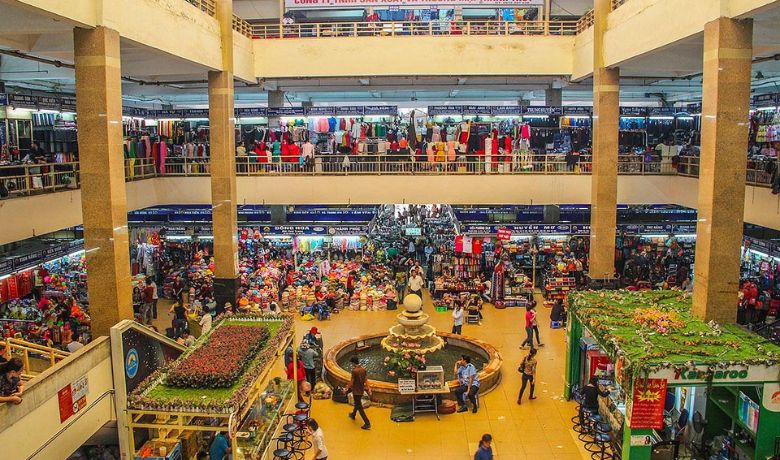
The vibrant multi-level Dong Xuan market bustles with colorful textiles, clothing stalls, and shoppers surrounding a central fountain.
Ho Chi Minh City
If you want a more energetic and tourist-focused experience, Ho Chi Minh City offers two iconic spots.
Ben Thanh Market is famous for its compact layout and wide mix of souvenirs, snacks, and clothing. Prices here can be quite inflated, which makes it a perfect place to practice your negotiation routine. Vendors expect bargaining, and starting at around half the asking price is common.
Meanwhile, Binh Tay Market in Chinatown (Cho Lon) feels more local. It’s a wholesale-focused market where Vietnamese shoppers buy in bulk, so the prices tend to be more reasonable from the start. Haggling is still part of the experience, but it’s more about adjusting small differences rather than trying to cut the price in half.
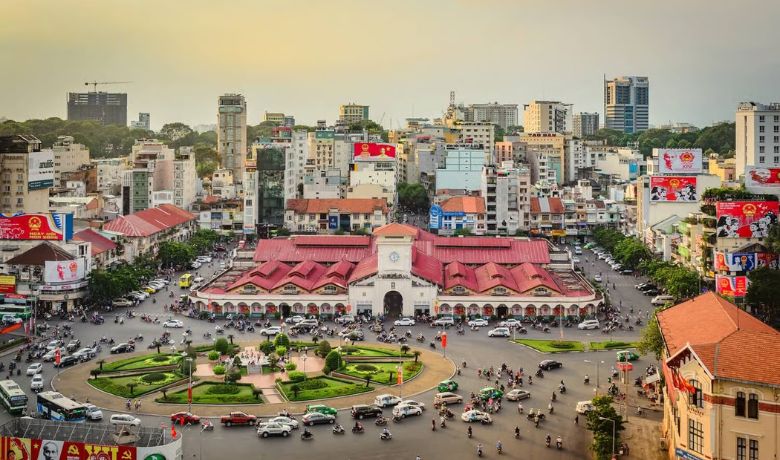
Ben Thanh Market’s iconic red-tiled roof and clock tower anchor a bustling roundabout in the heart of the city.

Hoi An
Hoi An is famous for its craftsmanship, and that naturally extends to its markets and tailoring shops.
At Hoi An Central Market, you’ll find seafood, spices, fresh produce, and a huge section dedicated to souvenirs and handmade goods. Vendors here are friendly but still expect some bargaining, especially for textiles, leather products, and accessories.
The real highlight, though, is Hoi An’s tailor shops, where you can have clothes custom-made in as little as 24–48 hours. Prices vary widely depending on fabrics and craftsmanship, so bargaining is not only accepted, it’s part of the process. Instead of pushing for the lowest price, aim for a balance between cost and quality.
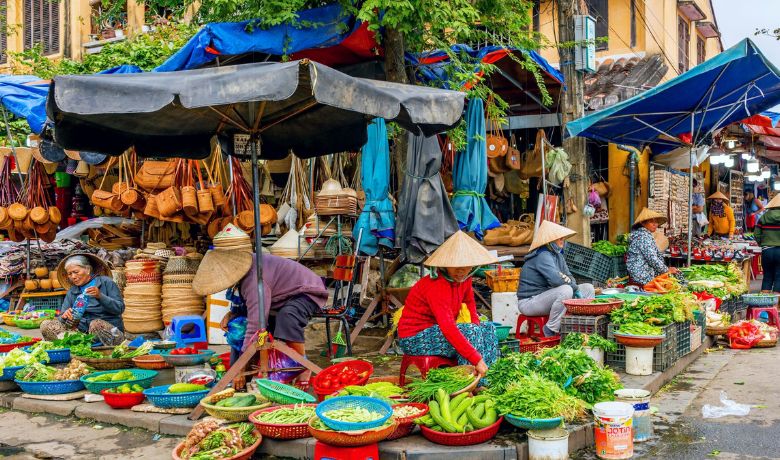
Vendors in conical hats sell fresh produce and handcrafted goods at Hoi An’s lively central market.
Hue
Hue’s Dong Ba Market is one of the oldest markets in central Vietnam. It’s known for traditional handicrafts such as conical hats (non la), incense, woven baskets, and local snacks. Prices here are generally fair, but vendors still expect tourists to bargain a little. What makes Dong Ba unique is its mix of wholesale and retail stalls, so comparing prices before negotiating can help you avoid overpaying.

Dong Ba market’s narrow covered aisles overflow with packaged goods, hanging wares, and vendors serving local shoppers.
Mekong Delta
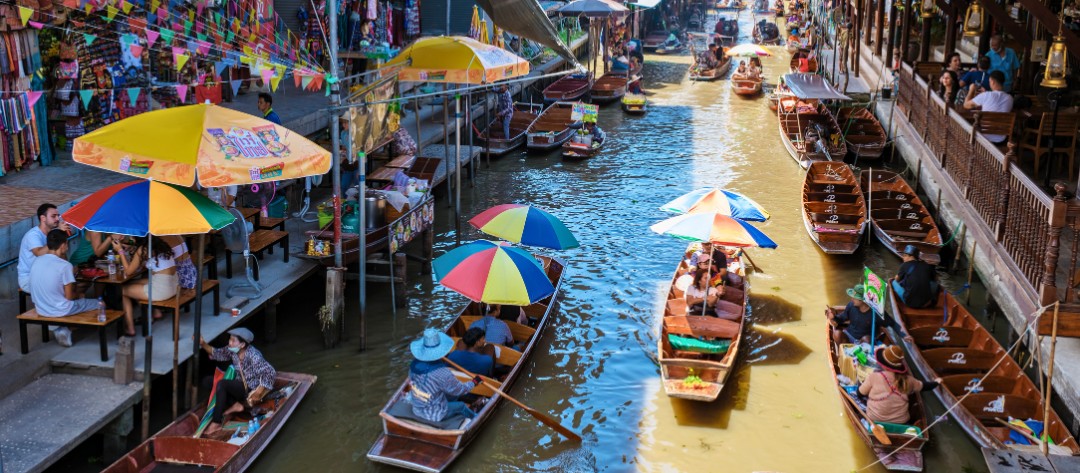
Bargaining takes on a whole different atmosphere in the floating markets of the Mekong Delta, where transactions happen from boat to boat. Popular ones like Cai Rang or Cai Be operate early in the morning and specialize in fruits, snacks, and drinks. Vendors often hold up sample items or hang goods on long poles so buyers can see what they’re selling from afar.
Prices here are already quite low, but gentle negotiation is still possible. So, just remember it’s more about the experience than chasing a big discount.

Tourists in life jackets enjoy fresh noodle soup served at their boat table while exploring the floating market.

Vietnamese Phrases for Haggling
Starting the Conversation
Use these phrases to open politely and get the initial price.
- “How much is this?”
– Vietnamese: “Cái này bao nhiêu ạ?”
– Pronunciation: kai nay bao nyew ah
– Use: The basic, polite way to ask for a price.
- “Which one is cheaper?”
– Vietnamese: “Cái nào rẻ hơn ạ?”
– Pronunciation: kai now zeh hern ah
– Use: Helps compare items without sounding too aggressive.
- “Do you have other colors/sizes?”
– Vietnamese: “Có màu/size khác không ạ?”
– Pronunciation: koh mao/size khak khom ah
– Use: Adds conversation before starting to bargain.
Reacting to the First Price
Useful when the seller gives a high starting point.
- “That’s too high.”
– Vietnamese: “Đắt quá ạ.”
– Pronunciation: dat kwah ah
– Use: Soft, non-confrontational pushback.
- “Can you give me a better price?”
– Vietnamese: “Bớt cho con/cháu chút được không ạ?”
– Pronunciation: but cho kon/chow choot duoc khom ah
– Use: Polite request for a discount.
Making Your Offer
These phrases help you state your desired price without sounding rude.
- “Can it be 50,000?” (replace with your own number)
– Vietnamese: “Năm mươi ngàn được không ạ?”
– Pronunciation: num muoi ngahn duoc khom ah
– Use: Perfect for counter-offers.
- “Please give me exactly this price.”
– Vietnamese: “Bán giá này cho con/cháu nhé.”
– Pronunciation: ban zah nay cho kon/chow nyeh
– Use: Softens your final offer.
- “If I buy more, can I get a better price?”
– Vietnamese: “Mua nhiều có giá ok hơn không ạ?”
– Pronunciation: moo-ah nyew koh zah ok hern khom ah
– Use: Works well for souvenirs, clothing, snacks.
Walking Away (A Key Strategy)
These phrases help you leave politely while signaling you’re not convinced.
- “Alright, I’ll think about it.”
– Vietnamese: “Để con/cháu xem thêm đã.”
– Pronunciation: day kon/chow sem them dah
– Use: Soft hesitation; may prompt the vendor to lower the price.
- “Sorry, I don’t need it.”
– Vietnamese: “Dạ con không lấy ạ.”
– Pronunciation: yah kon khong lay ah
– Use: Gentle refusal.
- “Okay, I’ll come back later.”
– Vietnamese: “Dạ vậy thôi, con đi rồi có gì con quay lại.”
– Pronunciation: yah vay thoy, kon dee roy koh zee kon kway lai
– Use: The classic Vietnamese walk-away line — often triggers a better offer.
Closing the Deal
Once the price feels fair, these help you finalize the purchase politely.
- “Okay, I’ll take this one.”
– Vietnamese: Rồi, con lấy cái này ạ.
– Pronunciation: yoy, kon lay kai nay ah
– Use: Accepting the final price.
- “Thank you!”
– Vietnamese: “Con cảm ơn ạ!”
– Pronunciation: kon kam un ah
– Use: Always appreciated.
Useful Terms for Addressing Sellers (Very Important)
These family terms create warmth and friendliness — essential in Vietnamese haggling.
- “Cô” (koh): older woman
- “Chị” (chee): slightly older woman
- “Chú” (choo): older man
- “Anh” (ang): slightly older man
Grab The Good Price in Vietnam’s Local Markets
Visiting Vietnam isn’t truly complete unless you’ve stepped into its bustling local markets. And once you’re there, haggling becomes part of the experience, not as a conflict but as a cultural rhythm that brings traveler and seller a little closer.
Learning how to haggle in Vietnam the right way ensures the conversation stays friendly, avoids misunderstandings, and turns what could have been an awkward moment into a genuine connection. When done respectfully, it’s one of those small travel skills that deepens your cultural understanding instead of creating bad impressions or uncomfortable emotions.
But of course, knowing where to practice matters just as much as knowing how. If you’re unsure which markets offer the most vibrant atmosphere, or which ones allow you to bargain comfortably, Asia Pioneer Travel can guide you to the best spots. Contact us now to experience Vietnam in a way that many travelers miss.