

A Vietnam train trip is one of the most rewarding ways to see the country beyond the highlights. Trains move slowly, but that is exactly the point. Instead of rushing from city to city, you watch rice fields, rivers, villages, and coastlines pass by your window. You share carriages with locals, eat simple meals on board, and fall asleep to the steady rhythm of the tracks. It is not polished or luxurious, but it feels real. For travelers who value experience over efficiency, a Vietnam train trip turns transportation into part of the adventure.
Overview of Train Travel in Vietnam
Train travel in Vietnam is less about speed and more about the journey itself. It offers a slow, local, and immersive way to see the country, connecting major cities while revealing everyday life along the tracks.
1. Age & Speed
Vietnam’s railway system dates back to the French colonial era. The main North–South line was completed in the 1930s and later restored after the war. Because of this legacy, trains are slow and not modern. Average speeds are around 40 km/h.
A full journey from Hanoi to Ho Chi Minh City usually takes 28–36 hours, depending on the train. Travel is unhurried, but many travelers enjoy the relaxed pace and changing scenery.
2. Amenities & Seat Classes
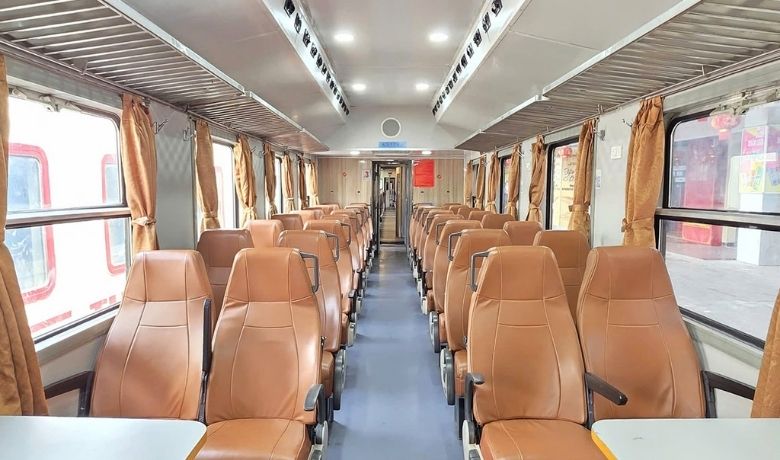
Trains offer several seating and sleeping options. Hard seats are cheap but basic and best for short trips. Soft seats are air-conditioned and suitable for daytime journeys. For overnight travel, hard sleepers (6 bunks) and soft sleepers (4 bunks) are the most popular. Soft sleepers provide more space, privacy, and comfort.
Facilities are simple. Toilets can be Western-style or squat, and cleanliness varies. Toilet paper is usually not provided, so bringing your own is advised. Food carts sell hot meals, snacks, and drinks, and local vendors often board briefly at stations.
3. Booking & Arrival
Booking in advance is strongly recommended, especially for soft sleepers and during holidays. Tickets can be bought online and shown on your phone. On travel day, arrive at the station at least 30 minutes early to find your carriage and board calmly.
4. Cost-Effectiveness & Comfort
Train travel is cheaper than flying on many routes. Overnight trains also save one night of hotel costs. Compared to long-distance buses, trains feel safer and more spacious, especially in sleeper cabins.
5. The Experience
More than transport, Vietnamese trains feel like a “rolling hostel.” You eat, sleep, talk, and watch as daily life passes by. Scenic sections, especially the coastal route over the Hai Van Pass, turn the journey itself into a highlight.
Best Scenic Vietnam Train Routes You Should Not Miss
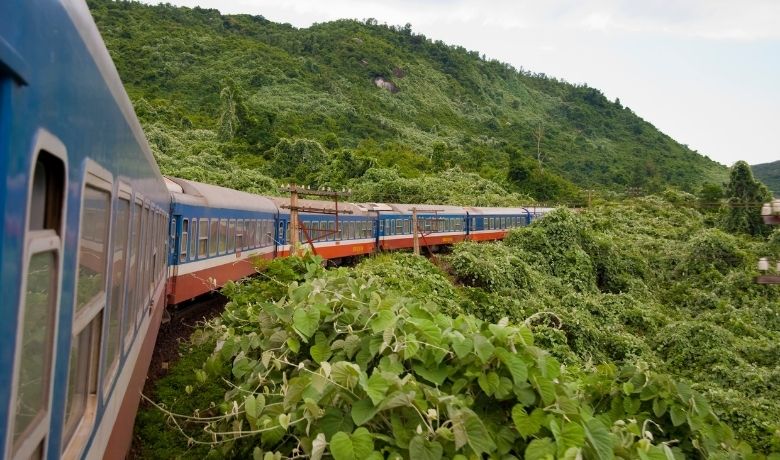
Because trains in Vietnam move slowly, scenic routes turn time into an advantage. Instead of rushing past landscapes, you watch them unfold frame by frame—often closer than any road allows.
1. Da Nang → Hue (Hai Van Pass)
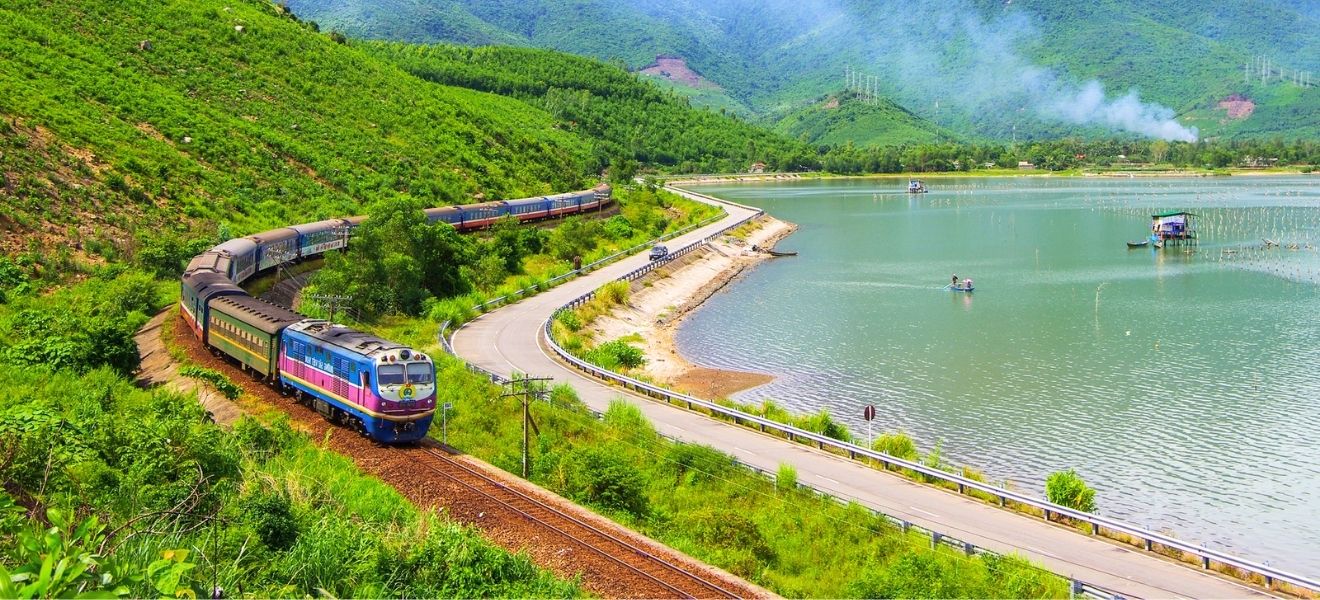
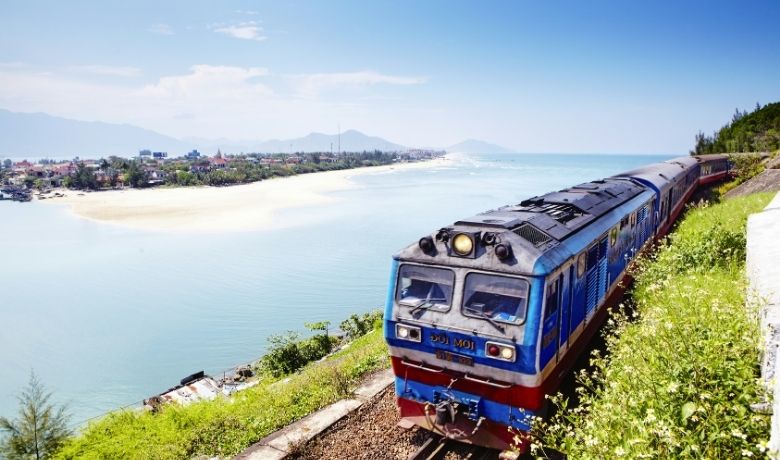
If you only take one scenic train ride in Vietnam, this should be it. The railway curves tightly around the Hai Van Pass, where mountains drop straight into the sea. On one side are forested cliffs; on the other, empty beaches and open water.
Seat choice matters: travel Da Nang → Hue, sit on the right; Hue → Da Nang, choose the left. The ride lasts about 2.5–3 hours.
For culture-focused travelers, the Central Heritage Connection trains add local food and performances, while The Vietage offers a high-end experience with fine dining and spa-style service.
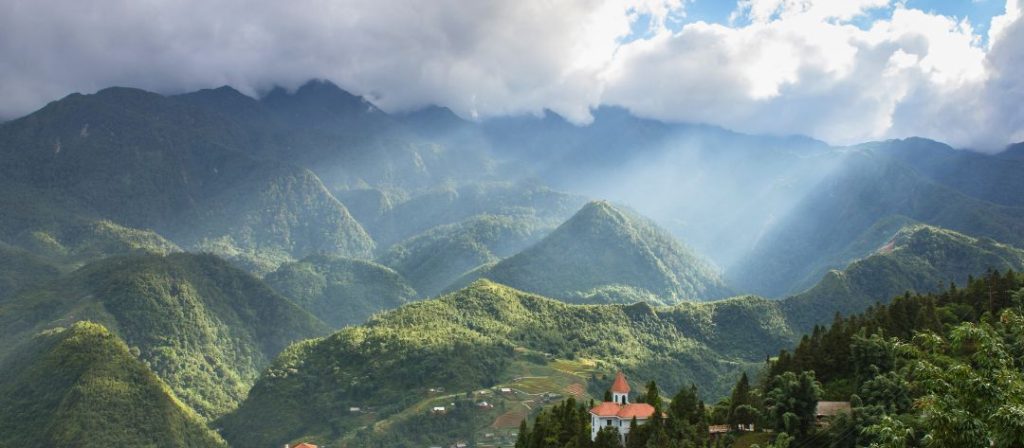
2. Hanoi → Lao Cai (Gateway to Sapa)
This overnight route suits travelers heading to the northern highlands. Departing late evening, the train follows the Red River valley and arrives early morning near the Chinese border. From Lao Cai, a 45–60 minute transfer brings you to Sapa.
A 4-berth soft sleeper is strongly recommended. It allows proper rest before trekking. Private tourist carriages offer extra comfort but run on the same tracks and timetable.
3. Hanoi → Ninh Binh
Not every scenic journey needs an overnight commitment. This 2–3 hour trip passes rice fields and limestone karsts, often called “Halong Bay on land.” The train stops close to Trang An and Tam Coc. A soft seat is ideal, giving large windows and a relaxed daytime ride.
4. Hanoi → Hai Phong
For travelers seeking a more local feel, this short route delivers. The line connects colonial landmarks like Long Bien Bridge with Hai Phong Station. It is also a quieter gateway to Cat Ba Island and Lan Ha Bay, often less crowded than Halong Bay. The journey takes about 2 hours and costs only a few dollars.
5. Ho Chi Minh City → Phan Thiet / Nha Trang
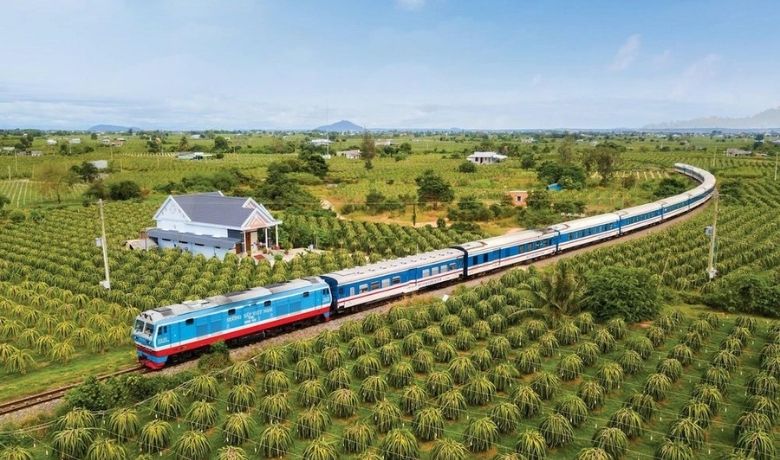
These southern coastal routes are ideal escapes from city heat. Phan Thiet is a direct tourist line to Mui Ne, taking around 4 hours. The longer 7–9 hour ride to Nha Trang reveals glowing dragon fruit plantations at night, one of Vietnam’s most unexpected rail sights.
2 Types of Vietnam Train Trips
Train travel in Vietnam today can be divided into two very different experiences. One is practical, communal, and deeply local. The other is slow, polished, and designed as a journey in itself.
1. Standard & Overnight Trains (The Reunification Express)
Best for: budget travelers, photographers, slow travelers, and anyone curious about everyday Vietnam.
The backbone of Vietnam’s rail system is the Reunification Express, a series of long-distance trains (SE1–SE8) running from Hanoi to Ho Chi Minh City. Covering the country in over 1,700 km, these trains prioritize function over speed, averaging 40–80 km/h.
This is not polished travel. Carriages feel lived-in, sounds travel easily, and schedules are relaxed. Yet this is exactly the appeal. You share space with families, students, workers, and fellow travelers. The train becomes a moving cross-section of Vietnamese life.
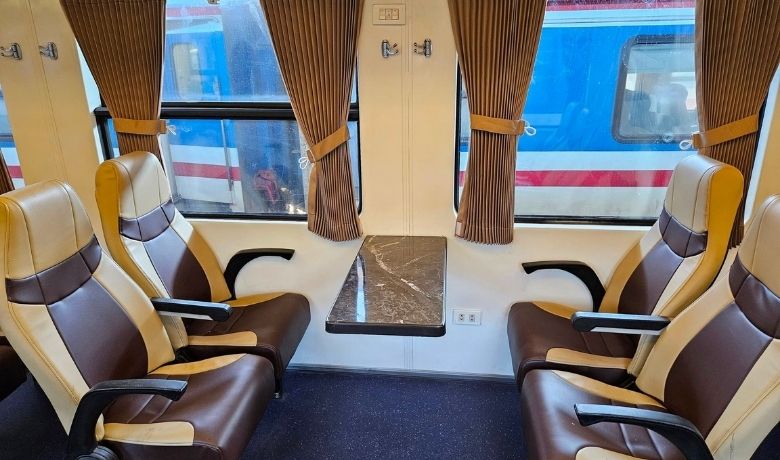
- Soft Seats work best for daytime trips under eight hours. They are wide, air-conditioned, and allow you to watch landscapes unfold through large windows.
- Hard Seats are extremely basic. While socially vibrant, they quickly become tiring and are best avoided for long distances.
- 6-berth Sleepers are economical overnight options, though upper bunks feel close to the ceiling.
- 4-berth Soft Sleepers are the sweet spot. Lockable cabins, thicker mattresses, and manageable shared space make them ideal for overnight journeys. Top bunks offer more privacy; bottom bunks provide table access and window views.
Food carts serve hot rice dishes, noodles, and drinks. Dining cars double as social spaces. At smaller stations, vendors briefly board to sell fruit or regional snacks. Toilets exist at carriage ends but supplies are limited—bringing toilet paper and sanitizer is essential.
2. Luxury Train Experiences
For travelers who value comfort over function, Vietnam now offers curated rail journeys. These fall into two forms: private carriages attached to normal trains, and fully designed luxury itineraries.
While standard trains focus on transport, luxury trains in Vietnam are designed as destinations in themselves. They run on the same tracks, but completely transform the onboard experience.
The Vietage (Da Nang – Quy Nhon)
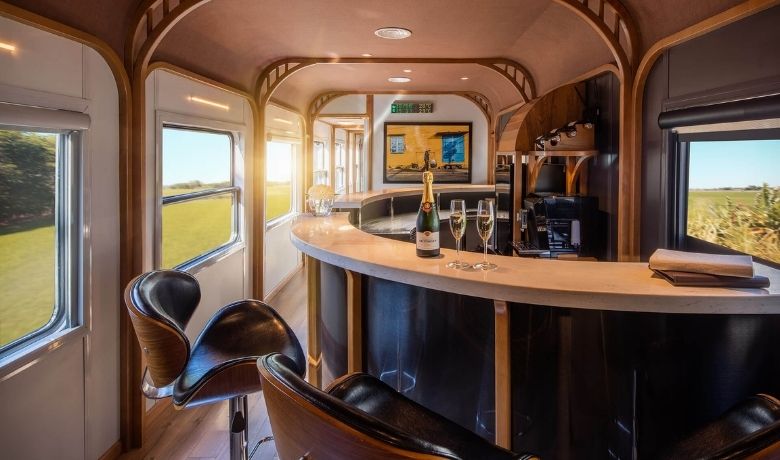
The Vietage is Vietnam’s most refined short-distance luxury train, operated by Anantara. Limited to just 12 guests, this six-hour journey feels intimate and quiet, with wide panoramic windows framing the coastline. Guests enjoy a three-course gourmet menu, free-flow wines and cocktails, and attentive table service in a private dining space.
A standout feature is the onboard wellness area, where each passenger receives a complimentary 20-minute head and shoulder massage. With plush seating, calm pacing, and personalized service, The Vietage turns the Hai Van–south central coast into a moving luxury lounge, ideal for couples and slow travelers.
SJourney (Multi-day Cross-Country)
SJourney offers a very different concept: a “cruise on rails.” Instead of short segments, guests live onboard for several days, sleeping in private ensuite cabins while exploring cities by day. The train features an elegant bistro dining car, serving both Vietnamese and international cuisine, paired with curated wines.
Evenings include cultural storytelling or performances, creating a sense of narrative across the journey. Cabins are designed in Indochine style, with wood finishes, soft lighting, and hotel-level bedding. SJourney suits travelers who want structure, comfort, and continuity without changing hotels every night.
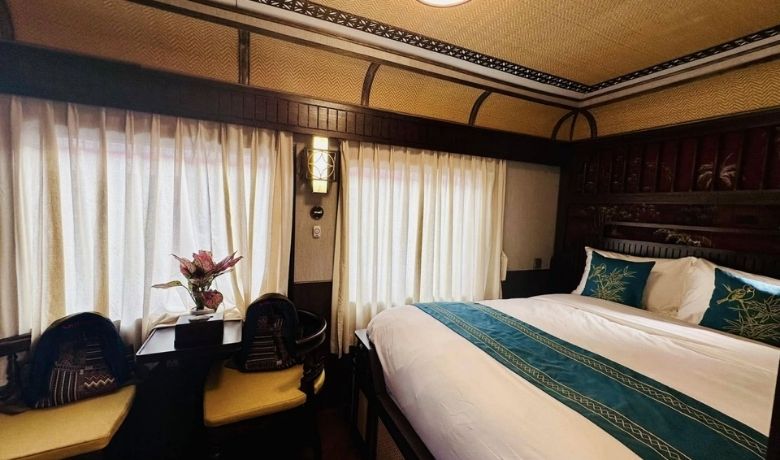
Luxury Sleeper Carriages to Sapa (Hanoi – Lao Cai)
For travelers heading to the northern mountains, luxury sleeper carriages operated by Livitrans, Violette, and Sapaly offer upgraded comfort within the standard rail system. These carriages provide 2-berth or premium 4-berth cabins, thicker mattresses, cleaner bathrooms, and quieter interiors.
While the train itself remains a Vietnam Railways service, the sleeping experience is closer to a boutique hotel, allowing guests to arrive in Sapa rested and ready for trekking.
Train Ticket Classes in Vietnam: What’s the Difference?
Train tickets in Vietnam fall into two main categories: state-run carriages operated by Vietnam Railways and private or luxury carriages attached to the same trains. The choice of class has a major impact on comfort, sleep quality, and overall experience.
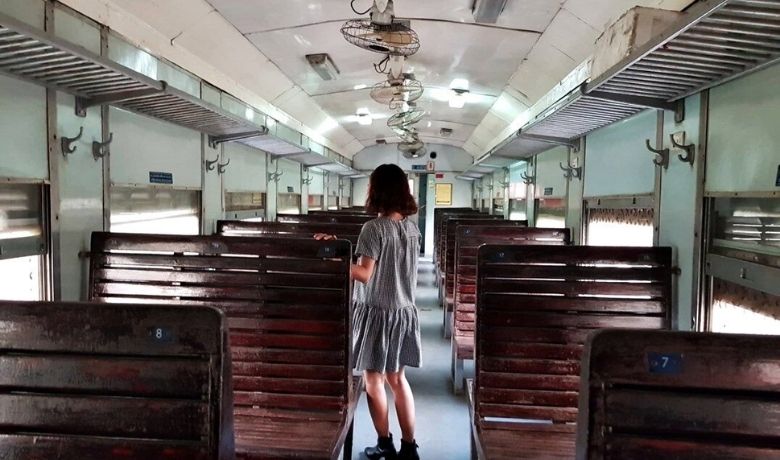
Hard Seat
- Best for: Very short trips (under 5–6 hours) or travelers on a strict budget who prioritize local atmosphere over comfort.
Hard Seat is the most basic and cheapest ticket class. Carriages usually have wooden benches arranged in rows. On older trains, cooling relies on fans or open windows rather than full air conditioning.
The experience is physically demanding but culturally rich. These carriages are often crowded with local families, children moving between seats, and lively conversations. Comfort is minimal, making long journeys exhausting.
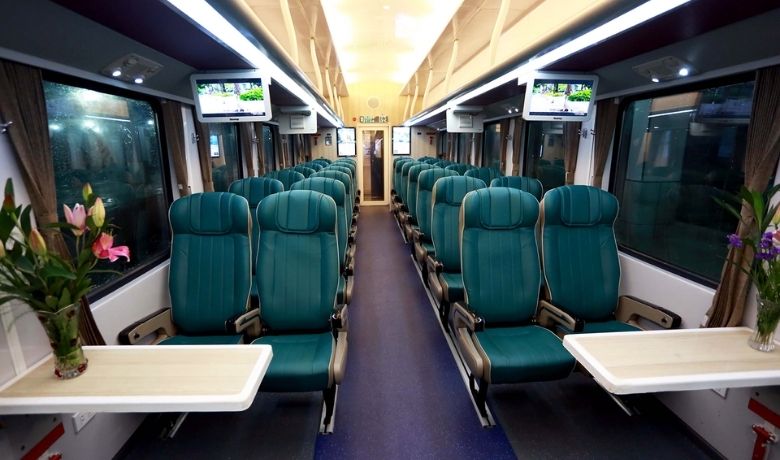
Soft Seat
- Best for: Daytime journeys of 6–8 hours, especially scenic routes such as Hue–Da Nang or Ho Chi Minh City–Phan Thiet.
Soft Seat offers a noticeable upgrade in comfort. Seats resemble airline economy chairs: padded, reclining, and arranged in a 2+2 layout with air conditioning.
Most soft-seat carriages include power sockets under the seats and sometimes overhead screens playing local programs. While sleeping is possible, it is not ideal for overnight travel.
6-Berth Sleeper Cabin (Hard Sleeper)
- Best for: Budget-conscious overnight travelers who can tolerate shared space and reduced comfort.
Despite the name, hard sleeper cabins do include mattresses. Each cabin has six bunks in three tiers. Bedding is provided, but mattresses are thinner and the space feels tight when fully occupied.
Upper bunks have limited headroom and sit close to the air-conditioning vents. Prices vary by level, with top bunks cheapest and bottom bunks more expensive due to easier access.
4-Berth Sleeper Cabin (Soft Sleeper)
- Best for: Overnight and long-distance travel, including Hanoi–Hue or Hanoi–Ho Chi Minh City.
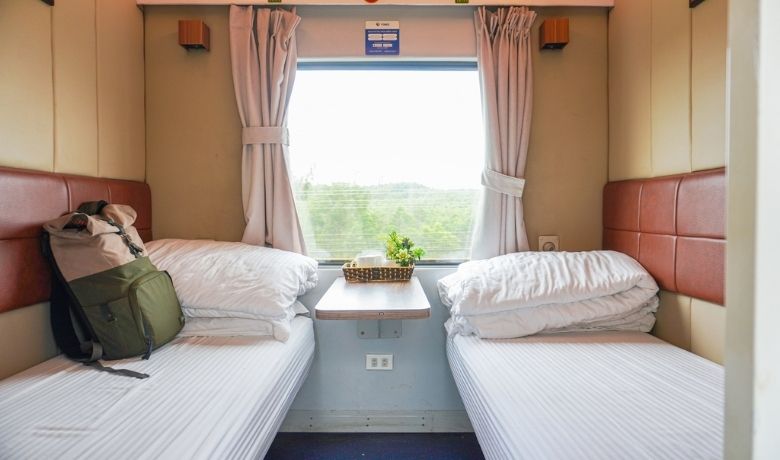
The Soft Sleeper is the most popular and comfortable standard option. Cabins have four bunks in two tiers, thicker mattresses, lockable doors, and more vertical space.
Each berth has a reading light and a power outlet. A small table sits between the lower bunks.
- Booking tips: Bottom bunk is easier access and window views, but less privacy. The top bunk is cheaper, quieter, and more private, though colder due to AC.
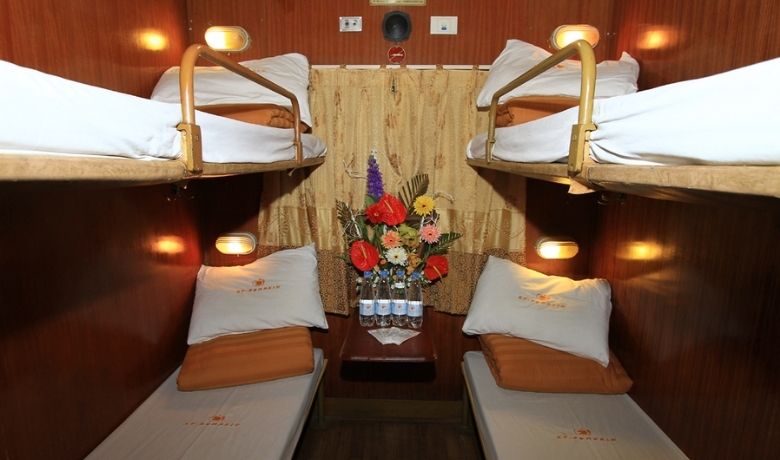
2-Berth VIP / Private Cabins
- Best for: Couples, light sleepers, or travelers prioritizing privacy and comfort.
True 2-berth cabins are mainly found on private tourist carriages such as Livitrans or Violette, or on dedicated luxury services like SJourney.
These cabins feature upgraded interiors, hotel-quality bedding, complimentary snacks, and higher cleanliness standards. On standard trains, some travelers buy all four beds in a soft sleeper to create privacy, though availability and acceptance vary.
How to Book a Vietnam Train Trip
Booking train tickets in Vietnam is now much easier than it used to be. Travelers can choose between convenient online platforms and traditional station counters, depending on comfort level and timing.
Booking Online (Recommended)
For most travelers, booking online is the simplest and safest option. It allows you to compare trains, choose seats, and avoid language barriers.
- Baolau – Best for International Travelers
Baolau is widely favored by foreign visitors thanks to its clean English interface and reliable payment system. It accepts international credit cards smoothly and lets you select your exact seat or sleeper berth using a carriage map.
This is especially useful if you want a bottom bunk, a quieter top bunk, or an ocean-facing seat on scenic routes. Tickets are issued as e-tickets with QR codes, which can be shown directly on your phone at boarding.
- Vietnam Railways – Official Website
Booking directly through the official Vietnam Railways website can be slightly cheaper since there is no third-party fee. However, the interface is less intuitive, and international cards are sometimes rejected. Extra care is also needed to avoid unofficial “look-alike” sites posing as the national railway.
Booking at the Train Station
Tickets can still be purchased in person at major railway stations. Prices are fixed and non-negotiable. However, English support is limited, so it helps to write your route, date, and class in advance.
The main risk is availability. Popular overnight routes and comfortable classes like Soft Sleepers often sell out early. If you wait until the last minute, you may be left with only hard seats or inconvenient departure times.
Important Booking Tips
For normal travel days, booking seats 1–2 days ahead is usually fine. For Soft Sleepers, VIP cabins, or overnight trains, booking at least one week in advance is strongly recommended. During peak periods such as Tet (Lunar New Year) or national holidays, tickets can sell out weeks ahead.
Vietnam does not offer hop-on, hop-off rail passes. Each journey leg must be booked separately. On scenic routes, always check seat orientation to secure the best views.
Practical Tips for Train Travel in Vietnam
Traveling by train in Vietnam is straightforward once you understand the on-the-ground realities. A little preparation goes a long way in making the journey comfortable.
Luggage & Storage
Storage space varies by ticket class. In Soft Sleeper cabins, luggage can be placed under the lower bunks or in a small rack above the cabin door. Hard Sleepers usually rely on overhead racks or space beneath the bottom bunk, while Soft Seat carriages provide overhead shelves or shared storage near carriage ends.
Although train travel is generally safe, petty theft does occur, especially overnight. Keep valuables such as passports, phones, and wallets close to your body or under your pillow while sleeping. Locking your main bag is strongly advised. Packing light also makes boarding easier, as aisles are narrow and platforms are often crowded.
Food & Dining Onboard
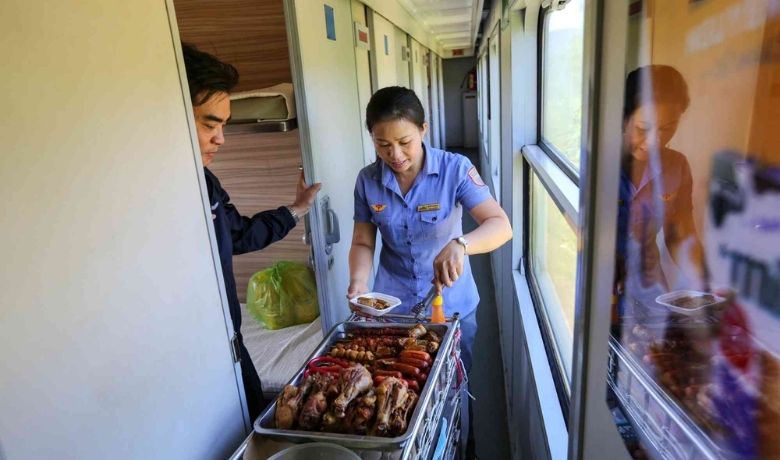
Food is readily available but simple. Meal trolleys pass through carriages selling hot dishes like rice with pork or eggs for 50,000–100,000 VND ($2–$4). At station stops, local vendors briefly board or sell through windows, offering snacks and fruit unique to the region.
Every carriage has a hot water dispenser, making instant noodles a popular and safe DIY option. Dining cars exist but can be noisy, smoky, and less hygienic, often functioning more like a casual pub than a restaurant.
Toilets, Cleanliness & Comfort
Toilets are shared and located at the end of each carriage. They may be Western-style or squat. Cleanliness is initially acceptable but declines over long journeys, especially overnight. Always bring toilet paper and hand sanitizer.
Air-conditioning can be very cold, particularly near vents or top bunks, so a hoodie or light blanket is essential. Trains are also noisy, making earplugs and an eye mask useful for sleeping.
Connectivity & Power
Wi-Fi is unreliable and should not be expected. Mobile data works well in most areas, with occasional signal loss in remote regions. Power outlets are usually available in Soft Sleepers and Soft Seats, though bringing a power bank is wise.
Accessibility & Boarding
Arrive at the station at least 30 minutes early to locate your carriage and board calmly. The system is low-tech, and boarding can be physically demanding with heavy luggage or mobility limitations.
FAQs About Vietnam Train Trips
1. Do Vietnam trains have beds?
Yes. Most long-distance trains offer sleeper options.
- Soft Sleeper (4-berth): The most comfortable standard choice. These cabins have two tiers of bunks, a lockable door, thicker mattresses, pillows, sheets, blankets, air conditioning, and power sockets at each berth.
- Hard Sleeper (6-berth): These cabins have three tiers of bunks. Mattresses are provided, but thinner, and the top bunks sit very close to the ceiling with limited headroom.
- VIP / Private Cabins: On selected tourist routes, private companies attach luxury carriages with 2-berth cabins, offering more privacy and better interiors.
2. Can I get food on the train?
Yes, but food options are simple. Staff push carts through the aisles selling hot meals such as steamed rice with pork, eggs, or vegetables, usually costing USD 2–4. Most trains have a dining carriage serving coffee, beer, and basic dishes like fried rice or phở. Local sellers often board briefly at stops (or sell through windows), offering regional snacks like steamed corn or dragon fruit.
3. Are there toilets on overnight trains?
Yes. Each carriage usually has one toilet and a separate washbasin area. Toilets may be Western-style or squat toilets. Conditions are acceptable at the start, but often decline on long journeys, becoming wet or smelly.
4. Is train travel safe in Vietnam?
Yes, it is generally considered safe. The main risk is petty theft. Keep passports, wallets, and electronics on your person or under your pillow while sleeping. Avoid leaving cabins unattended with doors open.
5. What is the most scenic Vietnam train route?
The stretch between Da Nang and Hue, crossing the Hai Van Pass, is widely considered the most scenic. The railway hugs coastal cliffs, with mountains on one side and open ocean on the other. This route is also served by The Vietage, offering gourmet dining and onboard massage services.