

Myanmar highlights include its royal capitals, vast temple plains, and one of Asia’s most intact colonial districts. With more than 2,000 surviving temples in Bagan, over 200 documented colonial buildings in Yangon, and key religious sites linked to dynasties spanning over 1,000 years, the country offers a concentrated timeline of cultural development.
This guide summarizes the essential locations, artefacts, and architectural layers that define Myanmar’s past and present. It is a practical overview for travelers seeking a clear understanding of the nation’s core historical highlights.
At-a-Glance “Historical Myanmar Highlights” Snapshot
Myanmar’s historical corridor covers key royal capitals and major religious sites documented by UNESCO (2019) and Myanmar’s Department of Archaeology (2024). The main stops include Bagan, Mandalay, Inwa, Amarapura, Mingun, Yangon’s colonial quarter, Kuthodaw Pagoda, and a set of national museums. Together, these locations represent more than 1,000 years of political, architectural, and Buddhist heritage.
Bagan – The Ancient Kingdom of a Thousand Temples
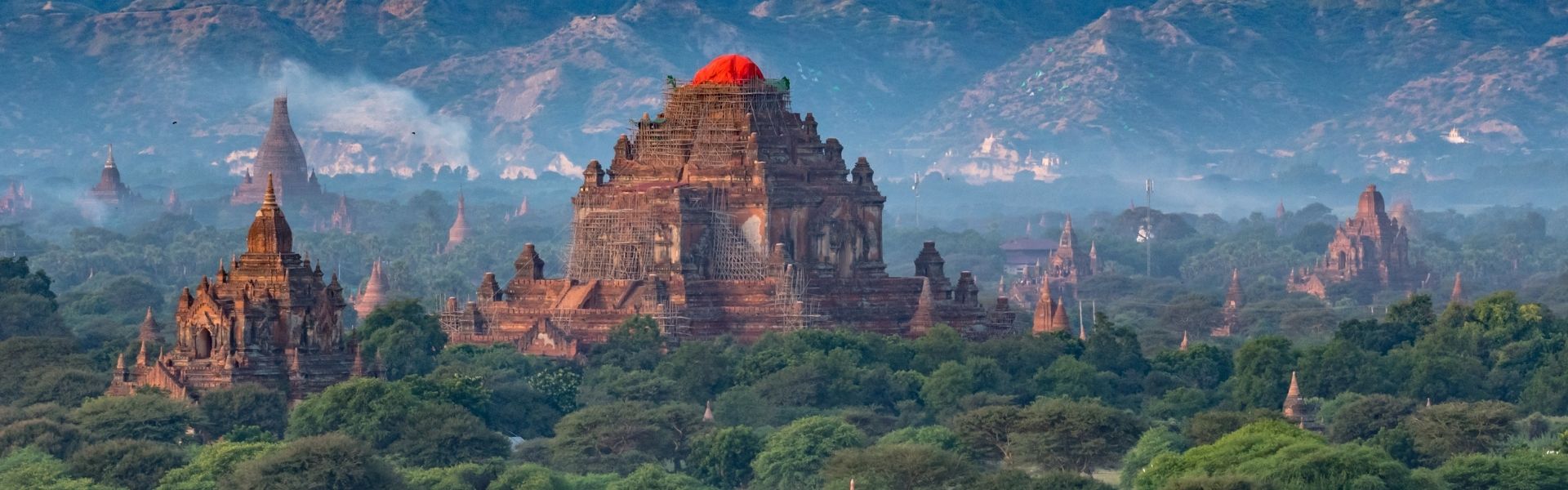
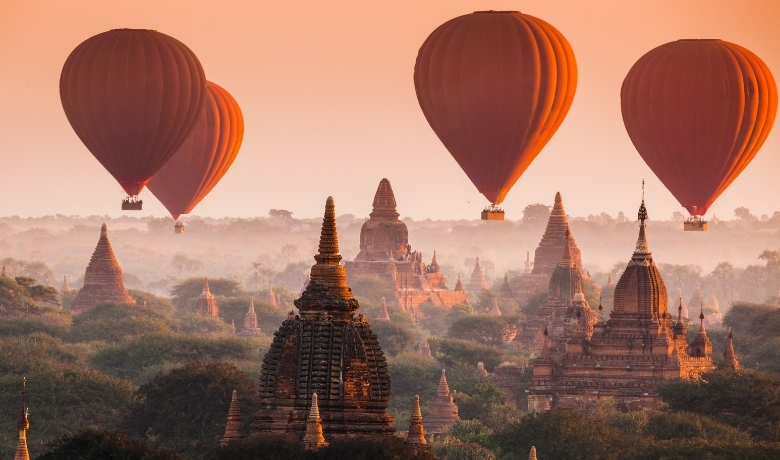
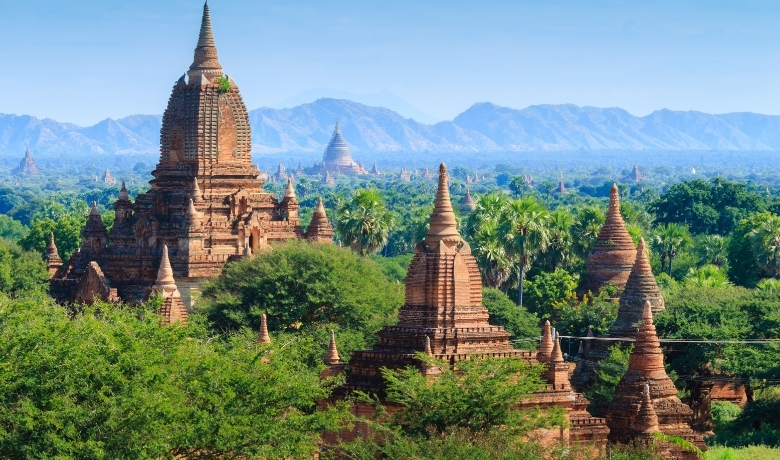
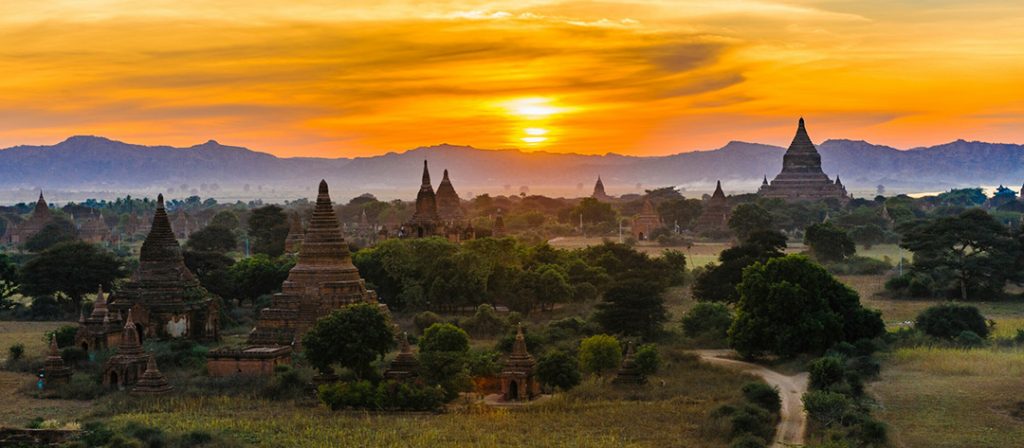
Once the capital of a great empire from the ninth to the thirteenth century, Bagan is one of the most remarkable archaeological sites in Asia. Over two thousand temples rise across the open plains beside the Ayeyarwady River.
Visitors can admire Ananda Temple for its perfect balance, Shwezigon Pagoda for its golden stupa, and Dhammayangyi Temple for its mysterious size and symmetry. The best moments are at sunrise and sunset when the red bricks glow softly under a sky filled with drifting balloons.
Mandalay – The Last Royal Capital
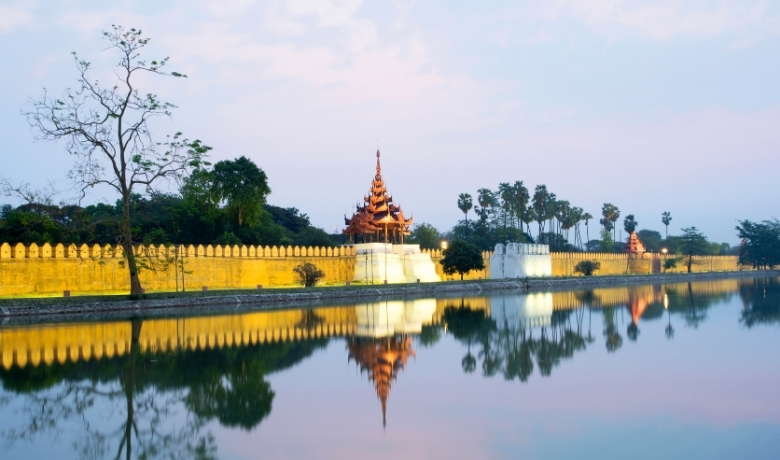
Founded in 1857, Mandalay was the final seat of the Burmese kings and remains the cultural heart of the nation. The Royal Palace stands at the city’s center, a symbol of royal pride. From the top of Mandalay Hill, travelers can watch the city’s temples shimmer under the fading sun.
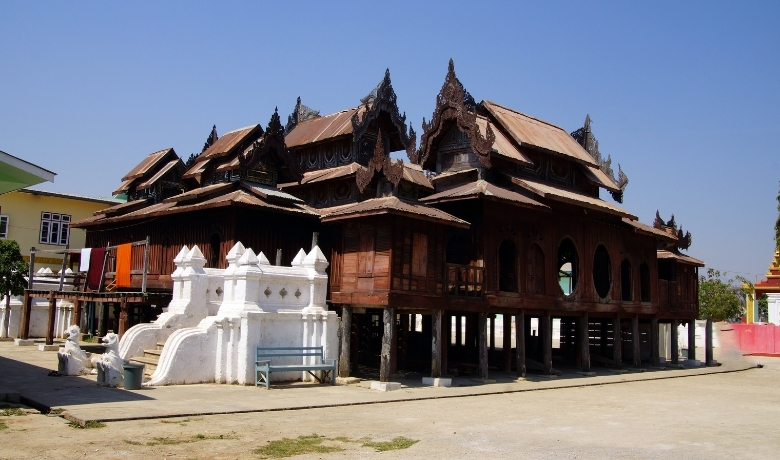
In the narrow lanes, artisans still carve marble Buddhas, hammer gold leaf, and weave delicate silk. The elegant Shwe Nandaw Monastery, made from carved teak wood, preserves the last original structure of the ancient palace.
Kuthodaw Pagoda – The World’s Largest Book
At the foot of Mandalay Hill lies Kuthodaw Pagoda, often called the world’s largest book. It holds seven hundred and twenty-nine marble slabs, each engraved with Buddhist teachings.
Together they form a complete collection of sacred texts. Walking among the small white shrines feels like wandering through a calm and holy library where stone pages shine under the tropical sun.
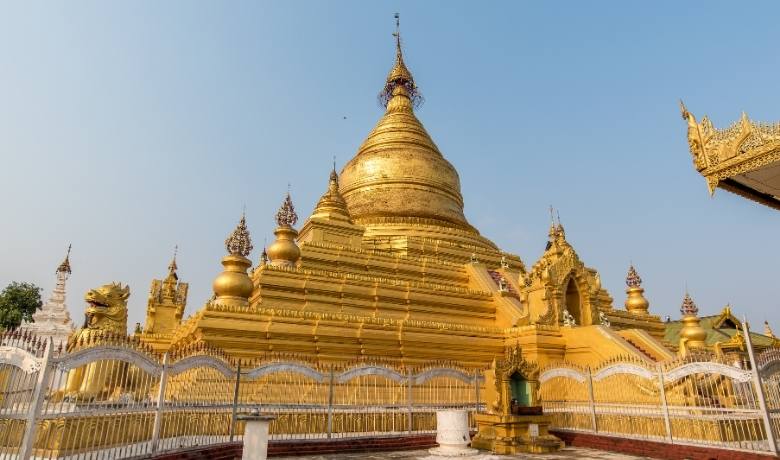
Kuthodaw Pagoda guards marble scriptures carved to last centuries.
Amarapura – The Timeless U Bein Bridge
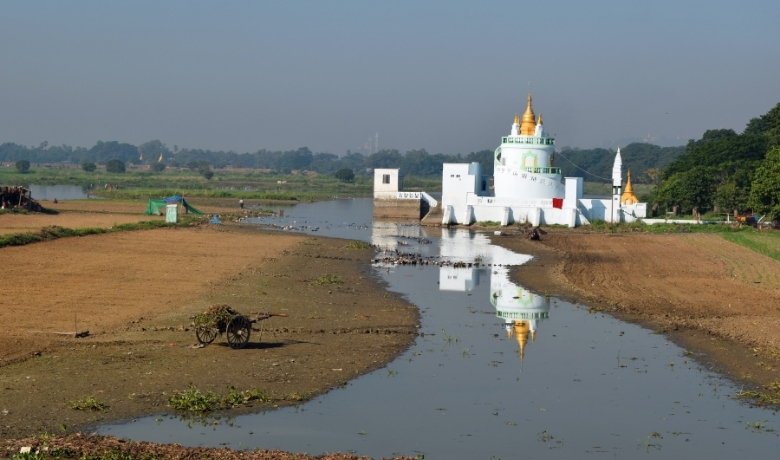
South of Mandalay rests Amarapura, once a royal capital and now famous for the U Bein Bridge. Built in the nineteenth century from the teak wood of the old Inwa Palace, this bridge stretches one thousand two hundred meters across Taungthaman Lake.
Monks and villagers cross it in the morning light while fishermen drift below. When the sun sets, the water turns gold, and the silhouettes of people walking across become a perfect scene of peace and beauty.
Mingun – The Giant That Never Was
Across the river from Mandalay lies Mingun, a quiet village that shelters a dream left unfinished. King Bodawpaya began building a grand pagoda that would have reached one hundred and fifty-two meters, equal to the Great Pyramid of Giza.
The work stopped long ago, but its fifty-two-meter base still stands as a monument to ambition. Near it hangs the Mingun Bell, a bronze giant of ninety tons, whose deep sound still rolls across the river valley.
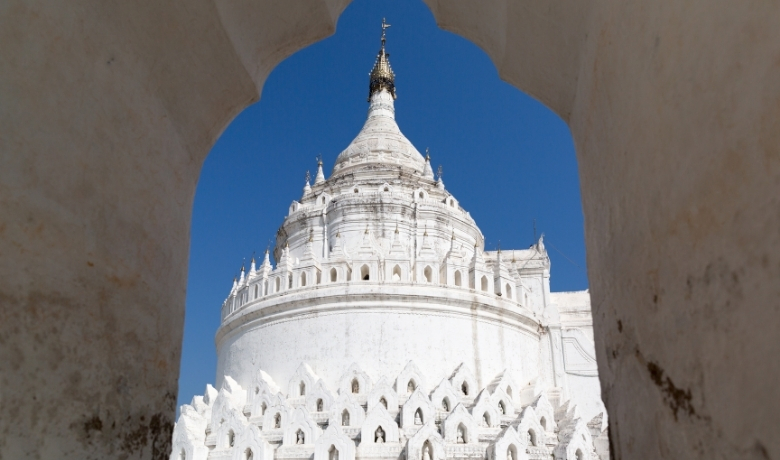
Inwa – The Ghost of Royal Capitals
For centuries, Inwa served as the heart of Burmese royalty. Although earthquakes and wars left the city in ruins, traces of palaces, monasteries, and watchtowers remain among quiet rice fields.
The wood taken from the Inwa Palace later became the material for Amarapura’s famous bridge, linking the past with the present. Travelers often explore by horse cart, passing through peaceful villages where time seems to move slowly.
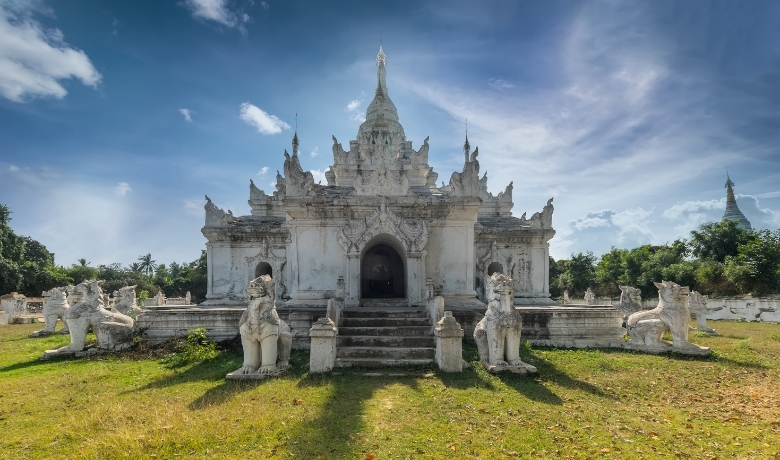
Yangon Colonial Quarter – Echoes of Empire
Unlike the ancient capitals, Yangon reflects the memory of another time, the colonial period. Its center is filled with graceful buildings built during British rule. Along Pansodan Street, old banks, post offices, and hotels display fine details and grand balconies.
Among them rise the Sule Pagoda and the shining Shwedagon Pagoda, symbols of both faith and identity. A heritage walk through these streets reveals how spiritual devotion and modern life still live side by side in Myanmar’s largest city.
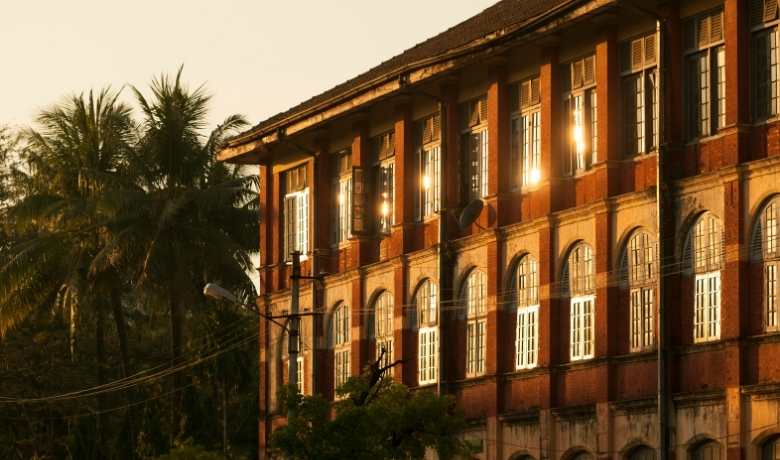
Museums of Memory – The Storykeepers of a Nation
Those who wish to understand the deeper story of Myanmar can visit its museums. The Bagan Archaeological Museum displays statues, inscriptions, and royal relics from the golden age of temple building. Other museums across the country preserve art, crafts, and ancient documents that help travelers see how the nation’s history continues to shape its present life.
The Royal Capitals in Myanmar
Myanmar’s royal capitals span more than 600 years of political history, from Bagan in the 9th century to Mandalay’s fall in 1885. Archaeological surveys (DoA, 2024) confirm over 2,000 temples at Bagan and more than 40 surviving monasteries across Amarapura and Inwa.
This section outlines each capital’s context, key sites, visitor tips, and premium experiences such as private sunrise balloons and expert-led temple walks.
Bagan
Bagan is a UNESCO World Heritage Site and the former capital of the Pagan Kingdom between the 9th and 13th centuries. Under King Anawrahta (r. 1044–1077), Theravada Buddhism became the state religion, leading to the construction of more than 10,000 religious monuments, of which over 2,000 remain today.
Key sites include Ananda Temple, known for its symmetrical plan and standing Buddha images, Shwezigon Pagoda, an early prototype of the Burmese stupa, and Dhammayangyi Temple, the largest surviving brick structure. The Bagan Archaeological Museum preserves inscriptions, terracotta plaques, and royal artifacts that support temple chronology.
Sunrise and sunset are the most documented viewing periods, with mist and low-angle light enhancing visibility of monument outlines. The Ayeyarwady River provides a stable corridor for boat access and landscape observation from the western bank.
Travel Tips
- Allocate 2 full days using e-bikes, horse carts, or a licensed archaeology guide.
- Explore lesser-known clusters such as Minnanthu or West Bagan for quieter conditions.
- Consider private sunrise balloon flights, Ayeyarwady sunset cruises, or a specialist temple-guide session to interpret murals and inscriptions.
Mandalay and Surrounds – The Last Royal Capital
Mandalay was founded in 1857 by King Mindon and recorded as the last royal seat before British annexation in 1885. Its layout follows a classical mandala plan centered on the reconstructed Royal Palace and moat.
Important sites include Mahamuni Pagoda, Shwe Nandaw Monastery, and Kuthodaw Pagoda, home to the 729 marble slabs recognized by UNESCO’s Memory of the World Register (2013). The city remains a major craft hub, documented in 2024 cultural reports focused on gold leaf, marble carving, and silk weaving.
Soundscapes vary sharply between busy markets and quiet monastic compounds where daily chanting begins before sunrise. From Mandalay Hill, visitors gain a clear view of pagoda clusters, the grid-like palace grounds, and the Ayeyarwady plain.
Travel tip:
- Spend time in local workshops where artisans hammer gold leaf, carve marble, and weave silk, timeless crafts passed down through generations.
- Join a guided craft tour, book a sunset river cruise to Mingun, or enjoy a monastic lunch at a temple school to witness daily Buddhist life up close.
Amarapura and Inwa (Ava) – Where Time Slows Down
Before Mandalay rose to power, Amarapura was the royal capital, standing gracefully by the shores of Taungthaman Lake. It served as the capital twice, from 1783–1821 and 1842–1857, before power shifted to Mandalay. Its most recognized landmark, U Bein Bridge, spans 1.2 km and was built in the mid-19th century using reclaimed teak from the former Inwa Palace.
At sunrise, monks cross the bridge as part of daily alms routines, while sunset viewing points often show clear reflections on Taungthaman Lake. The area remains active with local fishing and small lakeside communities.
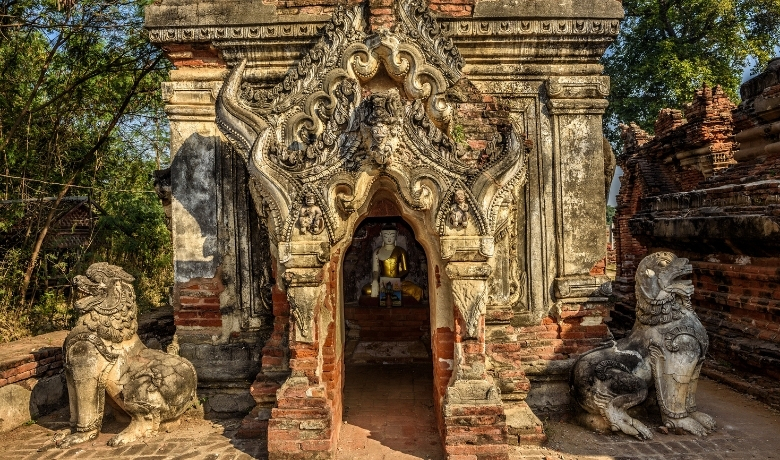
Inwa, capital for nearly 400 years across several dynasties, contains teak monasteries, watchtowers, and brick ruins scattered across farmland. Sites such as Bagaya Monastery and the Nan Myint Tower are commonly reached by horse cart along quiet dirt paths.
Travel tips:
- Arrive around 5:30 a.m. for peaceful sunrise scenes or return at dusk when reflections and silhouettes create perfect photos.
- Stay patient and let the rhythm of local life guide your steps.
- Book a private rowboat with sundowner drinks on Taungthaman Lake
- Pair it with an exclusive photography tour, or add a short Inwa village visit for an intimate glimpse into the heritage behind U Bein’s timeless wood.
Colonial Relics and Yangon’s Architectural Layering
Yangon contains more than 200 mapped colonial structures (Yangon Heritage Trust, 2023–2024), forming one of Asia’s most intact colonial districts. These buildings coexist with Shwedagon Pagoda, the city’s spiritual anchor for over a millennium, creating a rare overlap of Buddhist heritage and British-era urban planning.
Among the most studied landmarks are major civic buildings, waterfront customs facilities, early railway infrastructure, and hotels from the 1890–1920 construction boom.
Shwedagon Pagoda – The Spiritual Anchor
Rising above the city on Singuttara Hill, Shwedagon Pagoda is the spiritual heart of Myanmar. Believed to be over two thousand five hundred years old, it is said to enshrine strands of the Buddha’s hair and other relics.
The stupa shines like molten gold beneath the setting sun, surrounded by worshippers in quiet prayer. Visit at twilight to feel its most powerful aura, when bells ring softly and candles flicker across the terraces. Here, faith outshines every monument built in the name of kings or colonizers.
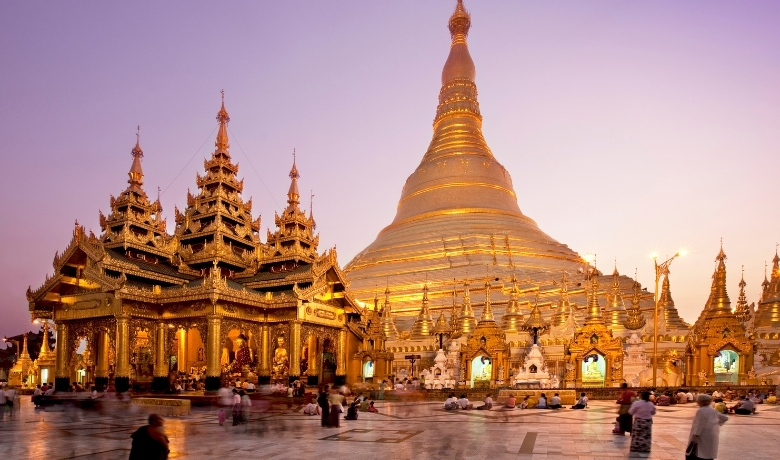
Shwedagon shines as Myanmar’s glowing heart of devotion.
Colonial Icons of Yangon
Before modern towers appeared, Yangon was built as a stage for the empire. Its colonial landmarks remain, dignified yet softened by time, showing how beauty endures through decay.
- City Hall: Standing proudly near Mahabandoola Park, it combines British symmetry with Burmese tiered roofs. Still in use today, it bridges tradition and governance.
- The Secretariat (Ministers’ Building): Once the seat of colonial power and later the site of General Aung San’s assassination, this vast red-brick structure embodies both imperial might and national sorrow.
- The High Court: With its crimson walls and tall clock tower, the High Court reflects late Victorian design. The sound of traffic below seems to echo through its fading arches.
- The Custom House: Overlooking the Yangon River, this building once greeted ships from across the world. Its colonnaded façade speaks of the city’s maritime glory.
- Rangoon Central Station: An elegant mix of local motifs and colonial engineering, the station still pulses with life, connecting Yangon to the country’s heartlands.
- The Strand Hotel: A masterpiece of quiet refinement, the Strand preserves the grace of early travel. Inside, the scent of polished teak and the soft hum of ceiling fans recall a world that refuses to fade.
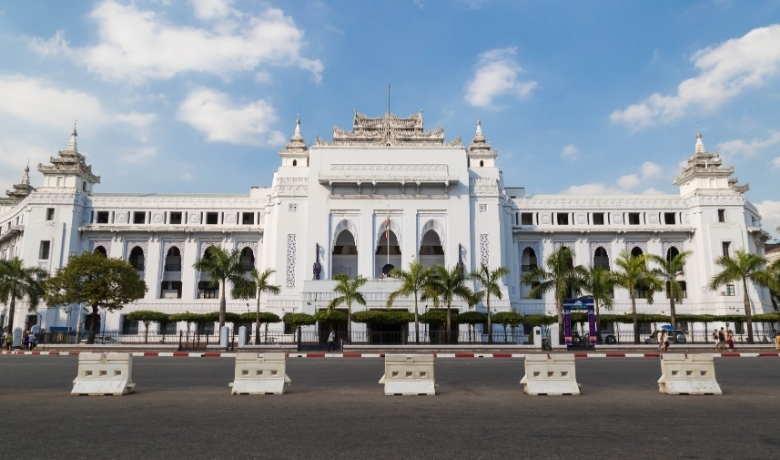
Yangon’s iconic colonial buildings stand as bold reminders of empire.
Top Museums, Manuscripts and Unique Artefacts in Myanmar
Myanmar’s museums and inscriptions preserve more than 1,000 recorded artefacts documented by the Department of Archaeology in 2024. These collections include stone scriptures from the eleventh century and royal regalia from the Konbaung court. Together they form a core evidence base for understanding the country’s language, religion, and political history.
Kuthodaw Pagoda – The World’s Largest Book, Mandalay
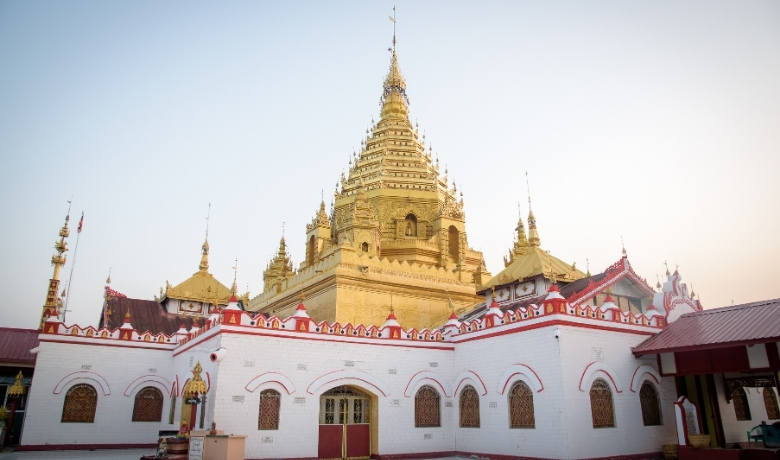
At the base of Mandalay Hill stands Kuthodaw Pagoda, a monument of devotion created by King Mindon in the nineteenth century. Within its grounds rest seven hundred twenty nine marble slabs, each carved with sacred Buddhist scriptures. Together they form what many call the world’s largest book.
Rows of small white shrines stretch as far as the eye can see, their marble surfaces glowing under the sun. The air is quiet except for the sound of birds and the soft murmur of prayer. Monks and visitors walk slowly through this forest of stone, tracing the words that have guided faith for generations.
Travel tip:
- Visit in the late afternoon when the golden light slides across the marble courtyards.
- If possible, speak with a local monk who can recite a verse from the inscriptions. Hearing ancient words spoken aloud adds a gentle rhythm to the silence of the place.
National Museum of Yangon – Preserving the Nation’s Legacy
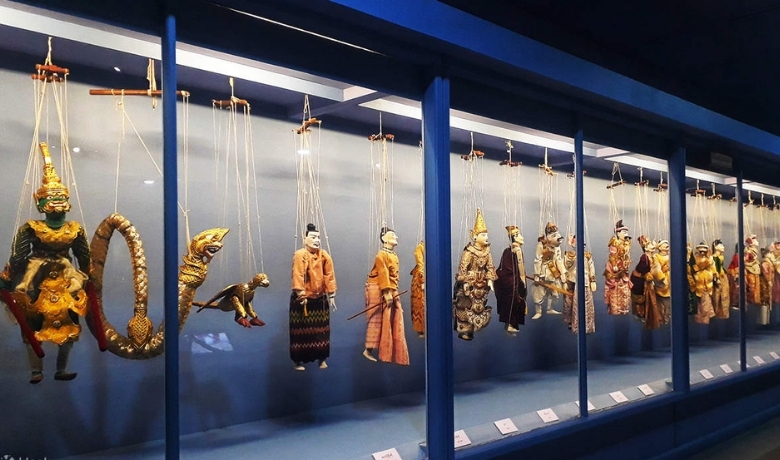
Along Pyay Road stands the National Museum of Yangon, the guardian of Myanmar’s royal treasures. Inside, rooms shimmer with golden thrones, jeweled crowns, and royal regalia from the Konbaung Dynasty. Other galleries display ceramics, lacquerware, and bronze artifacts, while the ethnographic section celebrates the colors and crafts of the country’s many ethnic groups.
The museum’s atmosphere is calm and reflective. Wooden floors creak softly beneath each step, and spotlights reveal details in silk robes and carved ivory. Visitors move slowly, surrounded by the quiet dignity of the nation’s story.
Travel tip: Plan at least two hours to explore. Photography is limited, but a small notebook will help you capture impressions and thoughts, just as the scribes once recorded royal history by hand.
Myazedi Inscription – The Stone Rosetta of Bagan
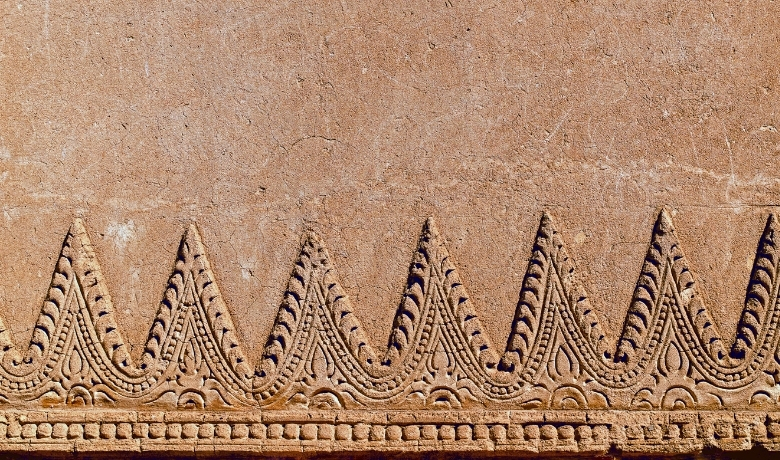
Near the sacred Myazedi Pagoda in Bagan, a single stone pillar stands as one of Myanmar’s greatest historical treasures. Known as the Myazedi Inscription, it was carved in the twelfth century with texts in Pali, Mon, Old Burmese, and Pyu. This four-language record is considered the earliest written proof of the Burmese tongue and a key to understanding the country’s ancient civilization.
Though modest in size, the stone carries immense importance. It connects kingdoms, faiths, and generations, preserving the birth of a language that continues to unite Myanmar today.
Travel tip:
- Visit the site in the early morning to enjoy the quiet before crowds arrive.
- Pair this stop with a visit to the Bagan Archaeological Museum, where copies of the inscription and translations reveal how language helped shape the kingdom’s golden age.
Myanmar in 10 Days: A Perfect Itinerary for Historical Explorers
This itinerary connects Myanmar’s core heritage centers with verified historical sites recorded by the Department of Archaeology in 2024. The journey covers Yangon, Bagan, Amarapura, Mingun, Sagaing, and Ava, representing over 1,000 years of religious and royal history. Travelers will encounter major monuments, inscriptions, craft traditions, and riverside settlements that shaped the former Burmese kingdoms.
Day 1: Arrival in Yangon
- Meet your private guide and transfer to your hotel in downtown Yangon.
- Free time for a short walk around the colonial district mapped by Yangon Heritage Trust.
Day 2: Yangon City Tour
- Walk through downtown streets with early 20th century buildings mapped by Yangon Heritage Trust.
- Visit the Post Office, Mahabandoola Garden and the Independence Monument.
- Explore Chauk Htat Kyi and its 66-meter reclining Buddha with detailed foot inscriptions.
- Stop at Karaweik Hall, a modern interpretation of a traditional royal barge. Visit Shwedagon Pagoda, with a stupa height of over 99 meters, during sunset hours.
Day 3: Yangon → Bagan (Flight)
- Fly from Yangon to Bagan on a short domestic route of about one hour. Visit a local market to observe fresh produce trading and daily activities.
- Tour major temples representing different centuries of Pagan-era construction. Photograph architectural details such as stucco carvings and brick vaulting.
- Watch the sunset over more than 2,000 surviving monuments on the Bagan plain.
Day 4: Bagan Balloon Ride and Village Visits
- Take an optional 45–60 minute sunrise balloon flight over the temple landscape. Visit rural villages to observe agriculture, pottery, and local crafts.
- Travel by pony cart along narrow paths not accessible to cars. Board a private wooden boat for an Ayeyarwady River cruise.
- Approach Shwezigon Pagoda by river during sunset for open-deck views.
Day 5: Bagan → Mandalay → Amarapura
- Fly to Mandalay, capital of the Konbaung Dynasty from 1857 to 1885. Visit Mahamuni Pagoda and see the venerated Buddha image.
- Stop at workshops producing gold leaf, marble carvings, and woodcraft. Visit Shwe Nandaw Monastery and the 729-slab Kuthodaw Pagoda.
- Walk on U Bein Bridge, a 200-year-old teak structure over Taungthaman Lake.
Day 6: Mingun – Sagaing – Ava
- Take a 45-minute boat ride to Mingun and see the 87-ton Mingun Bell. View the unfinished Mingun Paya designed to reach 152 meters in height.
- Visit Sagaing Hill with 600 monasteries and about 3,000 monks. Explore Sagaing Market and a pottery village producing water jars.
- Cross to Ava, ride by horse cart, and visit Bagaya Monastery and palace ruins.
Day 7: Mandalay → Yangon
- Fly back to Yangon and visit Scott Market, a 75-year-old trading hub. Browse lacquerware, silver items, and gemstones from regional producers.
- Visit St Mary’s Cathedral built in 1899 and nearby Sule Pagoda. Stop at the historic Yangon Synagogue and meet the community Trustee.
- Explore Little India and Chinatown for street vendors and local food stalls.
Day 8: Yangon Departure
- Spend the morning at leisure or visit nearby cafés and shops.
- Depart Yangon for your international flight.
Myanmar’s layered capitals, ancient inscriptions, and riverside kingdoms reveal a country shaped by devotion, craftsmanship, and the quiet endurance of its heritage. Exploring these highlights offers a clearer view of how Myanmar’s stories continue to live through its temples, museums, and living communities.
If these places spark your curiosity, let us help you turn inspiration into a journey. Build your trip with Asia Pioneer Travel and craft an itinerary that follows the paths, histories, and moments that speak directly to you.