

If you think you already know Cambodia, these interesting facts will make you look twice. In this guide, we break down 20 Cambodia facts that will surprise you, blending fun cultural quirks with fascinating history and nature. Perfect for travelers and trivia lovers alike, this quick read gives you a fresh, exciting snapshot of Cambodia you won’t forget.
Cambodia Has One of the Most Unique National Flags in the World
The Cambodian flag stands out because — unlike almost every other — it is one of the very few national flags to feature a building: the iconic Angkor Wat temple sits prominently in the center. This alone makes the flag deeply symbolic and visually distinct compared with typical flags that use abstract shapes, stars, or simple emblems.
The version of the flag most people recognize today has history behind it:
- That blue–red–blue design with Angkor Wat was first adopted in 1948, during Cambodia’s time as a French protectorate.
- Since then, Cambodia underwent dramatic political changes, including the era of the Khmer Republic, the period of Democratic Kampuchea under the Khmer Rouge, the People’s Republic of Kampuchea, and other transitional governments, each of which brought modified flag designs.
- Through all these shifts, the motif of Angkor Wat persisted in many variants, underscoring how central the temple remains to national identity.
- In 1993, when monarchy was restored in Cambodia, the original 1948 flag design was officially readopted, symbolizing a reconnection to the nation’s cultural roots and heritage.

The Cambodian flag features Angkor Wat – one of the few national flags to display a building.
Angkor Wat is the World’s Largest Religious Monument
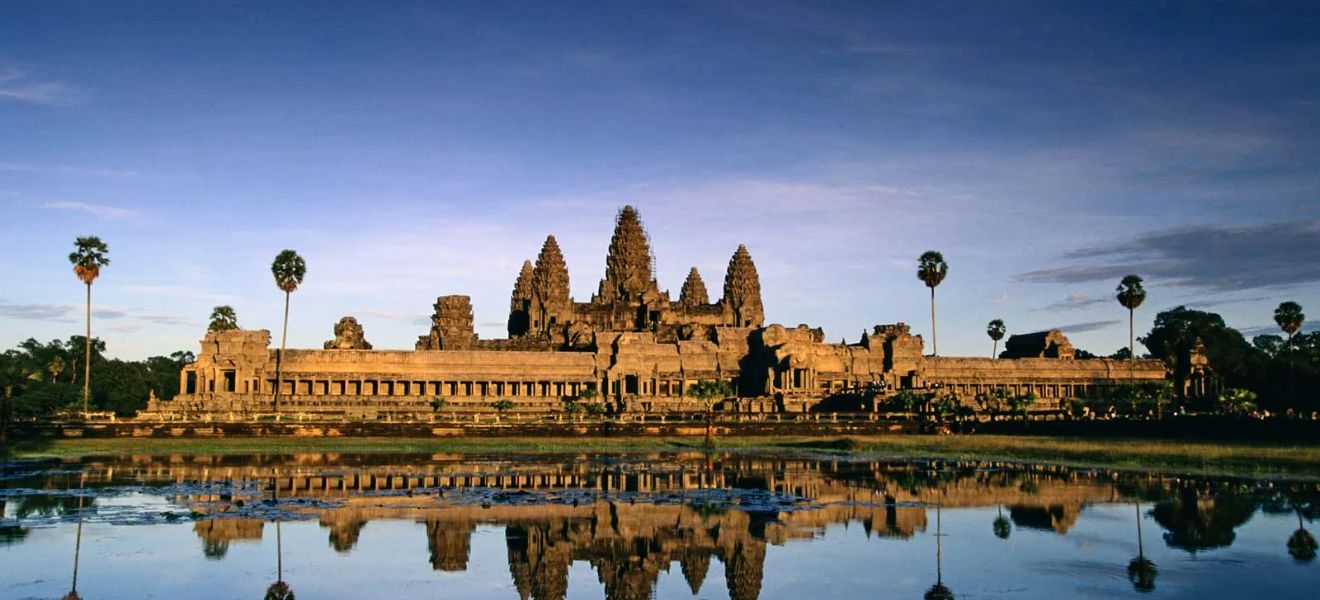
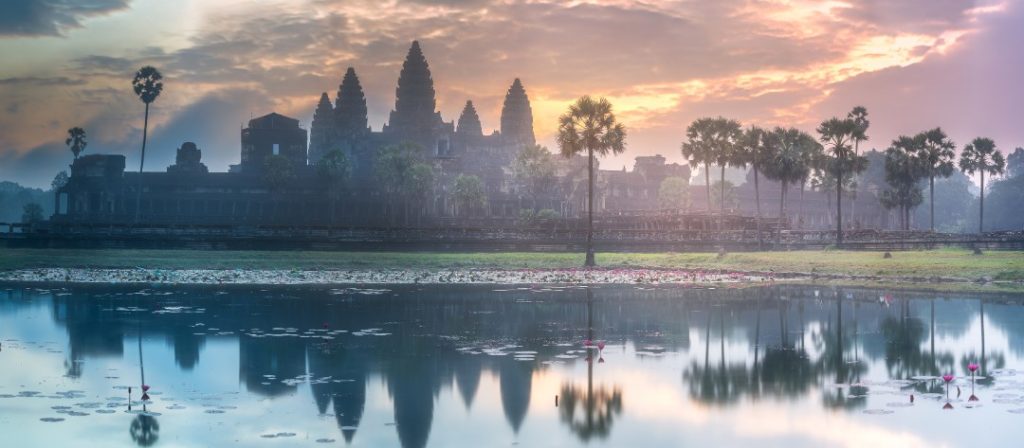
Angkor Wat isn’t just a temple, it’s the world’s largest religious monument, a masterpiece of architecture, history, and spirituality that continues to inspire awe nearly 900 years after its construction. Built in the early 12th century under King Suryavarman II, it was originally dedicated to the Hindu god Vishnu, though it later became a Buddhist site.
Unlike a typical temple, Angkor Wat is a vast temple city, designed to reflect the cosmos, combining symbolic architecture with incredible artistic detail. Its scale, history, and cultural significance make it a defining symbol of Cambodia and a bucket-list destination for travelers around the world.
Here’s what makes Angkor Wat truly extraordinary:
- Massive Scale: Covers around 162.6 hectares (≈400 acres), making it the largest religious structure in the world.
- Temple-City Design: Includes galleries, courtyards, libraries, towers, and a wide moat, creating a self-contained sacred city rather than a single building.
- Symbolic Architecture: The central quincunx of five towers represents Mount Meru, the mythical home of the gods in Hindu cosmology.
- Intricate Bas-Reliefs: Walls are adorned with carvings depicting Hindu epics, mythology, and historical events, showcasing unmatched craftsmanship.
- Endurance Through History: Survived centuries of political change, wars, abandonment, and jungle reclamation, remaining a functional religious site to this day.
- Cultural Icon: Its image appears on Cambodia’s national flag and continues to symbolize national pride, spirituality, and artistic achievement.
- Traveler Experience: Sunrise over the reflection pools, towering spires, and detailed carvings create an unforgettable visual and emotional impact.

Angkor Wat’s massive temple complex sprawls across 162.6 hectares, surrounded by a wide moat and lush jungle canopy.
Cambodia’s Name Has Changed Many Times Throughout Its History
The Cambodia facts about its history is long, complex, and full of fascinating transformations, and one of the most intriguing aspects is how often its name has changed over the centuries.
From ancient kingdoms to colonial times, and through modern independence, the country we now know as Cambodia has been called by different names that reflect shifts in politics, culture, and identity. Each name carries a story, revealing how the region’s rulers, neighboring powers, and historical events shaped the nation’s identity.
Key historical names of Cambodia and what they signify:
- Funan (1st–6th century CE): One of the earliest known kingdoms in the region, “Funan” was an influential maritime power and trading hub, covering parts of modern Cambodia and southern Vietnam.
- Chenla (6th–9th century CE): The successor to “Funan”, “Chenla” represented a more inland and agrarian kingdom. Historical records note Chenla as an important precursor to the Khmer Empire.
- Khmer Empire/Kambuja (9th–15th century CE): The golden age of Cambodia, when Angkor Wat and other monumental temples were built. The term “Kambuja” is derived from Sanskrit and became the cultural and political identity of the region.
- Cambodia/Kampuchea (19th–20th century): During French colonial rule, the country was officially known as “Cambodge” in French, which later anglicized into Cambodia. “Kampuchea” is still the native term in Khmer language.
- Khmer Republic (1970–1975): Following a coup, the country briefly adopted the name “Khmer Republic”, reflecting a republican government under Lon Nol.
- Democratic Kampuchea (1975–1979): During the Khmer Rouge era, the country’s name changed again, symbolizing radical political ideology and revolutionary rule.
- People’s Republic of Kampuchea (1979–1989): Established after the fall of the Khmer Rouge, this name reflected a socialist government supported by Vietnam.
- State of Cambodia (1989–1993): A transitional period before full restoration of the monarchy, marking political normalization.
- Kingdom of Cambodia (1993–present): With the restoration of the monarchy, Cambodia officially regained a name tied to its heritage and royal identity, which it retains today.
A Very Young Nation — Over Half the Population Is Under 25
The Cambodia facts about demographics is that it’s also a very young nation, with over half of its population under the age of 25. This youthful demographic shapes the country’s energy, creativity, and future potential, influencing everything from urban life to technology adoption and cultural trends.
For travelers, it means visiting a nation where history and modernity coexist dynamically, and where young Cambodians play an active role in shaping the country’s identity.
The Country Has a Dark and Painful Past
The Cambodia facts about its beauty and ancient wonders often captivate travelers, but beneath its stunning temples and vibrant culture lies a dark and painful past that shaped the nation. The 20th century, in particular, was marked by conflict, political upheaval, and human tragedy. The most notable point is the Khmer Rouge era, which left deep scars on the country’s population, culture, and infrastructure.
Key aspects of Cambodia’s dark history:
- The Khmer Rouge (1975–1979): Led by Pol Pot, this brutal regime sought to create a communist agrarian society, resulting in the deaths of an estimated 1.7 to 2 million people — nearly a quarter of the population.
- Targeting of intellectuals and minorities: Teachers, professionals, religious leaders, and ethnic minorities were persecuted, leading to a devastating loss of knowledge and cultural heritage.
- Forced labor and relocation: Entire cities, including Phnom Penh, were evacuated; citizens were sent to rural labor camps under harsh conditions.
- Impact on families and society: Many children grew up without parents, and intergenerational trauma continues to affect Cambodian society today.
- Recovery and rebuilding: Since the fall of the Khmer Rouge in 1979, Cambodia has worked to rebuild its institutions, preserve its culture, and educate new generations about its history.
- Memory and memorialization: Sites like the Tuol Sleng Genocide Museum and Killing Fields serve as somber reminders of the past and educational resources for visitors.
You Literally Need to Save for Your Own Funeral
One surprising and often overlooked fact about Cambodia is that many citizens literally need to save money for their own funerals. Unlike in many countries where funeral costs are typically covered by family savings or insurance, in Cambodia, cultural practices and limited social welfare mean that planning and saving for your own end-of-life expenses is a practical necessity. This reflects broader economic realities, local traditions, and the way communities approach life and death.
Tonlé Sap Lake — A Freshwater Marvel That Reverses Direction
Tonlé Sap Lake is a natural wonder that literally reverses its flow twice a year, creating a unique ecosystem and supporting millions of people who depend on its waters. This remarkable phenomenon occurs because of seasonal changes in the Mekong River, turning Tonlé Sap into one of the world’s most dynamic inland water systems.
For travelers, it offers an unforgettable experience of floating villages, abundant wildlife, and a glimpse into the symbiotic relationship between nature and human life in Cambodia.
Key Cambodia facts about Tonlé Sap Lake and its unique characteristics:
- Seasonal flow reversal: During the rainy season (June–October), the Mekong River swells and pushes water back into Tonlé Sap, expanding the lake’s size up to six times its dry-season area.
- Ecological importance: This annual flood cycle supports rich biodiversity, including numerous fish species, migratory birds, and rare wildlife, making the lake a vital ecological hub.
- Floating villages: Communities such as Chong Khneas and Kampong Phluk live entirely on the water, adapting homes, schools, and markets to the changing lake levels.
- Economic lifeline: Tonlé Sap is a major source of freshwater fish, which supply both local diets and export markets, supporting millions of livelihoods.
- UNESCO recognition: The lake and its surrounding floodplain are considered critical wetlands, highlighting its global ecological significance.
- Tourist experience: Visitors can explore the lake by boat, see stilted or floating homes, and witness firsthand the dramatic seasonal transformation of the water and wildlife.
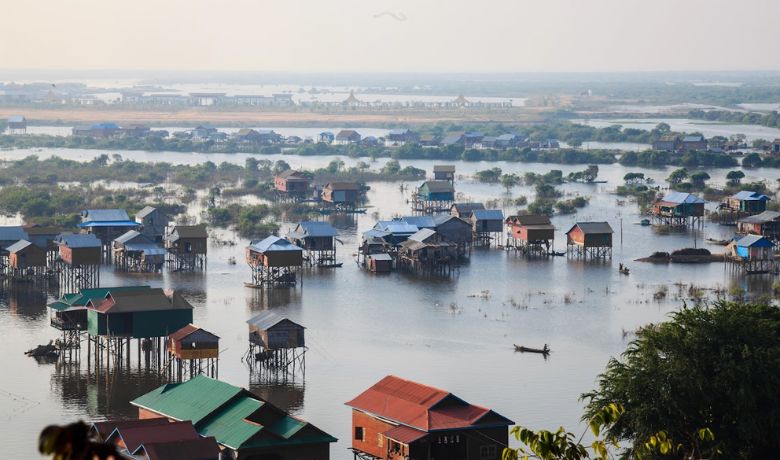
Tonlé Sap Lake’s floating villages with stilted homes rising high above the expanding floodwaters.
Cambodian Cuisine Is the Unsung Hero of Southeast Asia
The Cambodia facts about cuisine are often overshadowed by Thai, Vietnamese, and other Southeast Asian food, but it deserves its own spotlight. Known locally as “Khmer food”, it combines fresh herbs, bold spices, and unique flavors rooted in centuries of tradition, offering a culinary experience that’s both comforting and adventurous.
What makes Cambodian cuisine so distinctive:
- Staple ingredients: Rice is central, often paired with freshwater fish from the Mekong and Tonlé Sap, as well as local herbs, vegetables, and fermented fish sauce (prahok) for deep umami flavor.
- Signature dishes: Must-try dishes include Amok Trey (steamed fish curry in banana leaves), Samlor Korkor (hearty vegetable and meat stew), and Nom Banh Chok (rice noodle soup with fish gravy).
- Street food culture: Night markets in Phnom Penh and Siem Reap serve everything from grilled meats and fresh spring rolls to sweet treats like Num Ansom (sticky rice with banana).
- Influences and fusion: Cambodian cuisine reflects a mix of Indian, Chinese, Thai, and French influences, resulting in unique flavor combinations and culinary techniques.
- Seasonal and local focus: Recipes often rely on fresh, locally sourced ingredients, including tropical fruits, herbs, and seasonal vegetables.
- Drinks and desserts: Don’t miss refreshing beverages like sugarcane juice and desserts such as sticky rice with mango, which highlight the balance of sweet and savory in Khmer cooking.

Cambodian cuisine combines fresh herbs, locally sourced vegetables, and delicate dipping sauces served on banana leaves.
Fish Amok — The National Dish You Must Try
When it comes to Cambodia facts about culinary identity, Fish Amok reigns supreme. Often considered the national dish, this fragrant and creamy fish curry showcases the delicate balance of flavors that define Khmer cuisine. Made with fresh freshwater fish, coconut milk, and a unique blend of herbs and spices, Fish Amok is both comforting and exotic, offering travelers a taste of Cambodia’s rich gastronomic heritage.

Fish Amok features steamed fish curry wrapped in banana leaves with coconut milk, fresh herbs, and vibrant chili garnish.
Insects on the Menu — and They’re Surprisingly Delicious
Regarding the Cambodia facts about cuisine, dining can be an adventurous experience, especially when insects make it onto the menu. While it might sound unusual to some, insects are a common and traditional source of protein in Cambodian cuisine, eaten for generations. From crispy crickets to sweet fried tarantulas, these snacks are not only a cultural staple but also surprisingly flavorful, offering travelers a truly unique culinary experience.
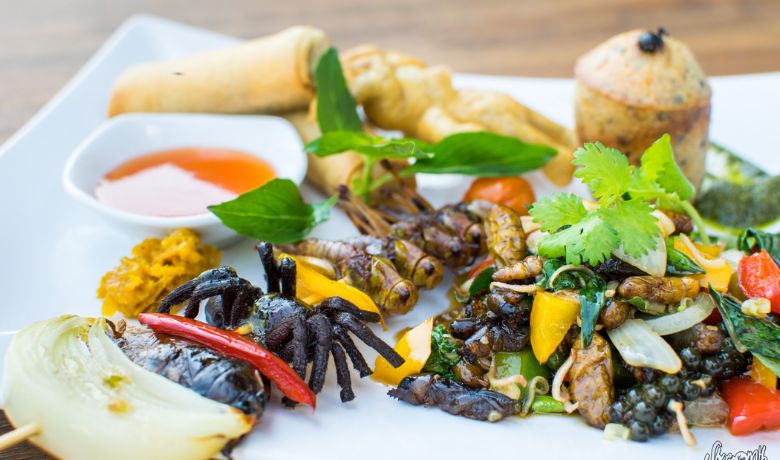
Crispy fried tarantulas, crickets, and larvae seasoned with fresh herbs, colorful peppers, and tangy dipping sauces.
Birthdays Aren’t Traditionally a Big Deal
In Cambodia, birthdays aren’t traditionally celebrated with the same fanfare as in Western countries. While Western-style parties and cakes are becoming more common in cities, historically, birthdays were low-key occasions, and major celebrations were often reserved for important cultural or religious milestones. This reflects Cambodian values that emphasize family, community, and spiritual observances over individual milestones.
Tuk-Tuks Are the King of Everyday Transportation
In Cambodia, tuk-tuks aren’t just a tourist novelty — they are the backbone of everyday transportation. These three-wheeled vehicles weave through busy city streets, narrow alleys, and even rural roads, providing an affordable and convenient way to get around. Whether for short trips, market runs, or sightseeing, tuk-tuks are deeply embedded in Cambodian life, offering travelers both a practical mode of transport and a culturally immersive experience.
Key details about tuk-tuks in Cambodia:
- Ubiquity and affordability: Tuk-tuks are widely available in urban and tourist areas, offering rides at prices far lower than taxis or private cars.
- Variety of rides: They can be used for short commutes, full-day city tours, or even longer rural trips, with fares often negotiated before the journey.
- Cultural experience: Riding a tuk-tuk gives travelers a close-up view of daily life, from bustling street markets to riverside neighborhoods.
- Flexible and nimble: Their small size allows them to navigate narrow streets and congested areas that larger vehicles can’t access.
- Tourist-friendly upgrades: In tourist hubs, some tuk-tuks are equipped with comfortable seating, fans, or even music, blending practicality with convenience.

Tuk-tuks in Cambodia are three-wheeled vehicles with covered seating areas that transport tourists through city streets.
Khmer New Year Is a Massive Three-Day Celebration
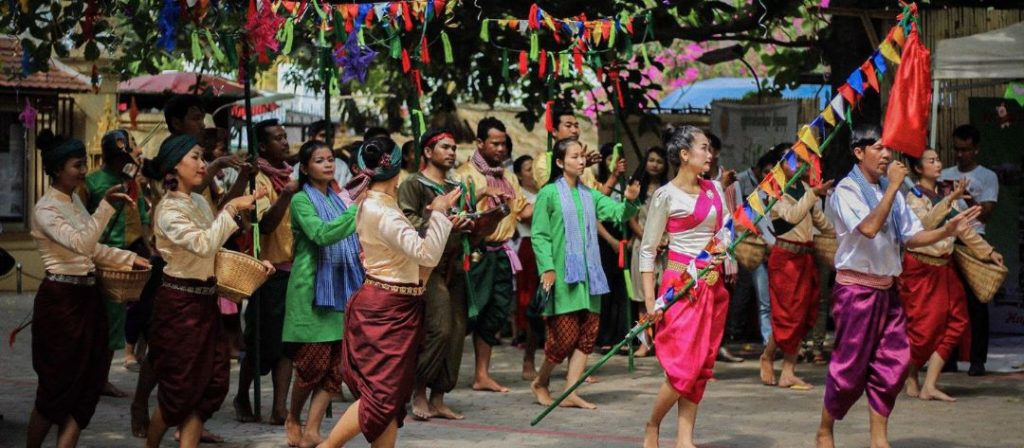
Khmer New Year, or Chaul Chnam Thmey, is one of Cambodia’s most vibrant and joyous celebrations, lasting three full days each April. Unlike typical New Year festivities in other countries, it blends religious rituals, traditional games, family gatherings, and water fights into a lively cultural experience.
For travelers, experiencing Khmer New Year offers a front-row seat to Cambodia’s rich traditions, communal spirit, and exuberant energy, making it a highlight of any visit during this season.
Key details about Khmer New Year celebrations:
- Dates and duration: Celebrated for three days, usually from April 13 to 15, marking the end of the harvest season and the beginning of a new year.
- Religious rituals: Families visit temples to offer food to monks, perform blessings, and pay respect to ancestors.
- Traditional games and performances: People engage in folk games, dancing, and music, such as tug-of-war, bamboo pole balancing, and traditional masked dances.
- Water celebrations: Similar to other Southeast Asian New Year traditions, water throwing is a fun way to cleanse the old year and welcome the new, especially popular among young people and tourists.
- Community and family focus: Khmer New Year emphasizes spending time with family and neighbors, preparing traditional foods, and strengthening social bonds.
- Tourist experiences: Visitors can participate in parades, local fairs, and cultural performances, offering a lively and immersive experience of Cambodian culture.

Traditional dancers in vibrant silk costumes perform in Chaul Chnam Thmey.
A Cambodian Wedding Can Last 3 Days and 3 Nights
In Cambodia, weddings can last up to three days and three nights, filled with rituals, celebrations, and community gatherings.
- Day 1 – Preparations and blessing: Families gather, homes are decorated, and monks are invited to bless the couple, chanting prayers to ensure a prosperous married life.
- Day 2 – Wedding ceremony: The bride and groom perform rituals such as tying ceremonial threads, exchanging gifts, and making offerings to ancestors, often accompanied by music and traditional dance.
- Day 3 – Celebration and feasting: The final day focuses on celebration with extended family and friends, featuring large feasts, dancing, and entertainment.
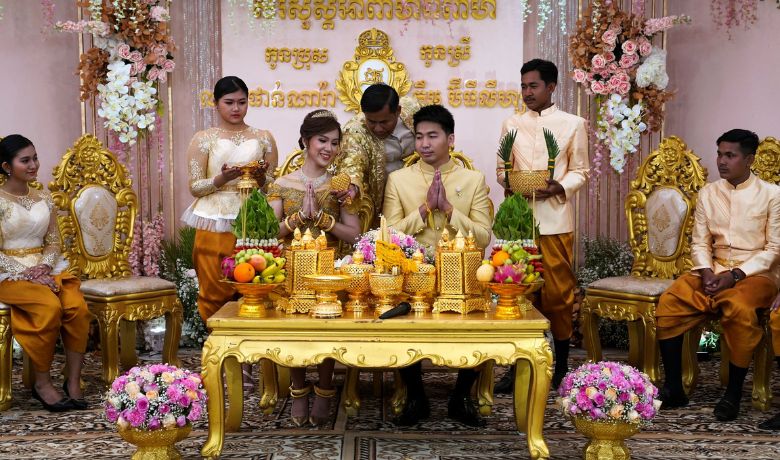
Attendants supporting the bride and groom through traditional rituals.
Buddhism Shapes Everyday Life
Buddhism is a cornerstone of everyday life, influencing social norms, family practices, architecture, and even city planning. With nearly 95% of Cambodians identifying as Theravada Buddhists, the teachings of Buddhism permeate both public and private spheres.
How Buddhism shapes daily life in Cambodia:
- Monks and merit-making: Families often offer food, donations, or assistance to monks, believing that such acts generate good karma for themselves and loved ones.
- Pagodas as community centers: Buddhist temples serve not only as spiritual sites but also as hubs for education, social gatherings, and festivals, deeply embedding the religion in everyday activities.
- Social norms and behavior: Buddhist principles influence politeness, respect for elders, and community cohesion, shaping interactions in both urban and rural settings.
- Architecture and city planning: Many towns and villages are built around pagodas, with architectural styles reflecting Buddhist symbolism and values.
- Festivals and holidays: Major Buddhist celebrations, such as Pchum Ben and Buddha’s Birthday, are central to cultural life, combining religious observance with family gatherings and communal activities.
- Personal guidance and mindfulness: Individuals often seek monks’ advice during life events such as births, marriages, or illnesses, demonstrating the religion’s role in decision-making and daily mindfulness.
The US Dollar Is (Basically) a Second National Currency
In Cambodia, the US dollar is everywhere, functioning almost like a second national currency alongside the Cambodian riel. From shopping in markets to paying for transportation and dining in restaurants, most daily transactions, especially in urban areas and tourist spots, are conducted in dollars.
Cambodia’s use of the US dollar:
- Widespread usage: Prices in hotels, restaurants, taxis, and markets are often listed in dollars, and cash payments are frequently expected in USD rather than riel.
- Riel still exists: Coins and smaller bills in Cambodian riel are commonly used for minor transactions (like small snacks, bus fares, or tips) and for change when paying in dollars.
- Convenience for travelers: Tourists can usually pay entirely in dollars, often without needing to exchange currency, simplifying trips across the country.
- ATM and banking practices: ATMs commonly dispense both dollars and riel, but dollars are often preferred for larger withdrawals or business transactions.
No McDonald’s — But Local Fast Food Wins Hearts
Surprisingly, Cambodia has no McDonald’s, despite the global reach of the fast-food giant. Yet locals and travelers alike don’t miss it — the country has its own thriving scene of local fast-food options that are flavorful, affordable, and deeply rooted in Cambodian culinary traditions.
Home to Some of the World’s Rarest Wildlife
Cambodia isn’t just famous for its temples and rivers — it’s also home to some of the world’s rarest and most fascinating wildlife. From dense rainforests to the wetlands of Tonlé Sap, the country offers habitats that shelter endangered species found nowhere else.
- Mammals: Cambodia hosts endangered species like the Indochinese tiger, Asian elephant, and Sunda pangolin, though sightings are rare due to habitat loss and poaching.
- Birds: Tonlé Sap and surrounding wetlands are home to migratory birds and endemic species, making it a birdwatcher’s paradise.
- Reptiles and amphibians: Unique species include the Cambodian roofed turtle and various rare frogs that thrive in freshwater ecosystems.
- Freshwater fish: Tonlé Sap Lake supports hundreds of fish species, including some found only in the Mekong Basin.
Greetings Focus on Respect, Not Touch
In Cambodia, greetings are all about respect rather than physical contact. Unlike Western customs such as handshakes or hugs, Cambodians use gestures that convey politeness, hierarchy, and social awareness.
Sampeah is the traditional Cambodian greeting, involving placing your palms together in a prayer-like position and bowing slightly. The height of the hands and the depth of the bow reflect the level of respect shown.
Key aspects of Cambodian greeting etiquette:
- Hierarchy matters: Elders, monks, and individuals of higher social status are greeted with higher hand positions and deeper bows, emphasizing respect in social interactions.
- No physical contact needed: Unlike handshakes or hugs, the Sampeah requires no touching, making it a polite and culturally appropriate greeting in most contexts.
- Common usage: The Sampeah is used for hellos, goodbyes, apologies, and thanks, demonstrating its central role in everyday communication.
- Modern adaptations: In urban areas, younger Cambodians may also smile or nod as a casual greeting, but the Sampeah remains the most traditional and respectful form.
- Tips for travelers: To greet respectfully, match the gesture and bow to the other person’s status, and use a warm smile to show friendliness.
Cambodia’s Fashion Tells a Story: The Iconic Sampot
The sampot, Cambodia’s iconic traditional garment, is a reflection of the country’s culture, history, and identity. This long rectangular piece of fabric, wrapped around the waist and secured with a fold or belt, is worn by both men and women in daily life, festivals, and ceremonial occasions.
Traditionally made from silk or cotton and adorned with intricate patterns and motifs, the sampot can signify social status, marital status, or regional identity. While women wear it as skirts and men as trousers or ceremonial attire, modern designers also blend traditional elements with contemporary fashion, keeping the heritage alive.
Visitors can try on a sampot in markets or cultural workshops, experiencing firsthand a garment that tells the story of Cambodia’s artistry, traditions, and enduring cultural pride.

The sampot features vibrant silk fabric with ornate gold embroidery and is paired with elaborate golden headdresses.
Final Words
Above are all the fascinating Cambodia facts — some may be completely new to you, while others might feel familiar. Overall, these insights offer a deeper understanding of Cambodia’s culture, history, and daily life, revealing the richness and uniqueness of this incredible nation. To see these facts in real life and experience Cambodia firsthand, connect with Asia Pioneer Travel and start planning your immersive journey into the heart of this remarkable country.