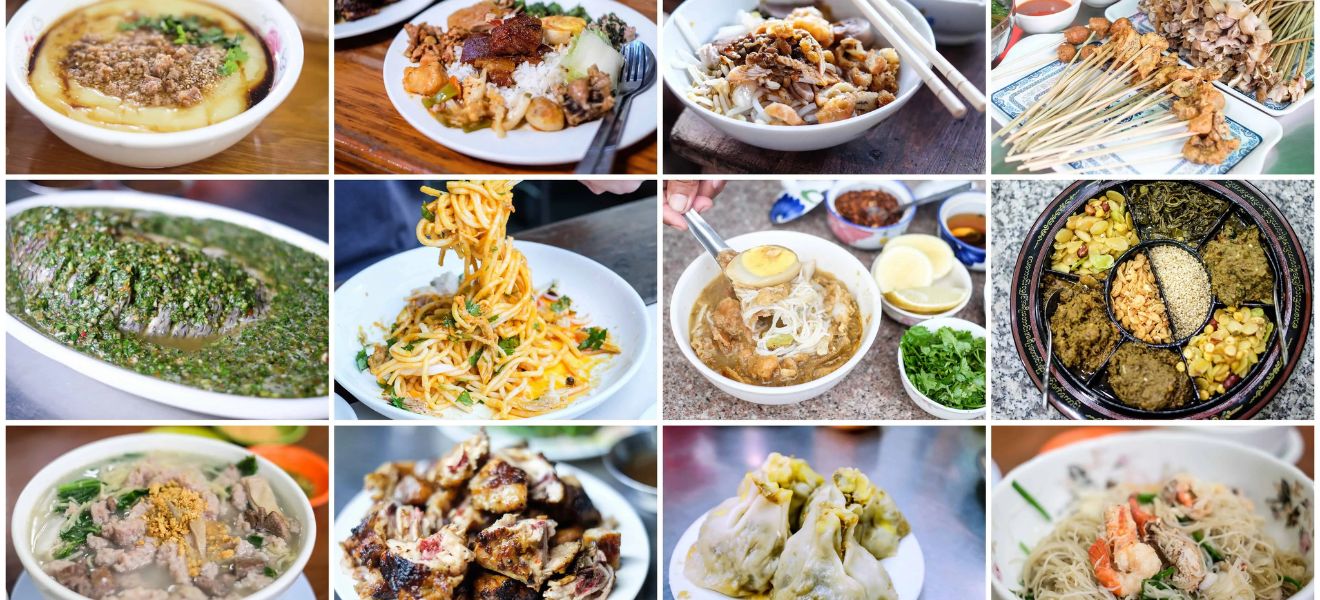


Exploring the vibrant, flavor-packed world of street food in Myanmar is arguably the best part of any journey here. This blog has rounded up 20 absolute must-try delights, showcasing everything from savory breakfast bowls to sweet, cooling treats. Get ready to discover your new favorite local delicacy and bite into the heart of Myanmar!
Top 20 Must‑Try Street Foods in Myanmar
Mohinga
Often called the national street food in Myanmar for breakfast, Mohinga is a comforting bowl of rice noodles served in a fragrant fish broth infused with lemongrass, garlic, and herbs. Some vendors top it with boiled eggs or crunchy fritters, giving every spoonful a blend of soft and crispy textures. Its slightly tangy aroma makes it unforgettable for first-time visitors.
- Where to try: Street stalls in Yangon or Mandalay, particularly during morning hours.
- Tip: Ask for extra broth or a squeeze of lime to enhance the flavor. Always stir in the crispy fritters (egg or chickpea) just before eating to keep them crunchy.
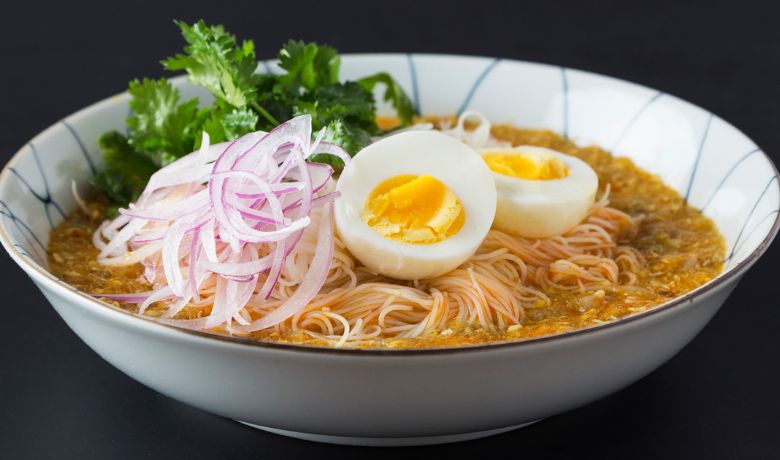
Soft noodles, savory broth, boiled egg, and fresh garnishes come together in this classic Mohinga bowl.
Nan Gyi Thoke
Thick, round rice noodles take center stage in Nan Gyi Thoke. Instead of soup, the noodles are tossed with rich chicken curry sauce, chili flakes, and garlic oil, creating a dish that’s bold yet familiar. It’s one of Mandalay’s signature flavors and a perfect example of how street food in Myanmar turns simple ingredients into something deeply satisfying.
- Where to try: Local noodle stalls around Mandalay markets.
- Tip: The dish is best when the curry sauce is freshly mixed into the noodles, so ask the vendor to toss it right before serving. Adding a little fried onion or a squeeze of lime elevates the flavor authentically.
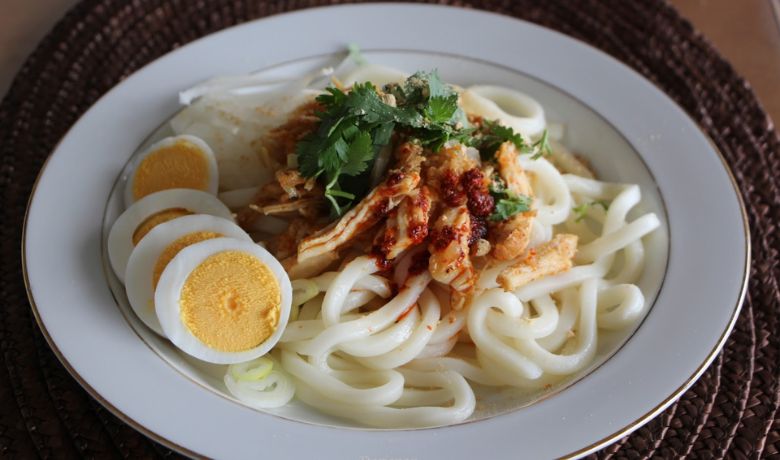
Nan Gyi Thoke’s distinctive appeal lies in its tangled crispy noodles tossed with tender meat and vibrant cilantro in a savory sauce.
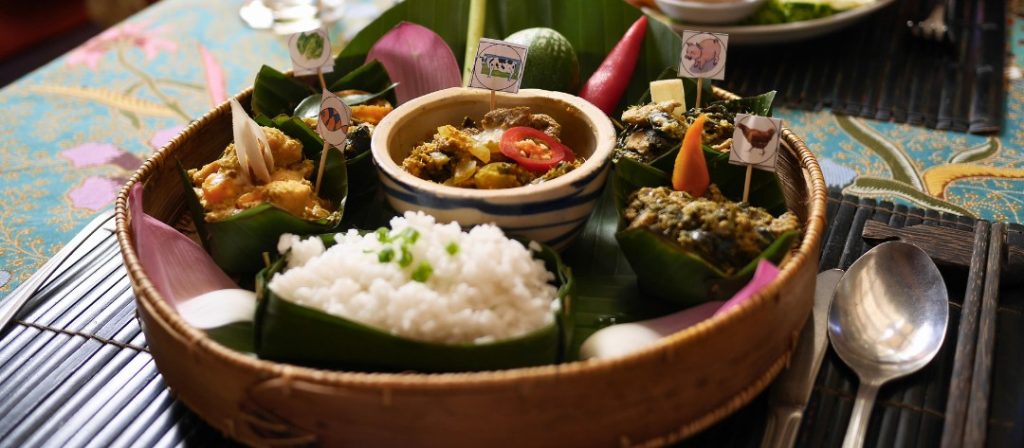
Ohn No Khao Swè
Ohn No Khao Swè is a comforting dish featuring wheat (egg) noodles in a creamy coconut-milk and chickpea-flour curried broth. Wheat noodles soak in a coconut-milk broth thickened with chickpea flour, while fried onions, sliced eggs, and crispy noodles add layers of texture. This dish is a good example of how street food in Myanmar blends richness with spice while staying approachable for travelers.
- Where to try: Common in street food scenes, often available in teashops and noodle stalls.
- Tip: The noodles should remain separate until eaten. Always mix the fried onions and crispy noodles into your serving to experience the intended combination of textures.
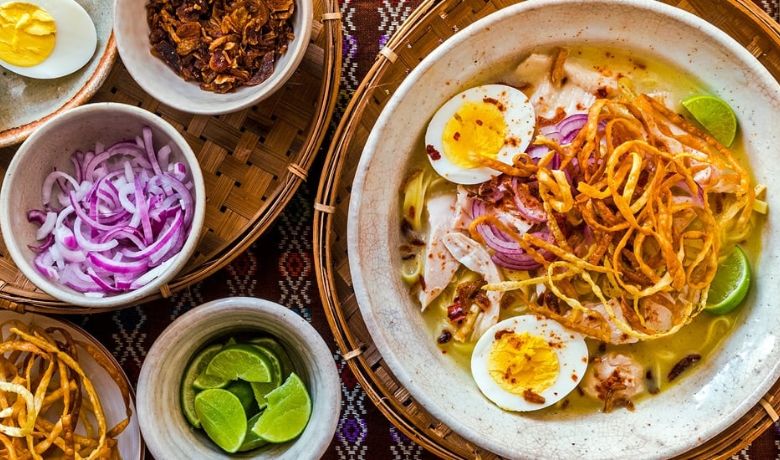
Ohn No Khao Swè combines silky egg noodles and crispy fried noodles in a rich coconut curry broth, finished with a soft-boiled egg and fresh lime.
Lahpet Thoke (Tea Leaf Salad)
More than just a dish, Lahpet Thoke, or tea leaf salad, is a cultural symbol in the scene of street food in Myanmar. It combines fermented tea leaves with peanuts, sesame seeds, fried garlic, and sometimes dried shrimp, tomatoes, or cabbage, creating a dish that balances bitter, nutty, and savory flavors. Specifically, beyond the flavors, Lahpet Thoke carries deep cultural meaning as a food of welcome and celebration.
- Where to try: Yangon teashops or portable salad stands across the city, popular at markets or busy intersections.
- Tip: For the best experience, mix all ingredients thoroughly so the tea leaves coat the crunchy peanuts and garlic evenly. Enjoy it fresh, as the flavor and texture degrade quickly once it sits.
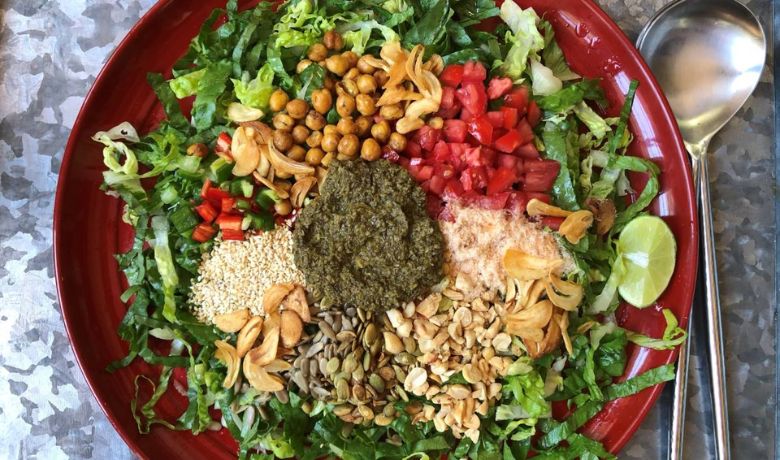
Lahpet Thoke’s signature element is fermented tea leaves combined with fresh vegetables, nuts, and crispy garnishes.
Mont Lin Ma Yar (“Husband-and-Wife” Pancakes)
Mini rice flour pancakes, known as Mont Lin Ma Yar, are cooked in pairs and often filled with a quail egg or savory ingredient. Each pair is often filled with a quail egg or other savory ingredients, then pressed together, earning its charming nickname “Husband-and-Wife Pancakes”. The result is a crispy, slightly chewy exterior with a soft, flavorful filling — a perfect bite for breakfast or an afternoon snack.
- Where to try: Street griddles near teashops or bustling market stalls.
- Tip: For the authentic experience, eat it immediately after it’s cooked.
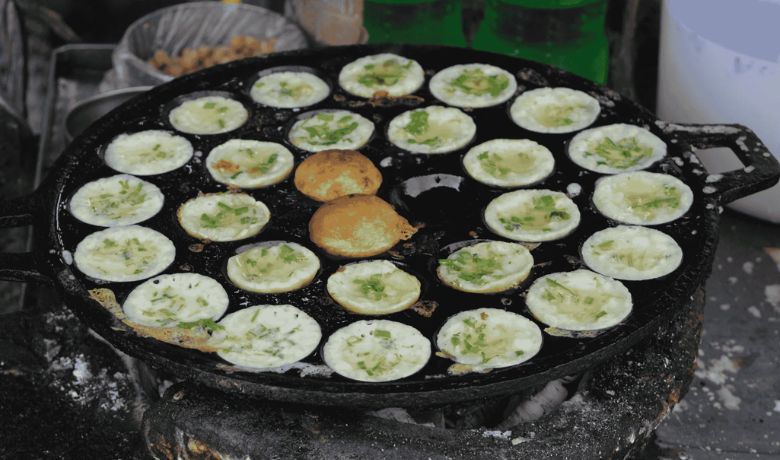
Mont Lin Ma Yar features delicate, crepe-like pancakes cooked in a traditional cast-iron mold, topped with fresh scallions and served warm.
Samosa Thoke (Samosa Salad)
Samosa Thoke is a creative Burmese twist on traditional samosas. Vendors chop up fried samosas and mix them with lentils, cabbage, mint, and a tangy sauce made from tamarind and chickpea flour broth, producing a dish that’s both refreshing and hearty. It’s an example of how street food in Myanmar repurposes fried snacks into flavorful salads.
- Where to try: Street food stalls in Yangon, especially near markets.
- Tip: The tamarind sauce is the star, so make sure it’s mixed evenly. Add extra chili or lime if you prefer a spicier, zestier punch.
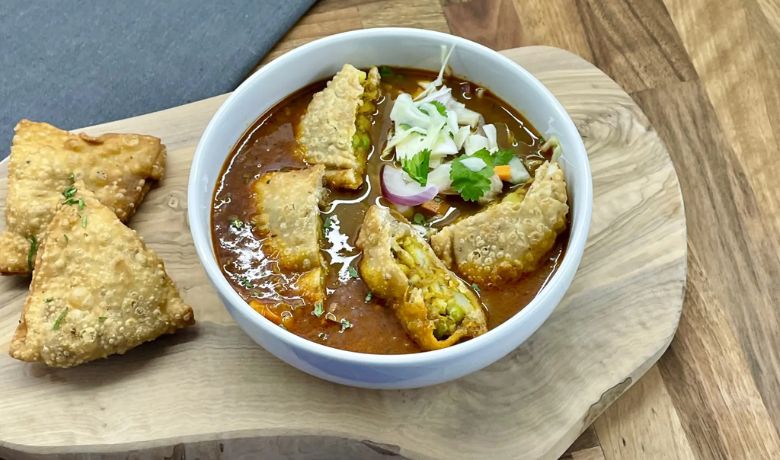
Samosa Thoke combines crispy fried samosas with fresh cabbage slaw and tangy tamarind broth.
A Kyaw Sone (Fried Burmese Tempura)
A Kyaw Sone offers an irresistible assortment of deep-fried treats. Onion slices, potato rounds, tofu cubes, shrimp, and even bananas are dipped in batter and fried before being paired with a sweet-tangy tamarind dipping sauce. This street food in Myanmar is often sold in small paper cones for easy snacking.
- Where to try: Street food stalls across Yangon, especially in market areas.
- Tip: Try a mixed selection to enjoy the full range of flavors — sweet, savory, and vegetable items each offer a distinct taste. Eat while hot and crispy for the best texture.
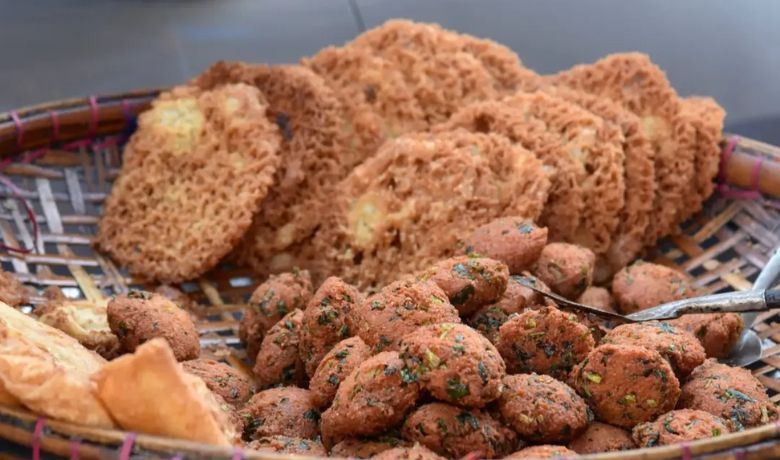
A Kyaw Sone showcases two distinct forms of fried chickpea fritters: crispy elongated patties and round balls.
Grilled Skewers
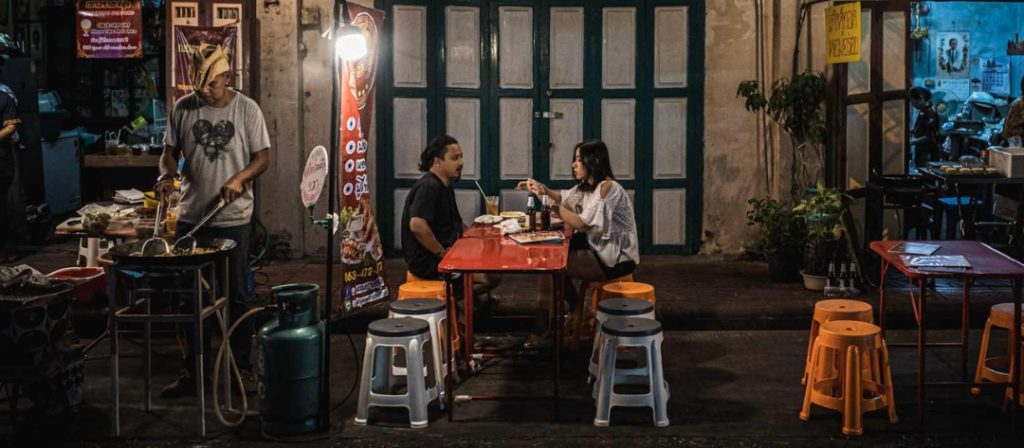
At night markets, the scent of charcoal smoke leads you straight to Myanmar’s iconic grilled skewers. Whether it’s chicken, pork, beef, tofu, or mushrooms, the items are cooked over open flames, resulting in smoky, juicy bites perfect for a casual dinner.
- Where to try: Yangon’s Chinatown, particularly 19th Street (famous for its grill stalls) and night markets across major cities.
Tip: For the best experience, choose a skewer grilled fresh over charcoal and try a mix of meat and tofu for variety. Pair with chili sauce or a squeeze of lime to enhance the flavor.
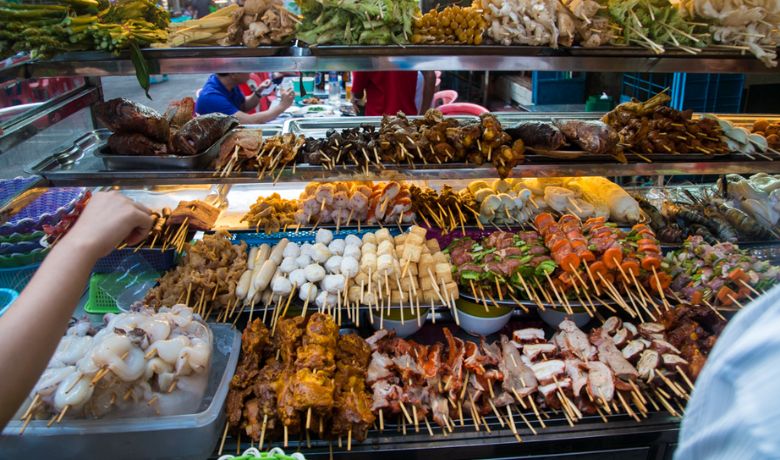
Myanmar’s grilled skewers showcase an impressive variety of marinated meats, seafood, and vegetables.
Shan Noodles
Shan Noodles are a regional specialty, which originate from Shan State in eastern Myanmar. They feature rice noodles served either in a light, savory broth or tossed in a salad style, often topped with pickled vegetables, garlic oil, and sometimes minced meat. This street food in Myanmar is lighter than typical Burmese noodles, making it a popular choice for lunch or a quick street snack.
- Where to try: Noodle shops in Yangon specializing in Shan cuisine, local street vendors in Shan State and regional markets.
- Tip: The pickled vegetables add a signature tang, so mix them in thoroughly for authentic flavor.
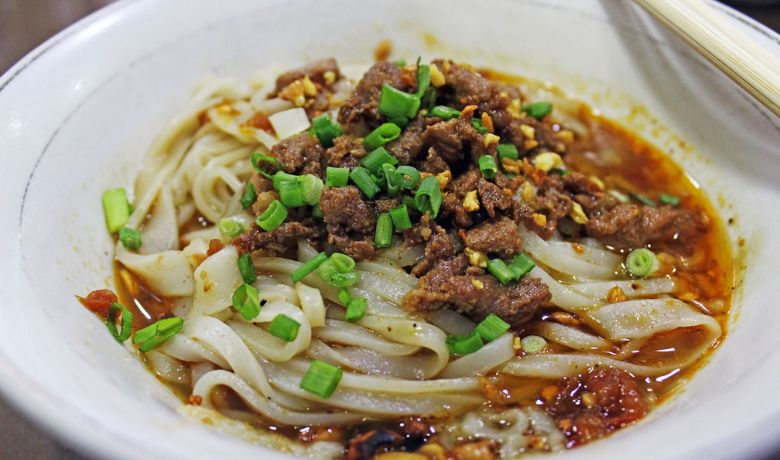
Shan Noodles bring together chewy rice noodles, seasoned ground meat, and fresh scallions in a savory oil-based sauce.
Shan Tofu
Made from chickpea flour rather than soy, Shan Tofu has a firm texture and nutty taste. It’s usually fried until golden or steamed and served with a spicy chili sauce, often as a snack or light meal. As a staple in Mandalay’s street food scene, it reflects the ingenuity of Burmese regional cooking.
- Where to try: Local snack stalls across Mandalay.
- Tip: For a truly authentic experience, dip each piece into the chili sauce provided.
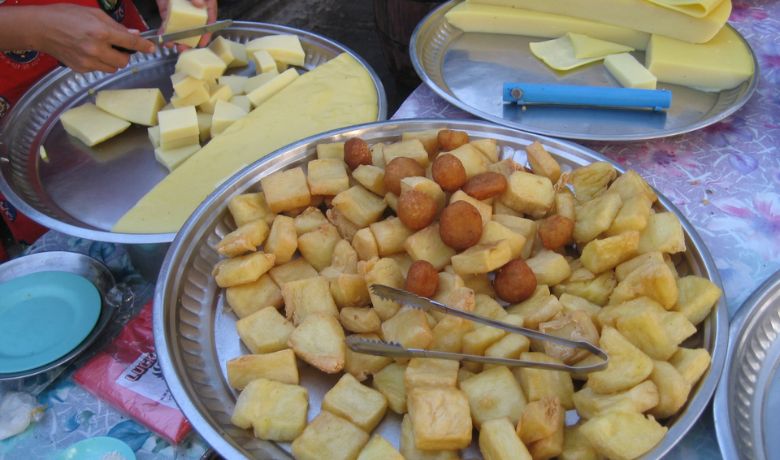
Shan Tofu is made from creamy chickpea paste molded into slices, offering a unique soft and velvety texture.
Meeshay
Meeshay, or Shan-style curry noodles, combine rice noodles with a creamy bean-based sauce, minced meat, and pickled vegetables. This street food in Myanmar is hearty yet lighter than many other Burmese curries, making it a street-food favorite for lunch or dinner. The blend of savory sauce and tangy pickles is a defining feature of Shan cuisine.
- Where to try: Street stalls and small Shan noodle shops in Yangon or Mandalay, often sold in markets and near busy transit spots.
- Tip: Ask for a balanced mix of sauce and pickles to enjoy the contrast of flavors. Meeshay is best eaten hot and freshly tossed, so avoid leftovers.
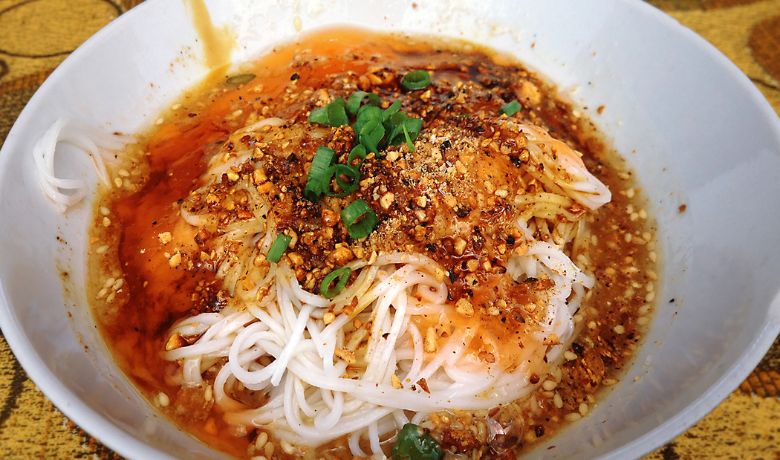
Meeshay combines delicate rice noodles in a fiery red broth topped with crispy garlic, scallions, and aromatic spice powder.
Kyay Oh
Kyay Oh is a hearty Burmese noodle soup made with pork, egg, vegetables, and light seasonings. It’s one of the most common street-side meals because vendors can serve it quickly while keeping the broth hot and fresh. You’ll find both soup versions and dry mixed noodles, each style of this street food in Myanmar offering a different flavor profile.
- Where to try: Street corners and small eateries across Yangon and Mandalay or popular local chains such as YKKO, known for their consistent flavor.
- Tip: Try both the wet and dry versions. The soup highlights the broth’s savory depth, while the dry style lets you taste the noodles, garlic oil, and toppings more intensely.
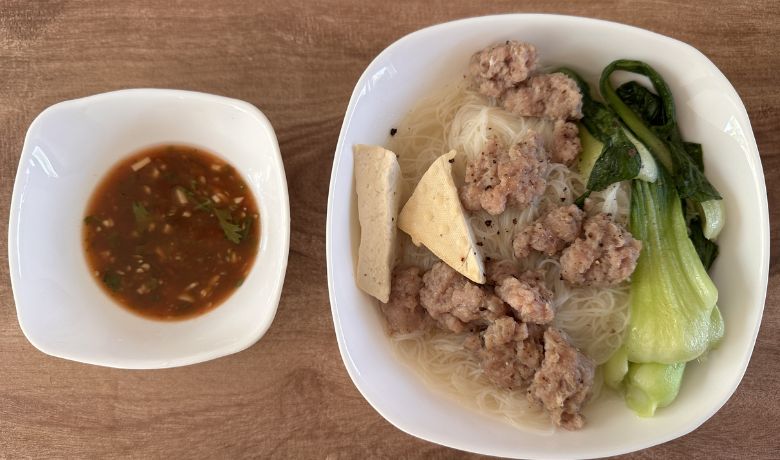
Kayah Oh features delicate rice noodles topped with seasoned ground pork, fresh greens, and tofu, served with a savory dipping broth.
Balachaung (Shrimp Floss)
Balachaung is a crunchy, spicy dried shrimp floss made by stir-frying shrimp, garlic, chili, and onions until crisp. It’s used as a topping for rice and noodles or simply eaten as a snack. This condiment reflects Myanmar’s love for bold, layered flavors and is often homemade in small batches.
- Where to try: Street condiment stands near markets, vendors selling packaged snacks or homemade jars.
- Tip: Balachaung is most flavorful when it’s freshly fried and still crisp, so choose vendors who keep it in airtight jars and prepare small batches daily.
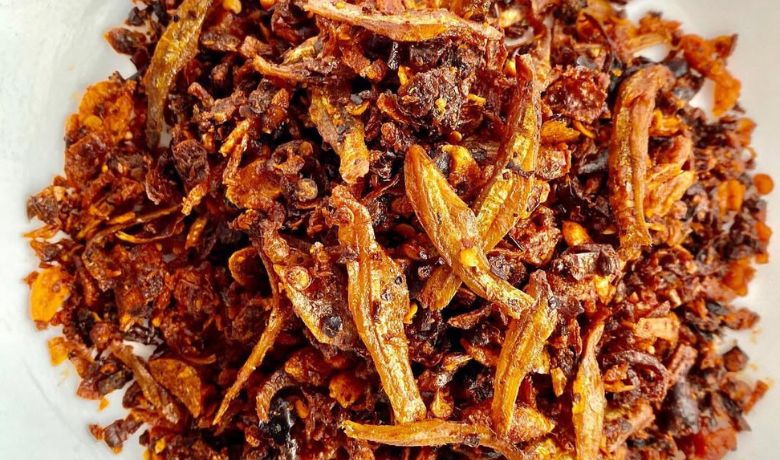
Balachaung showcases crispy fried shrimp and garlic combined into a pungent, aromatic condiment with deep golden-brown color.
Bein Mont (Myanmar Street Pancake)
Bein Mont is a popular crispy and chewy street pancake, usually cut into small bite-size squares. It comes in two common versions: brown (made with palm sugar) and white (a lighter, mildly sweet version). These pancakes are cooked on flat griddles and sold as a quick snack throughout the day.
- Where to try: Street dessert sellers around markets or busy intersections, mobile carts near schools and residential neighborhoods.
- Tip: Bein Mont is extremely affordable, often around 0.05 USD per piece, so it’s worth trying both versions to compare flavor and texture.
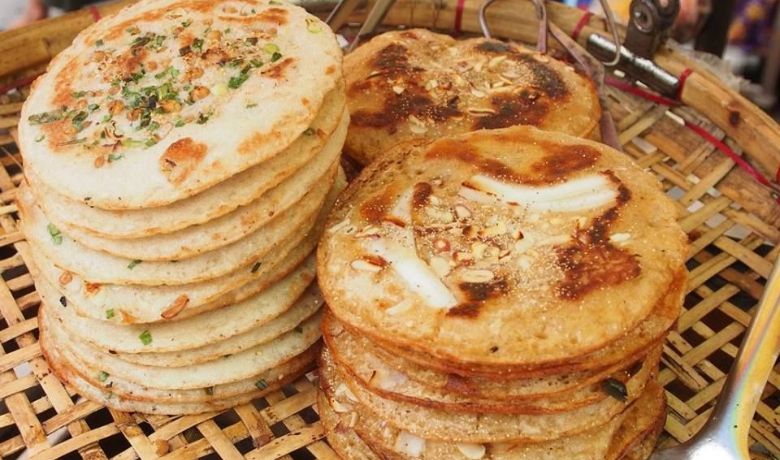
Bein Mont consists of stacked thin crepes with crispy edges, seasoned with fresh herbs and garnished with roasted peanuts and scallions.
Sanwin Makin
Sanwin Makin is a traditional Burmese semolina cake made with semolina, condensed milk, coconut milk, and sometimes poppy seeds for texture. It’s dense, fragrant, and mildly sweet — more like a tea cake than a dessert. This street food in Myanmar is commonly served at celebrations but also sold widely as a street snack.
- Where to try: Sweet stalls in markets or dessert hawkers selling sliced portions wrapped in paper.
- Tip: Choose pieces with a slightly firm top layer — a sign that it’s been baked properly and has the classic Sanwin Makin texture.
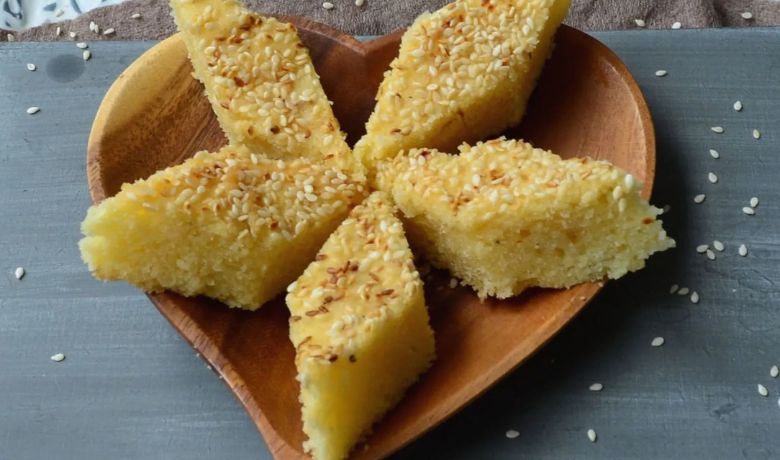
Sanwin Makin showcases a rich, dense semolina cake topped with sesame seeds and studded with roasted peanuts.
Mont Lone Yay Paw
Mont Lone Yay Paw are sweet glutinous rice balls traditionally stuffed with jaggery and topped with fresh coconut shavings. These soft, chewy treats are usually dropped into boiling water; when they float, they’re ready to eat. They’re especially tied to cultural celebrations and often prepared in large batches for sharing.
- Where to try: Sold at festival stalls and community celebrations, most common during Thingyan (Myanmar New Year Water Festival).
- Tip: During Thingyan, some playful vendors hide a chili instead of jaggery in a few rice balls, so expect surprises if you’re eating them during the festival.
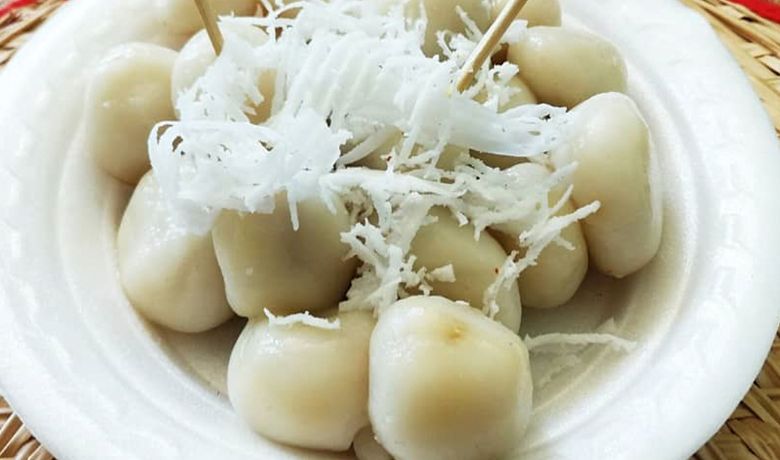
Mont Lone Yay Paw features chewy glutinous rice balls served in a sweet coconut broth, garnished with shredded coconut.
Laphet Yay (Sweet Milk Tea)
Laphet Yay is Myanmar’s signature rich, creamy milk tea, brewed strong and blended with condensed milk for sweetness. It’s a daily staple and the drink most associated with the country’s beloved teashop culture. Locals enjoy this street food in Myanmar with snacks, breakfast noodles, or simply while chatting at street-side tables.
- Where to try: Mandalay teashops, known for balanced brews or street-side tea vendors who prepare fresh batches throughout the day.
- Tip: Order the “half-sweet” version if you prefer a lighter taste, as regular Laphet Yay can be very sweet due to the condensed milk.
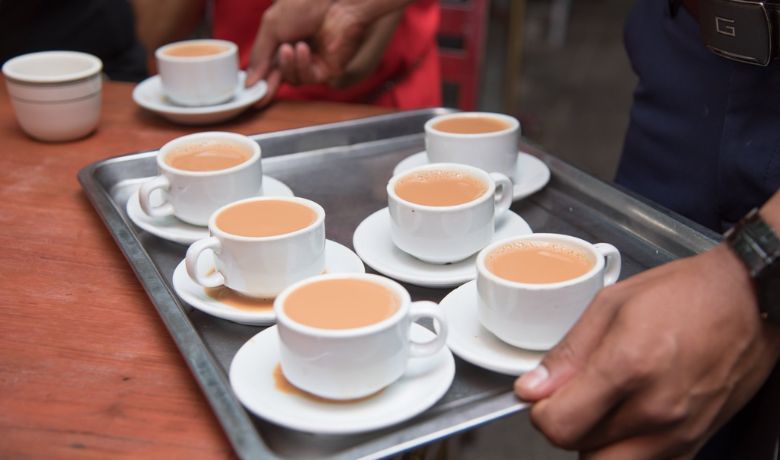
Laphet Yay is a creamy, milky tea made from fermented tea leaves, traditionally served in small cups with a rich, distinctive flavor.
Grilled Fish/Seafood
The scene of Myanmar street food includes a wide range of grilled fish and seafood, especially in coastal and riverside towns. Vendors marinate fresh fish with turmeric, chili, garlic, and salt, then grill it over charcoal for a smoky, aromatic flavor. This dish reflects Myanmar’s long-standing connection with its waterways and seafood traditions.
- Where to try: Towns near the coast or major rivers or night markets in Dawei, Mawlamyine, Ngapali, and other seaside hubs.
- Tip: Choose stalls grilling whole fish to order, since pre-grilled pieces can dry out quickly.
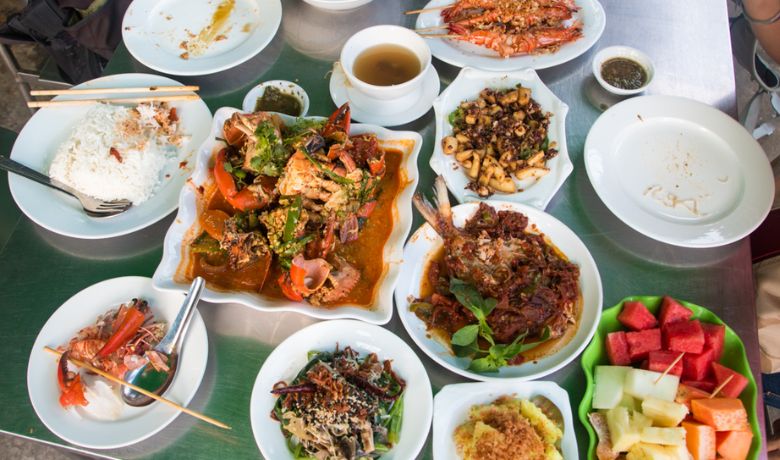
Myanmar’s grilled fish and seafood is infused with aromatic spices, fresh herbs, and served alongside vibrant vegetable accompaniments.
Rice Cakes/Rice-based Snacks
Myanmar offers a wide variety of rice cakes and steamed rice snacks, ranging from lightly sweet treats to savory bites. These snacks often use glutinous rice, coconut, jaggery, or mung beans, depending on the region. They’re simple, affordable, and often made fresh each morning.
- Where to try: Markets and early-morning stalls, or portable vendors carrying baskets or trays through residential streets.
- Tip: Rice cakes are best eaten in the morning, when they’re freshly steamed and still warm. Later in the day, they tend to firm up and lose their softness.
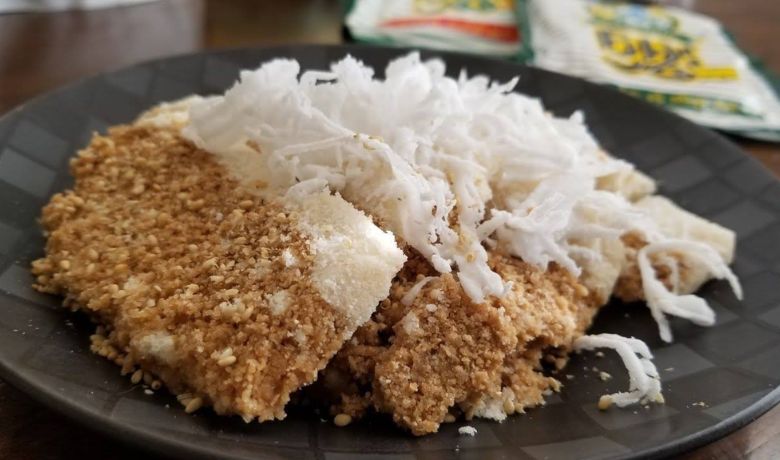
Myanmar’s rice cakes offer a delightful contrast of crispy golden exterior with soft, chewy interior, topped with shredded coconut.
Tofu Salad/A Thoke Sone Varieties
Myanmar’s diverse range of A Thoke Sone (salads) includes Khauk Swè Thoke (noodle salad), tofu salad, papaya salad, and many regional variations. These salads combine fresh vegetables, noodles, chickpea flour dressings, lime, garlic, and chili, creating dishes that are bright, tangy, and satisfying. They’re a cornerstone of the culture of street food in Myanmar.
- Where to try: Roving vendors carrying portable salad trays through busy neighborhoods, or market salad stalls offering made-to-order combinations.
- Tip: Ask the vendor to adjust the chili level, as some versions can be surprisingly spicy, especially tofu and papaya salads.
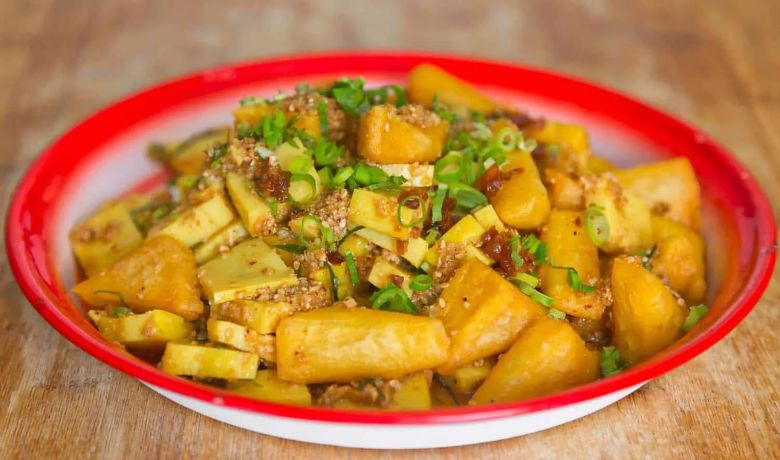
Tofu salad brings together crispy golden tofu cubes tossed with ground meat, fresh scallions, and aromatic spices.
Practical Tips for Eating Street Food in Myanmar
- Hygiene First
– Choose busy stalls, as a steady flow of customers means high food turnover and reduces the chance of food sitting out too long.
– Observe cooking surfaces when possible — grills, pans, and cutting boards should look reasonably clean, not covered in old oil or residue.
– Look for vendors who prepare ingredients on the spot, such as chopping herbs or reheating broth, which signals better freshness.
– Prioritize stalls using covered containers for raw ingredients to limit dust and flies.
- Ordering & Etiquette
– Use simple English or point directly at the food; many vendors rely on gestures rather than spoken explanations.
– Carry cash, ideally small notes, since most street vendors do not accept cards.
– Bringing a reusable container is acceptable and helps reduce plastic waste; many locals appreciate customers who do this.
- Dietary Considerations
– For vegetarians or vegans, ask for Lahpet Thoke without dried shrimp or choose tofu-based street food in Myanmar like Shan tofu.
– If gluten-sensitive, avoid wheat noodles and choose rice noodles, which are widely available in salads and soups.
– Burmese food can be unexpectedly spicy, so ask for “less spicy” or “no chili oil” if you prefer milder flavors.
- Safety Advice
– Observe local customers first. If locals eat there regularly, that’s a reliable indicator of quality and safety.
– Avoid dishes that look like they’ve been sitting out, including pre-cut salads, lukewarm curries, or stale fritters.
– Look for vendors who use fresh cooking oil; extremely dark oil or smoky frying pans can indicate poor oil reuse.
Let’s Go for a Wonderful Culinary Journey
After exploring these 20 must-try street foods in Myanmar, it’s clear that each dish opens a small window into the country’s soul. From noodle bowls packed with regional character to sweet treats sold only during festivals, this list brings together the true diversity of Myanmar’s flavors — the foods locals actually eat, love, and grow up with. Together, they give you a fuller picture of the country’s culture, daily rhythms, and the warmth of its street-side life.
For travelers, this matters more than you might think. Street food in Myanmar is one of the most immersive, affordable, and authentic ways to discover Myanmar. More than eating, you’re stepping into crowded morning markets, chatting with vendors, and tasting traditions that have been passed down for generations.
And if you’re ready to turn this culinary inspiration into a real journey, Asia Pioneer Travel is here to guide you. Reach out, share what you love, and let the team craft a trip filled with unforgettable flavors and experiences.